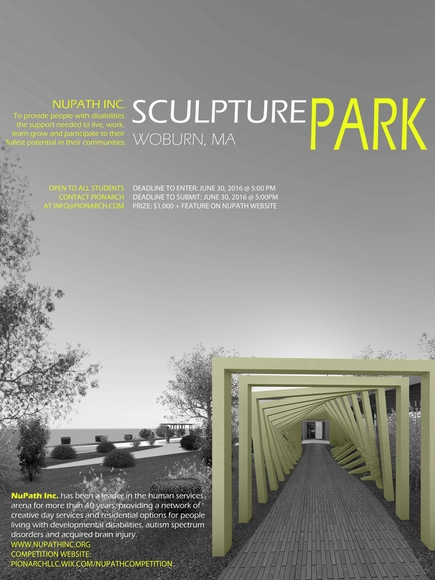
We see opportunities for collaboration for art and architecture students and NuPath. We would love to engage the students in a potential competition project of creating sculptures to the name of those who were part of NuPath. The project is to design a single sculpture or installation that could be dynamically multiplied on site. The outdoor space is located on the back green space of the building, located in 147 New Boston Street in Woburn, MA and it is currently being planned as the Outdoor Sculpture Park. With the innovative and creative ideas from art and architecture students, we can help memorialize people that were part of the NuPath family.
How To Architecture! is a design competition which invites students to reflect on contemporary culture and to do it with architecture. Leafing through headlines, lists, captions, zooming in and out of feeds, bold fonts, and articles made of images: we participate in the age of the listicle. Culture flashes before us—an extension of ourselves: the superabundant reel. As the cycle of consumption whirs on, architecture still stands. What does architecture say; how does it feed you? Tell us what you think! Tell us How To Architecture!
Videos
ARCHITECTURAL COMPETITION FOR STUDENTS - MODULAR BUILDING OF THE PHILHARMONIC
The purpose of the architectural competition is to bring attractive ideological solutions for the proposal of a new multi-purpose building of the philharmonic orchestra in České Budějovice. The topic of the competition is the design of a multi-purpose centre of the South Czech Philharmonic with a variable hall for an audience of up to 1,000 persons, combined with an open stage for open-air concerts with all the necessary amenities for the artists as well as for the visitors of the cultural installation of the South Czech Philharmonic.
Philadelphia, the City of Brotherly Love, draws millions of visitors annually, and in 2016, will host dozens of different events such as concerts, sporting events, and festivals. The city has an opportunity to bring Philadelphia history to the heart of each of these events through the use of mobile visitor centers.
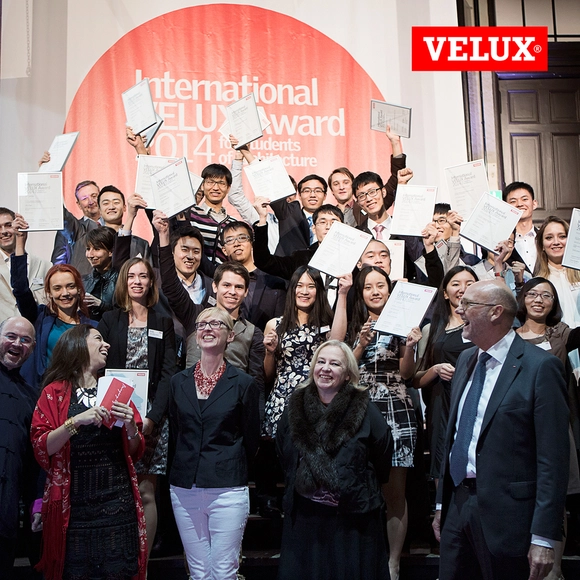
Registration for the International VELUX Award 2016 for Students of Architecture is open until 1 April 2016.
The International VELUX Award for students of architecture is a competition that wants to encourage and challenge students to explore the theme of daylight - and to create a deeper understanding of this ever-relevant source of energy, light and life. The award encourages projects that celebrate the privilege of being a student with curiosity and with the willingness to think “out of the box” – as well as consider the social, sociological and environmental dimension of daylight.
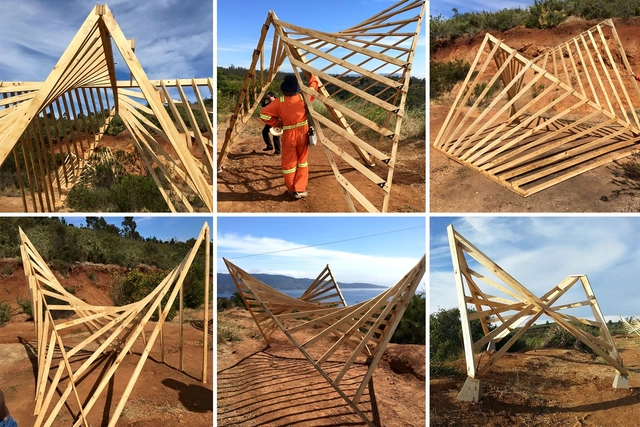
At the UTFSM in Valparaíso, Chile, architect Verónica Arcos developed a first-year studio centered around the theme of "materiality."
Based on an application of math and geometry in the study of Mexican architect Félix Candela's work, the workshop sought to "put form in crisis and take it to its maximum expression."
The Department of Spatial and Sustainable Design, Vienna University of Technology, and the Society of Architecture and Spatial Design is organizing the BLUE AWARD, an international student competition for sustainable architecture. The prize is overseen by the UIA, International Union of Architects, represented by its former President Albert Dubler.
A very exciting opportunity is presented to architects and students worldwide for your work to be showcased in an international documentary film, alongside some of the greatest living architects of our current time.
ABOUT :: [TRANS-] is a critically-reviewed academic journal published in print and online, inviting expressions of interest for submitting works of design, writing, or multi-media on the topic of design process and design communication for Vol. No. 2 to be published in May 2016.
[Overview] TRANS-PLAN is an international student design competition organized by A2G (Architecture Gallery at the Faculty of Architecture University of Manitoba). The competition is open to all students registered in spatial design and or exhibition design disciplines.
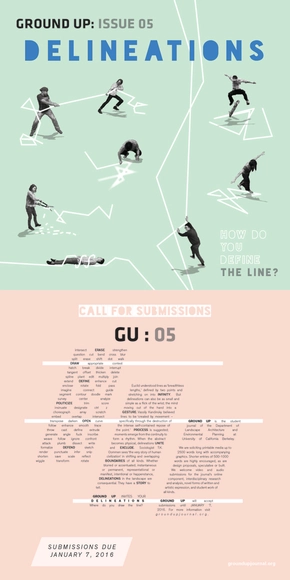
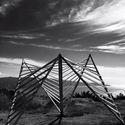
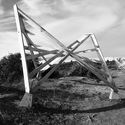
Euclid understood lines as ‘breadthless lengths,’ defined by two points and stretching on into infinity. But delineations can also be as small and simple as a flick of the wrist; the mind moving out of the hand into a gesture. Vassily Kandinsky believed lines to be ‘created by movement – specifically through the destruction of the intense self-contained repose of the point.’ Process is suggested; moments emerge from the continuity to form a rhythm. When the abstract becomes physical, delineations unite and exclude. Sociologist T.K. Oommen sees ‘the very story of human civilization’ in shifting and overlapping boundaries of all kinds. Whether blurred or accentuated, instantaneous or permanent, representational or manifest, intentional or happenstance, DELINEATIONS in the landscape are consequential. They have a story to tell.
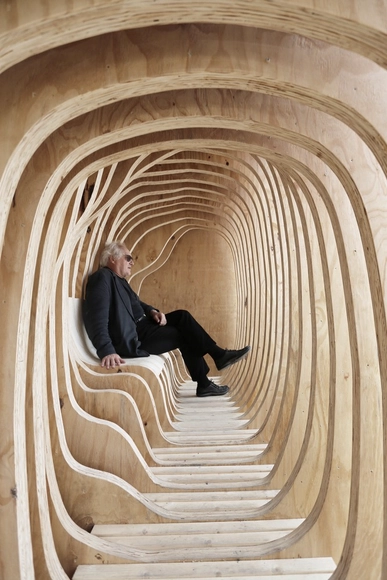
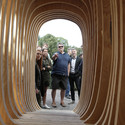
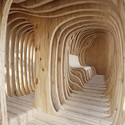
First-year architecture and urban planning students at the Estonian Academy of Arts have designed and created READER, a shelter based on the concept of removal from daily life, and focusing on oneself. Passers-by are invited to enter the shelter and “escape from the real world of problems into the fictional world of books.” And for those who don’t have a book on hand, the structure is meant to evoke the pages of a book through its ribbed wooden structure.







![Call For Submissions: [TRANS-] lation - Featured Image](https://snoopy.archdaily.com/images/archdaily/media/images/5694/f06b/e58e/cec2/8000/00d0/slideshow/open-uri20160112-18439-x06j8r.jpg?1452601447&format=webp&width=640&height=580)
![Open Call: TRANS-PLAN: WATER+ [curate/design/fabricate] - Featured Image](https://snoopy.archdaily.com/images/archdaily/media/images/568e/a1b3/e58e/ce17/0100/0011/slideshow/open-uri20160107-28024-9d08db.jpg?1452188027&format=webp&width=640&height=580)