1. ArchDaily
  2. Stefano Perego

Stefano Perego: The Latest Architecture and News

Between Geometric Shapes and Raw Materials: The Case of Brutalism in Italy

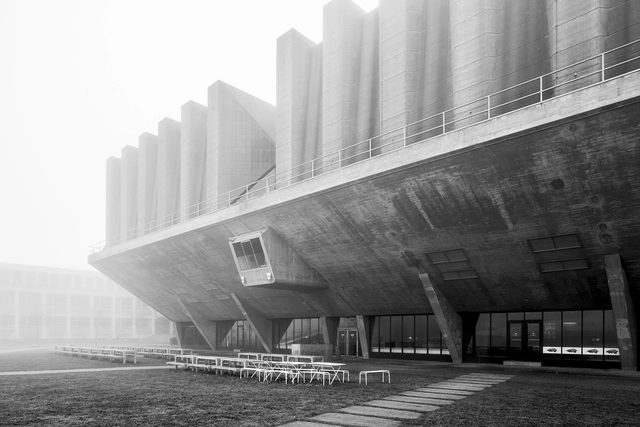
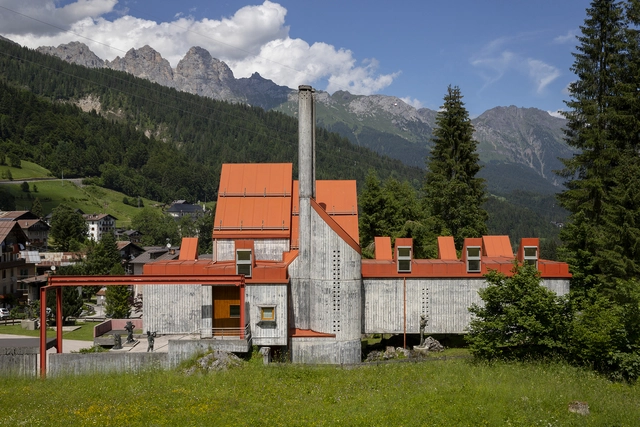
Born in the post-war period in the United Kingdom, the Brutalism movement was first met with skepticism but has found a new appreciation in the last decade, capturing the imagination of new designers fascinated with the interplay between striking geometric shapes and the exposed raw materials in which they are rendered. From Britain, the movement spread throughout Europe, Southeast Asia, and Africa, gathering different variations influenced by the cultural and socio-economic status of each area. In this article, we delve into the particularities that define Italy's contribution to the Brutalist movement, exploring the style through the lens of Roberto Conte and Stefano Perego. The two photographers have also published a photographic essay on the subject, taking the form of a book titled "Brutalist Italy: Concrete Architecture from the Alps to the Mediterranean Sea".

Between Geometric Shapes and Raw Materials: The Case of Brutalism in Italy - Image 1 of 4Between Geometric Shapes and Raw Materials: The Case of Brutalism in Italy - Image 2 of 4Between Geometric Shapes and Raw Materials: The Case of Brutalism in Italy - Image 3 of 4Between Geometric Shapes and Raw Materials: The Case of Brutalism in Italy - Image 4 of 4Between Geometric Shapes and Raw Materials: The Case of Brutalism in Italy - More Images+ 11

Beersheba: Brutalist Architecture in the Middle of the Desert

Subscriber Access | 
Beersheba: Brutalist Architecture in the Middle of the Desert - Image 15 of 4
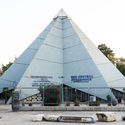
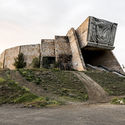
Negev Brigade Monument - Dani Karavan (1963-1968). Image © Stefano Perego
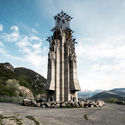
Located 108 kilometers to the south of Tel Aviv, Beersheba (Be'er Sheva) is one of Israel's oldest cities. Although in existence since biblical times, military campaigns and occupations have seen it destroyed and rebuilt throughout the centuries, resulting in the juxtaposition of various time periods and cultures that can be seen throughout the city. One of Beersheba's principal transformations happened during the population boom of the 1950s sparked by the formation of the State of Israel in 1948. To keep up with the need for housing, the government rebuilt and expanded the city, which soon transformed from a small military outpost of 4,000 people to a vibrant urban center in the middle of the Negev Desert.

Beersheba: Brutalist Architecture in the Middle of the Desert - Featured ImageBeersheba: Brutalist Architecture in the Middle of the Desert - Image 1 of 4Beersheba: Brutalist Architecture in the Middle of the Desert - Image 2 of 4Beersheba: Brutalist Architecture in the Middle of the Desert - Image 3 of 4Beersheba: Brutalist Architecture in the Middle of the Desert - More Images+ 11

Brutalism and Collective Living in Europe, Through the Lense of Stefano Perego

Subscriber Access | 
Brutalism and Collective Living in Europe, Through the Lense of Stefano Perego - Image 20 of 4
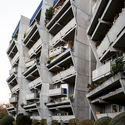
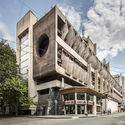
Residential Building in Paderno Dugnano (1990, Milan, Italy). Image © Stefano Perego

Although there is much conflict surrounding the term Brutalist, there are certain constants and patterns within the movement that offer a concrete idea of the movement and its place in contemporary architecture.

The buildings that adhere to Brutalism—an off-shoot of the Modern Movement that erupted between 1950 and 1970— stand out in part to their constructional sincerity- that is, keeping no secrets about the materials that went into their creation, their bold geometry, and the asperity of their textures and surfaces. Reinforced concrete is the predominant material in Brutalist works thanks to its prominent and dramatic texture, which is put on full display.

Brutalism and Collective Living in Europe, Through the Lense of Stefano Perego - Featured ImageBrutalism and Collective Living in Europe, Through the Lense of Stefano Perego - Image 1 of 4Brutalism and Collective Living in Europe, Through the Lense of Stefano Perego - Image 2 of 4Brutalism and Collective Living in Europe, Through the Lense of Stefano Perego - Image 3 of 4Brutalism and Collective Living in Europe, Through the Lense of Stefano Perego - More Images+ 16

Brutalism in European Schools and Universities, Photographed by Stefano Perego

Subscriber Access | 

In his book “The New Brutalism in Architecture: Ethical or Aesthetic?,” Reyner Banham establishes what he deems the semantic roots of the term 'Brutalism,' explaining that it comes from one of the " indisputable turning points in architecture, the construction of Le Corbusier's concrete masterpiece, la Unité d'habitation de Marseille. It was Corbusier's own word for raw or rough-cast concrete, "Béton brut," that made Brutalism a mainstay in architectural jargon and, in many ways, the term, as well as the architecture it described, flourished." In the book, Banham highlights the historical milestone marked by Corbusier's Unite d' Habitation and the socio-political context that shaped it. In steel-starved post-World War II Europe, exposed concrete became the go-to building material within the burgeoning Brutalist movement, which quickly defined itself by its bare-bone, rugged surfaces and dramatic, geometric shapes.

Brutalism in Central Asia: The Eastern Influences that Shaped Soviet Architecture

Subscriber Access | 

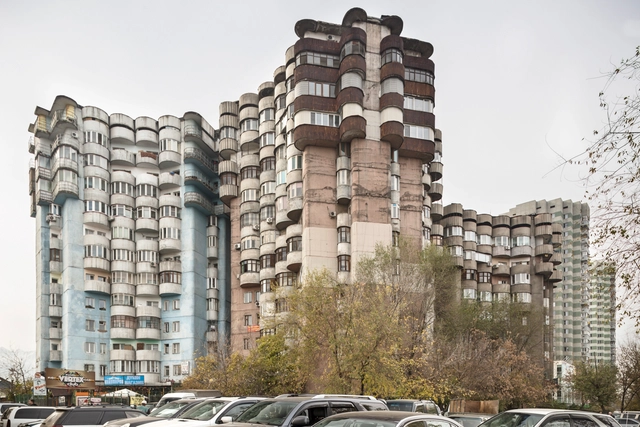
In the second half of the 20th century, Soviet architecture has spread a common aesthetic across highly diverse environments, being an integral part in promoting the totalitarian ideology that disregarded local cultures, envisioning a unified, homogenous society. Nevertheless, in practice, the architecture proved itself susceptible to adaptations and local influences, perhaps nowhere more than in Central Asia. The article looks at the architectural heritage of a geographical area largely excluded from the Western-centric narratives on Soviet Modernism, encouraging a re-reading of a layered and nuanced urban landscape, with images by Roberto Conte and Stefano Perego.

Brutalism in Central Asia: The Eastern Influences that Shaped Soviet Architecture - Image 1 of 4Brutalism in Central Asia: The Eastern Influences that Shaped Soviet Architecture - Image 2 of 4Brutalism in Central Asia: The Eastern Influences that Shaped Soviet Architecture - Image 3 of 4Brutalism in Central Asia: The Eastern Influences that Shaped Soviet Architecture - Image 4 of 4Brutalism in Central Asia: The Eastern Influences that Shaped Soviet Architecture - More Images+ 14

Europe's Brutalist Churches and Chapels, by Stefano Perego

Subscriber Access | 

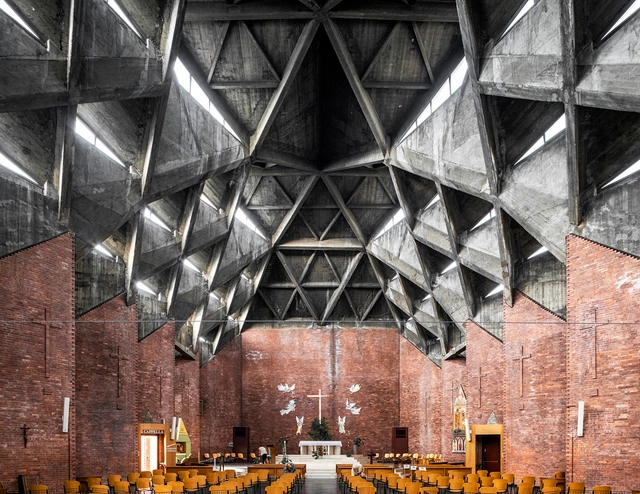
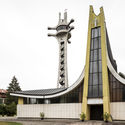
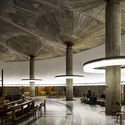
Europe's Brutalist Churches and Chapels, by Stefano Perego - Image 1 of 4Europe's Brutalist Churches and Chapels, by Stefano Perego - Image 2 of 4Europe's Brutalist Churches and Chapels, by Stefano Perego - Image 3 of 4Europe's Brutalist Churches and Chapels, by Stefano Perego - Image 4 of 4Europe's Brutalist Churches and Chapels, by Stefano Perego - More Images+ 17

Rich in symbolism and tradition, religious architecture has always been marked by the grandiosity and extravagance of its interior spaces. For the architects and designers who created these spaces, everything from the scale, to the materials, to the lighting were tools to be used in optimizing their form and function and creating a place for users to connect with their faith.

Futuristic Architecture of the 70s: Photographs of a Modern World with a Twist of Science Fiction

Subscriber Access | 

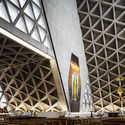
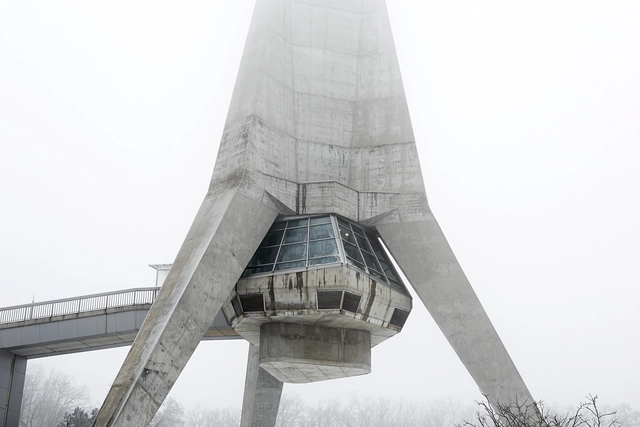
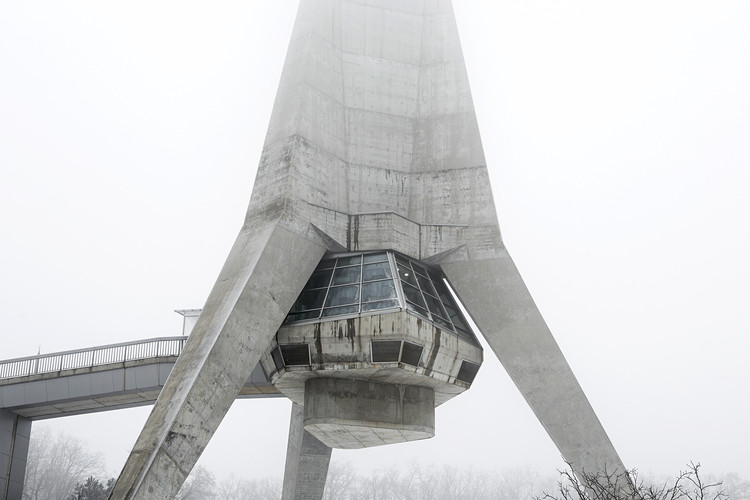
Futuristic Architecture of the 70s: Photographs of a Modern World with a Twist of Science Fiction - Image 1 of 4Futuristic Architecture of the 70s: Photographs of a Modern World with a Twist of Science Fiction - Image 2 of 4Futuristic Architecture of the 70s: Photographs of a Modern World with a Twist of Science Fiction - Image 3 of 4Futuristic Architecture of the 70s: Photographs of a Modern World with a Twist of Science Fiction - Image 4 of 4Futuristic Architecture of the 70s: Photographs of a Modern World with a Twist of Science Fiction - More Images+ 3

The Manifesto of Futurism, written by Italian poet Filippo Tommaso Marinetti in 1909, was the rallying cry for the avant-garde movement driven by the writers, musicians, artists, and even architects (among them Antonio Sant'Elia) in the early 20th century. After the manifesto's publication, Futurism quickly came to the forefront of public conscience and opened the way for many other cutting edge movements in the art world and beyond.

While the movement would undergo a significant decline in the years following World War II, it reinvented itself decades later during the Space Age, when faith in technology and industry were at a fever-pitch and the world's powers were racing to put humans on the Moon. All of a sudden, humanity had a new cultural panorama that inspired every facet of society--from musicians, to scientists, to architects. With the combination of engineering and art, not to mention the bountiful scientific achievements of the time, works of architecture turned into works of science fiction. 

Georgia's Soviet Architectural Heritage Captured by Photographers Roberto Conte and Stefano Perego

Georgia's Soviet Architectural Heritage Captured by Photographers Roberto Conte and Stefano Perego - Image 4 of 4
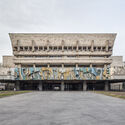
Tbilisi. The Palace of Ceremonies/Rituals, by Victor Djorbenadze (1984-1985). Image © Roberto Conte

The Republic of Georgia’s past is defined by turbulence and a struggle for identity. A former republic of the USSR, Georgia is perhaps best known as the birthplace of Joseph Stalin. The nation's history has been anything but calm, and remnants of the architectural past provide a glimpse into the nation that was.

The country's remaining Soviet landmarks give Georgia an air of being caught between the past and the present. Italian photographers Roberto Conte and Stefano Perego capture this in their photo series, Soviet Architecture Heritage in Georgia, with a compilation of photos that highlights the existing Soviet heritage in Georgian architecture today.

Georgia's Soviet Architectural Heritage Captured by Photographers Roberto Conte and Stefano Perego - Image 1 of 4Georgia's Soviet Architectural Heritage Captured by Photographers Roberto Conte and Stefano Perego - Image 2 of 4Georgia's Soviet Architectural Heritage Captured by Photographers Roberto Conte and Stefano Perego - Image 3 of 4Georgia's Soviet Architectural Heritage Captured by Photographers Roberto Conte and Stefano Perego - Image 4 of 4Georgia's Soviet Architectural Heritage Captured by Photographers Roberto Conte and Stefano Perego - More Images+ 7