1. ArchDaily
  2. South China Sea

South China Sea: The Latest Architecture and News

Unpacking the History of Artificial Islands: The True Cost on the Built Environment

Subscriber Access | 

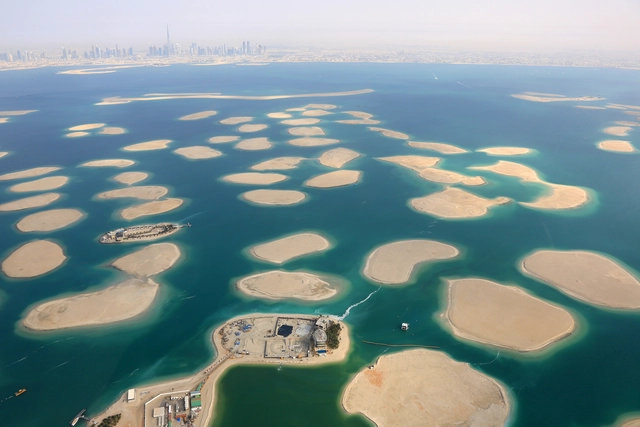
Contrary to common belief, artificial islands have a lengthy historical background in many regions worldwide. This heritage dates back to the reclaimed islands in Ancient Egypt, the hundreds of Stilt crannogs found in Scottish and Irish lakes and waterways, and the ceremonial islands constructed during the Aztec Empire. By definition, an artificial island is an island that has been constructed by humans rather than formed through natural processes. Artificial islands can be built for many different reasons, and these reasons are only increasing as the world faces the looming issue of space scarcity.

In the past, these islands were intended for ceremonial or agricultural purposes, often verging on solutions for urban space. More recently, the islands have been built to mitigate overcrowding, reclaim land, provide new urban expansions, and meet infrastructure and industrial needs. Artificial islands also have certain strategic advantages and economic gains and can lead to geopolitical benefits. However, these types of projects come at a significant cost to our ecosystem, harming the environment in severe and vast ways.

Unpacking the History of Artificial Islands: The True Cost on the Built Environment - Image 1 of 4Unpacking the History of Artificial Islands: The True Cost on the Built Environment - Image 2 of 4Unpacking the History of Artificial Islands: The True Cost on the Built Environment - Image 3 of 4Unpacking the History of Artificial Islands: The True Cost on the Built Environment - Image 4 of 4Unpacking the History of Artificial Islands: The True Cost on the Built Environment - More Images+ 3

Ronald Lu & Partners Designs High-Density Environments Across the Rapidly Urbanising Greater Bay Area in South China

Ronald Lu & Partners Designs High-Density Environments Across the Rapidly Urbanising Greater Bay Area in South China - Featured Image
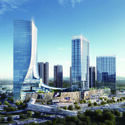
Shenzhen Prince Bay in collaboration with OMA as Design Architect. Image © Ronald Lu & Partners

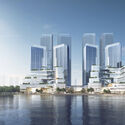
China is undergoing a rapid urbanization process, and in South China’s Greater Bay Area (GBA), it takes the form of a comprehensive development strategy. The region, comprising the cities of Hong Kong, Macau as well as other nine fast-developing municipalities in Guangdong Province, is being transformed into a city-cluster of world importance and architecture practice. Ronald Lu & Partners contributes to this vision through high-density urban developments shaped around principles of sustainability and human-centric design.

Ronald Lu & Partners Designs High-Density Environments Across the Rapidly Urbanising Greater Bay Area in South China - Image 1 of 4Ronald Lu & Partners Designs High-Density Environments Across the Rapidly Urbanising Greater Bay Area in South China - Image 2 of 4Ronald Lu & Partners Designs High-Density Environments Across the Rapidly Urbanising Greater Bay Area in South China - Image 3 of 4Ronald Lu & Partners Designs High-Density Environments Across the Rapidly Urbanising Greater Bay Area in South China - Image 4 of 4Ronald Lu & Partners Designs High-Density Environments Across the Rapidly Urbanising Greater Bay Area in South China - More Images

Marine Urbanism: How China is Building Artificial Islands in the South China Sea

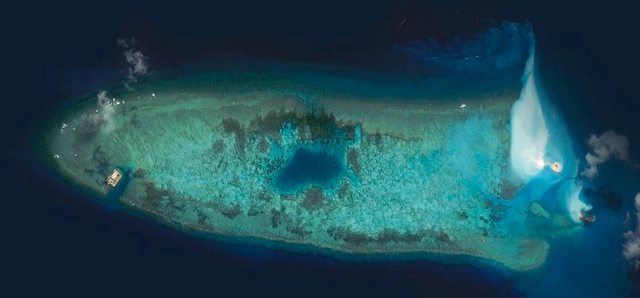
For a recent article in The New York Times, Derek Watkins examines "what China has been building in the South China Sea." Employing high resolution satellite imagery and diagrams, his article investigates why—and how—China have been dredging and dumping sand in a bid to construct inhabitable artificial islands. Political and diplomatic concerns aside, the article also touches upon the technical requirements necessary to reclaim land from the oceans.