1. ArchDaily
  2. Signage

Signage: The Latest Architecture and News

The Line of Fragile Radiance: Neon Light as Atelier, Architecture, and Archive

Subscriber Access | 

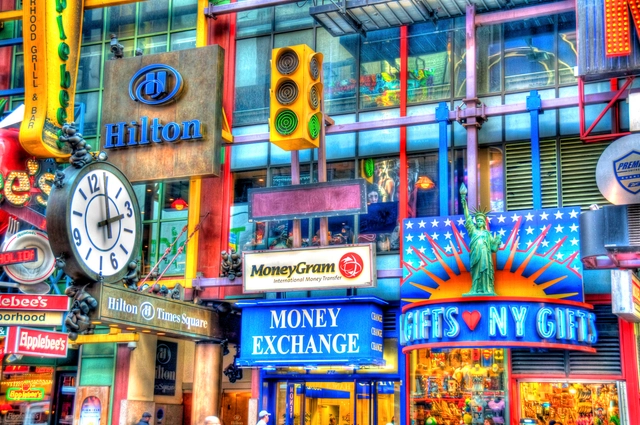
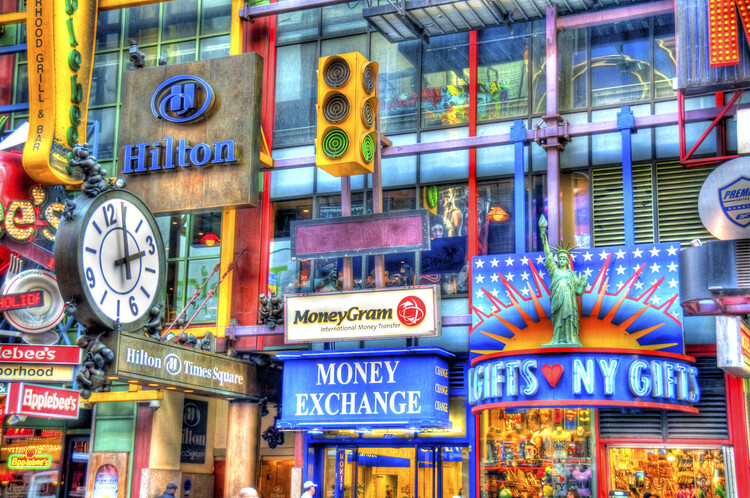
The fragility—and temporal beauty—of neon has captivated audiences since the early 1900s. First shown commercially by French engineer Georges Claude at the 1910 Paris Motor Show, neon spread rapidly, achieving broad popularity in the United States from the 1920s through the 1950s. Mid-century America saw it everywhere: from the casinos of the Las Vegas Strip to roadside motor inns along Route 66 and the spectacle of Times Square. By the latter half of the century, however, many signs were scrapped or left to decay, and numerous municipalities restricted neon as visually garish or power-hungry—despite the technology's comparatively modest energy use. In the U.S., renewed interest in neon arguably didn't meaningfully return until the early 2000s.

In Hong Kong, by contrast, neon was embraced with unusual enthusiasm at a time when it began to lose popularity elsewhere. Even as installation slowed in recent decades—largely due to updated ordinances requiring removal of overhanging signs whose support structures failed to meet safety standards—the city's affinity for neon never fully disappeared.

The Line of Fragile Radiance: Neon Light as Atelier, Architecture, and Archive - Image 1 of 4The Line of Fragile Radiance: Neon Light as Atelier, Architecture, and Archive - Image 2 of 4The Line of Fragile Radiance: Neon Light as Atelier, Architecture, and Archive - Image 3 of 4The Line of Fragile Radiance: Neon Light as Atelier, Architecture, and Archive - Image 4 of 4The Line of Fragile Radiance: Neon Light as Atelier, Architecture, and Archive - More Images+ 16

The City as Interface: How Legible Cities Rethink Wayfinding Using UX Design

Design disciplines, like user experience (UX) design, have evolved to excel at devising experiences that make digital interfaces navigable. They accomplish this through a deep understanding of user needs and by mapping user journeys with meticulous attention to detail. The city represents a physical interface experienced by multiple users - residents, tourists, people of various ages and genders each experiencing it uniquely. In a time where digital interfaces are crafted for frictionless user experiences, why do many cities remain challenging to navigate?

The City as Interface: How Legible Cities Rethink Wayfinding Using UX Design - Image 1 of 4The City as Interface: How Legible Cities Rethink Wayfinding Using UX Design - Image 2 of 4The City as Interface: How Legible Cities Rethink Wayfinding Using UX Design - Image 3 of 4The City as Interface: How Legible Cities Rethink Wayfinding Using UX Design - Image 4 of 4The City as Interface: How Legible Cities Rethink Wayfinding Using UX Design - More Images+ 5

The Strategic Use of Color in Environmental Graphic Design

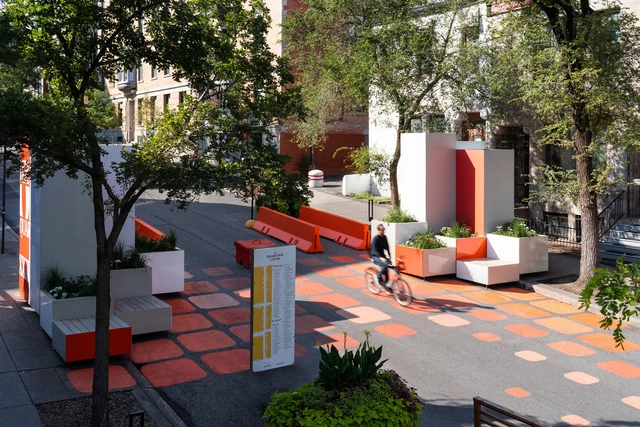
Our daily lives involve constant communication with the city. As we move through different spaces, we ask ourselves questions like "Where am I now?", "Where am I headed?", "What am I looking for?", "What is this building for?", and "How do I experience this space?" While spatial encounters may feel intuitive, environmental graphic design (EGD) provides the answers by serving as an important interface between us and the built environment. It involves the design of graphic elements that merge with architectural, landscape, urban, and interior designs to make spaces more informative, easier to navigate, and memorable. EDG comprises three major elements: text, shape, and color. Text and shapes typically encapsulate the graphic information, but color projects it, amplifies it, and helps communicate it within the packed scenes of the city. In spatial experiences, we perceive colors first, since our senses mostly register visual sensations. Therefore, the strategic use of color is critical for environmental graphics to provide a layered experience of identity imagery, sense of place, and emotional connection.

The Strategic Use of Color in Environmental Graphic Design - Image 1 of 4The Strategic Use of Color in Environmental Graphic Design - Image 2 of 4The Strategic Use of Color in Environmental Graphic Design - Image 3 of 4The Strategic Use of Color in Environmental Graphic Design - Image 4 of 4The Strategic Use of Color in Environmental Graphic Design - More Images+ 5

Finding The Right Path: 20 Public Environments That Reveal The Secrets of Successful Wayfinding

Subscriber Access | 

It’s easy to feel lost and anxious in a new environment. Even with the satellite-accurate quality of modern map apps in our back pockets, modern humans still get stressed when their internal map of the immediate area draws a blank. 

While digital maps help us to find the fastest route through streets, when our need for direction is most urgent – such as finding the right department in a vast hospital campus, the relief of a toilet in a foreign airport, or the right platform 30 seconds before a train departs – even with innovative IPS technology, digital interfaces still come a distant second to well-placed signs or other, more intuitive, solutions.

Finding The Right Path: 20 Public Environments That Reveal The Secrets of Successful Wayfinding - Featured ImageFinding The Right Path: 20 Public Environments That Reveal The Secrets of Successful Wayfinding - Image 1 of 4Finding The Right Path: 20 Public Environments That Reveal The Secrets of Successful Wayfinding - Image 2 of 4Finding The Right Path: 20 Public Environments That Reveal The Secrets of Successful Wayfinding - Image 3 of 4Finding The Right Path: 20 Public Environments That Reveal The Secrets of Successful Wayfinding - More Images+ 21

Universal Signage: The First Step in Making Cities More Accessible

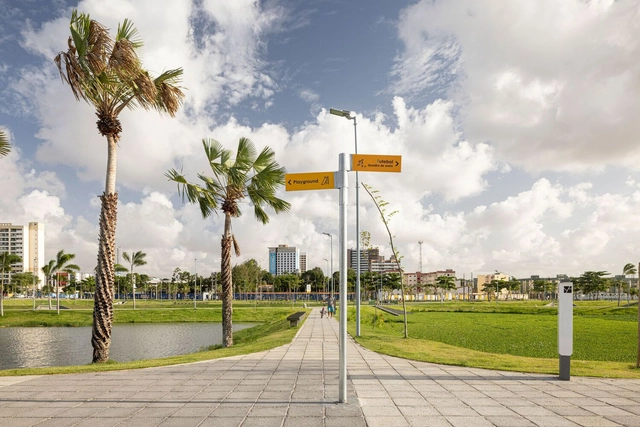
Of all the steps a city can take to make itself more pedestrian-friendly, developing a integral system of signage is both a quick and easy improvement that makes a world of difference--as shown by initiatives like Legible London, New York's WalkNYC, or Rio on Foot, in Río de Janeiro.

Avanti-Avanti Studio: "Design for All, the Start of the Creative Process is Through Individual Diversity"

Avanti-Avanti Studio is a design studio dedicated to the development of creative communication strategies, particularly specialized in “Design for All.” Founded by Alex Dobaño (graphic designer and member of the Design For All Foundation) and Elvira Muñoz (architect), the duo leads a multidisciplinary team of professional people in communication, design, and technology, and work with companies and institutions specialized in leisure, tourism, culture, museums, and cities. They describe their practice as a meeting point, where professionals from different fields come together for every new venture, to ensure that the built environments are suitable and inclusive for anyone experiencing them.

We talked to Alex, founder and creative director of the studio, to learn more about their work and the importance of introducing the Design for All concept in the integrated space design projects.

A New Guide by Architects Explains What Makes a Space "Instagrammable"

When you tap an Instagram geolocation, the nine most popular posts in that location float to the top. Sometimes, there's an uncanny similarity to these posts: near-identical pictures of smoothie bowls, tiled floors, or neon signs. In part, a place’s popularity on Instagram is a domino effect—one person posts a picture of a mural (Wynwood Walls, anyone?), and then everyone does. But a new Instagram Design Guide from Valé Architects suggests that some design features might be inherently more Instagrammable than others. Valé’s guide is interesting for its quasi-scientific analysis of Instagram aesthetic, but it also has real implications in the architecture world; a building’s popularity on social media (in this case, its Instagramability) can influence its perception in the non-digital world. Here are some of the traits that Valé says make a space successful on Instagram: