1. ArchDaily
  2. Shopping Centers

Shopping Centers: The Latest Architecture and News

Escapism from the Streets: How Air-Conditioning Reshaped the Asian City

Audio available

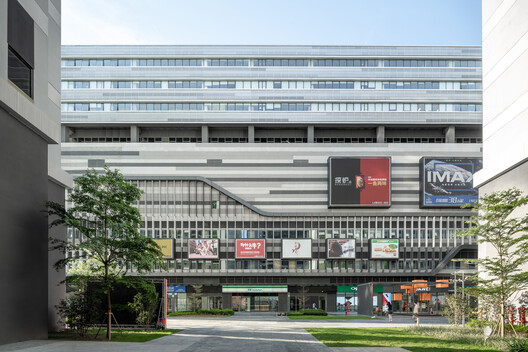
In many Asian cities, the summer climate can increasingly be experienced from a distance. In Hong Kong, it is possible to move from an apartment tower through a podium mall, enter the Mass-Transit-Railway system (MTR), arrive beneath another commercial complex, and continue through enclosed footbridges or underground passages while encountering remarkably little of the atmosphere outside. Heat, humidity, rain, and seasonal variation remain present, but they can be largely bypassed through a continuous network of conditioned interiors.

Over several decades, air-conditioning has expanded from a technology for cooling individual rooms into an infrastructure capable of producing an alternative urban environment. This has been particularly visible in parts of East Asia and South East Asia, where transit-oriented development frequently combines railway stations, shopping centres, housing, offices, and other everyday services within interconnected complexes. The Railway plus Property model has helped institutionalize this relationship between transport and development, creating districts where movement through the city is often inseparable from movement through privately managed interiors.
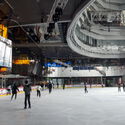
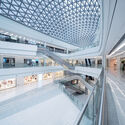
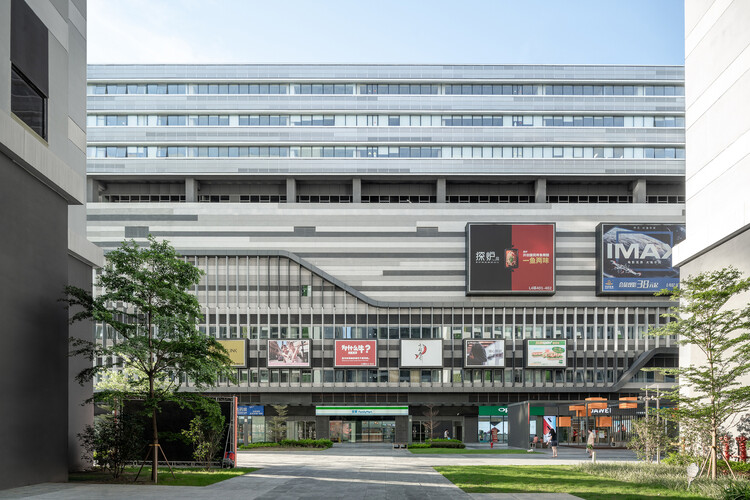
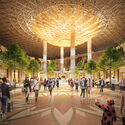
Escapism from the Streets: How Air-Conditioning Reshaped the Asian City - Imagem 1 de 4Escapism from the Streets: How Air-Conditioning Reshaped the Asian City - Imagem 2 de 4Escapism from the Streets: How Air-Conditioning Reshaped the Asian City - Imagem 3 de 4Escapism from the Streets: How Air-Conditioning Reshaped the Asian City - Imagem 4 de 4Escapism from the Streets: How Air-Conditioning Reshaped the Asian City - More Images+ 8

Foster + Partners Reveals Masterplan and Shopping Hub for Iași's Palace of Culture Area in Romania

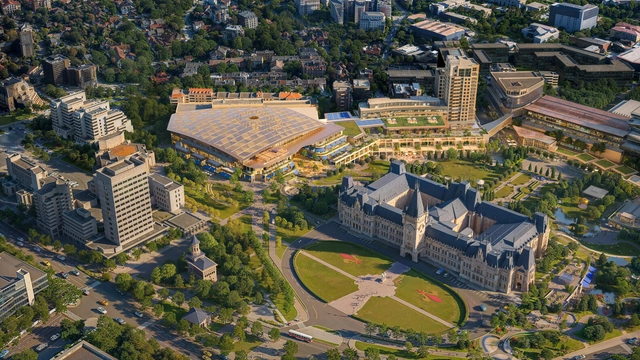
Foster + Partners has just released the design for the redevelopment of Palas Iași, a major mixed-use development in Iași, a city in eastern Romania. The proposal includes a new masterplan centered around the historic Palace of Culture and aims to improve urban connectivity, enhance public green spaces, and upgrade the existing commercial infrastructure. Developed in collaboration with Romanian developer IULIUS, the project aims to bring together retail, cultural, and landscape elements within a unified and accessible framework.

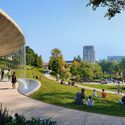
Foster + Partners Reveals Masterplan and Shopping Hub for Iași's Palace of Culture Area in Romania - Imagem 7 de 4Foster + Partners Reveals Masterplan and Shopping Hub for Iași's Palace of Culture Area in Romania - Imagem 5 de 4Foster + Partners Reveals Masterplan and Shopping Hub for Iași's Palace of Culture Area in Romania - Imagem 6 de 4Foster + Partners Reveals Masterplan and Shopping Hub for Iași's Palace of Culture Area in Romania - Imagem 9 de 4Foster + Partners Reveals Masterplan and Shopping Hub for Iași's Palace of Culture Area in Romania - More Images+ 5

Heatherwick Studio Reimagines Seoul's Hanhwa Shopping Mall in South Korea

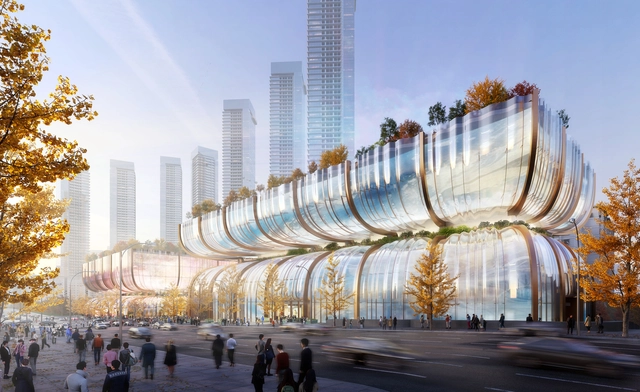
Heatherwick Studio has just announced its design for transforming Seoul’s renowned Hanwha Galleria. Following a competition aimed at reimagining six sites across the South Korean capital, Heatherwick Studio seeks to highlight South Korea’s rising status as a global cultural hub. Featuring two twin hourglass-shaped structures, the proposed design challenge traditionally designed luxury department stores worldwide.

From the Streets to the Internet: The History of Commerce and Its Relationship With the Territory

Subscriber Access | 

Commerce is a human activity practiced by societies since the beginning of evolution. Exchanges were made between products negotiated by entire communities at first. They began to be based on a common currency and practiced individually over time, from family to family. In one way or another, this activity is a characteristic of civilization and even influences our territorial organization. Historically practiced in outdoor spaces, commercial activity defined many spatial configurations.

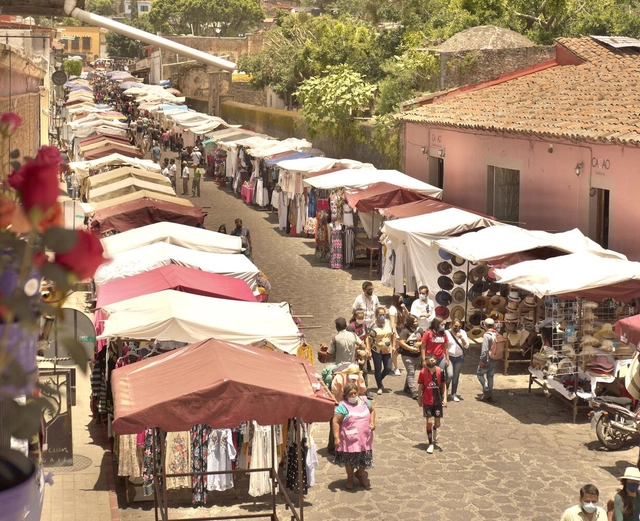
From the Streets to the Internet: The History of Commerce and Its Relationship With the Territory - Image 1 of 4From the Streets to the Internet: The History of Commerce and Its Relationship With the Territory - Image 5 of 4From the Streets to the Internet: The History of Commerce and Its Relationship With the Territory - Image 3 of 4From the Streets to the Internet: The History of Commerce and Its Relationship With the Territory - Image 7 of 4From the Streets to the Internet: The History of Commerce and Its Relationship With the Territory - More Images+ 4