
-
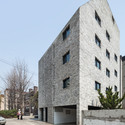
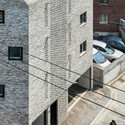
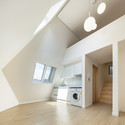
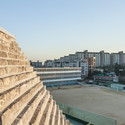
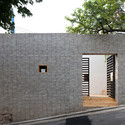
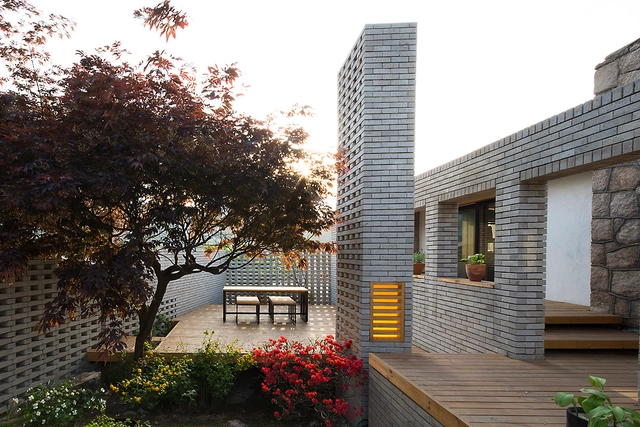
Architects: Moohoi Architecture Studio
- Area: 298 m²




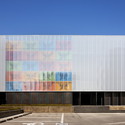
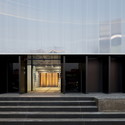
Built and exhibited at “Data Curation” in the Museum of Art at Seoul National University, ‘Mood Map’ visualizes the moods of Korean people in color and light through textual analysis of their Tweets on Twitter. Designed by E/B Office, they created a custom software program in Processing that will search and analyze Tweets in Korean language through the Twitter API. More images and architects’ description after the break.



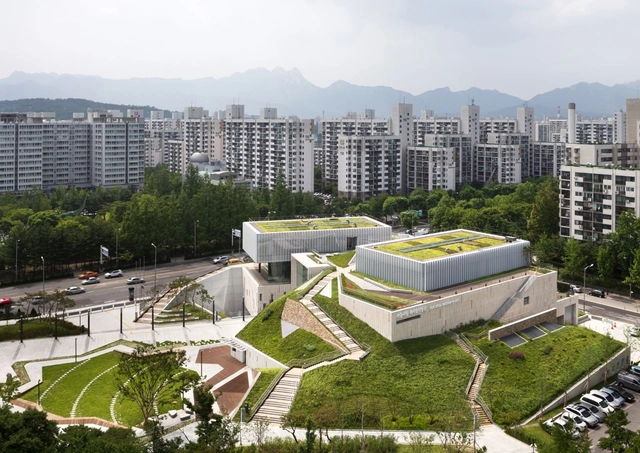
Open to students and professionals, the Seoul Institute just launched the international ideas competition for the first step to changing the Mapo Oil Reserve Base, a relic of the industrial era. Located in Sangam, this area was once an abandoned mountain of waste, but now stands as a state-of-the-art city that leads the future of Seoul. Aiming to achieve a communication and co-existence between people and nature, the oil reserve base will be returned to the citizens through the ideas of students and professionals who reflect the meaning and value of the land and regenerate the space to meet this new era’s core values of environment & ecology and sustainable future. The deadline for submissions is August 23. To register, and for more information, please visit here.

Taking place at the Seoul Museum of Art, the 'Total Theatre: Interspace Dialogue' exhibition is featuring the Plushscape installation by Max Kuo of ALLTHATISSOLID. Curated by Regina Shin, the exhibition, which is also a film festival, borrows Gropius and Piscator’s concept of a new kind of theatre to realize a cinema inside of the white cube of a museum. In response to the curatorial agendas of Interspace Dialogue, Plushscape seeks to agitate and amplify the somatic conditions of the viewers’ bodies providing more spatial possibilities in their haptic response to the screening films. More images and architects' description after the break.


According to Business Insider and a number of other real estate development outlets, the "Dream Hub" project in Seoul Korea that drew designs from internationally renowned architects including Daniel Libeskind -designer of the master plan - MVRDV, Dominique Perrault, BIG, REX, KPF and Tange Associates is on the verge of collapse. The Yongsan Development Corporation reportedly defaulted on a major loan repayment, citing difficulties in raising funds due to the real estate slump since the 2008 global financial crisis. The collapse of the project is still speculative, as it is unclear how the next round of loans that are to mature in June will fare.
The $28 billion real estate "Dream Hub" project was to develop 56-acres in central Seoul into a modern business hub. In its planning it included shopping malls, hotels, department store, apartment blocks, and mixed-use office towers. Follow us after the break for a recap of the projects that were planned for this development.

Awarded yesterday with the 2013 Pulitzer Prize for criticism, Philip Kennicott has built an honorable reputation as a art and architecture critic for Washington Post’s Style section. One of his most recent works, Music Holl: A Copper Clad Pavilion in Seoul recounts the inspiration behind Steven Holl’s award-winning Daeyang Gallery and House in Seoul.
Designed as an experiment on “the architectonics of music,” the basic geometry of the Daeyang Gallery and House was inspired by Istvan Anhalt’s 1967 Symphony of Modules - a uniquely transcribed sheet of music found in John Cage’s contemporary music compendium, Notations. Reminiscent of the “blocky and shard-like shapes” of Anhalt’s sketch, Holl’s design features three copper-clad pavilions punctured by a symphony of carefully placed, rectangular skylights that animate the interior with “bars of light”. As Kennicott describes, Holl uses music as a “powerful metaphor for the dynamic unfolding of experience” (captured in this film by Spirit of Space).
Read Kennicott’s Music Holl: A Copper Clad Pavilion in its entirety here on Dwell. Continue after the break to compare Steven Holl's sketch above with Anhalt’s Symphony of Modules.