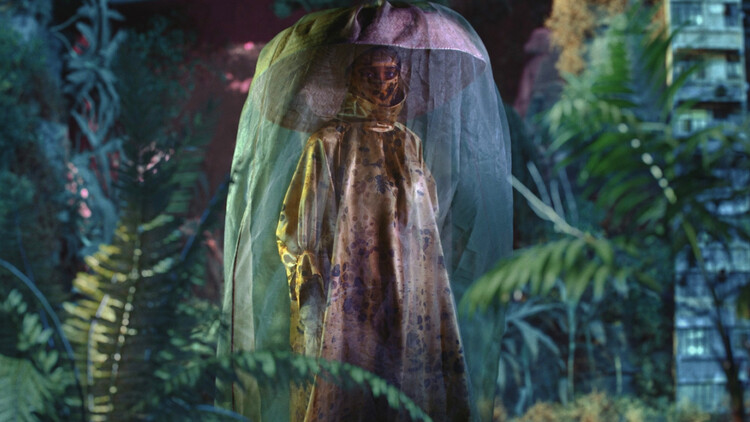
Australian artist, director, and BAFTA-nominated producer Liam Young creates imaginary worlds as a way of thinking through the futures we fear, desire, and are already making. As a creator and designer of atmospheres, he proposes speculative landscapes reflecting the possibilities of a world to come, whether ideal or truthfully unsettling. In his worldbuilding practice across the film, television, and video game industries, fiction becomes a tool for navigating the environmental urgencies of the present. He is considered a "futurist" working across design strategies, technological scenarios, and collective imaginations, grounded in his academic research yet reaching a wider audience in exhibitions such as "In Other Worlds" at the Barbican Centre in London and "Age of Nature" at the Danish Architecture Center in Copenhagen. In February 2026, he was interviewed by Marc-Christoph Wagner for Louisiana Channel, where he shares his visions of our future: from architecture consolidating as a boutique industry to the need for a new kind of planetary punk at the scale of the climate crisis.
Science Fiction: The Latest Architecture and News
"My Solutions Are Not Polite:" Liam Young on Architecture in the Age of Polycrisis in Louisiana Channel Interview
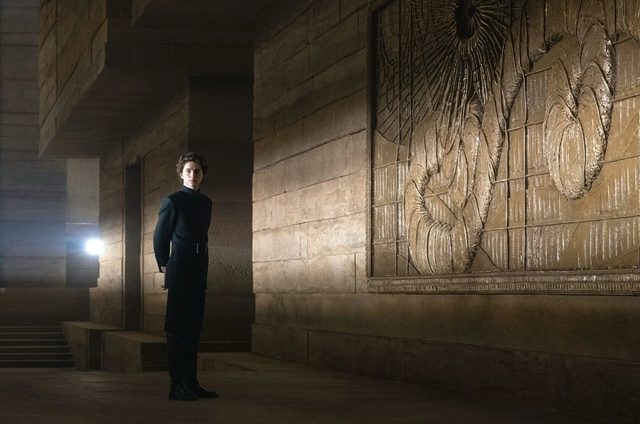
The Architecture of Dune: Leveraging the Past to Create a Myth of the Future

Imagine a world thousands of years into the future, one where humanity has conquered planets from galaxies away, only to default to a neofeudalistic social order in a constant power struggle, all built upon an intricate tapestry of cultures and religions and set in a harsh yet vivid landscape that becomes a character in and of itself. This was the challenge faced by director Denis Villeneuve and production designer Patrice Vermette in creating the cinematic adaptation of Frank Herbert's 1965 novel. The two Dune movies, released in 2021 and 2024, were conceived as a whole and therefore share a coherent style and cinematic expression. Beyond aesthetics, the environment and architecture of Dune present a lived-in, believable world, one that anchors the action and characters, silently offering invaluable insights into the values and mythology of each civilization.
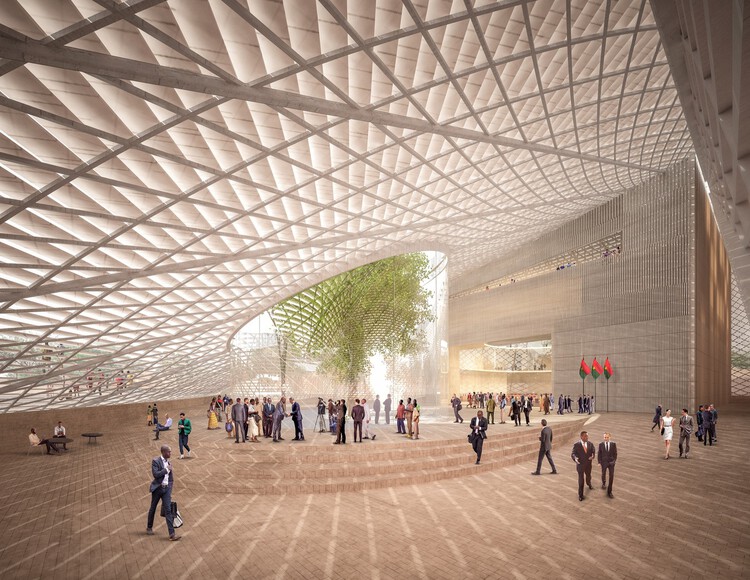
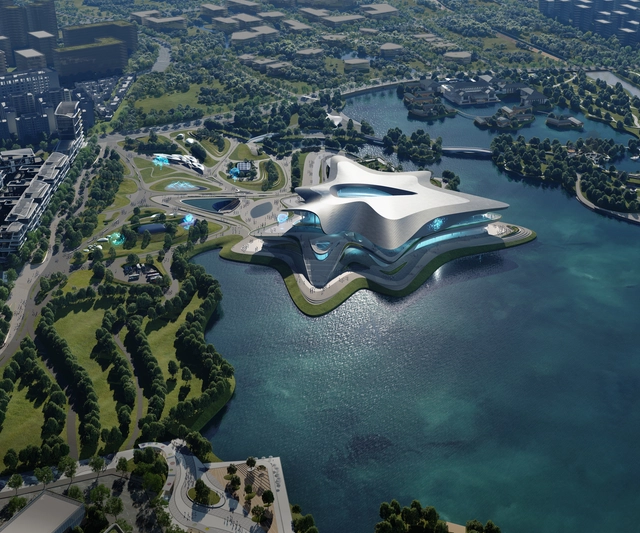
Zaha Hadid's, Under Construction, Chengdu Science Fiction Museum Will Host Worldcon 2023

The world’s largest science fiction event Worldcon will take place in the Chengdu Science Fiction Museum, designed by Zaha Hadid Architects. Under construction, the 59,000 sq. m venue that will host the 81st annual World Science Fiction Convention and the Hugo Awards, is set to become a vibrant center of innovation and gathering place for the “leading incubator of science fiction writing in China”. In fact, the city of Chengdu, home to over 20 million residents, is transforming into an important global center of scientific innovation and research.
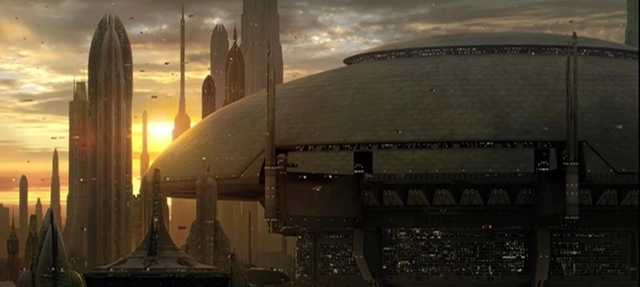
Exploring the Architecture of Star Wars: In a Galaxy Far Away, Using the Tangible for Futuristic Visualizations

Depicting architectural visualizations of the future is no easy feat, so it makes much sense for designers to use aspects of our existing architecture as a foundation for these fictional worlds. Despite recent advancements in terms of animation technologies and CGI, there is still substantial use of existing architecture to provide tangible structural elements in film.
In terms of recycling architectural aesthetics, elements of the past and future are often integrated to create a hybridized style, an amalgamation of Retro, Dystopian, Modernist and Futuristic themes. From the resurgence of ancient pyramids and temples, to skylines reminiscent of the city of New York, visualizations vary depending on different notions of what our future may look like.
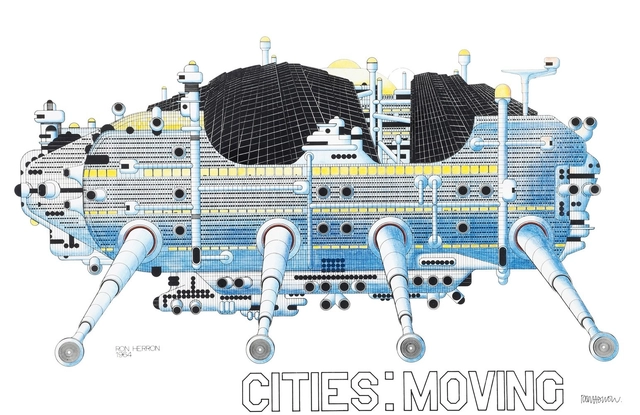
Architectural Drawings: Imagining the Future

There’s the iconic Cenotaph for Newton drawing, the evocative monochrome illustration by Etienne-Louis Boullée. There are the experimental drawings of Lebbeus Woods, evocative urban visions of a distant future. There are also the well-known drawings of Le Corbusier’s utopian Ville Radieuse. Drawing, and in turn architectural visualizations, have always been a useful medium with which to contemplate architectural concepts of the future. It is fascinating to look back at the architectural visualizations of the future done in the past.
Black Mirror: What Can it Teach us About the Future of Architecture?

Unlike its TV and film counterparts, which imagine the future as an over-populated dystopian nightmare overrun with violence and chaos, Black Mirror paints a picture of a near future that aligns far more with our current reality--and nowhere is this more apparent than in the architecture shown in the series.
New Images of MAD's "Spaceship" Lucas Museum Released as Construction Breaks Ground in Los Angeles

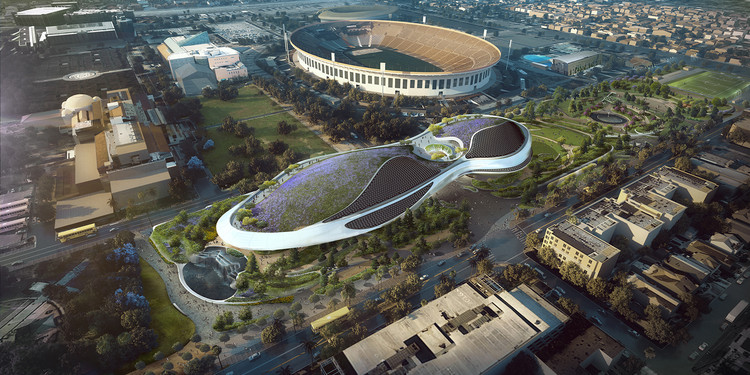
The Lucas Museum of Narrative Art, designed by MAD Architects, has broken ground in Los Angeles, California. Founded by “Star Wars” creator George Lucas, and standing at the gateway to the city’s Exposition Park, the scheme is envisioned as a “futuristic spaceship” landing on the site’s natural environment.
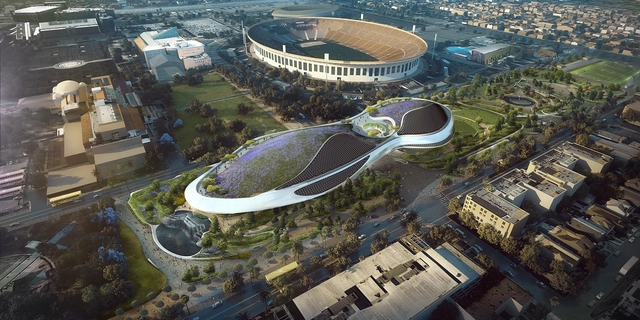
The building’s interior has been designed as an expansive, open cave, flooded with natural light from skylights above. At least $400 million worth of art will be housed in the museum, including over 10,000 paintings, illustrations and movie memorabilia. The first floor and roof will be designated as public areas for visitors to exercise, relax, and “directly experience nature in the urban environment."
SCI-FI / CLOG

Turn the bend and the foreignness of the thing reveals itself, with its gunmetal-colored facade, surfaces jutting at oblique angles, and curves and lines that suggest automotive racing streaks or cooling pipes at a power-generation facility. It would fit right in with a fleet of Star Destroyers blasting some unfortunate rebel ship with turbolasers. -- The Atlantic Cities’ John Metcalfe, describing Zaha Hadid’s Library and Learning Center in Vienna
When architecture and Sci-Fi are mentioned in the same breath, it’s usually only to achieve an amusing, surface-level comparison. Zaha’s library? A “Star Destroyer.” OMA’s Casa da Música? A Sandcrawler. And while these unlikely likenesses certainly speak to Sci-Fi’s hold on architecture’s imagination, they don’t really delve into the potential Sci-Fi holds as a source of architectural inspiration.
Enter CLOG: SCI-FI. As does each issue of CLOG, SCI:FI “slows things down,” taking a good-hard look at architecture and science fiction’s long, fascinating relationship. And while it certainly provides many entertaining meanders into comics, literature, and film (including a peek into 2001: A Space Odyssey by ArchDaily contributors INTERIORS), SCI:FI really shines when it’s digging below the surface, exploring how both architecture and sci-fi reveal the dilemmas, fears, and desires of our society today.
Through the Lens: Sci-Fi & Architecture

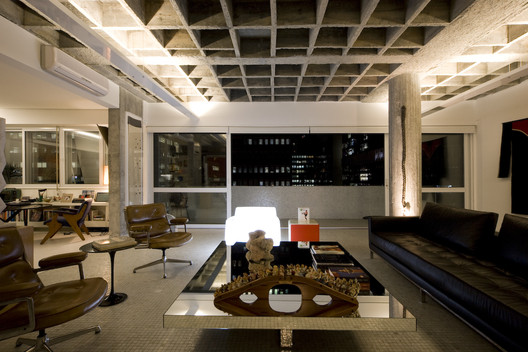
You would think that of all film genres, Science Fiction would be the one least likely to feature real buildings. It stands to reason that production designers would want to avoid connections with things so grounded in reality. But in fact, there is somewhat of a tradition of using modern architecture as a foundation for the creation of fictional film worlds.
Science fiction relies on an audience believing in the world they are presented with. Clever camera work, perspective design, and temporary materials can only do so much. What often tips the balance in favour of using real, Modern buildings - rather than a temporary set - is the authenticity and atmosphere they provide the Science Fiction genre.
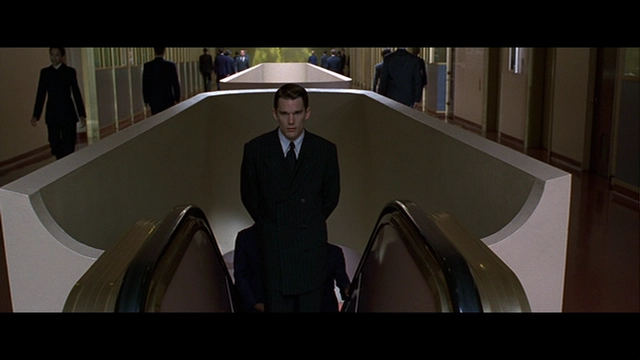
Read about Modern architecture in Sci-Fi films Blade Runner, Gattaca, Aeon Flux, and more, after the break...