Every so often, the field of architecture is presented with what is hailed as the next “miracle building material.” Concrete enabled the expansion of the Roman Empire, steel densified cities to previously unthinkable heights, and plastic reconstituted the architectural interior and the building economy along with it.
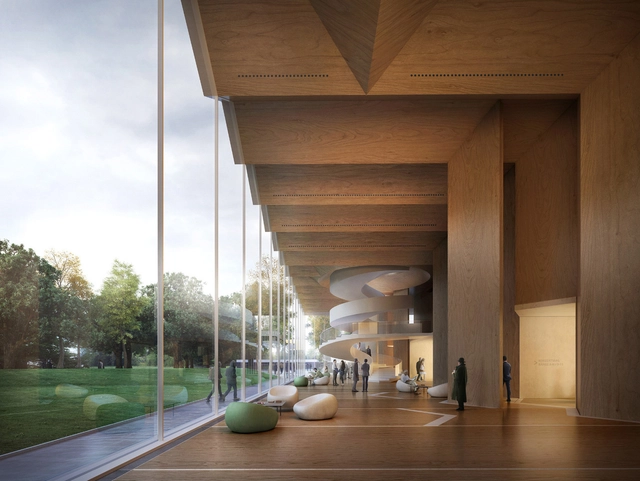
But it would be reasonable to question why and how, in the 21st century, timber was accorded a miracle status on the tail-end of a timeline several millennia-long. Though its rough-hewn surface and the puzzle-like assembly it engenders might seem antithetical to the current global demand for exponential building development, it is timber’s durability, renewability, and capacity for sequestering carbon—rather than release it—that inspires the building industry to heavily invest in its future.
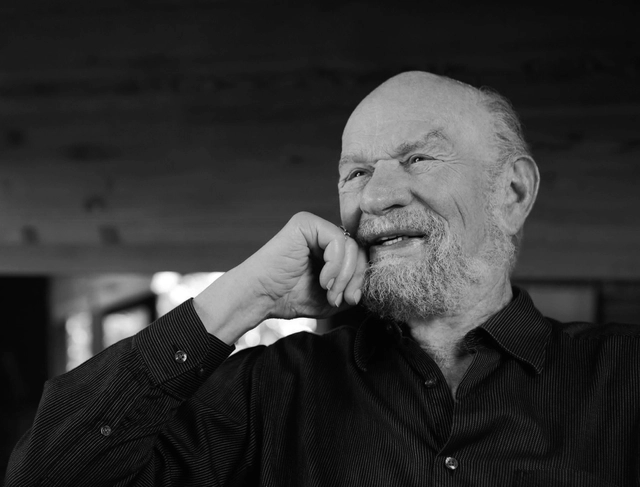
Architect, educator and founding director of SCI-Arc, Ray Kappe, FAIA, passed away last week at the age of 92. Kappe experienced lung failure after battling pneumonia. As a renowned architect, Kappe designed more than 100 residences, pioneered a new approach to architectural education, and shaped both Los Angeles and California Modernism as we know it.
The annual DesignIntelligence architecture school ranking for 2020 classified the establishments according to the “most admired” rather than the “best”, for the second year in a row. The subjective classification is based on the responses of hiring professionals.
Claude Parent – Visionary Architect, exhibition and book discussion at SCI-Arc
On the occasion of the book release of Claude Parent: Visionary Architect (Rizzoli New York), we are pleased to invite you to discover the exhibition Claude Parent: Visionary Architect held at SCI-Arc’s Kappe Library, celebrating French architect Claude Parent’s work. This exhibition includes a full-scale ramp installation based on the architect’s own oblique apartment interior, and presents a selection of never before seen original drawings and sketches, as well as photographs of iconic projects and publications on Parent's work.
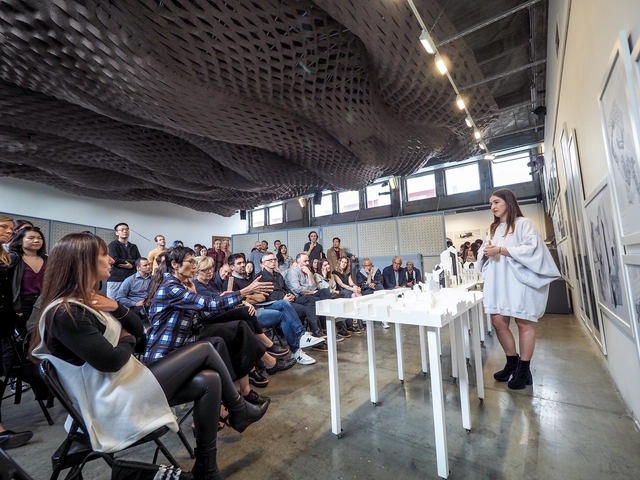
On April 19th and 20th, fifth year SCI-Arc undergraduates presented their final thesis projects to panels of faculty and guest juries comprised of some of the top architects, critics, and theorists in the field – including Undergraduate Program Chair Tom Wiscombe, Undergraduate Thesis Coordinator Jenny Wu, and Special Thesis Advisor and former SCI-Arc Director Neil M. Denari. This year’s thesis advisors were Kristy Balliet, Marcelo Spina, and Peter Testa.
https://www.archdaily.com/916821/undergraduate-thesis-weekend-wraps-up-sci-arc-spring-semesterSponsored Post
For its second year as part of the EDGE Center for Advanced Studies, the MS in Architectural Technologies program at SCI-Arc continued connecting issues of disciplinary relevance with the most advanced technological developments reshaping society and culture at large.
Taught by Program Coordinator Marcelo Spina and Casey Rehm, the program’s final degree studio “The Future of Experience: Speculations on New Cultural Centers” explored how artificial intelligence (AI) and its various forms of automation allow us to visualize, learn from, and reconfigure the world.
https://www.archdaily.com/911426/sci-arc-studio-connects-issues-of-disciplinary-relevance-with-advanced-technological-developmentsSponsored Post
Blockbuster movies and buildings are somewhat related; both take multi-million-dollar budgets to produce, individuals work in large teams and coordinate with one another towards a single deliverable, and they both contribute to the development of society and culture. The relationship between film and architecture is prolific, especially when considering the work being produced at SCI-Arc.
SCI-Arc's B.Arch thesis students recently presented projects in progress at midterm reviews aimed at fostering discussion, debate, and direction. The culmination of the school's five-year B.Arch curriculum, the year-long thesis program challenges the next generation of designers to take firm positions, form fresh perspectives, and conceive solutions for issues that architects will face in the future.
SCI-Arc EDGE, Center for Advanced Studies in Architecture, will be graduating its first students at the end of this summer. All four postgraduate programs are currently in the final semester of the three-semester sequence and students are busy wrapping up their final projects.
SCI-Arc is pleased to announce MAIN EVENT 13 returns to its Downtown Los Angeles Art District campus (960 E 3rd St, Los Angeles, CA 90013) supporting their endowment scholarship fund. This year, MAIN EVENT 13 will showcase SCI-Arc’s annual schoolwide exhibition of final thesis projects and presentations of its most talented and promising young minds. This most anticipated event will also will also recognize two stand-out pioneers in the field of design and architecture - famed Pritzker-Prize-winning architect and founder of Morphosis, Thom Mayne and arts advocate Merry Norris, founder of Merry Norris Contemporary Art.
Every summer, SCI-Arc opens its doors to students and young professionals from multiple disciplines and diverse backgrounds seeking to explore the field of architecture from the school’s distinctive vantage point of hands-on design and experimentation. The Making+Meaning summer program offers participants a unique opportunity to be a part of the vibrant design community at SCI-Arc as they work on projects to jumpstart or enhance a design portfolio. This immersive workshop runs from July 10th – August 4th and is now open for registration.
Wan-Hsuan Kung in Dwayne Oyler Studio. Image Courtesy of SCI - Arc
SCI-Arc, one of the few remaining schools whose undergraduate program culminates in a thesis project, asks students to locate their position within the discipline, theorize a problem around that position, create a project that tests their theory, and ultimately to present and defend that position to an audience of future peers and professionals. It’s a cathartic endeavor that is to some degree fraught with anxiety, as defining a position and speculating on the future of the discipline can be a rather daunting endeavor.
In November, SCI-Arc Director Hernan Diaz Alonso announced the launch of SCI-Arc EDGE, Center for Advanced Studies in Architecture. Beginning in fall 2016, the new center is intended to serve as a platform for multiple postgraduate programs. Diaz Alonso sat down to talk about SCI-Arc EDGE, the philosophy behind it, and the fields of study it will offer.
https://www.archdaily.com/778022/sci-arc-edge-center-for-advanced-studies-in-architectureSponsored Post
A dynamic post-professional program in Emerging Systems, Technologies, & Media (ESTm) offered by the Southern California Institute of Architecture (SCI-Arc) in Los Angeles has been charged with examining core contemporary issues facing architecture and design today. Spanning topics from advanced manufacturing methodologies to new building systems, this one year Master of Design Research track allows professionals to rethink architecture and design through the experimental hands-on approach of the SCI-Arc community.
The ESTm program tests new levels of environmental performance as it prepares students to successfully integrate formal, technical, logistical, and material processes into advanced architectural designs. The program is open to graduates in architecture, engineering, product design, computer sciences and other professionals who wish to develop advanced research and design skills in light of continuously evolving materials and new production paradigms of the 21st century.
https://www.archdaily.com/611103/sci-arc-offers-emerging-systems-technologies-and-media-post-professional-programSponsored Post
The Southern California Institute of Architecture (SCI-Arc) has appointed Hernan Diaz Alonso as the Los Angeles architecture school’s new Director beginning September 2015. Alonso, principal of Xefirotarch and educator widely credited for spearheading the transition of SCI-Arc to digital technologies, will succeed architect Eric Owen Moss who has served as the school’s director since 2002. Continue after the break to watch Alonso’s “New Director Presentation” and preview a selection of his work.
In 2008, a group of students from SCI-Arc put out a proposal for a series of mixed income city housing projects for Dubai. In their design, wealthy residents would live in apartments on the building’s perimeter, with natural daylight and views of the city, while low-income housing tenants would live in the core of the building, isolated from “the upper class.” The proposal was a parody aimed at the classist design of residential development in Dubai, but what unsettled the SCI-Arc students was that their proposal generated almost no controversy. Inspired by the recent approval of a similar 'poor door' in a project in New York, this article from the LA Times covers that parody, and shows that both at home and abroad, residential design is slipping towards socio-economic segregation.
Apertures reflect a current architectural discourse of digital ecologies, emphasizing the relationship between the natural world and advances in digital technology, which leads to a new type of interactive, organic buildings. The installation focuses on a symbiotic relationship between nature, building morphologies, and material expression.
Rooted in Baumgartner+Uriu’s work and ongoing research, Apertures challenges the notion of an architectural opening as a static object. Moreover, it aims to redefine the DNA of a window both in terms of its appearance and materiality, as well as its nature as an object in continuous flux, responding to its environment through movement or sound. The pavilion and its apertures are designed to physically engage the visitor with the architectural work through sensors and sound feedback loops creating an immersive spatial environment in which the visitor can experience their own biorhythms.
In the early years of COOP HIMMELB(L)AU, Raimund Abraham was a role model - later on a friend. On the occasion of the Austrian government "Staatspreis" awarded to Raimund Abraham, Wolf D. Prix held the speech of honor, and characterized him as one of the main representatives of the Austrian architectural approach of celebrating space.