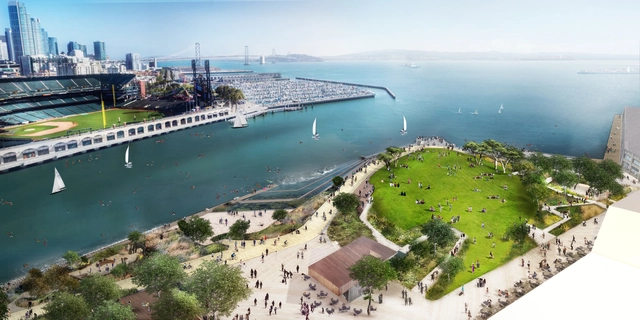
Overview – Daytime . Image Courtesy of Mission Rock/ China Basin Park
The first phase of the planning vision for Mission Rock in San Francisco was initiated. The masterplan developed by the San Francisco Giants and Tishman Speyer put in place four buildings designed by internationally renowned architecture firms MVRDV, Studio Gang, Henning Larsen, and WORKac. The scheme also includes a 5-acre waterfront park by SCAPE.
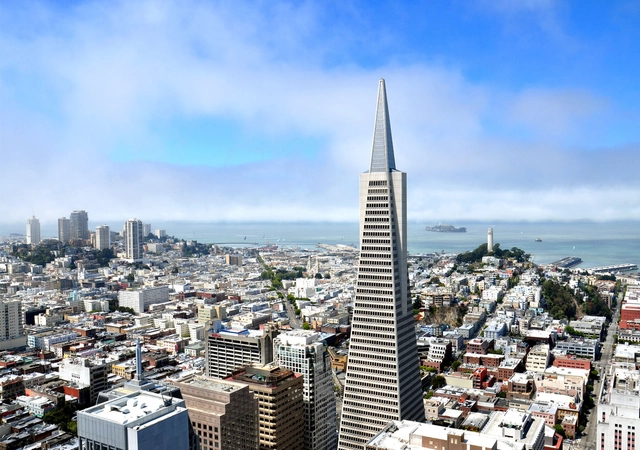
For the first time, San Francisco's iconic Transamerica Pyramid has been listed for sale. Built in 1972, the 48-story Brutalist-style project was designed by American architect William Pereira. The triangular-shaped skyscraper was the tallest building in San Francisco for nearly half a century, until it was surpassed by Salesforce Tower in 2018. Selling for $600 million, the building has become a landmark in the skyline of San Francisco.
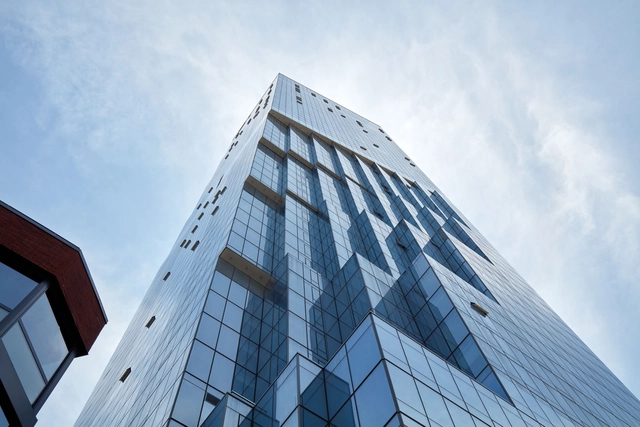
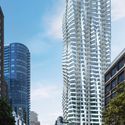
Studio Gang is celebrating a significant milestone with the topping out of their twisting high-rise MIRA tower in San Francisco. Construction of the 400-foot-tall tower began in mid-2017, with steady progression leading to projected occupancy in late 2019. The scheme's design is centered on the evolution of the bay window element, a feature common to San Francisco’s early houses. The bay window is reimagined in a high-rise context, twisting across the full height of the tower to offer views across the city.
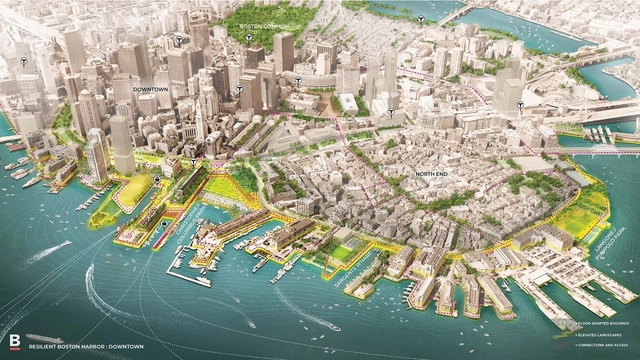
As the world recognizes Earth Day 2019, the public discourse is increasingly dominated by citizen action across the world manifesting a widespread fear and frustration at a perceived lack of action by governments and officials to confront the issue forthrightly. From the Extinction Rebellion protests that have gripped London, to school student strikes across 125 countries, global cities are increasingly finding themselves on the front line of a battle to limit the effects of global warming.
https://www.archdaily.com/915510/how-three-major-us-cities-are-preparing-for-climate-changeNiall Patrick Walsh
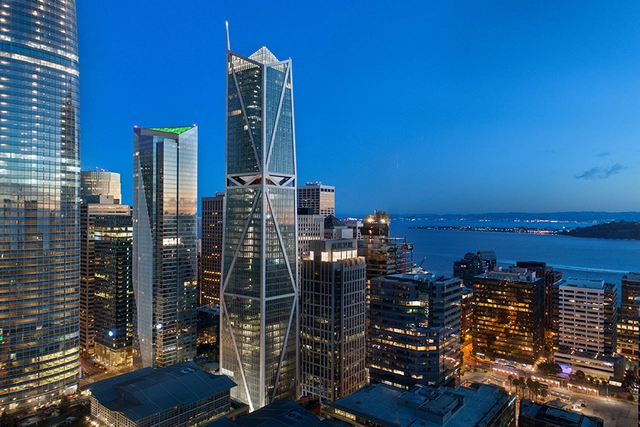
For 181 Fremont, Arup’s radical move was to do away with plans for a tuned mass damper or a sloshing damper on the skyscraper’s roof—common features in tall towers in the U.S. for reducing the natural sway of buildings. Neither damper style goes very far in protecting a building against seismic force, says Ibbi Almufti of Arup. Image Courtesy of Kevin Chu/KCJP
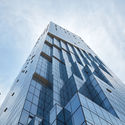
The most remarkable thing about 181 Fremont—San Francisco’s third-tallest tower, designed by Heller Manus Architects—is not the penthouse’s asking price ($42 million). Rather, it’s an innovative yet unglamorous structural detail: a viscous damper system that far exceeds California Code earthquake-performance objectives for buildings of 181 Fremont’s class, allowing immediate reoccupation after a seismic event.























.jpg?1559207593&format=webp&width=640&height=580)
.jpg?1559207947 "© Laurian Ghinitoiu")
.jpg?1559207882 "© Laurian Ghinitoiu")
.jpg?1559207058 "© Laurian Ghinitoiu")
.jpg?1559208195 "© Laurian Ghinitoiu")
.jpg?1559207593)






_Jason_O'Rear_Courtesy_Studio_Gang-1.jpg?1556277122)
_Jason_O'Rear_Courtesy_Studio_Gang-5.jpg?1556277154 "© Jason O’Rear")
_Jason_O'Rear_Courtesy_Studio_Gang-2.jpg?1556277139 "© Jason O’Rear")
_Jason_O'Rear_Courtesy_Studio_Gang-1.jpg?1556277122 "© Jason O’Rear")
_Jason_O'Rear_Courtesy_Studio_Gang-5.jpg?1556277154)