1. ArchDaily
  2. Riverbank

Riverbank: The Latest Architecture and News

The Continuous Project: A Case of Iterative Placemaking in Long You, China

The architect's role has traditionally been relatively well-defined: design a building, direct the project, coordinate logistics, and guide construction through to completion. As specialised fields have proliferated, together with a rapidly changing social economy, the practice of architecture has diversified, opening multiple paths for how architects can contribute to society.

Since the 1980s, one of the most consistent shifts may have been the separation between the "design architect" and the "architect of record." Where a single office once carried a project from concept to completion, internationalisation—alongside cross-border work, licensure regimes, procurement models, and liability structures—has encouraged a split. Design teams increasingly set the conceptual and schematic direction, then hand over the design development to local record architects for technical detailing, approvals, and site execution. The model has clear advantages—sharper expertise, efficiency, and often profitability (or services offered at reduced fees)—but it also segments the profession and can distance authorship from delivery.

What, then, might the next shift be, and what new synergies could redefine the architect's role? How should architects adapt to the changing professional climate? One promising trajectory is a turn from singular, permanent objects toward ongoing placemaking—iterative, context-specific programmes that prototype, test, and refine spatial ideas in public. Rather than producing one large, iconic work that fixes a site for decades, this model privileges cycles of making, use, evaluation, and adjustment at the community scale.

The Continuous Project: A Case of Iterative Placemaking in Long You, China - Image 1 of 4The Continuous Project: A Case of Iterative Placemaking in Long You, China - Image 2 of 4The Continuous Project: A Case of Iterative Placemaking in Long You, China - Image 3 of 4The Continuous Project: A Case of Iterative Placemaking in Long You, China - Image 4 of 4The Continuous Project: A Case of Iterative Placemaking in Long You, China - More Images+ 24

MVRDV Wins Competition to Design the Master Plan for a Taiwanese Town’s Water Network

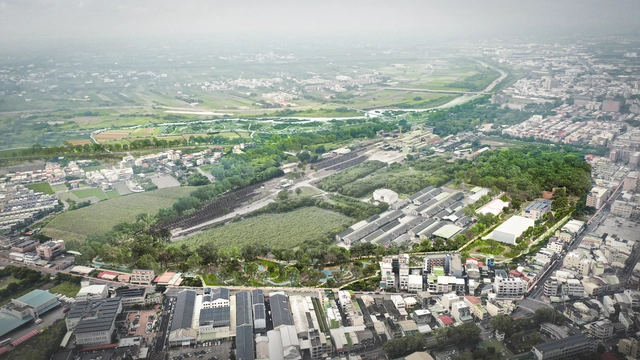
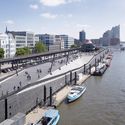
International office MVRDV has been selected by the Taiwan Ministry of Economic Affairs to design the Hoowave Water Factory, a large-scale redevelopment of Huwei’s Beigang and Anqingzhen waterways. The project combines a strategic master plan with the landscape design in an effort to move beyond the mono-functional approach for controlling and distributing water. Besides storing and capturing water, the proposal also opens up access to the river and the natural ecosystem by integrating cycling paths, cultural amenities, and ecological systems. The master plan also includes a comprehensive strategy for flood resilience while improving the quantity and quality of available water. The project is expected to be completed in 2026.

MVRDV Wins Competition to Design the Master Plan for a Taiwanese Town’s Water Network - Image 1 of 4MVRDV Wins Competition to Design the Master Plan for a Taiwanese Town’s Water Network - Image 2 of 4MVRDV Wins Competition to Design the Master Plan for a Taiwanese Town’s Water Network - Image 3 of 4MVRDV Wins Competition to Design the Master Plan for a Taiwanese Town’s Water Network - Image 4 of 4MVRDV Wins Competition to Design the Master Plan for a Taiwanese Town’s Water Network - More Images+ 12

Winners of the UIA 2030 Award Announced: Acknowledging Architects' Contributions to the Sustainable Development Goals

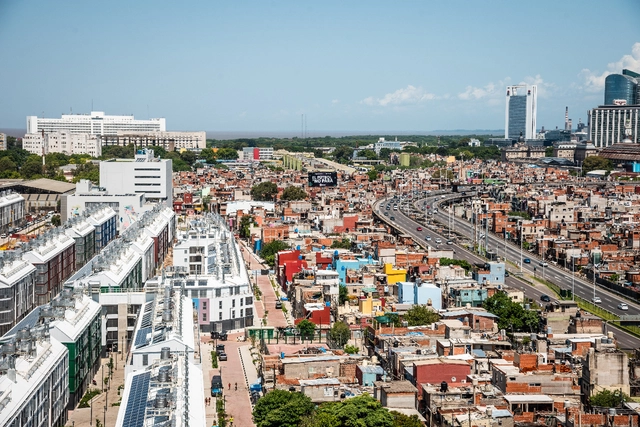
Today, at the eleventh session of the World Urban Forum in Katowice, Poland, the International Union of Architects (UIA), together with the UN-HABITAT, have announced the laureates of the UIA 2030 Award. Seeking to acknowledge the contributions of architects to the UN 2030 Agenda for Sustainable Development and New Urban Agenda through built interventions that demonstrate design quality and alignment with the UN Sustainable Development Goals (SDGs), this first edition of a biennial awards program, selected winning projects from Germany, Hong Kong, Argentina, Bangladesh, and China, from 125 submitted projects in 40 countries.

Organized under six categories: Open Category, Improving Energy Efficiency, Adequate, Safe & Affordable Housing, Participatory, Land-Use Efficient & Inclusive Planning, Access to Green & Public Space, and Utilizing Local Materials, the jurors picked a winner per section, yet were unable to identify an overall winner in the open category and chose instead to recognize six projects as Highly Commended, honoring in total 5 laureates and 15 commendations.

Winners of the UIA 2030 Award Announced: Acknowledging Architects' Contributions to the Sustainable Development Goals - Image 1 of 4Winners of the UIA 2030 Award Announced: Acknowledging Architects' Contributions to the Sustainable Development Goals - Image 2 of 4Winners of the UIA 2030 Award Announced: Acknowledging Architects' Contributions to the Sustainable Development Goals - Image 3 of 4Winners of the UIA 2030 Award Announced: Acknowledging Architects' Contributions to the Sustainable Development Goals - Image 4 of 4Winners of the UIA 2030 Award Announced: Acknowledging Architects' Contributions to the Sustainable Development Goals - More Images+ 17

Riverside Settlements and the Timeless Dialogue Between Architecture and Nature

Subscriber Access | 

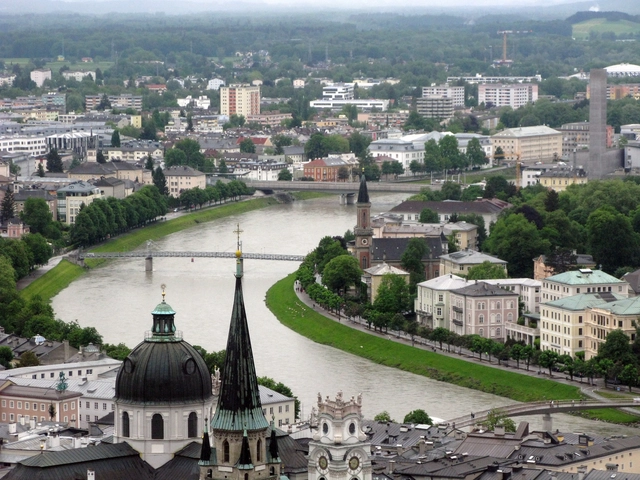
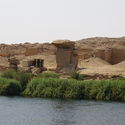
Rivers have long been considered as Earth’s arteries, serving as the essence of urban communities as human settlements developed their shelters and crop beds around them. Centuries later, riverside architecture remained vital as these areas expanded beyond residential typologies, and harnessed dynamic mixed-use developments and public functions. As valuable as they may seem though, these landscapes come with the risk of unexpected floods, increased water levels, or complete droughts, which has forced architects to design built environments that are able to respond to these abrupt changes. So how were these settlements built in the past, and how has today’s urban densification and technological advancements influence the way they are built?

Riverside Settlements and the Timeless Dialogue Between Architecture and Nature - Image 1 of 4Riverside Settlements and the Timeless Dialogue Between Architecture and Nature - Image 2 of 4Riverside Settlements and the Timeless Dialogue Between Architecture and Nature - Image 3 of 4Riverside Settlements and the Timeless Dialogue Between Architecture and Nature - Image 4 of 4Riverside Settlements and the Timeless Dialogue Between Architecture and Nature - More Images+ 7

Belfast Waterside Development by Henning Larsen Receives Planning Approval

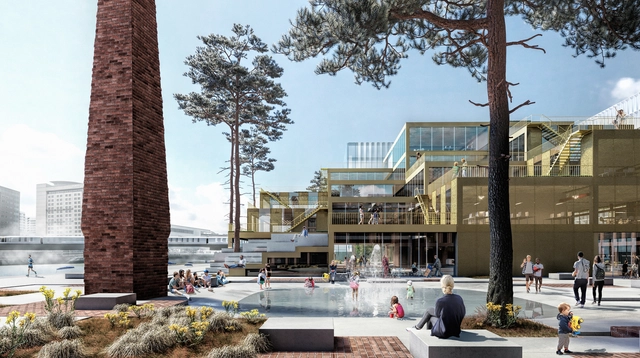
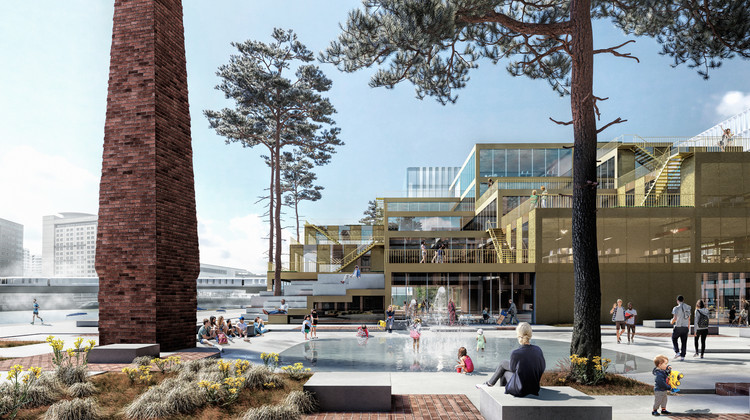
The Henning Larsen-designed Belfast Waterside development was officially granted planning approval by the Belfast City Council, after a year in the planning approval process. Located on the site of the former Sirocco Works, the project is set to “transform the 2.6-hectare area on the east bank of the River Lagan that has been disused for nearly two decades”.

Belfast Waterside Development by Henning Larsen Receives Planning Approval - Image 1 of 4Belfast Waterside Development by Henning Larsen Receives Planning Approval - Image 2 of 4Belfast Waterside Development by Henning Larsen Receives Planning Approval - Image 3 of 4Belfast Waterside Development by Henning Larsen Receives Planning Approval - Image 4 of 4Belfast Waterside Development by Henning Larsen Receives Planning Approval - More Images+ 2

Competition Winning Stadium Design Promotes Inclusivity in Dunkirk, France

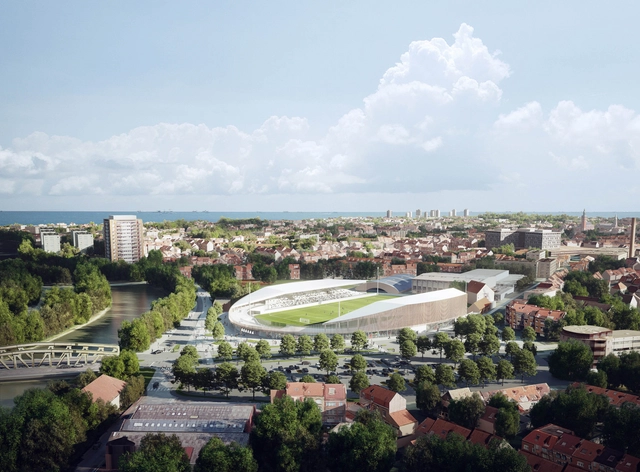
The SOCKEEL + OLGGA consortium have won a competition to design the new Tribut Stadium in Dunkirk, France. The historic stadium, in a prominent location on a canal bank in central Dunkirk, will be transformed into a 5,000 seat stadium seeking to maximize inclusiveness and accessibility.

Competition Winning Stadium Design Promotes Inclusivity in Dunkirk, France - Image 1 of 4Competition Winning Stadium Design Promotes Inclusivity in Dunkirk, France - ChairCompetition Winning Stadium Design Promotes Inclusivity in Dunkirk, France - Image 3 of 4Competition Winning Stadium Design Promotes Inclusivity in Dunkirk, France - FacadeCompetition Winning Stadium Design Promotes Inclusivity in Dunkirk, France - More Images+ 6

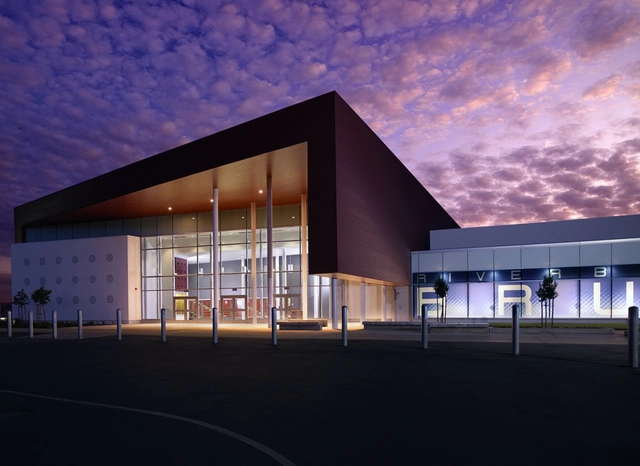
Riverbank High School / Darden Architects

Riverbank High School / Darden Architects - High School, Facade, LightingRiverbank High School / Darden Architects - High School, FacadeRiverbank High School / Darden Architects - High School, Facade, Column, Door, LightingRiverbank High School / Darden Architects - High SchoolRiverbank High School / Darden Architects - More Images+ 5