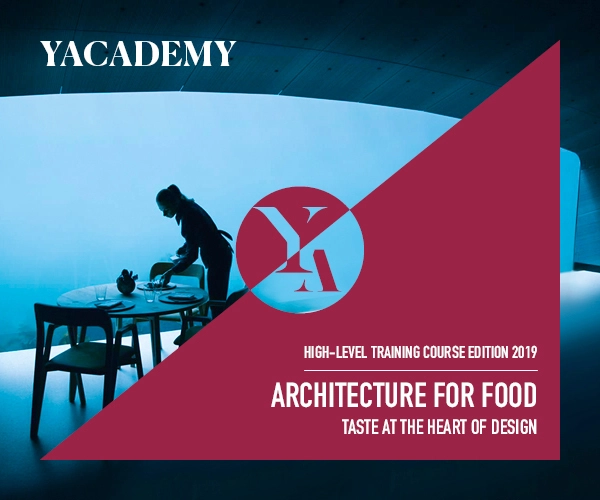
YACademy launches the first edition of Architecture for Food, a high-level training course offering 8 scholarships and internships in internationally-renowned architectural firms.
102 hours of lessons, a 30-hour workshop, lectures and placement opportunities in internationally-renowned architectural firms like L22, MVRDV, Snøhetta, and Barozzi Veiga.
https://www.archdaily.com/917925/yacademys-course-in-architecture-for-foodSponsored Post
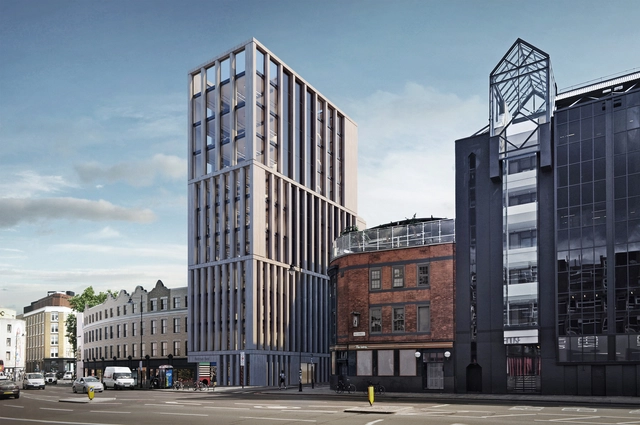
Douglas and King Architectsmaster plan to reinvigorate Shoreditch takes on a complex dual challenge. Broadly, there is the challenge at the core of any masterplanning project: creating a set of elements that flow together seamlessly with one another and their overall context. But more specifically, the project grapples with a tight triangular site and an already-lively urban context.
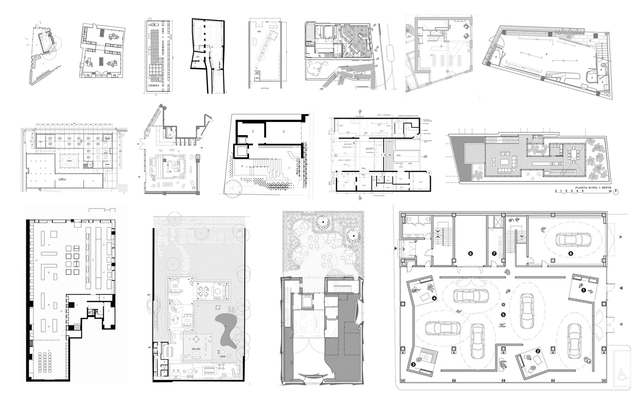
As mentioned in our previous article on retail stores under 100 square meters, the spatial distribution of commercial spaces is a determinant for its success. Not only does it address adequate logistics and the circulation of customers, but the variations and innovations that will enable a more efficient and original space.
Below, we've selected projects from our site, with their plan and section, that can help inspire your next project.
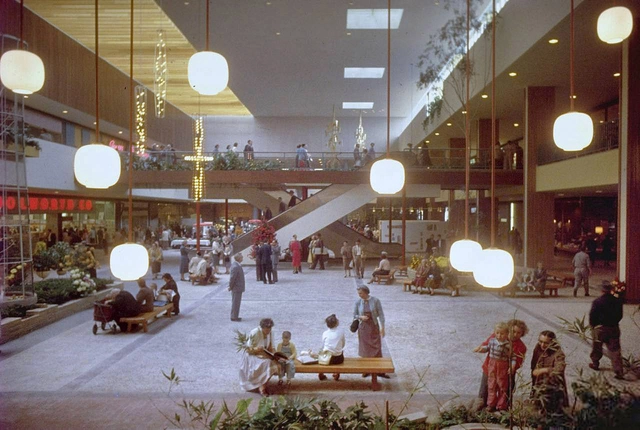
Southdale Center Circa, portrayed by Grey Villet (Minnesota, United States), 1956. Image via Shorpy
In this collaboration, the Spanish office Ecosistema Urbano analyzes the rise and fall of the shopping centers as an authentically American typology of the twentieth century and with commercial success in the rest of the world, although it does not undergo significant changes in "its spaces, solutions, and elements."
According to the authors, this typology is currently undergoing an inflection due to the new economic and urban paradigms that force them to reinvent themselves or die. They plan a series of revitalization strategies in a mall in the outskirts of Barcelona (Spain) that seeks their "reconfiguration through the introduction of new programs in an attempt to convert it into a much more public space, being able to attract users who would otherwise not come."
Cities around the world are growing at an unprecedented rate, and for the first time in recent history represent the preferred place for people to live. Urbanization has historically aided millions in escaping hardship through increased employment opportunities, better education and healthcare, large-scale public investments, and access to improved infrastructure and services. The city has been the ideal for heightened livability for people worldwide.
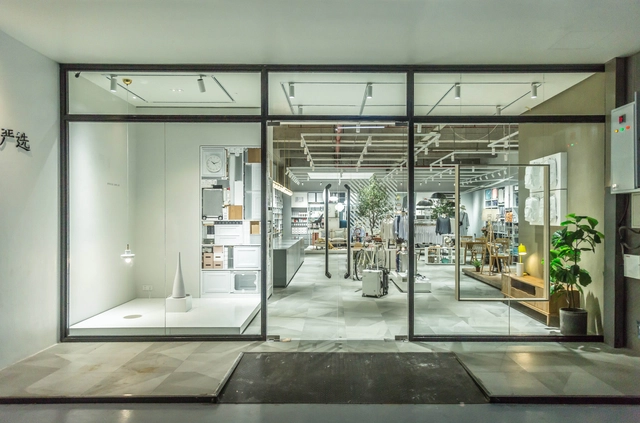
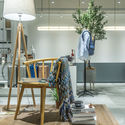
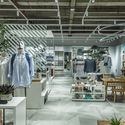
Furniture and design retailer XTRA's new flagship store in Singapore's Marina Square includes a Herman Miller "Shop-in-Shop" that draws inspiration from the furniture it showcases. Encircling the space is a 20-meter arched structure that, from a distance, gives the appearance of tufted fabric pulled taught over a frame. But in fact, this structure is built from a plywood "skin" that designer Pan Yicheng of PRODUCE Workshop has dubbed "fabricwood."
The Principles just recently completed an interactive project, titled the “Workshop”, for the clothing brand Everlane in the Meatpacking district of New York. As part of the Everlane’s “Not-a-Shop” series, which focuses on selling only online, “the space was a physical manifestation of their primarily digital presence; replacing coded interaction with physical interaction,” described The Principals co-founder Drew Seskunas.
Located at the Poznań Plaza mall in Poland, mode:lina architekci accepted a challenge to create a temporary store for Swedish watch brand TRIWA. Their goals included using renewable materials, low cost, speed of constructing, and most importantly, to further increase global brand awareness. More images and architects’ description after the break.
Located in Berlin Zehlendorf, the Truman Plaza parallels the adjacent Clayallee and is part of a larger master plan that balances its historical urban context with its integration of a delicate onsite forest. Designed by Wiel Arets Architects, the project, which is currently in progress, includes offices, retail, health and sports facilities, which together form an urban setting situated around a central plaza within this leafy borough on the edge of Berlin. More images and architects’ description after the break.
American retailer Coach has commissioned OMA to develop a new merchandising system that accommodates Coach’s wide diversity of products while returning to the clarity of Coach’s heritage stores. Since establishing its first workshop 1941, Coach has expanded from a specialist leather atelier to a global distributor of “democratized luxury goods”. This expansion has clouded the clarity of the brand’s original library-like stores, which used a rigorous organizational system that categorically sort projects inside minimal wooden shelving at assisted counters. OMA intends to create a flexible, modular system that embodies the clarity of the original stores and responds to the individual needs of locale.
COMPLEX CITY shared with us their Wine Concept Store which is focused around three basic concepts: the vertical, the visual, and sensitivity. The image of the vine and its linearity are the starting point of this verticality that is reflected in the facade while the curve expresses a sensitivity related to a sensory awareness that takes place during the taste of wine. More images and architects’ description after the break.












.jpg?1486048343 "Prototype of the Fabricwood system. Image Courtesy of PRODUCE Workshop")
.jpg?1486048351 "Courtesy of PRODUCE Workshop")