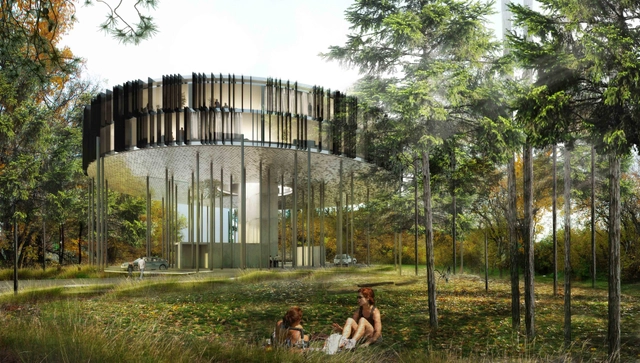
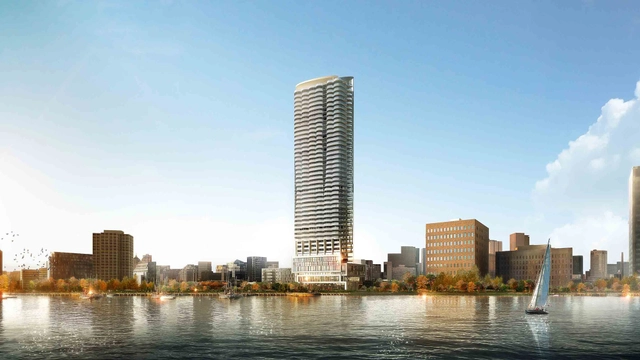
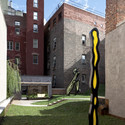
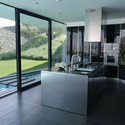
Set for completion in 2014, Winnipeg’s “Flying Saucer” condominium project 62M, designed by Winnipeg-based studio 5468796 Architecture, will occupy the corner of MacDonald Avenue and Waterfront Drive, close to the Exchange District. Named after its address, 62M will be a two-storey, circular building lifted up on 35-foot stilts. Its circular design is spatially efficient and will provide each unit with a view. As a whole, the 360° plan provides the widest possible perimeter for glass with the smallest amount of exterior envelope to construct. More images and architects' description after the break.
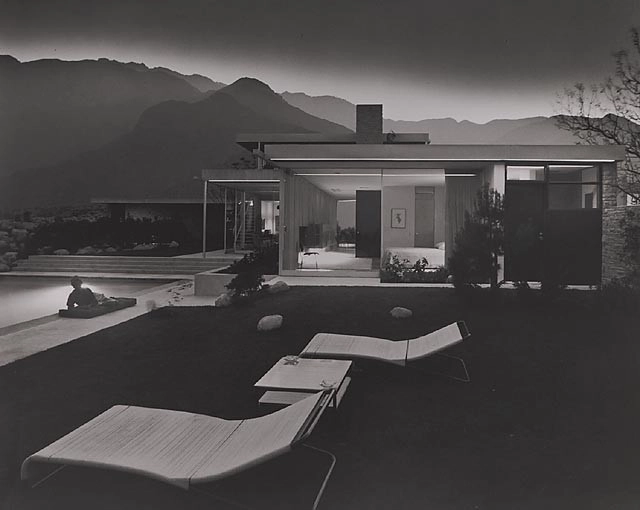
The mid-century modern master, Richard Neutra was well known for his cutting edge modernism. Since Julius Shulman immortalized his houses in his iconic photographs, Neutra's bright, airy homes have widely been seen as the pinacle of modernism and desirability. One problem though, they're in high demand and it's not exactly like they're making any more Neutra buildings; in fact, quite the opposite is true and as a result they have become a pretty expensive commodity.
Read more about how to get your very own Neutra home after the break...
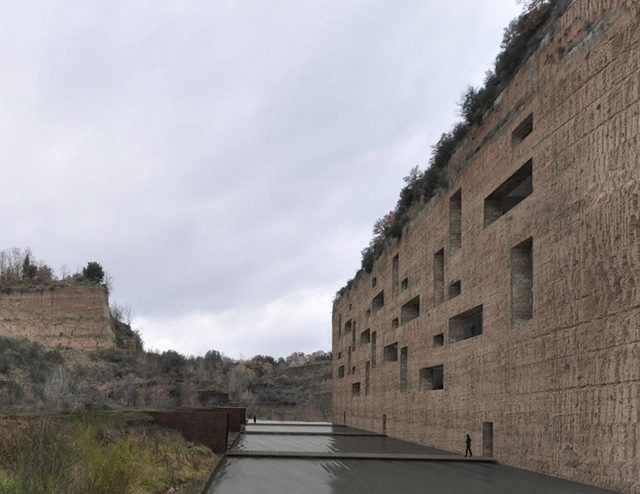
Romano Adolini Architetto shared with us their design for a new residential complex, carved into the vertical face of an abandoned tufa stone quarry in Civita Castellana, near Viterbo, Italy. Their scheme is a modern reinterpretation of a manner of living and behaving which responds to the need to distance oneself from outside, a new dimension of hidden isolation, of seeking silence and meditation. It is also a new solution to the rehabilitation of quarry sites, currently abandoned and forgotten industrial by-products, located in wonderful landscapes and destined otherwise to become illegal dumping grounds. More images and architects' description after the break.
Icon: Claridge Homes is set to become Ottawa’s tallest tower at 45-storeys, transforming the cityscape of the country’s capital and setting a new standard for high quality design and smart densification in the city. Designed by Hariri Pontarini Architects, and as part of the area’s revitalization, the development will bring a mix of uses to meet both the existing and future needs of the neighborhood. More images and architects' description after the break.
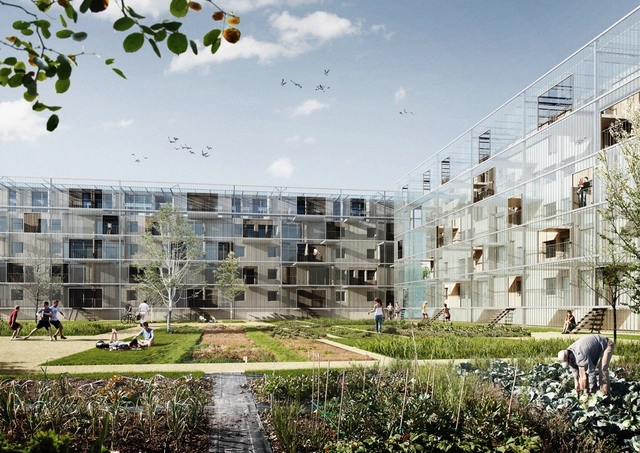
FORA and Beth Hughes, with Raul Moura and Tudor Vasiliu, have been selected as one of four finalists for the second phase of the Danish site in the Nordic Built Challenge - an open multidisciplinary design competition for the refurbishment of five buildings one in each Nordic country. Their proposal addresses the Ellebo Housing Estate in Ballerup, Denmark. The estate was built in 1963, and features four buildings for a total size of 20,000m2, enclosing playgrounds, playing fields and green recreational areas. Their challenge was to renovate the existing buildings and outdoor areas, and for 5,000m2 of additional housing. More images and architects' description after the break.
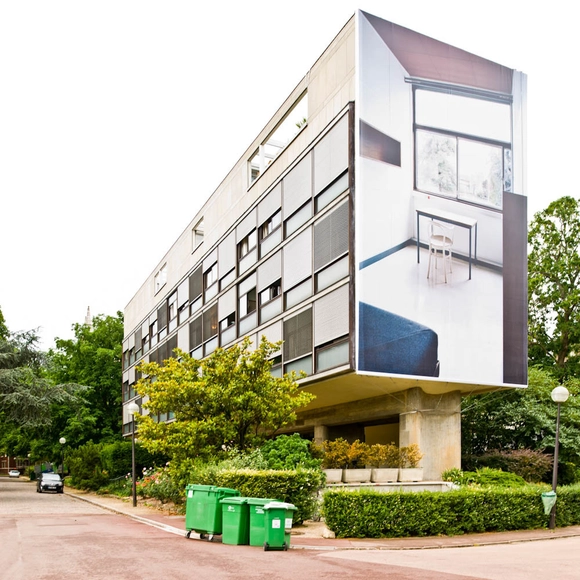
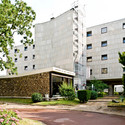
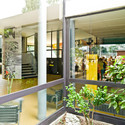
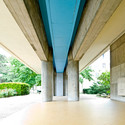
In 1930, Le Corbusier was tasked with designing a dormitory that would house Swiss students at the Cité Internationale Universitaire in Paris. At first the architect and Pierre Jeanneret, his partner at the time, refused to take on the project due to tensions with the Swiss after their handling of the architects' proposal for the League of Nations competition. Eventually, however, they agreed to see it through and worked on a very limited budget, which led the building to become a summation of Le Corbusier's modern principles, forcing him to focus on dwelling before all else.
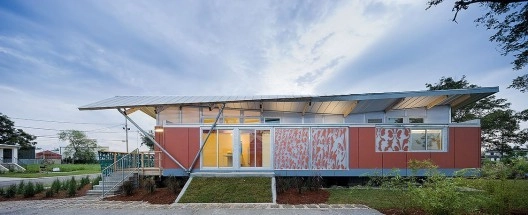
Ever since the New Republic published Lydia DePillis's piece entitled "If you Rebuild it, They Might Not Come" - a criticism of the progress of Brad Pitt's Make It Right Foundation - numerous blogs and journals have been in a uproar, defending Make It Right's efforts at rebuilding the vastly devastated Lower Ninth Ward and presenting a much more forgiving perspective on the progress of the neighborhood since the engineering disaster that exacerbated the effects of Hurricane Katrina in 2005. To date, 86 LEED Platinum homes have been designed and constructed by world-renowned architects including Frank Gehry and Morphosis, at a cost of approximately $24 million. Make It Right has promised to build up to 150 such homes, but DePillis's article points out how amenities in the neighborhood are low and how the number of residents returning to the neighborhood is dwindling. Make It Right has made a commitment and the debate that ensues questions whether it is going far enough in delivering its promise to rebuilding community.
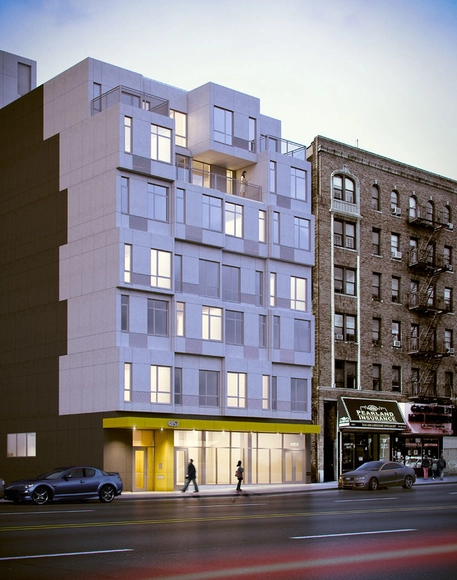
Prefabrication has long been heralded as a possible way to infill New York's vacant sites, however it is only in recent years that it has become a solid practical solution rather than an experimental concept. Riding the crest of the wave of new prefabricated housing is GLUCK+ (formerly Peter Gluck & Partners), in collaboration with developers Jeffrey Brown and Kimberly Frank. Together they have began construction on one of New York's first prefabricated steel and concrete residential buildings.
Read more about this and New York's recent wave of prefabricated buildings after the break...
Designed by Architetto Matteo Ascani (AMA), the main driving force behind the their Cambonian Sustainable Housing project was to somehow recreate the sensation of living in a typical Cambodian house, where people have to maintain their own traditions, but in healthy and safe living conditions. Combined with a type of spatial experience that allows flexibility and the simple method of construction, this environmentally conscious design is able to respond to the needs of this society. More images and architects’ description after the break.
Long Lane, a key section of the Great Kneighton development on the southern fringe of Cambridge, has recently received planning approval, which will provide 273 homes over 5.4 hectares. Designed by C.F. Møller their contemporary masterplan retains historic features from the existing site, while providing homes that are functional, flexible and sustainable. Working in collaboration for developer Homes by Skanska and PRP, the customer-focused scheme provides a tenure-blind mix of private and affordable housing. More images and architects' description after the break.