1. ArchDaily
  2. Residential Home

Residential Home: The Latest Architecture and News

Plattform: A Spotlight on Modernist Residential Architecture in Norway

Subscriber Access | 

Modernist architecture came about in the early 20th century as a response to large-scale changes in technology, construction, and society; particularly through the use of glass, steel, and reinforced concrete. The style was typically associated with the function of buildings from an analytical viewpoint, rational use of materials, the elimination of ornamentation, and openness to structural innovation.

Paul Tunge is a Norwegian writer, director, and cinematographer of Arthouse Films who has been involved in film production since the early 2000s. Having written, directed, shot, and produced four independent films, alongside 3 documentaries, each of his projects has been featured during major film festivals across all continents, in galleries, and various national cinemas and cinematheques.

Plattform: A Spotlight on Modernist Residential Architecture in Norway - Image 1 of 4Plattform: A Spotlight on Modernist Residential Architecture in Norway - Image 2 of 4Plattform: A Spotlight on Modernist Residential Architecture in Norway - Image 3 of 4Plattform: A Spotlight on Modernist Residential Architecture in Norway - Image 4 of 4Plattform: A Spotlight on Modernist Residential Architecture in Norway - More Images+ 1

Brooklyn Residential: Rethinking Home Design in NYC's Most Populous Borough

Subscriber Access | 

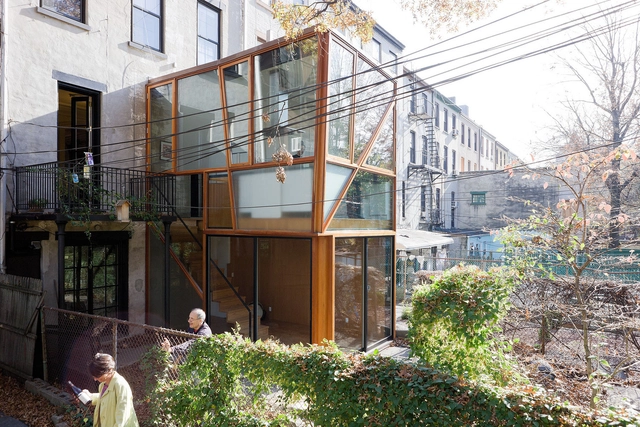
New York City is defined by its architecture, and in turn, diverse ways of living. As the nation's "metropolis," it has also faced some of the most challenging housing problems of any American city. From single-family homes to high-rise residential towers, housing has evolved at different paces and scales throughout the boroughs. In turn, each district and county is home to a wide range of residential styles and housing solutions.

Brooklyn Residential: Rethinking Home Design in NYC's Most Populous Borough - Image 1 of 4Brooklyn Residential: Rethinking Home Design in NYC's Most Populous Borough - Image 2 of 4Brooklyn Residential: Rethinking Home Design in NYC's Most Populous Borough - Image 3 of 4Brooklyn Residential: Rethinking Home Design in NYC's Most Populous Borough - Image 4 of 4Brooklyn Residential: Rethinking Home Design in NYC's Most Populous Borough - More Images+ 15

Marc Thorpe Designs House of Four Gardens along Savannah River Tributary

Marc Thorpe Design has unveiled a new home concept along a tributary of the Savannah River in the United States. Sited in the deep south, the "House of Four Gardens" was designed between live oaks and perennial ferns. Access to nature was a central concept throughout the entire home, and each space is defined by the geometry of the structure in plan.

Marc Thorpe Designs House of Four Gardens along Savannah River Tributary - Image 1 of 4Marc Thorpe Designs House of Four Gardens along Savannah River Tributary - Image 2 of 4Marc Thorpe Designs House of Four Gardens along Savannah River Tributary - Image 3 of 4Marc Thorpe Designs House of Four Gardens along Savannah River Tributary - Image 4 of 4Marc Thorpe Designs House of Four Gardens along Savannah River Tributary - More Images+ 6

Cut, Fold, Stack: German Homes Built for Precision

Subscriber Access | 

German design has become synonymous with accuracy, efficiency and precision. While the stereotype has roots in geography and local culture, the country's built environment reflects an affinity for structure, privacy and order. Combined with influences across Europe, Germany's contemporary architecture showcases refined forms and an emphasis on craft.

Cut, Fold, Stack: German Homes Built for Precision - Image 1 of 4Cut, Fold, Stack: German Homes Built for Precision - Image 2 of 4Cut, Fold, Stack: German Homes Built for Precision - Image 3 of 4Cut, Fold, Stack: German Homes Built for Precision - Image 4 of 4Cut, Fold, Stack: German Homes Built for Precision - More Images+ 8

Concrete and Stone: New Homes Reinterpreting Tradition in Cyprus

Subscriber Access | 

The architecture of Cyprus has been defined by larger geopolitical forces throughout history. Located in the Eastern Mediterranean, the island country is shaped physically and socially by the Cyprus dispute. Dating back to the bronze and iron ages, its architecture has been influenced by the Greeks, Assyrians, Egyptians, Persians, and Romans. Today, new homes are built across the island that reinterpret past building methods and construction techniques.

Concrete and Stone: New Homes Reinterpreting Tradition in Cyprus - Image 1 of 4Concrete and Stone: New Homes Reinterpreting Tradition in Cyprus - Image 2 of 4Concrete and Stone: New Homes Reinterpreting Tradition in Cyprus - Image 3 of 4Concrete and Stone: New Homes Reinterpreting Tradition in Cyprus - Image 4 of 4Concrete and Stone: New Homes Reinterpreting Tradition in Cyprus - More Images+ 10

What Makes a City Livable to You?

What Makes a City Livable to You? - Arch Daily Interviews
© Flickr user Hafitz Maulana licensed under CC BY-SA 2.0. ImageA music festival in Singapore

Mercer released their annual list of the Most Livable Cities in the World last month. The list ranks 231 cities based on factors such as crime rates, sanitation, education and health standards, with Vienna at #1 and Baghdad at #231. There’s always some furor over the results, as there ought to be when a city we love does not make the top 20, or when we see a city rank highly but remember that one time we visited and couldn’t wait to leave.

To be clear, Mercer is a global HR consultancy, and their rankings are meant to serve the multinational corporations that are their clients. The list helps with relocation packages and remuneration for their employees. But a company’s first choice on where to send their workers is not always the same place you’d choose to send yourself to.

And these rankings, calculated as they are, also vary depending on who’s calculating. Monocle publishes their own list, as does The Economist, so the editors at ArchDaily decided to throw our hat in as well. Here we discuss what we think makes cities livable, and what we’d hope to see more of in the future.