
-
Architects: Gabriel Verd Arquitectos
- Area: 6738 m²
- Year: 2011
-
Manufacturers: VMZINC
-
Professionals: IDD Consultores


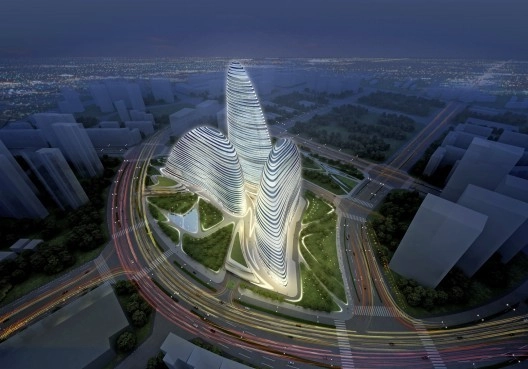
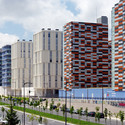
When we see another Eiffel Tower, idyllic English village, or, most recently, a Zaha Hadid shopping mall, copied in China, our first reaction is to scoff. Heartily. To suggest that it is - once again - evidence of China’s knock-off culture, its disregard for uniqueness, its staggering lack of innovation.
Even I, reporting on the Chinese copy of the Austrian town of Halstatt, fell into the rhetorical trap: “The Chinese are well-known for their penchant for knock-offs, be it brand-name handbags or high-tech gadgets, but this time, they’ve taken it to a whole other level.” Moreover, as Guy Horton has noted, we are keen to describe designers in the West as “emulating,” “imitating,” and “borrowing”; those in the East are almost always “pirating.”
However, when we allow ourselves, even unconsciously, to settle into the role of superior scoffer, we do not just the Chinese, but ourselves, a disservice: first, we fail to recognize the fascinating complexity that lies behind China’s built experimentation with Western ideals; and, what’s more, we fail to look in the mirror at ourselves, and trouble our own unquestioned values and supposed superiority.
In the next few paragraphs, I’d like to do both.
Located on a long and very narrow site, on the edge of Parc La Vilette in Paris’s 19th district, the major objective of the Basket Apartments was to provide students with a healthy environment for studying, learning and meeting. Designed by OFIS architects, their video gives viewers a look at the surrounding urban context, including the new Paris tram route passing along the site. The open corridor, gallery, and studio spaces are all illustrated here as the film takes you through a typical experience by its users.

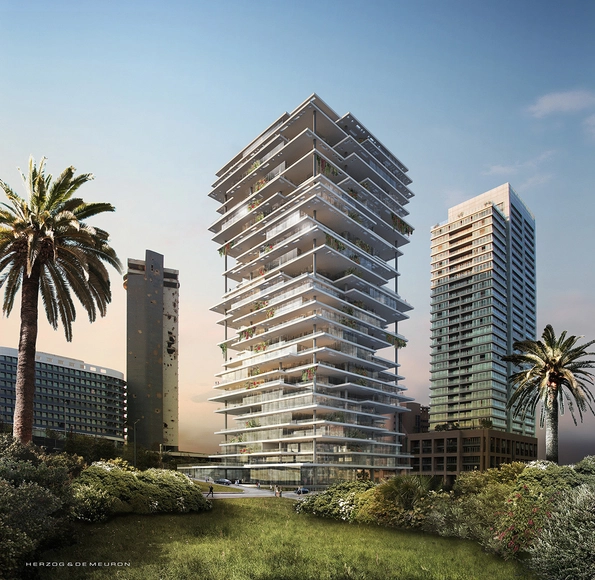
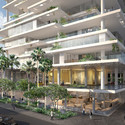
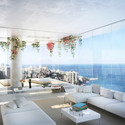
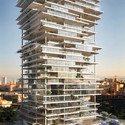
Beirut Terraces rethinks the concept of the skyscraper, creating a vertical village composed of thin, elegant platforms layered in a playful formation. By offering lavish outdoor spaces, breathtaking views, and meticulously composed lofts, architects Herzog & DeMeuron bring an unprecedented way of living to crowded and dense Beirut.
More on these contemporary living spaces after the break...
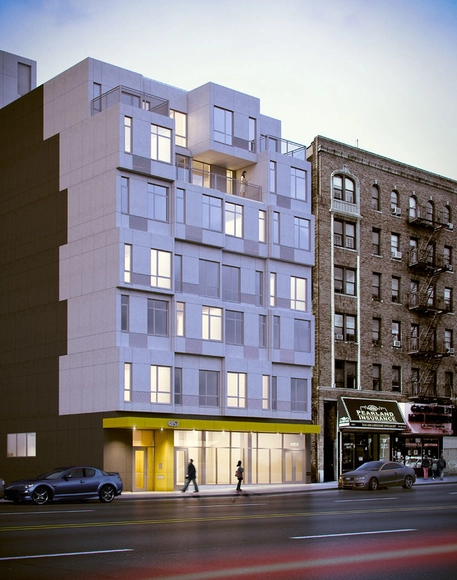
Prefabrication has long been heralded as a possible way to infill New York's vacant sites, however it is only in recent years that it has become a solid practical solution rather than an experimental concept. Riding the crest of the wave of new prefabricated housing is GLUCK+ (formerly Peter Gluck & Partners), in collaboration with developers Jeffrey Brown and Kimberly Frank. Together they have began construction on one of New York's first prefabricated steel and concrete residential buildings.
Read more about this and New York's recent wave of prefabricated buildings after the break...
Designed by Architetto Matteo Ascani (AMA), the main driving force behind the their Cambonian Sustainable Housing project was to somehow recreate the sensation of living in a typical Cambodian house, where people have to maintain their own traditions, but in healthy and safe living conditions. Combined with a type of spatial experience that allows flexibility and the simple method of construction, this environmentally conscious design is able to respond to the needs of this society. More images and architects’ description after the break.

Long Lane, a key section of the Great Kneighton development on the southern fringe of Cambridge, has recently received planning approval, which will provide 273 homes over 5.4 hectares. Designed by C.F. Møller their contemporary masterplan retains historic features from the existing site, while providing homes that are functional, flexible and sustainable. Working in collaboration for developer Homes by Skanska and PRP, the customer-focused scheme provides a tenure-blind mix of private and affordable housing. More images and architects' description after the break.

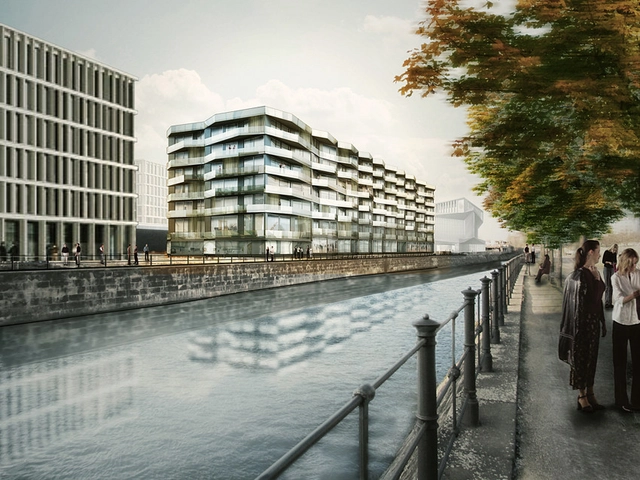
Léon Wohlhage Wernik Architekten was recently announced as the first prize winner for their proposal in the Living on Kunstcampus competition. Situated in the heart of Berlin, on the estate of the Hamburger Bahnhof, a new quarter will be created there, including the dominant urban planning element called the “Kunstkubus”. A lengthy building with a faceted surface gives the residential area its own urban planning presence. All apartments radiate spaciousness, and can be freely partitioned and enter into a relationship with the city through large loggias, or so-called “green rooms”. More images and architects' description after the break.

In an effort to saving the crumbling 15-acre Pier 40 on Manhattan’s Lower West Side waterfront, seven downtown youth sports groups have released a concept plan prepared by WXY Architecture + Urban Design to open up 40% more space for more fields and park space on the pier, mainly by creating a new development site for two new, 22-story residential buildings in an area along West Street directly in front of the pier. The development approach would open the existing 800-foot-long pier shed building that encloses the park fields to improve connections and access between the Hudson River, the pier, and the park. The result knits together leisure and recreation amenities with a premier waterfront destination. More images and architects' description after the break.

Studio BANG shared with us their winning proposal for the IBA Basel competition to design a settlement for commuters in Rheinweiler, Germany. With a strong focus on the last part of the commuters daily way back home, this new settlement is composed of 3 different row-housing units with 28 of them forming a structure that is slightly denser than the surrounding single-family house units. Thus, lower building costs and a closer community is enabled. More images and architects' description after the break.
.jpg?1363717376&format=webp&width=640&height=580)














.jpg?1363717376)