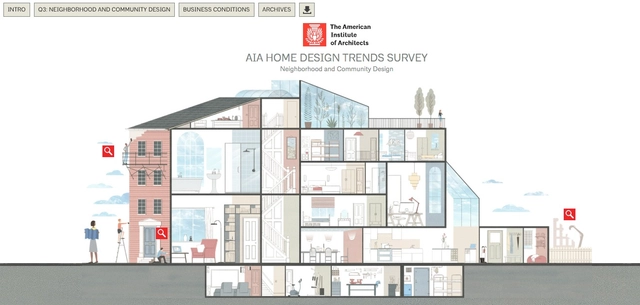
According to the findings, walkability, higher density and infill development, as well as access to public transportation, are all on the rise, with homeowners “seeking community amenities that allow them to remain connected to people and commerce” throughout the nation’s growing metro areas.
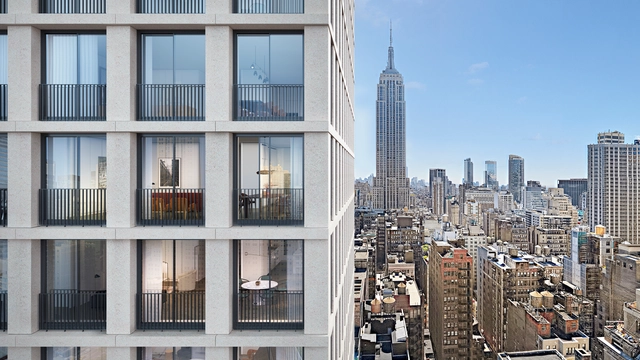
Details on David Chipperfield's first large-scale residential project in New York has been revealed. The last development to take place at Bryant Park, The Bryant condominium tower will feature 57 one to four bedroom residences, including two triplex penthouses, on a boutique hotel at 16 West 40th Street. The HFZ Capital Group development was designed with Chipperfield's "intelligent simplicity," as the architects describe. Each residence will occupy a corner of the tower.
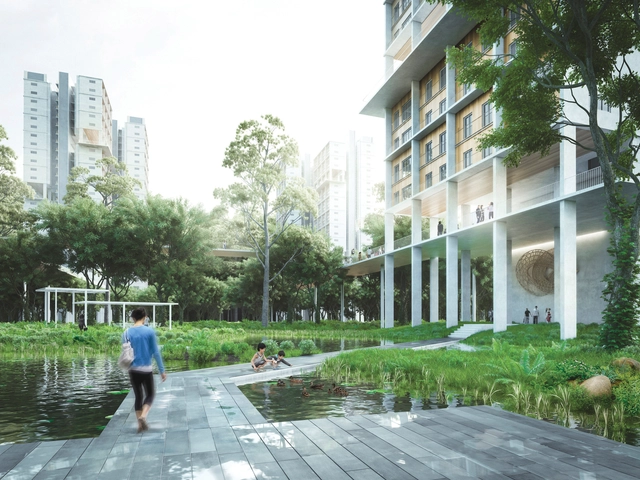
The waterscape in the precinct is one of its distinct characteristics, where residents are able to get in close proximity with different habitants.. Image Courtesy of Norm Li for MKPL/Turenscape Team
Inspired by the mass production of the automotive and aerospace industries, Spanish architects [baragaño], in collaboration with ArcelorMittal, have designed a housing model that can be completely constructed in a factory. Once completed, the house is transported to the site and installed.
The basic model [#bh01] is 39 square meters, composed of two volumes and can be easily expanded both horizontally and vertically in the future. According to the architects, it’s a method that “makes construction easier, generates less waste than traditional systems and increases the safety of personnel involved in the assembly work.”
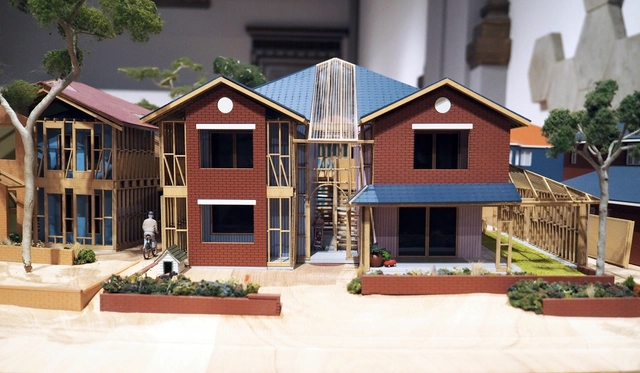
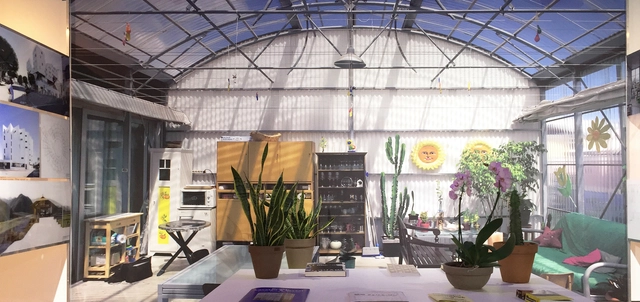
In the classic film The Wizard of Oz, Dorothy and friends manage to obtain a visit with the great and powerful wizard, who appears to them as an enormous, grotesque head, surrounded by smoke and flames, with a booming voice and a hostile demeanor. But when Toto pulls back the curtain, the wizard’s true nature is revealed, and it is only then that he is able to help the gang get the help for which they journeyed many miles down the yellow brick road. In architecture today, suburban houses share many of the characteristics of the wizard’s illusion: large, stand-offish and intimidating. But what if there is a more benevolent architecture hidden behind the smoke and flames? This is the thesis of Australian firm Otherothers' Offset House, on display now at the Chicago Architecture Biennale.
A higher percentage of the world’s population lives in cities than in any point in history, and with an ever increasing demand for housing, some of the planet’s older and more condensed cities are struggling to keep up. This crisis is currently front and center in London, where median housing prices 12 times the median income have prompted a large number ofradical solutions to quell the storm, but with politicians so far declining to take decisive action a viable answer remains a distant possibility.
In a new video produced by a collaboration between The Architectural Review and the Architecture Foundation, Phineas Harper proposes London take lessons from housing solutions from the past. The example on display here is The Barbican, a massive housing block constructed in the 1960s and 70s, and featuring amenities such as an arts center, music school, restaurants, pub and a cinema, all while providing comfortable, affordable housing for the middle-class professionals at which it was targeted. The video recounts the tale of the project's inception and its design ideals, revealing how this 50-year-old fortress in central London could be an inspiration for the architecture - and the politics - of today.
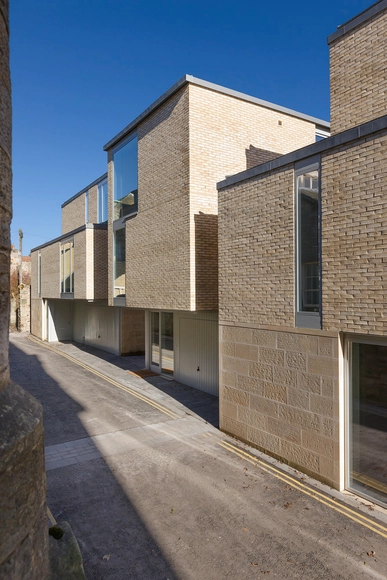
The brick courtyard housing project was lauded by the jury for being "expertly woven" into the context of St. Andrews - one of Scotland's most historic areas.
The City of Amsterdam has selected MVRDV and OVG Real Estate to realize a new mixed use development in its Zuidas Business District - "P15 Ravel Plaza." Chosen through an international competition, the design calls for three asymmetrical towers grounded by office and retail, topped with housing and intertwined by an expansive public green space that wraps itself in and around the building.
"This plan effectively increases the attractiveness of Zuidas," said Klaas de Boer, director of Zuidas, Amsterdam City Council.
Today in Moscow, Asymptote Architecture unveiled plans for the new Hermitage Modern Contemporary, alongside a 150-meter tower planned for ZiL - the city's oldest industrial area and former Soviet automotive factory. The State Hermitage Museum's newest outpost, the 15-story satellite facility was said to be inspired by El Lissitzky's "Proun" painting, which informed the building's "terraced interior."
“With so much museum work over the years, we’ve dress-rehearsed for the Hermitage,” Hani Rashid of Asymptote told the New York Times back in July. “We’ve done a lot of thinking about how art might be seen in the future, about how the museum building itself can provoke artistic responses.”
Walk the Talk—A talk and tour about “missing middle” housing in Austin
Walk the Talk—A talk and tour for people interested in learning more about “missing middle” housing in Austin. Join us for a panel discussion and self-guided tour of "missing middle" housing types—such as duplexes, fourplexes, courtyard housing, and accessory dwelling units—in the Blackland and Cherrywood neighborhoods. Our expert panel represents varied perspectives on the subject. After a Q&A session, participants can easily bike or walk to the missing middle sites in the neighborhood. We welcome you to join the conversation!
With ideas ranging from floating homes to new mega-cities, New London Architecture has revealed 100 proposals to address the housing crisis in London. The ideas will be on display as part of the New Ideas for Housing exhibition at the NLA Galleries in the Building Centre in London. After an open ideas competition announced June 2015, over 200 entries from 16 different countries were received. Of the 100 shortlisted projects 10 finalists will be selected and have the opportunity to work with the Greater London Authority to implement their ideas. Read more about the entries and exhibit after the break.
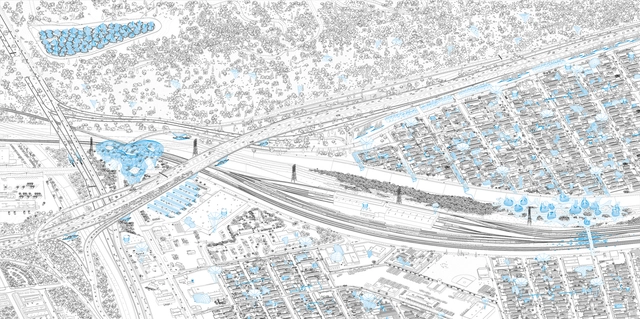
Lorcan O’Herlihy Architects (LOHA) has designed a speculative system of interventions for the Los Angeles River that “examines the relationship between urbanization and water use to develop new models of densification that recognize and tap into existing ecological and infrastructural patterns.” Called WATERshed, the design is part of the A+D Museum’s ongoing “Shelter: Rethinking How We Live in Los Angeles” exhibition that explores new typologies of housing in Los Angeles.
With their model for urban regeneration, LOHA hopes to address issues like the ongoing California drought, as well as the United Nation’s prediction that by 2030, nearly half of the world’s population will be living in areas of high water stress. Thus, the plan utilizes the Los Angeles River as a resource for water use and management in order to provide a path for sustainable growth in Los Angeles, and an example for other cities.
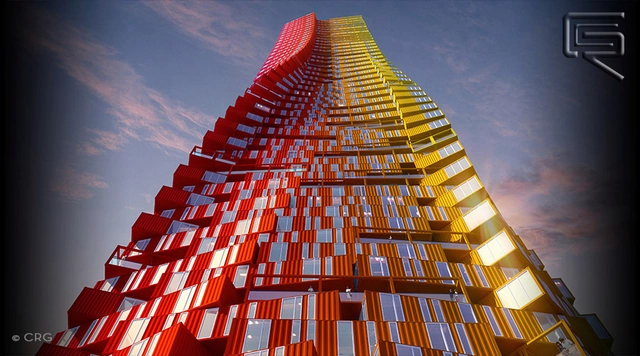
At ArchDaily, we believe it's important to keep our readers up to date on all the most interesting developments in architecture. Sometimes, we will present ideas and projects with a critical eye; however, in many cases we simply present ideas neutrally in the hope that it will spark some discussion or critical response within the profession. Recently, a series of connected news articles about proposals for high-rise shipping-container housing provoked just such a response from Mark Hogan, principle at San Francisco-based firm OpenScope. Originally posted on his blog Markasaurus here's his reasoning for why, contrary to the hype, "shipping containers are not a 'solution' for mass housing."
What’s wrong with shipping container buildings? Nothing, if they’re used for the right purpose. For a temporary facility, where an owner desires the shipping container aesthetic, they can be a good fit (look, I’ve even done a container project!). For sites where on-site construction is not feasible or desirable, fitting a container out in the factory can be a sensible option, even though you’ll still have to do things like pour foundations on site. It probably won’t save you any money over conventional construction (and very well might cost more), but it can solve some other problems.
The place where containers really don’t make any sense is housing. I know you’ve seen all the proposals, often done with an humanitarian angle (building slum housing, housing for refugees etc) that promise a factory-built "solution" to the housing "problem" but often positioned as a luxury product as well.
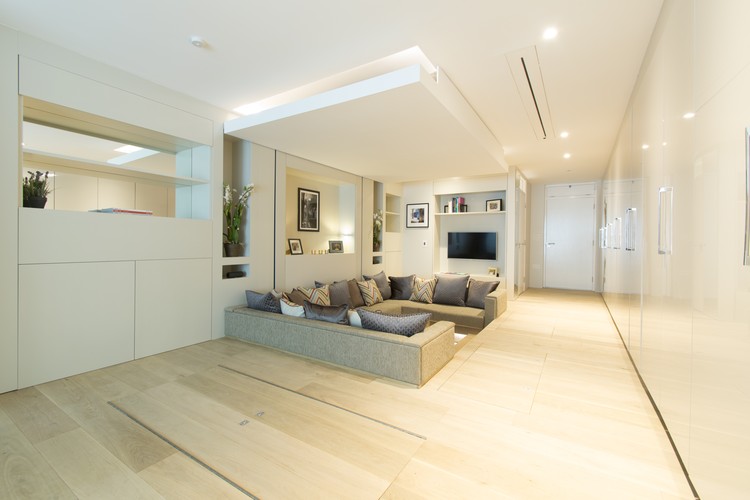
With the cost of space rising in city centres everywhere, YO! Home by Simon Woodroffe provides a possible solution – a transformable, modular living space. Acting as a reinvention of the traditional studio apartment, YO! Home is a 40 square metre living space with movable features to create the impression of a much bigger home. Read more about this London apartment project after the break.
Living Anatomy installation detail, with a photograph from Lacaton & Vassal's "Mulhouse Social Housing" in the background.
On Monday, August 24, the Harvard Graduate School of Design opened its main Fall 2015 exhibition Living Anatomy: An Exhibition About Housing. Focusing on the past 50 years, the mixed-media exhibition features both built and academic work and showcases innovative approaches and solutions to housing in contexts around the world.
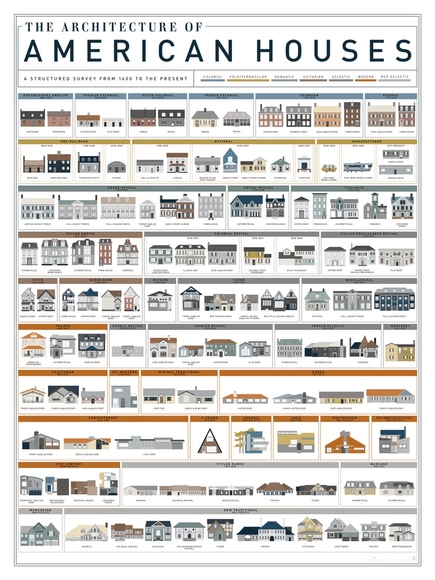
From 17th century Postmedieval English homes to the “McMansions" of the 90s, check out Pop Chart Lab's structured survey of 121 North American homes from the past 400 years. Sorted into seven major categories and 40 subdivisions, the comprehensive diagram highlights the morphology of homes throughout the US.
Each print is signed and numbered by the artists, much like the Brooklyn-based company's popular "Schematic of Structures" poster that features mankind's 90 greatest architectural achievements.
In a recent article for The Observer, Rowan Moore discusses what he describes as the "quiet revolution in British housing." In compiling a list of practices and collectives from the recent past and present, he has created a compendium of people and organisations who he believes are creating exemplary dwellings in the UK. Noting that the British housing stock is not necessarily in the best shape (a symptom of the 1970s), Moore ultimately offers an optimistic message tinged with words of caution.




![[baragaño]’s #bh01: How to Build a House in 80 Days - Sustainability](https://snoopy.archdaily.com/images/archdaily/media/images/5639/2fb9/e58e/ce27/a900/0172/slideshow/29.jpg?1446588335&format=webp&width=640&height=580)
![[baragaño]’s #bh01: How to Build a House in 80 Days - Sustainability](https://images.adsttc.com/media/images/5639/2f2d/e58e/ce6e/6400/0161/thumb_jpg/b_home_26-b.jpg?1446588198 "© Mariela Apollonio")
![[baragaño]’s #bh01: How to Build a House in 80 Days - Sustainability](https://images.adsttc.com/media/images/5639/2f79/e58e/ce6e/6400/0163/thumb_jpg/23.jpg?1446588273 "© Verónica Carreño")
![[baragaño]’s #bh01: How to Build a House in 80 Days - Sustainability](https://images.adsttc.com/media/images/5639/2efe/e58e/ce27/a900/016c/thumb_jpg/b_home_19.jpg?1446588150 "© Mariela Apollonio")
![[baragaño]’s #bh01: How to Build a House in 80 Days - Sustainability](https://images.adsttc.com/media/images/5639/2ea8/e58e/ce27/a900/0168/thumb_jpg/b_home_06-retocada.jpg?1446588065 "© Mariela Apollonio")
![[baragaño]’s #bh01: How to Build a House in 80 Days - More Images](https://images.adsttc.com/media/images/5639/2fb9/e58e/ce27/a900/0172/newsletter/29.jpg?1446588335)
























_Nick_Kane_6.jpg?1439884712&format=webp&width=640&height=580)