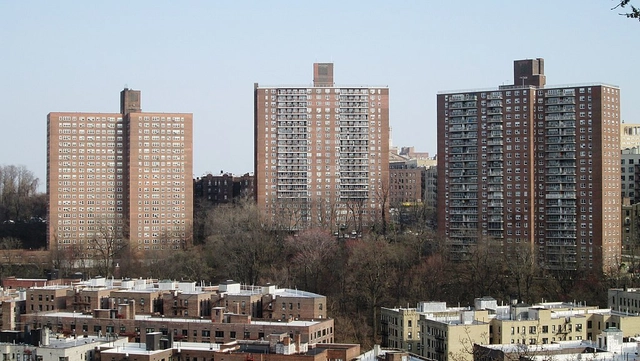
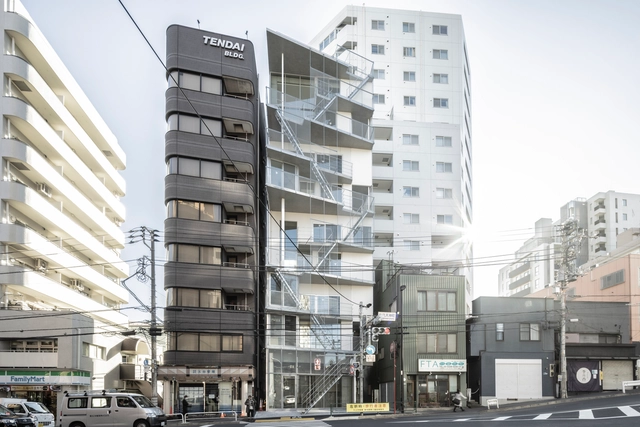
All over the globe, countries are facing a housing crisis. United Nations statistics put the number of people who live in sub-standard housing at 1.6 billion, and 100 million of the world’s population are without a home. As conflicts and climate change forces refugees to move to new countries, and as housing prices around the world continue to rise, cities are having to grapple more and more with how to provide safe and affordable housing for their residents.
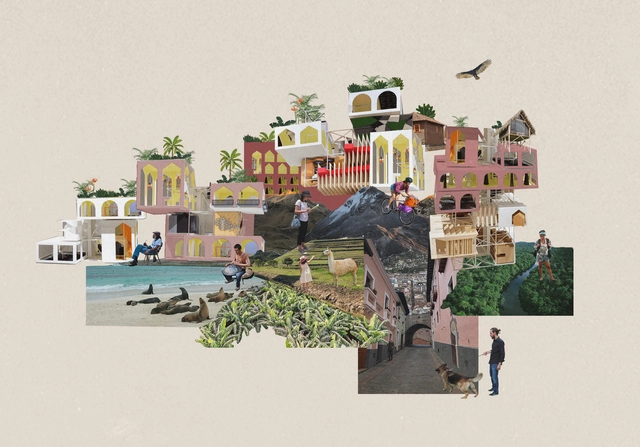
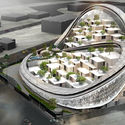
Mexican firm Tatiana Bilbao Estudio has unveiled Botániqo, its new project in collaboration with the Ecuadorian firm Uribe Schwarzkopf in Quito, Ecuador. With over 12,000 km2, the project will cede 4,000 km2 to create a new transportation hub expected to service over 60,000 people per day, in addition to the creation of green space around the residential units.
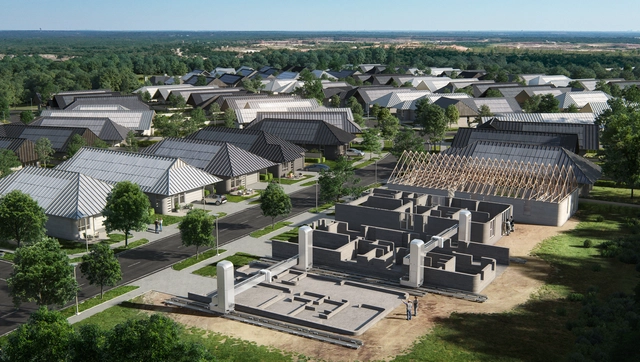
Homebuilding company Lennar and construction technologies company ICON are collaborating with BIG-Bjarke Ingels Group to build the largest community of 3D-printed homes to date. The 100-home neighborhood in Austin is expected to break ground in 2022 and will combine ICON’s innovative robotics, software, and advanced materials with BIG's designs.
Designing residential projects has become nothing short of a challenge. Whether it being for the housing crisis and its repercussions, the heightened environmental awareness, or the fact that people are spending more time inside their dwellings, architects are now focused on building projects that look beyond the typical house and that provide answers to questions like: how can architects offer residents privacy and comfort while maintaining a connection with the outdoors? And how can these spaces cater to the spatial and functional needs of all family members, especially when the lines between work, play, and rest are blurred?
From a Matrix-inspired housing compound in Saudi Arabia to the world's first steel 3D printed structure of modular houses in Sardinia, this round up of unbuilt apartments showcases how architects have reimagined the traditional residential typology, and looked into how these structures can cater to their users, the site, and the environment. This round up also includes projects from the Netherlands, Siberia, Sweden, and Italy.
Only 18 months ago, everyone around the globe had their life upended by the COVID-19 pandemic. Almost immediately, architects and designers began to speculate on how they could design for a better world that would be flexible, functional, and healthy. While the pandemic is far from over, with many scientific advancements and public health policies still needed to truly allow us to live out our “new normal”, perhaps its time to reflect on our predictions and examine what aspects of the pandemic were short-term reactions, and which aspects of life might be permanently reflected in how we think about the built environment.
The housing shortage has long been the catalyst for architectural speculation over adaptive resue scenarios or the valorisation of underused places in cities. At the same time, the health crisis and its work from home imperatives have brought into sharp focus the adaptive reuse potential of offices spaces into housing. The probability that some office buildings remain vacant post-pandemic opens up the possibility of bringing back housing to city centres, enabling the implementation of a 15-minute city vision. The following discusses the challenges and opportunities of transforming office spaces into housing, highlighting this limited phenomenon's long-term feasibility and impact.
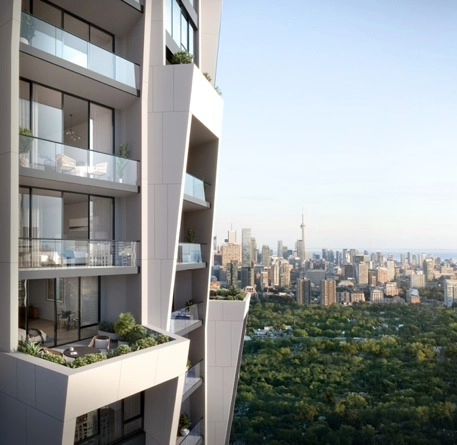
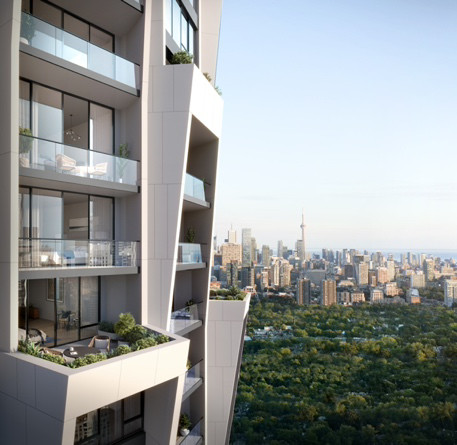
Studio Gang has designed a honeycomb-shaped residential building, titled One Delisle that offers residents an all-year-round outdoor patio overlooking Toronto, Canada. The project is designed as a windbreaker inspired by a German beach chair known as the Strandkorb. The tower will include up to 47 floors, with each distinct penthouse spanning one-third or one-half of the 16-sided building, and will offer residents hotel-style amenities.
Planning cities and the way that we comfortably live in them is often a pull between many things. From creating affordable housing for all, enhancing community facilities and amenities, and designing walkable neighborhoods, all aspects of urban design have trade-offs, or do they? While there are many reasons why cities are becoming increasingly more expensive, dense, and less pedestrian-friendly, one of the key drivers behind the increase in unaffordability has to do with the way that outdated zoning codes drive the lack of available housing that they regulate.
Kigali, Rwanda - September 21, 2018: a wide view looking down on the city centre with Pension Plaza in the foreground and Kigali City Tower in the background against a backdrop of distant blue hills. Image via Shutterstock/ By Jennifer Sophie
The urban metropolises of our planet are home to an abundance of stories. They are home to stories of wealth, of innovation, and of architectural marvels. They are home, too, to stories of inequality, inequity and of urban divides – places where one’s income determines the quality of the spatial environment around them. Within these stories has developed an increasing advocation for making cities “smarter”, the goal being to use data and digital technology to build more efficient and convenient urban environments.
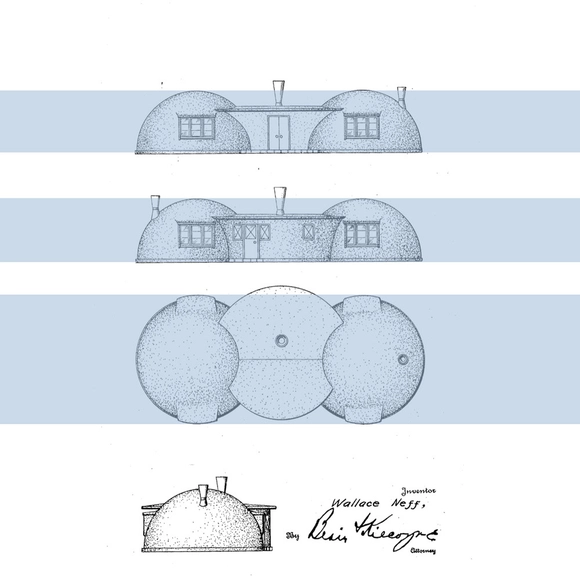
Following the Second World War, United States veterans and citizens were seeking a fresh start, a rightful place to live out their modern American dream. With a significant housing shortage looming around and fast-growing families, solutions had to be found to provide equitable living means for all. The development of new construction techniques and propagation of easy building materials promised an age of prosperity.
https://www.archdaily.com/969231/the-evolution-of-the-house-plan-in-the-united-states-post-war-eraAgustina Coulleri, Hana Abdel & Clara Ott
Casa CML / Ricardo Torrejón + Arturo Chadwick. Image
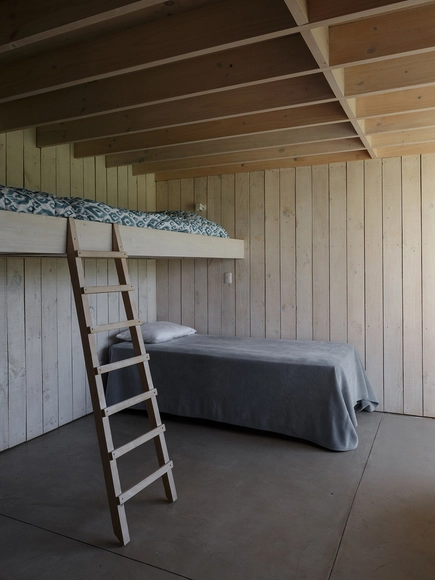
It is a common misconception that bunk beds - which are sleeping spaces elevated above floor-level - are used exclusively for the bedrooms of children and teens. While bunk beds are a great solution for younger kids and older kids alike, the practical aspect of bunk beds which gives ample sleeping space while saving on floor space, makes them great for a variety of purposes and applications. With a rise in density and the majority of people living in large urban centers making use of increasingly smaller living spaces, there has come a push towards modularity in interior architecture. For this reason, bunk beds and lofted sleeping areas have become a great solution to maximize square footage.
D Residence. Image Courtesy of Jemma Chidiac Achitects _ By JPAG.co
This week’s curated selection of Best Unbuilt Architecture highlights private residential projects submitted by the ArchDaily community. From futuristic private retreats on the coast of Hawaii to a mini-housing concept on the rocky cliffs of Montenegro, this article explores residential architecture and presents projects submitted to us from all over the world.
Featuring a secluded private residence that sits between a Persian mountain and river, an interior renovation of an 80's Mediterranean house, and a minimalist forest retreat, this round-up explores the diversity of private homes and how each design responds to its site's topography, context, and to the occupants spatial needs. The selection also includes villas in Lebanon, Iran, Tanzania, Netherlands, Ivory Coast, Kosovo, and Vietnam.
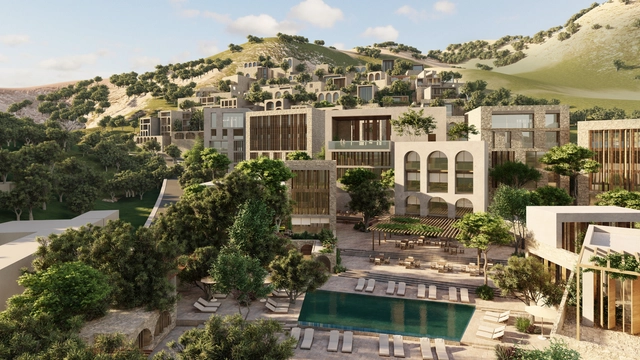
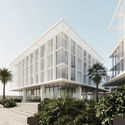
Oppenheim Architecture have unveiled the design of the Jali Hotel and Residences, a new luxury complex on Albania's southern coast. The project will nestle in the site's picturesque landscape and seaside, and provide visitors and residents with a public square, recreational amenities, and access to a vibrant beachside club that pay homage to traditional Albanian coastal structures.
In the world of design and urban planning, aesthetics and functionality seem to take the spotlight, especially in how large-scale housing projects are developed. While this can be a good thing that continuously pushes the modern boundary of what we consider to be a dwelling, in some aspects, it has shined a negative light on how we perceive and stigmatize “bad design” in public and affordable housing, the socioeconomic factors that have created the need for it, and the types of residents who benefit most from these types of housing policies.
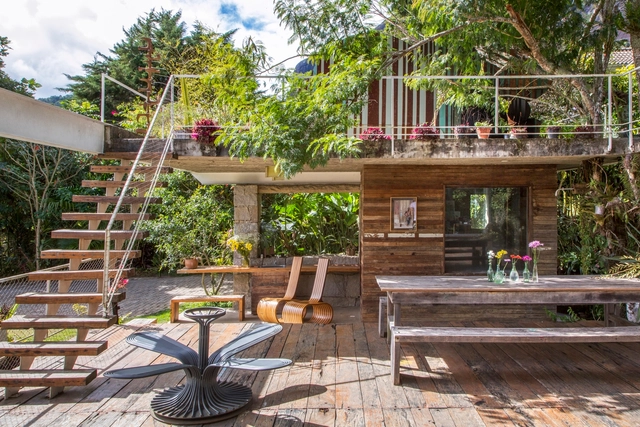
Reclaimed wood is wood that has been taken from its original application and repurposed. Old buildings such as houses, barns, and warehouses, often have to be torn down, resulting in demolition waste, which can be recycled and reused. Reclaimed wood can be used for many purposes, from cladding to building structures, and is very popular in contemporary architecture all over the world.
To get you inspired, here is a selection of 12 Brazilian houses that use this recycled material in flooring, walls, decks, bathrooms, outdoor areas, and stairs.
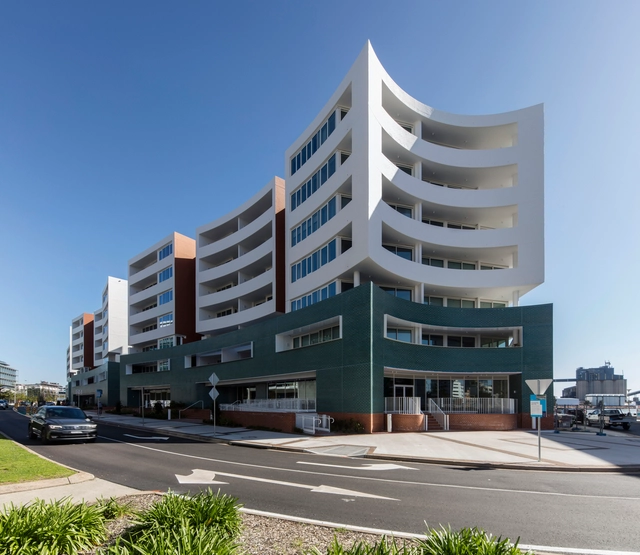
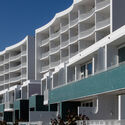
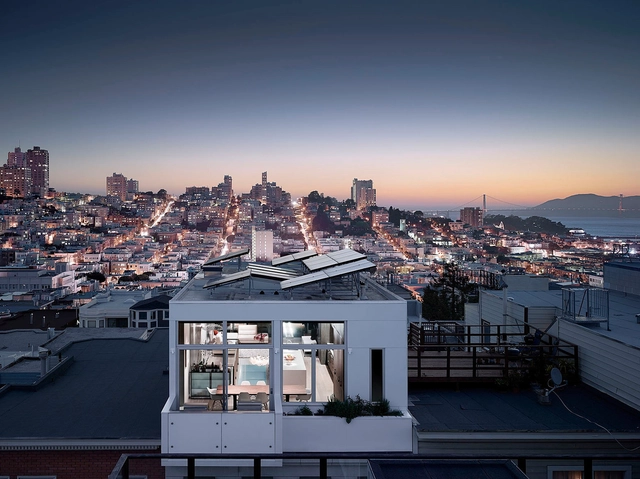
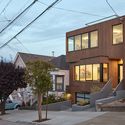
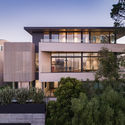
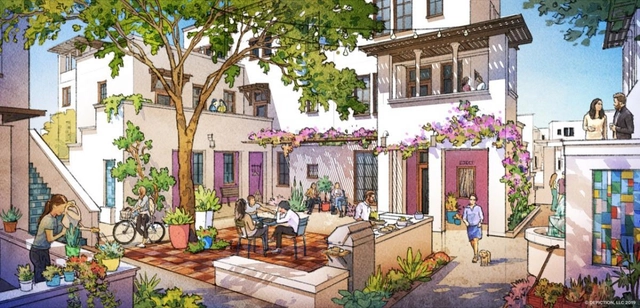
San Francisco is a city defined by its relationship to housing. Since the 90s it has faced an affordable housing shortage, and now, has some of the highest rents of any major US city. As planners and policy makers work to move beyond the city's past and find new paths forward, architects and designers are testing out diverse housing models. From dense residential towers to multi-unit developments, modern housing aims to strike a balance between economy and urbanity.






















.jpg?1630414739&format=webp&width=640&height=580)

.jpg?1630414689 "D Residence. Image Courtesy of Jemma Chidiac Achitects _ By JPAG.co")
.jpg?1630414739)