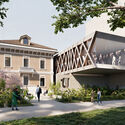
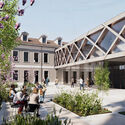
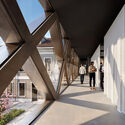
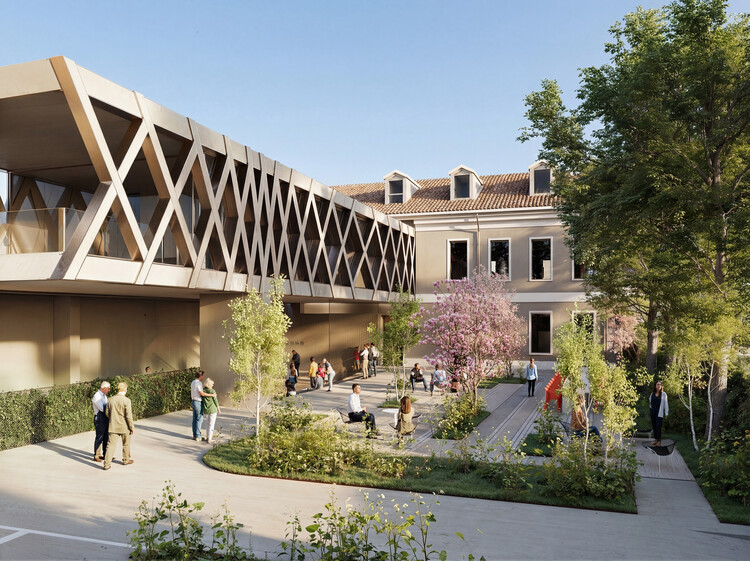
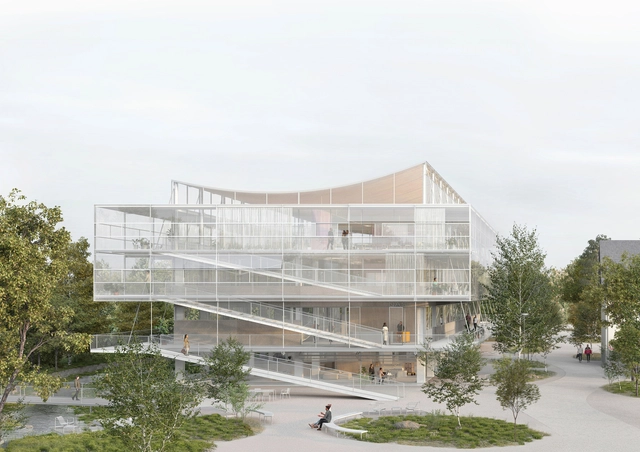
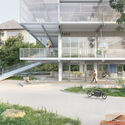
CRA–Carlo Ratti Associati has been selected to design the Buzzi Heritage cultural center in Casale Monferrato, Italy. The proposal introduces a 100-meter-long suspended truss that links two former educational buildings, consolidating archival, research, and cultural functions within a single structure. The project also marks the first real-world application of a patented structural system developed through research by Carlo Ratti Associati in partnership with Maestro Technologies. Positioned above a system of open spaces, the intervention reconfigures the site as a publicly accessible cultural complex while maintaining a clear distinction between built and landscaped areas.
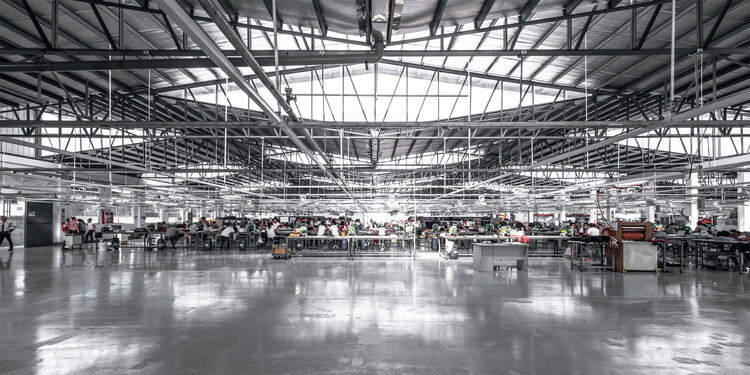
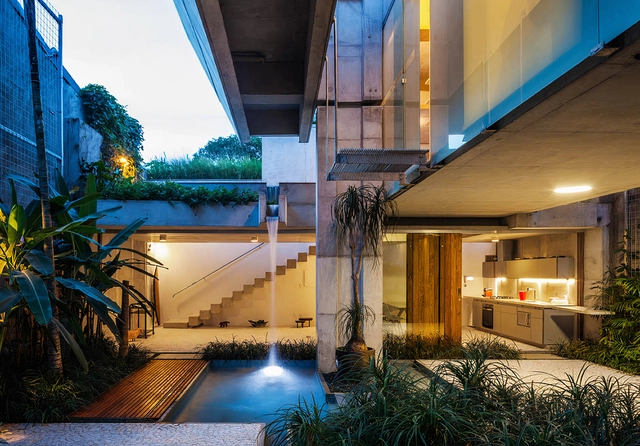
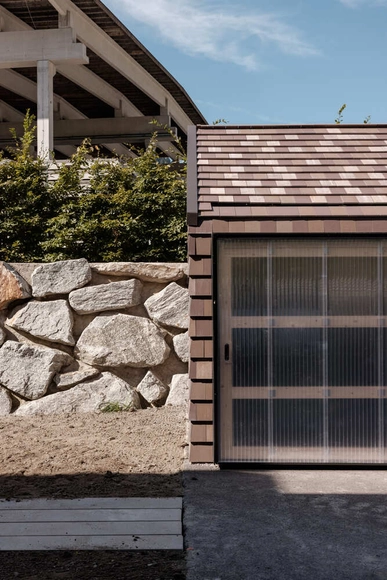
In Hong Kong, where interiors and small buildings are routinely caught between two extremes—high-gloss "luxury" finishes on one end, and budget-cautious industrial roughness on the other—a third attitude has emerged through the calibration of both: a uniquely precise, relevant, and materially honest execution that is not dependent on price point. This is calibrated rawness. Calibrated rawness describes an architecture that retains the directness of matter and materiality—concrete, metal, blockwork, exposed structure, visible services—while subjecting it to rigorous control.
The "raw" is not a costume, and the "refined" is not polished; it is a discipline of precise execution, producing spaces that feel balanced and considered, yet never "made up" or overworked. Studio 1:1 demonstrates this attitude consistently across its work—and its upcoming publication, Architecture under the Radar: Three Projects in Asia (with a foreword by Nader Tehrani), offers a timely frame through which to read this ethos as more than an aesthetic, but as a repeatable architectural method.
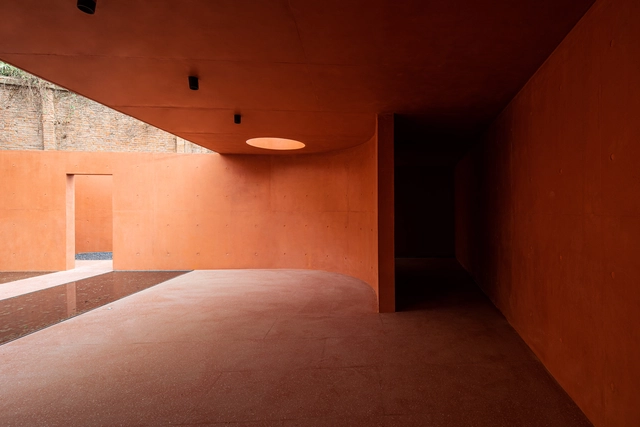
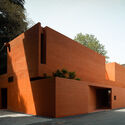
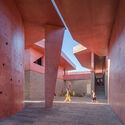
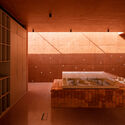
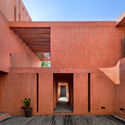
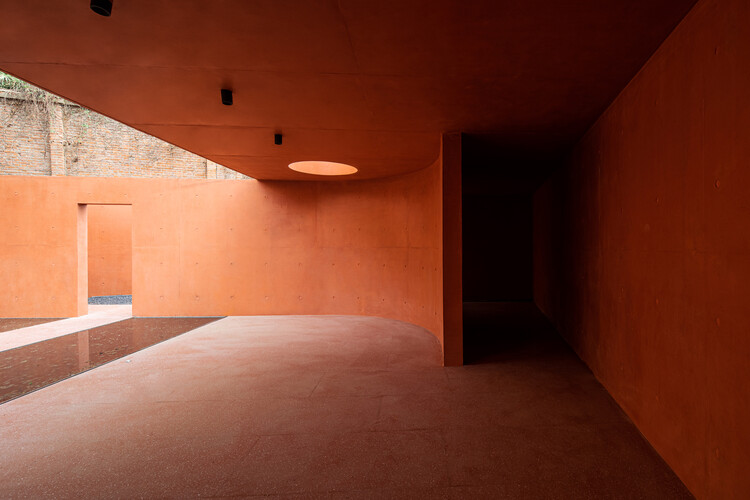
Concrete is often seen as the material of modernity, defined by its structural strength, raw finish, and unmistakable gray tone. It became the default palette of 20th-century architecture, a symbol of functionality and permanence. Yet, concrete is not bound to this chromatic identity. Its color is a byproduct of the cement, aggregates, and chemical composition used in its mix, and it can be intentionally altered through pigmentation. Among the many hues explored, red stands out — not only for its visual intensity, but for its ability to root buildings in place, evoke cultural references, and imbue architecture with a material presence that feels both elemental and expressive.
Pigmenting concrete involves the addition of mineral-based colorants — usually iron oxides — during the mixing process. Unlike paints or coatings applied to the surface, these pigments are integrated directly into the concrete mass, ensuring the color permeates the material and remains stable over time. Red pigments in particular are often derived from iron oxide (Fe₂O₃), a naturally occurring compound found in clay, hematite, and other iron-rich minerals. Their deep, earthy hue connects contemporary construction with ancient techniques — from Roman pozzolana mortars to the red earth buildings of West Africa and South America.
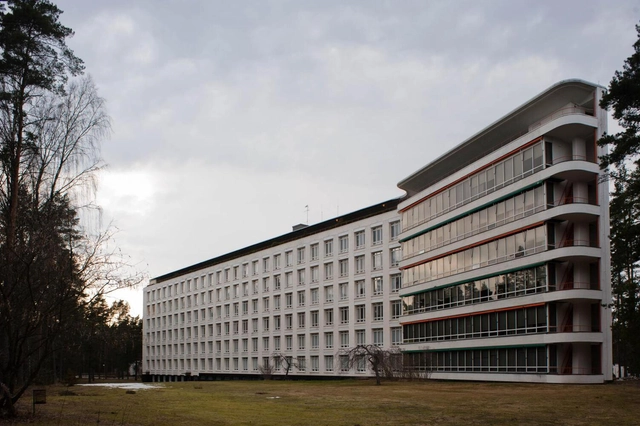
In the early 20th century, tuberculosis presented a significant public health challenge across Europe, prompting the construction of specialized facilities for patient recovery. The Paimio Sanatorium in Finland stands as a groundbreaking example of architecture's potential to promote healing. Designed by Alvar Aalto between 1929 and 1933, the sanatorium combined innovative design principles with a deep understanding of human needs, setting new benchmarks for healthcare architecture.
Alvar Aalto, a leading figure in modernist architecture, envisioned the Paimio Sanatorium as more than a functional response to a medical crisis. He crafted a space where architecture became an instrument of care, integrating natural light, ventilation, and harmonious forms to support physical and emotional well-being. This project marked a turning point in Aalto's career, showcasing his ability to blend modernist ideals with a profound sensitivity to context and human experience.
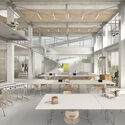
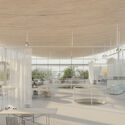
Gustav Düsing and FAKT have just won the competition to design an adaptive reuse project in Siegen, Germany. Following Gustav Düsing’s recent win of the EU Mies Award 2024, the NAS project was developed through a comprehensive participatory process involving students, faculty, staff, and community members. The New Architecture School (NAS) is an adaptive reuse proposal transforming the former printing facility into a new type of central campus. Aspiring to act as a dynamic urban entity, the design combines academic pursuits with cultural and public spaces.
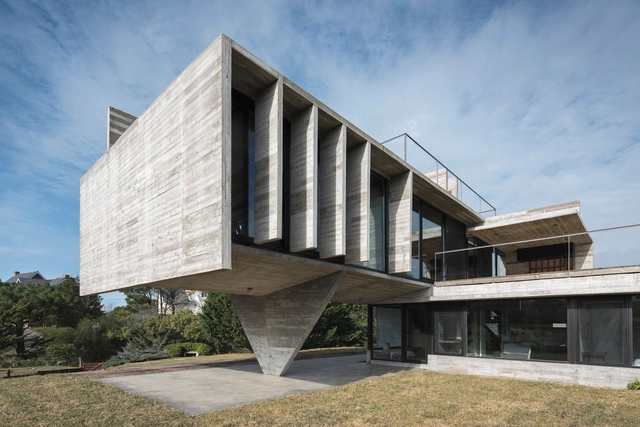
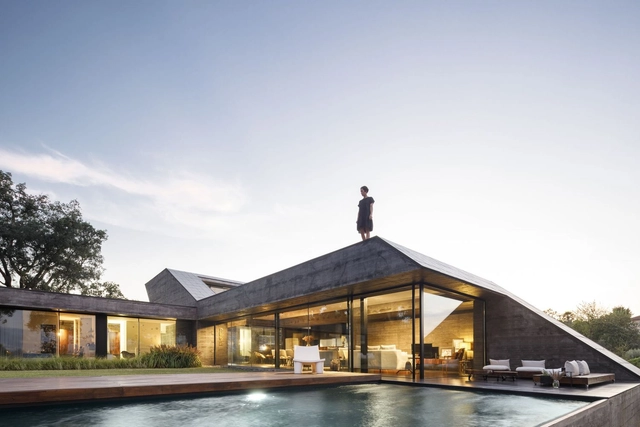
In response to the diverse topographies and natural conditions throughout the Argentine territory, the works of Luciano Kruk propose an architecture that works in harmony with the environment, the landscape, and the nature in which they are situated. Whether immersed in a forest, on sloping terrain, or on a rural plain, among other geographies, his intention is to enhance the relationship between the interior and exterior of the architecture, using concrete as the main material in most of his projects.
It's fundamental that architects know about structures, not only to bring their designs to reality but also to be able to discuss their projects with engineers in order to find the best solutions for construction. Structural pre-dimensioning is crucial to the initial design of the structural components, revealing the restrictions and the possibilities of the spaces.
One of the main loads that a structure must support is its own weight, so it's essential to know this information so that the different parts of the building can be dimensioned. When starting a structural project, the engineer doesn't yet know the dimensions of the different pieces that make up the structure, and therefore, can't know their own weight. A paradox appears without a solution: to know the weight it's necessary to know the dimensions, but, to know the dimensions, it's necessary to know the weight.
During the development of the project the architect finds himself in the curious situation of having to design without necessarily knowing the size of each of the parts of the building (such as the size of the pillars, for example). These important elements directly affect functionality and aesthetics of the project.
https://www.archdaily.com/891880/learn-to-pre-dimension-a-reinforced-concrete-structureJoão Carlos Souza
pixel application. Image Courtesy of Rieder Group / Florian Voggeneder
Nowadays, the concepts of reducing waste and upcycling have experienced a remarkable expansion in various fields of architecture, driven by the need to change the paradigm of consumption habits in both society and industry. This wave not only responds to sustainable approaches but has also demonstrated significant benefits in economic terms. Today, the transformation of various resources, from excavated earth to agro-waste and plastics, is being carried out to create new materials, thus consolidating the efficiency and feasibility of more environmentally friendly practices.
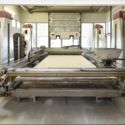
Within this context, technology and data have contributed significantly to a better understanding of materials and to exploring new processing methods. In this regard, artificial intelligence has become a valuable ally. In addition, innovations in software have made it possible to maximize the potential of what was previously considered waste. Correspondingly, Rieder has introduced a product innovation named pixel, aimed at minimizing waste in the production of facade elements constructed from glass fiber-reinforced concrete.
https://www.archdaily.com/1012597/transforming-waste-into-pixels-of-glassfiber-reinforced-concreteEnrique Tovar
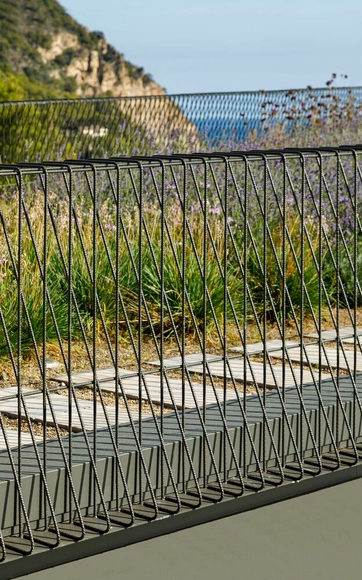
Concrete has enormous resistance to compressive stress, but it is a fragile material in terms of tension, which occurs when forces are applied in opposite directions of a structure, tending to separate the parts. This is why the incorporation of steel into concrete –which provides high levels of strength when stretched– has made so-called reinforced concrete the world's most widely used construction method. In other words, reinforced concrete combines the intrinsic advantages of its two components (concrete and steel reinforcement) to produce an extremely robust, versatile, and practical material. These steel reinforcements, in addition to reinforcing concrete, can also be used in art installations, facades, and even interiors.
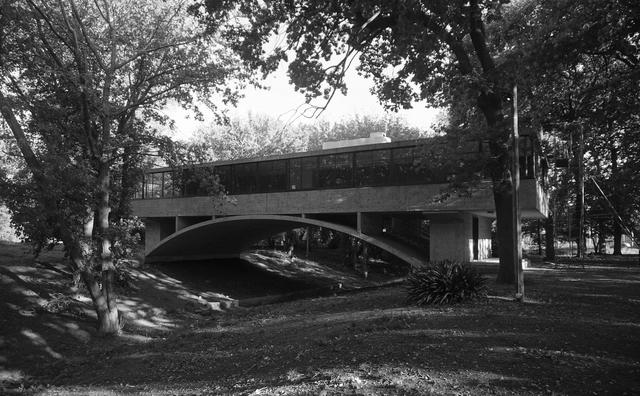
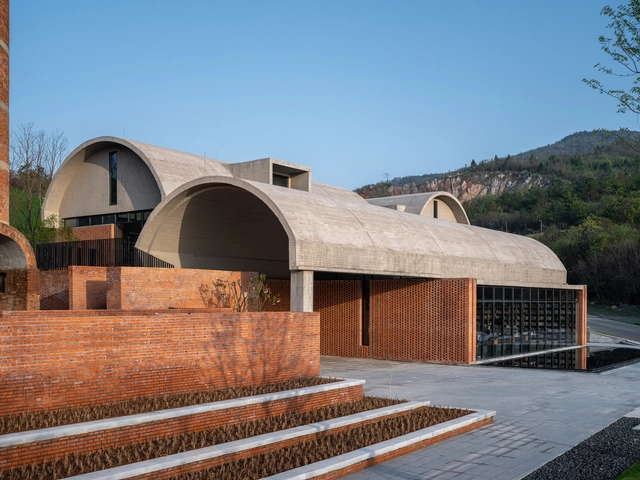
The oldest record of barrel vaults is estimated to date back to 4000 BC. These provided the spans in the Sumerian ziggurat at Nippur in Babylonia, built from fired bricks amalgamated with clay mortar. This type of vault was built as a continuous round arch and became a characteristic architectural element of Roman architecture, later used also in Renaissance architecture.
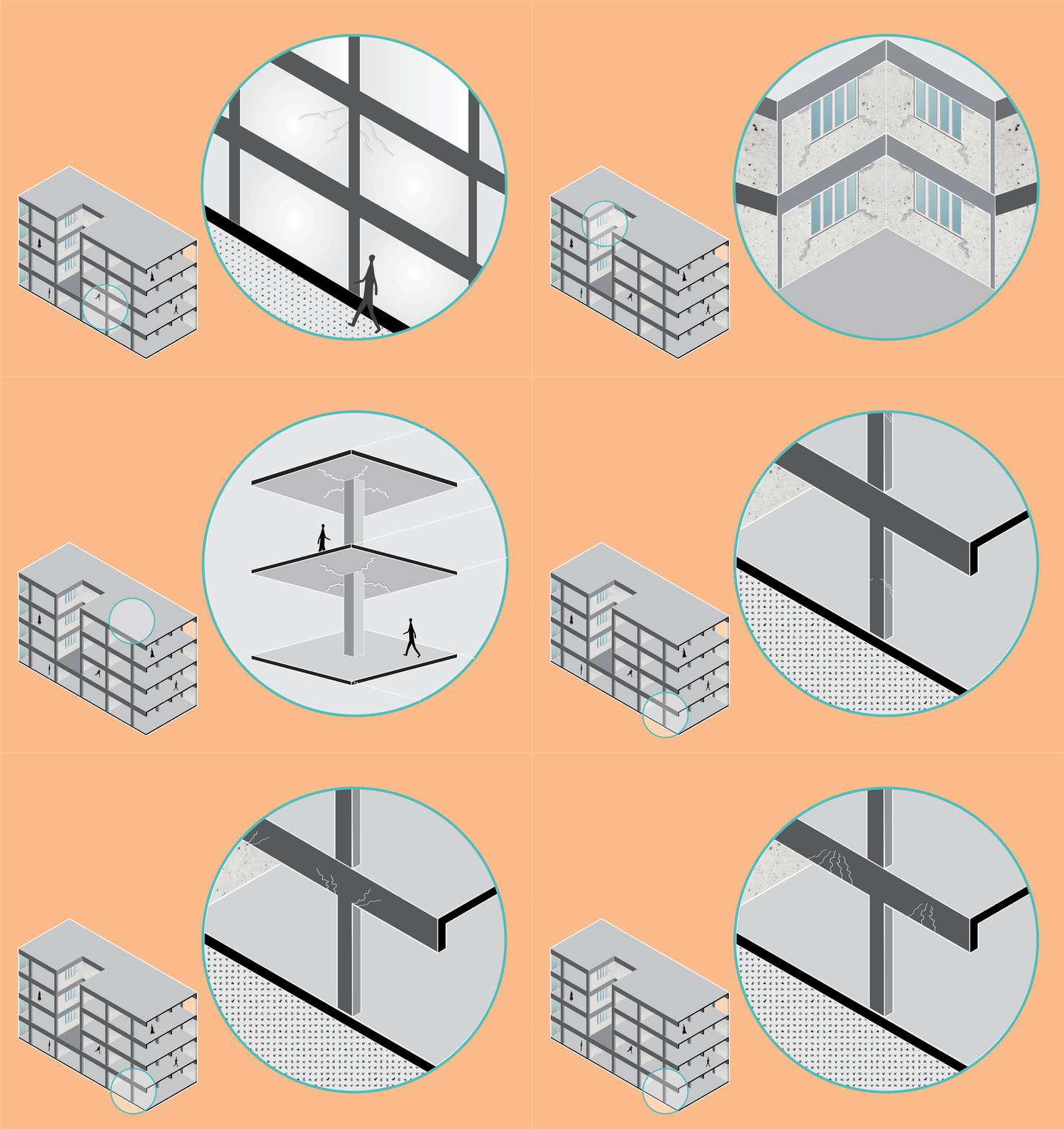
Cracks, which could be classified according to their thickness as fissures or fractures, are serious problems in the construction industry that can negatively affect aesthetics, durability and, most importantly, the structural characteristics of a project. They can happen anywhere, but occur especially in walls, beams, columns, and slabs, and usually, are caused by strains not considered in the design.
https://www.archdaily.com/879953/what-do-the-cracks-in-concrete-structures-meanJoão Carlos Souza
The use of concrete in construction is probably one of the main trademarks of 20th century architecture. Concrete is composed of a combination of materials which when mixed with water solidify into the shape of the container where it is poured in. In this sense, it is the container or the ‘moulds’ who rule the outcome. The reuse of molds for casting concrete is a technique used to replicate and control the production of concrete elements or buildings. Architects and designers have used/created diverse types of molds and casting techniques to explore the limits of the material.
Complex designs often require bulky structural systems to support imaginative forms. But 3D printing technology has begun to provide unlimited architectural potential without compromising design or structural durability. Researchers at ETH Zurich, under the leadership of Benjamin Dillenburger, have now developed an innovative 3D sand printing technique that allows for quick molding and material reuse.
They have used this technique to create a formwork to fabricate an 80 square meter lightweight concrete slab at the DFAB House, the first and largest construction of its kind. The “Smart Slab,” which carries a two-story timber unit above it, merges the structural durability and strength of concrete with the design liberation of 3D printing.












_Maureen_M._Evans.jpg?1646840531 "© Maureen M. Evans")










.jpg?1533120986 "Courtesy of ETH Zurich / Tom Mundy")
.jpg?1533120727 "Courtesy of ETH Zurich / Andrei Jipa")
.jpg?1533120793 "Courtesy of ETH Zurich / Tom Mundy")