1. ArchDaily
  2. Rebuilding

Rebuilding: The Latest Architecture and News

Demolished and Rebuilt: The Identity of Architectural Replicas

The rights to reconstruct Kisho Kurokawa's iconic Nakagin Capsule Tower are currently sold on one of the largest NFT sites. While the tower’s demolition has begun earlier this year, the auction sells the right to rebuild the structure, in both the metaverse and in real space. The idea of recreating the Metabolic building in a virtual space seems natural. It could allow a larger community to explore an iconic piece of architecture and encourage them to experiment with it, an initiative in line with Metabolist ideals. On the other hand, the idea of reconstructing a demolished historical building in the physical world raises a different set of conflicting emotions. Architectural replicas are not the norm, but their existence raises questions regarding the identity and authenticity of works of architecture.

Demolished and Rebuilt: The Identity of Architectural Replicas - Image 1 of 4Demolished and Rebuilt: The Identity of Architectural Replicas - Image 2 of 4Demolished and Rebuilt: The Identity of Architectural Replicas - Image 3 of 4Demolished and Rebuilt: The Identity of Architectural Replicas - Image 4 of 4Demolished and Rebuilt: The Identity of Architectural Replicas - More Images+ 5

Heneghan Peng Architects Wins Competition for Transforming the Ruins of a Historical Berlin Church

The design by heneghan peng architects, Dublin, with Ralph Appelbaum Associates, Berlin, was awarded 1st prize in the international competition for the replanning and expansion of the Old Tower of the Kaiser Wilhelm Memorial Church. The competition’s purpose was to redesign the original West Tower, which was partially destroyed during a bombing by the Allied Forces in 1943, and return it to the tourist circuit as a war memorial and exhibition space.

New Orleans Architecture City Guide: 18 Sites to Empower New Generations

Subscriber Access | 

Home to architectural styles spanning almost three hundred years, the is no city like New Orleans. The meld of French, Spanish, and Caribbean architectural influences, in conjunction with the demands of the hot and humid climate, has impacted the urban fabric as much as the culture itself. Located along the Mississippi River and close to the Gulf of Mexico coast, the construction of ports, NOLA’s trading history, and forceful natural phenomena like Hurricane Katrina in 2005 illustrate how water has shaped the city.

Following Hurricane Katrina, Orleans adapted its values to respond to the changing needs of its recovering community. Although reconstruction is not only architectural responsibility, New Orleans public architecture has contributed to revitalizing and reinhabiting the city after the disaster. Museums, parks, and churches, each of these places connects people to each other in ways that define and support community.

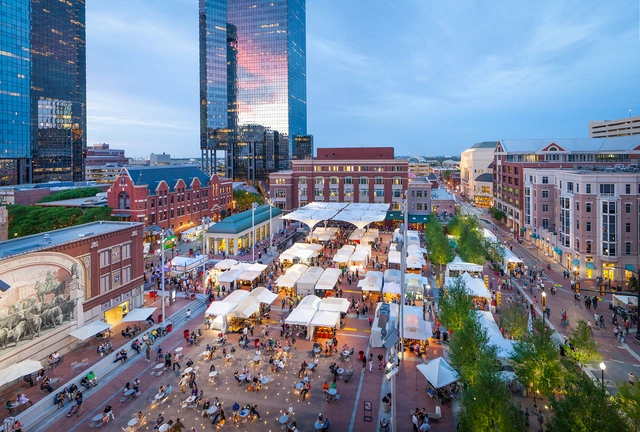
New Orleans Architecture City Guide: 18 Sites to Empower New Generations - Image 1 of 4New Orleans Architecture City Guide: 18 Sites to Empower New Generations - Image 2 of 4New Orleans Architecture City Guide: 18 Sites to Empower New Generations - Image 3 of 4New Orleans Architecture City Guide: 18 Sites to Empower New Generations - Image 4 of 4New Orleans Architecture City Guide: 18 Sites to Empower New Generations - More Images+ 15

Discontinued Aesthetics: The Effects of Abrupt Changes in Urban Landscapes

Public spaces play a significant role in organizing the life of every community but defining what differentiates them from other spaces within the city is not an easy task. Once these spaces start to settle into the collective memory of the local communities, they become key elements that concentrate the mental image of a city. While this process usually happens with urban spaces, monuments and isolated architectural elements can also become markers for the urban life of an area. So, what happens when dramatic events like fires, war, or even the pandemic alter that image?

Discontinued Aesthetics: The Effects of Abrupt Changes in Urban Landscapes - Featured ImageDiscontinued Aesthetics: The Effects of Abrupt Changes in Urban Landscapes - Image 1 of 4Discontinued Aesthetics: The Effects of Abrupt Changes in Urban Landscapes - Image 2 of 4Discontinued Aesthetics: The Effects of Abrupt Changes in Urban Landscapes - Image 7 of 4Discontinued Aesthetics: The Effects of Abrupt Changes in Urban Landscapes - More Images+ 3

The Trends that Will Influence Architecture in 2019

It is, once again, the time of year where we look towards the future to define the goals and approaches that we will take for our careers throughout the upcoming year. To help the millions of architects who visit ArchDaily every day from all over the world, we compiled a list of the most popular ideas of 2018, which will continue to be developed and consolidated throughout 2019.

Over 130 million users discovered new references, materials, and tools in 2018 alone, infusing their practice of architecture with the means to improve the quality of life for our cities and built spaces. As users demonstrated certain affinities and/or demonstrated greater interest in particular topics, these emerged as trends. 

How to Design Semi-Permanent Structures

Natural disasters continue to leave thousands of people homeless every year, forcing them to seek refuge without any alternatives. On many occasions, cities cannot cope with refugees, limiting their resources. In addition to this, the difficulties to sustain refugees in a dignified way, becomes increasingly complex, leading to the collapse of conventional strategies.

It is at this moment when innovation and creativity play an important role in construction practices, ultimately creating a quicker and more efficient construction model that can be replicated after natural disasters.

Undoubtedly, there are some principles that should be taken into account when designing a semi-permanent structure. Thus, we have gathered some tips and examples that you may find useful. 

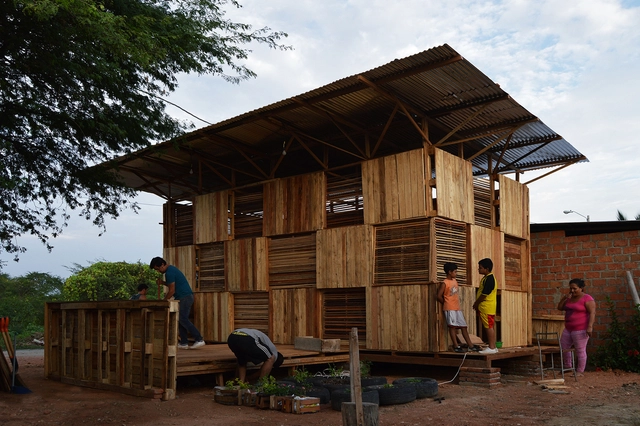
How to Design Semi-Permanent Structures - Image 1 of 4How to Design Semi-Permanent Structures - Image 5 of 4How to Design Semi-Permanent Structures - Image 6 of 4How to Design Semi-Permanent Structures - Image 7 of 4How to Design Semi-Permanent Structures - More Images+ 3

Rebuilt Travel Agency Receives a More Fluid and Dynamic Space

Rebuilt Travel Agency Receives a More Fluid and Dynamic Space - Image 4 of 4
© Rafael Shcmidt

This article is part of our series "Material Focus", where we ask architects to share with us their creative process through the choice of materials that define important parts of the construction of their buildings.

From the demolition of the existing building to the making of a new one better suited to the travel agency’s requirements of more open space, the new project also needed to leave the remaining neighboring building intact. The solution they went with was to create a new structure away from the wall, stripped to let the bricks show, and within that underlying area create a space with vertical circulation, natural lighting, gardens, and service areas like a kitchenette, restrooms, and a technical shaft. We spoke with architect Baldomero Navarro Gomes from NN Arquitetos Associados to learn more about his choices on materials and the determining role they played in his design concept.

Reconstructing Space, Reconstructing Community in Japan

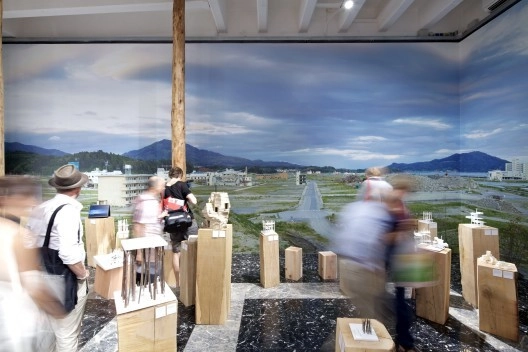
Still rebuilding after the catastrophic tsunami of 2011, Toyo Ito, Kazuyo Sejima, and other notable Japanese architects, have teamed up on the "Home for All" project to provide community-focused housing to disaster-stricken communities. While the architect-driven initiative seems to be a success, Edwin Heathcote of the Financial Times asks in this exquisitely well-written article: are a set of "starchitects" the right team for the job? (Spoiler: Yes)

"Designing Recovery" Winners: Resilient, Livable Homes for Vulnerable Cities

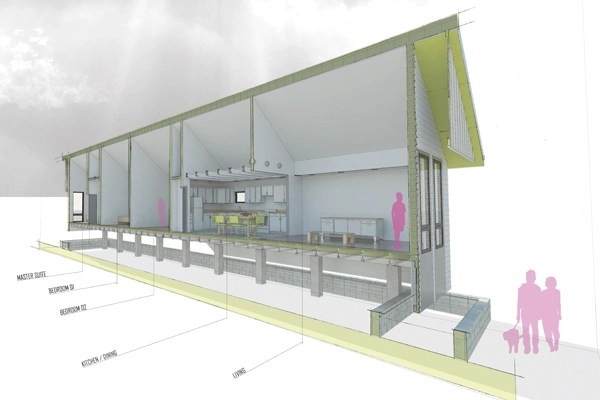
“Designing Recovery,” a competition focused on the planning and rebuilding of resilient and sustainable communities, has announced its three winning entries, by sustainable.to Architecture + Building, GOATstudio LLP, and Q4 Architects.

The competition, which was a collaboration between the American Institute of Architects (AIA), Make It Right, Architecture for Humanity, the St. Bernard Project, and Dow Building Solutions, was envisioned to aid communities affected by devastating natural disasters – in this case, New York City, New Orleans, and Joplin, MO.