1. ArchDaily
  2. R. Buckminster Fuller

R. Buckminster Fuller: The Latest Architecture and News

Montreal Architecture City Guide: 15 Historic and Contemporary Landmarks in Canada’s Cultural Capital

Subscriber Access | 

Montreal, located along the Saint Laurent River in Southern Quebec, is Canada’s second-largest city. Often renowned for its architectural diversity, its built environment reflects both its colonial past and modern evolution. As a former territory of "Nouvelle France," French language and culture remain dominant, which has in turn influenced the city's architectural character. Notably, Old Montreal features well-preserved buildings from the 18th and 19th centuries, most of which are a testament to the city’s industrial growth after the construction of the Lachine Canal. The area's heritage has been protected and restored through efforts by figures like Phyllis Lambert and organizations such as Heritage Montreal, allowing the city’s rich architectural history to coexist with its modern developments.

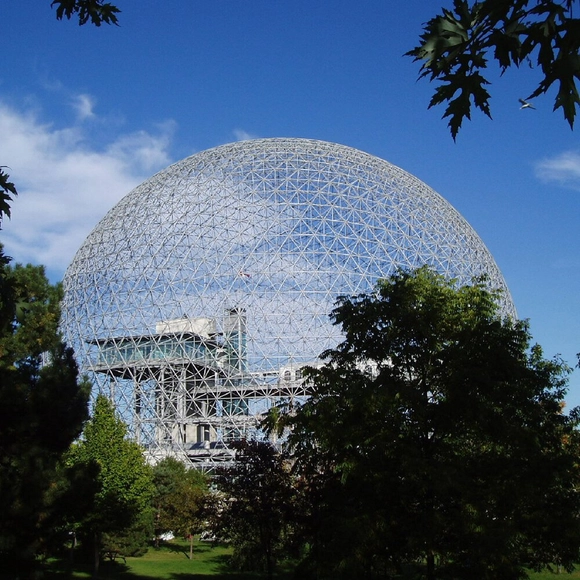
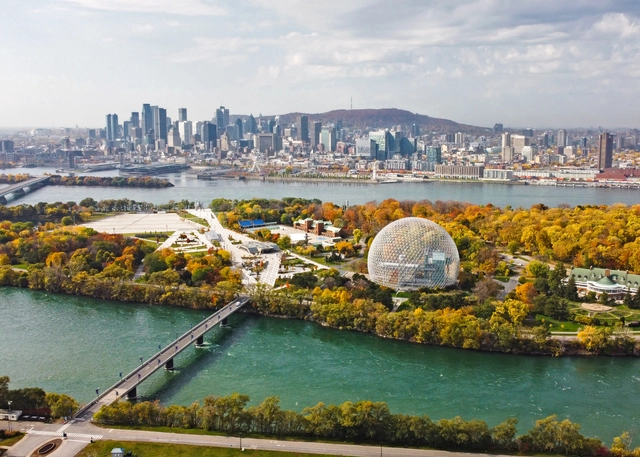
Montreal's multiculturalism is evident in neighborhoods like Little Italy and Little Portugal, with its diversity fueling a vibrant cultural scene. The city hosts a multitude of festivals every year, many held in open-air venues like Place des Festivals. Parc Jean-Drapeau, built for the 1967 World Expo, is another popular spot for large events while offering stunning views of the city skyline. Another relevant site is Mont Royal Hill, a park offering panoramic views of downtown and access to hiking trails, Saint Joseph’s Oratory, Beaver’s Lake, and other areas of architectural interest such as the Plateau.

Montreal Architecture City Guide: 15 Historic and Contemporary Landmarks in Canada’s Cultural Capital - Image 1 of 4Montreal Architecture City Guide: 15 Historic and Contemporary Landmarks in Canada’s Cultural Capital - Image 2 of 4Montreal Architecture City Guide: 15 Historic and Contemporary Landmarks in Canada’s Cultural Capital - Image 3 of 4Montreal Architecture City Guide: 15 Historic and Contemporary Landmarks in Canada’s Cultural Capital - Image 4 of 4Montreal Architecture City Guide: 15 Historic and Contemporary Landmarks in Canada’s Cultural Capital - More Images+ 12

Bucky Fuller’s Most Complex Invention May Have Been Himself

This article was originally published on Common Edge.

Today we know R. Buckminster Fuller primarily through his oeuvre of iconic objects and ideas created over the arc of a nearly 90-year life. Born in the last decade of the 19th century, Fuller lived long enough to hang out with Steve Jobs. He’s variously described as a “systems thinker,” perhaps the first “futurist,” a visionary, engineer, geometer, and architect (he won the AIA Gold Medal in 1970). But “inventor” is probably the most accurate description. Historian and writer Alec Nevala-Lee’s 2022 biography, aptly titled Inventor of the Future: The Visionary Life of Buckminster Fuller (Dey St. Books), tells a nuanced story of the man known for geodesic domes; space frames; “Spaceship Earth”; the Dymaxion map, house, and car; and concepts such as tensegrity, synergy, and “ephemeralization” (“doing everything with nothing at all,” as he described it).

The Insignificance of Aesthetics: An Exhibition at Vitra Design Museum Adds a Context of Urgency to the Works of Victor Papanek

The Insignificance of Aesthetics: An Exhibition at Vitra Design Museum Adds a Context of Urgency to the Works of Victor Papanek - Image 3 of 4
Victor Papanek. Image Courtesy of donation from Nicolette Papanek/Victor J. Papanek Foundation

This article was originally published on Metropolis Magazine as "Design Provocateur: Revisiting the Prescient Ideas of Victor Papanek".

“Today industrial design has put murder on a mass-production basis,” declared Victor Papanek, design provocateur and critic, from the podium of a design-activist happening in 1968. “By designing criminally unsafe automobiles that kill or maim,” he roared, “by creating a whole new species of permanent garbage to clutter up the landscape, and by choosing materials and processes that pollute the air we breathe, designers have become a dangerous breed.”

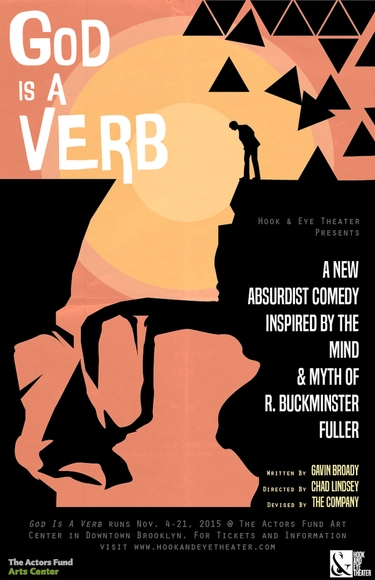
God Is A Verb: A New Play Inspired by R. Buckminster Fuller

GOD IS A VERB is an urgent portrait of a world - and a man - on the brink. Summer 1969, an eccentric professor gathers a team of offbeat academics to play a game with one goal: make the world work for all humanity. As the clock ticks, the lines blur between the game and the real world and we wonder if we've detached from reality altogether.

Hook & Eye is an ensemble company of theater-makers, actors, dancers, musicians and artists based in Brooklyn, NY. We build totally new theatrical pieces full of joyful athleticism, soul, and song. The mission of Hook & Eye is to build inspiring and inquisitive theater productions to embolden audiences of every age. We are committed to compensating our artists for their work, and offering low-or no-cost tickets to audiences and students.

ASM International World Headquarters Renovation / The Chesler Group and Dimit Architects

Subscriber Access | 
ASM International World Headquarters Renovation / The Chesler Group and Dimit Architects - Image 16 of 4
© Jeff Goldberg ESTO

The ASM International World Headquarters, originally constructed in 1959, is an architectural composition by two influential designers during the mid-twentieth century: John Terence Kelly, who studied under Bauhaus-founder Walter Gropius, and R. Buckminster Fuller, well known for his geodesic domes, environmentally-conscious designs and the dymaxion car. The complex includes the building, dome and garden on the 45-acre site known as Materials Park. The renovation, led by The Chesler Group and Dimit Architects, brings new life to Kelly’s building. According to Architectural Record, (Snapshot, Laura Raskin), Michael Chesler of The Chesler Group, campaigned to salvage the architectural marvel, giving it a place in the National Register of Historic Places and using tax credits to fund the renovation.

Pictures and details of the renovation after the break.