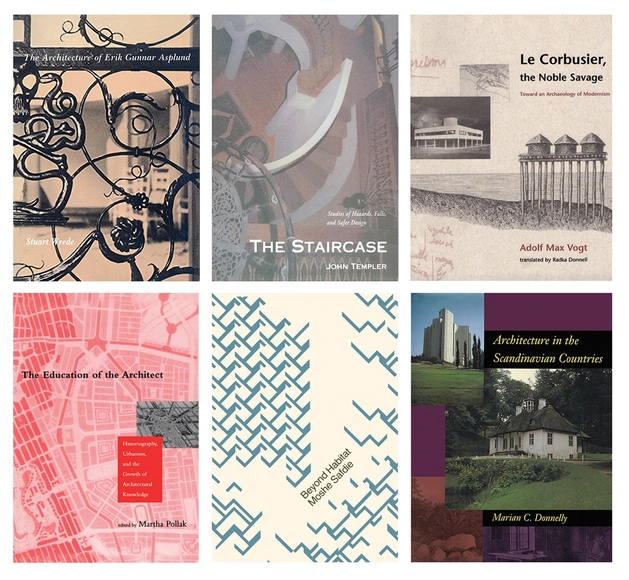
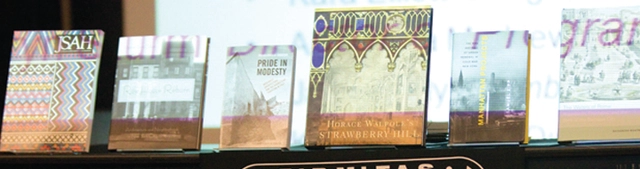
Funded by Andrew W. Mellon and the National Endowment for the Humanities foundations as part of the Open Book Program, a collection of classic books, published between 1964 and 1998 are now available online as open access e-books through the MIT Press Open Architecture and Urban Studies book collection.
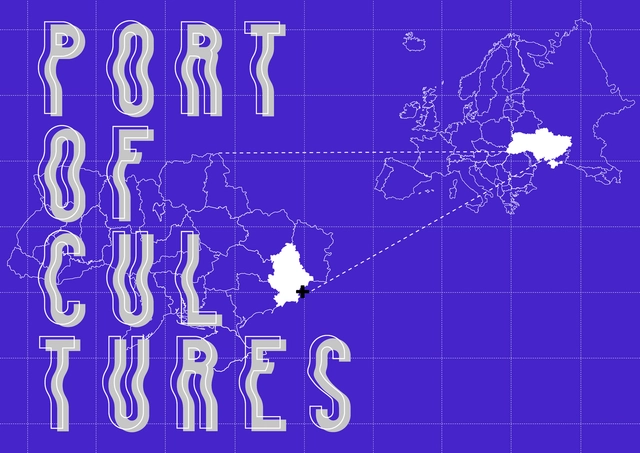
Municipality of Mariupol (UA) invites architects, designers and interdisciplinary teams to submit architectural ideas for a new multifunctional center that will be devoted to the subject of migration, a process that has shaped the city throughout the centuries, becoming an integral part of its identity. The Port of Culture will uncover and explore the less known traits of Mariupol city, and contextualize its local history within larger regional and global processes related to migration.
The International Committee of Architectural Critics CICA is pleased to announce an invitation to publishers, editors, curators and authors to submit their publications for consideration for the 10th CICA Awards 2020 by 30th November 2019. Award winners will be announced during the UIA XXVII World Congress of Architecture to be held in Rio de Janeiro from July 19th to 23rd, 2020.
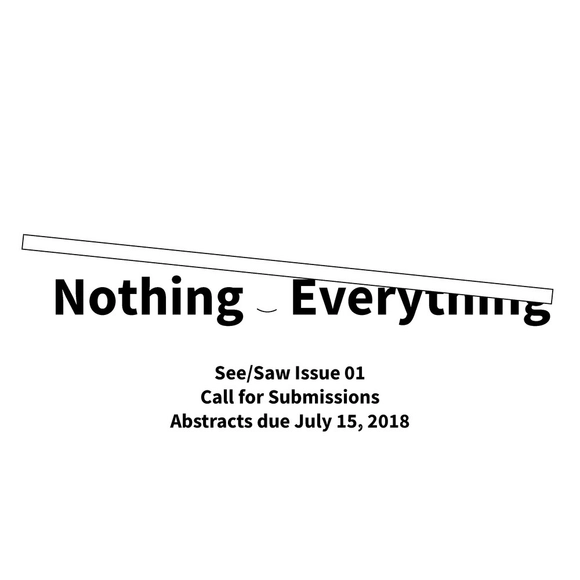
See/Saw is the student-run architecture publication of the University of Maryland.
“Nothing, and Everything Else” aims to locate architecture’s general position between nothing and something. Nothing is temporary, easily intimated, fleeing whenever something comes to take its place. At one point obsessed with space, architecture as a discipline has become occupied by a diffuse range of topics and fields which poses the question - is everything now architecture, or alternatively, is architecture now nothing? Is there a middle ground between the two? And is nothing residual - does it last or linger, smell stinky or pleasant, is it strong or subtle?
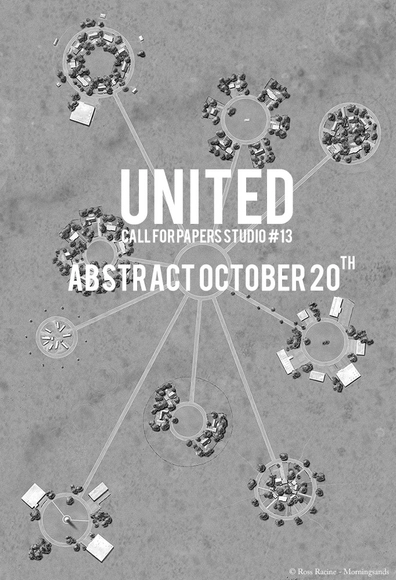
How does formal commitment of architecture and urban planning give us a UNITED (or not) city landscape, through the transformation of its knowledge into aggregational processes? Territories have different strategies of possession by its inhabitants, in between different narratives, epistemological discourses, and fragmentation processes. Within this context, the city is characterized by structural UNITED elements that shape urban futures.
City Cook Book invites projects and initiatives worldwide that work with food dynamics and culture to enhance public space and foster social interaction to be part of its platform.
If you have developed or are actively engaged in any such initiatives we would like you to share your experience in our open repository. The projects will be presented both in a digital platform and a publication.
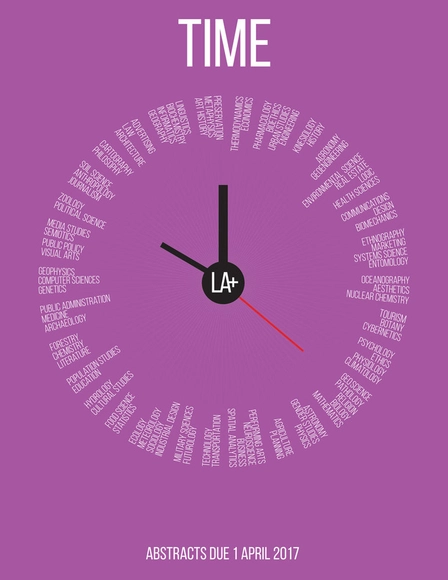
Time is ticking. That’s what it does. Or at least that’s how we represent what we don’t understand. For physics, time is a byproduct of so called space-time, elastic goo created at the very moment that something came from nothing; the moment eternity stopped and the universe began. For geology, time is 4.5 billion years of compression and catastrophe. For biology time is 3.5 billion years of diversification and now the urgency of the sixth extinction. For anthropology time is 150 thousand years since mitochondrial Eve walked out of the rift valley in Ethiopia. For historians, time begins with Herodotus (484 BC) and ends, or rather doesn’t, with Fukuyama’s The End of History. For architecture time is ruination. For landscape architecture time is ephemerality, entropy, and growth. For all of us time is running out. In this issue of LA+ we invite speculations on the question of time from all relevant disciplines.
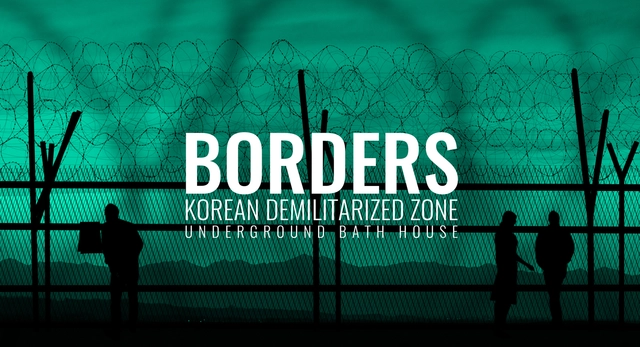
Borders - The Korean Demilitarized Zone Underground Bath House
The border between North and South Korea is not just a symbolic line dividing the two countries. It is a high tensioned zone not freely entered or explored. arch out loud is excited to announce their international open-ideas competition, Borders - The Korean Demilitarized Zone Underground Bath House, which will explore the implications of border conditions.
The Society of Architectural Historians is accepting nominations for its 2017 PublicationAwards. The program includes five awards that will be presented at the Society's 2017 Annual International Conference (Glasgow, June 7-11). The deadline to submit is Monday, August 1, 2016.
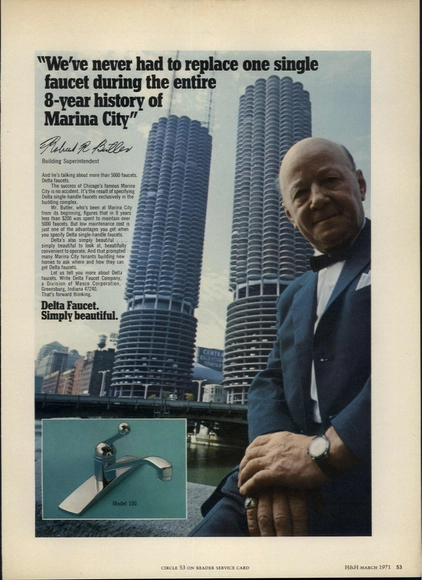
House+Home, March 1971 Page 53. Image via Colossus
North Carolina Modernist Homes (NCMH) and Hanley Wood (parent company of ARCHITECT) have partnered to create Colossus: a new digital archive of 20th century architectural publications, reports Architect Magazine. When complete, it will be the largest digital archive of modern architecture magazines, with over 1.3 million pages.
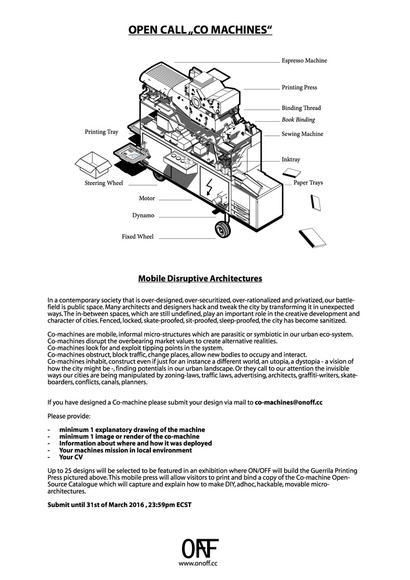
The modernist movement looked to industrial processes – factories, warehouses and silos - to enhance their designs. Their dream was to create rationalized machines for living. They thought the functional glass box could modernize everyday life. By bringing efficiency into every aspect of the city, home, and schools we would become liberated creatives and thinkers. Since then, there have been many iterations of machine-methods applied to the physical and cultural environment.
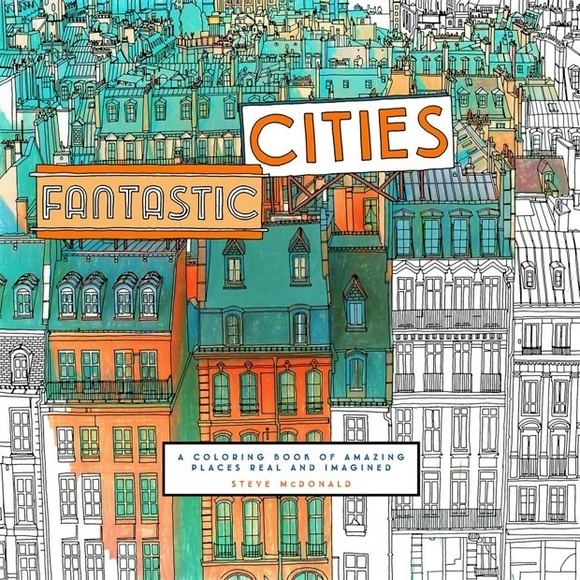
Canadian artist Steve McDonald has released "Fantastic Cities," an illustrated coloring book featuring 60 cities from around the world. From Paris to New York, Tokyo to Istanbul, the illustrations will take any architect or urban planner back to childhood times.
The book, with 48 full-view pages of real and imaginary places, is on sale Amazon and Chronicle Books. Take a look inside, after the break.
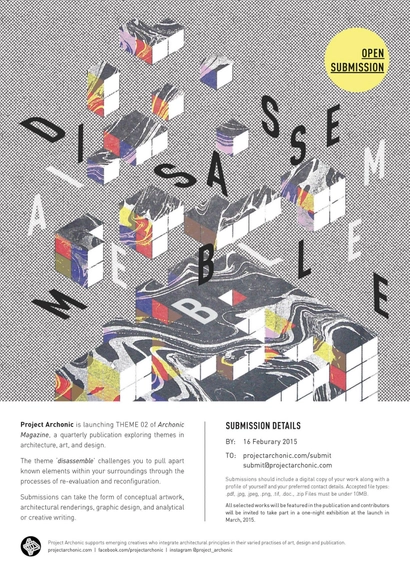
Sydney-based collective Project Archonic is currently accepting submissions for Archonic Magazine, a quarterly publication exploring the nexus between architecture, art, and design. Themed "Disassemble" and prompting creatives to deconstruct, re-evaluate, and reconfigure their surroundings, the publication marks the second issue compiled by Project Archonic, and is expected to launch in March 2015. Learn more about the publication and view spreads from the previous issue after the break.
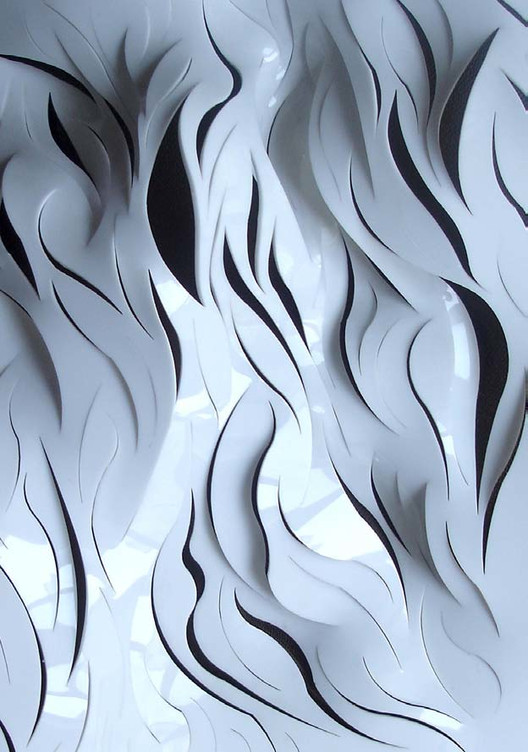
Cut, Pleat, Tile, Weave. Four principles guide every project in the publication Soft Shells - a new publication that features porous, deployable, expandable and retractable architecture. Keep reading after the break to see two of the featured projects, but make sure to check out the full book here.
The new issue of MAS Context, a quarterly publication released by MAS Studio, explores the actual and perceived divisions of space. MAS Context #17: Boundary contains varying in discussions of urban development, forced and naturally occurring segregation, the politics of such separations and ultimately, breaking the boundaries that frame our engagement. Of particular interest in this issue is the philosophical divisions between designers and non-designers and the specialized world that architecture school and the architectural profession construct to define themselves. Through a series of essays, projects, personal accounts and photographs, MAS Context crafts an argument around the boundaries exist in our built and un-built environment - and ways in which we choose to transgress them.
The new issue of MAS Context, a quarterly publication released by MAS Studio takes on the daunting issue of production and consumption impacting cities through the lens of a handful companies operating out of Chicago. Production and consumption have a negative connotation in today's atmosphere of sustainability and conservation but architecture is fundamentally a celebration of the craft of inventing, designing and making. MAS Studio, in collaboration with Chicago-based collective The Post Family, looks critically at the social, environmental, and political implications of consumer culture while celebrating the excellence of production.