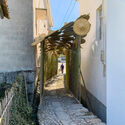
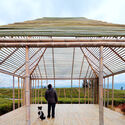
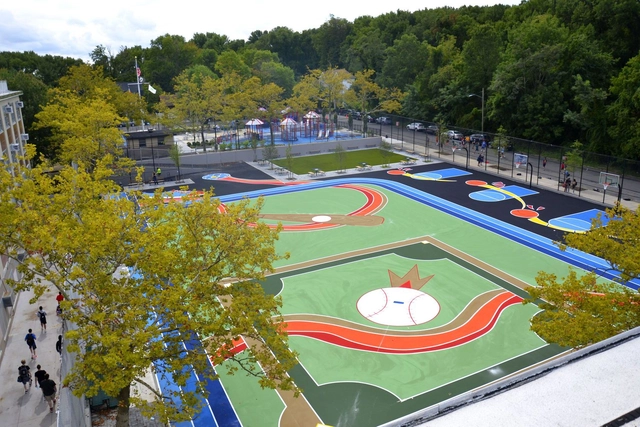
Democracy’s essence is the people's self-government and autonomy based on their own rights, and its characteristics are demonstrated through equality and participation. If democracy means a more equitable way of public life in architecture, then, this way of life is dependent on the homogenization of the building's spatial structure, with open, transparent, and functionally diverse public spaces. It is also possible to argue that the birth, maintenance, and demise of democracy all occurred in public space.
The democratic regime of Athens began in the sixth century B.C. The square became a meeting place, a symbol of architecture's democratic politics. Although people's access to assembly has become more widespread and convenient as technology has advanced, the existence of public space in the city remains critical, representing the spatial demands of citizens' public rights beyond the basic conditions of survival and serving an important spiritual function of expressing democracy. So, how architecture be democratic? How can we realize the public nature of architecture?
Social responsibility and the desire to improve society has long been influenced by the built environment. Looking at city centers, architecture has contributed to the improvement of the urban fabric, whether it being through planning and zoning strategies, integration of public spaces, or small interventions. In some cases however, these interventions are in fact used as tools to keep the homeless off the streets, disguised as art or conceptual designs. Several public urban policies have all implicitly prohibited the homeless and other marginalized social groups from city centers, claiming that their presence and “irregular” use of public space could compromise the reputation, security, and desirability of the city.
"Growing up queer means experiencing the destabilizing absence of a broad and accessible queer history, most notably, in our case, in relation to spatial design". This account is what intrigued artist Adam Nathaniel Furman and architectural historian Joshua Mardell to bring together a community of contributors who bring new perspectives to the field of architecture and share stories of spaces that challenge cis-heteronormative morals, sheltering lives that seek to live their own truths. The result of this quest is a book titled Queer Spaces: An Atlas of LGBTQIA+ Places and Stories, which explores stories about distinct social, political, and geographical contexts within the community.
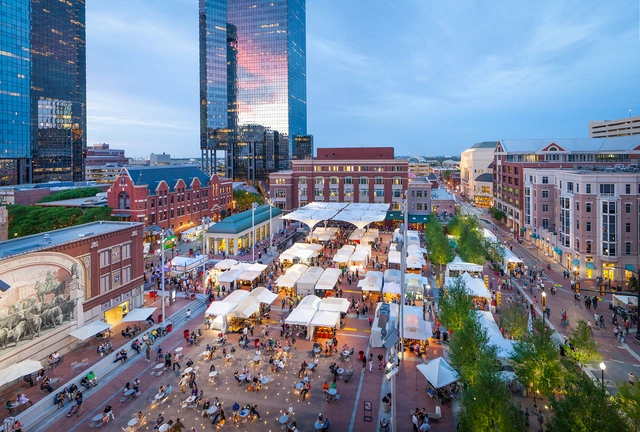
Sundance Square, a new central place for the city of Fort Worth, TX, USA. Image Courtesy of PPS
Public spaces play a significant role in organizing the life of every community but defining what differentiates them from other spaces within the city is not an easy task. Once these spaces start to settle into the collective memory of the local communities, they become key elements that concentrate the mental image of a city. While this process usually happens with urban spaces, monuments and isolated architectural elements can also become markers for the urban life of an area. So, what happens when dramatic events like fires, war, or even the pandemic alter that image?
The award-winning firm based in London, England, Jan Kattein Architects, works to realize the civic and spatial opportunities that architecture presents’ with their projects establishing a social and physical legacy, achieved by embracing an open, interactive design process that responds positively to the needs and aspirations of the clients.
Allowing the process to drive each individual project, their method stimulates innovative design, seeking to add benefits through education, economic growth, cultural activity, and greater community coherence.
Design Justice is a branch of architecture and design focused on redesigning cities, products, services and environments with historic reparations in mind.
The term emerged about 7 years ago when debates and dialogues about inclusion and diversity in spaces started to get stronger, creating movements that fought for the rights of people who had their roots and choices denied in society.
Far beyond basic training, reading is a leisure activity that is part of modern society. Whether outdoors, in squares and parks, at home or even at work, this habit, which improves reasoning ability and mental health, already had large spaces dedicated to books in palaces and mansions. We selected 15 projects that demonstrate the different ways of integrating reading at different scales and architectural programs.
Today, one of the most popular initiatives regarding public space, participatory design and activism in the city is the so-called citizen urbanism or tactical urbanism. The approach proposes to trigger, through limited and low-cost interventions, long-term changes in public space, i.e. short-term action, long-term change (Street Plans, 2013).
The strategy used is to create temporary scenarios that make visible a specific problem and the formation of specific interventions to solve it, seeking to incorporate the community to give it relevance and promote its sustainability over time and, in this way, raise the discussion about the benefits of the projects for the quality of life in the context in which they are inserted.
In the early 1980s, when I first saw the film The Social Life of Small Urban Spaces and then read the book, both by William H. Whyte, I was enthralled. I had met Holly, as he was affectionately known, while I was still a reporter at the New York Post in the 1970s, and we had great discussions about New York City, what planners got wrong, what developers didn’t care about. By the 1980s I was at work on my first book, The Living City: Thinking Small in a Big Way, and having conversations with Jane Jacobs, who would become my good friend and mentor. Jacobs had validated the small, bottom-up community efforts around New York City that I was observing and that would be the too-often-unacknowledged sparks to jumpstart the slow, steady rebirth of the city. My observations were resoundingly dismissed—even laughed at—by professional planners and urban designers, but they were cheered and encouraged by both Whyte and Jacobs, and today they are mainstream.
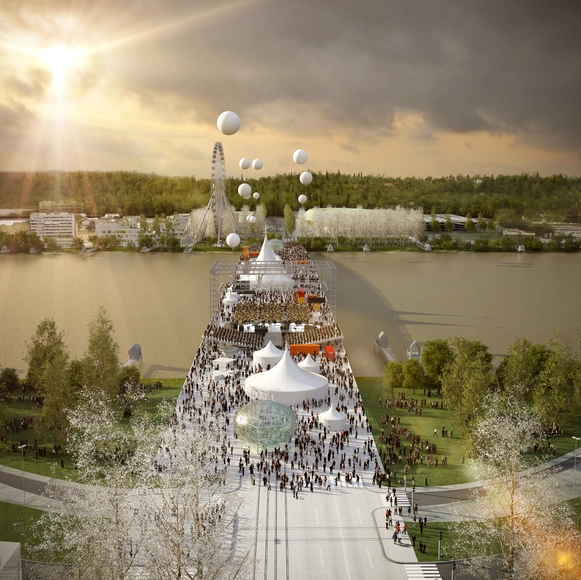
Construction is underway for OMA’s Simone-Veil Bridge in Bordeaux, with the first elements of the metal framework installed on the right bank of the Garonne river. Spanning 548 metres, the sixth bridge across the Garonne will connect the municipalities Floirac and Bègles and provide the city with a new public space, thus framing the bridge as a contemporary boulevard. Designed as a continuous surface extended to landscaped public spaces on each bank, the 44-metre bridge will accommodate cars, public transport, bicycles, with the largest surface dedicated to pedestrians. When completed, the project will become the first bridge in OMA’s body of work.
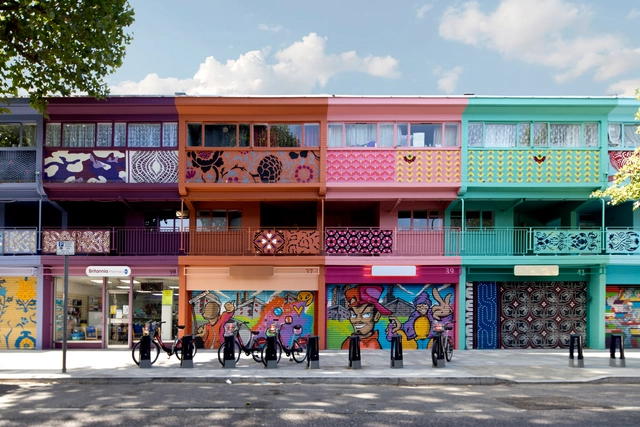
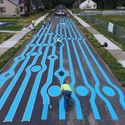
For more than a century, a street market known as ‘The Blue’ was the beating heart of Bermondsey in Southeast London. On Saturdays gone by, hundreds flocked to the historic neighborhood, a site with roots reaching back to the 11th century when it was once a pilgrimage route to Bermondsey Abbey. Market punters used to sample goods from more than 200 stalls that famously sold everything under the sun. “You can buy anything down The Blue” was the phrase everyone went by.
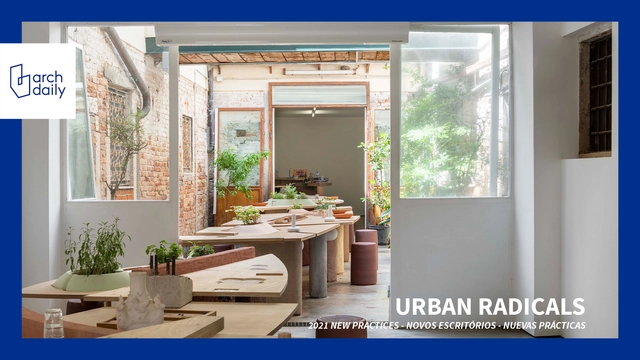
Urban Radicals is a design collective based in London, founded in 2019 by Era Savvides and Athanasios Varnavas. The practice operates at the intersection of multiple disciplines, exploring public space and the notion of collectivity across a variety of scales, contexts and design expressions. One of Archdaily's Best New Practices of 2021, Urban Radicals shrinks and grows organically through the projects, dissolving the boundaries between diverse fields of knowledge and circumventing traditional office structure to integrate a multiplicity of perspectives within architecture.
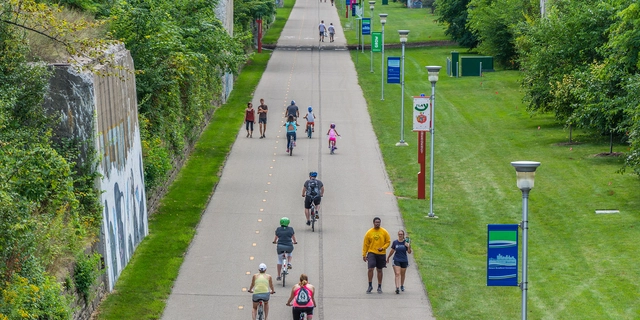
Dequindre Cut, Detroit / The High Line Network, SmithGroup. Image Courtesy of The Dirt
Decades of redlining and urban renewal, rooted in racist planning and design policies, created the conditions for gentrification to occur in American cities. But the primary concern with gentrification today is displacement, which primarily impacts marginalized communities shaped by a history of being denied access to mortgages. At the ASLA 2021 Conference on Landscape Architecture in Nashville, Matthew Williams, ASLA, with the City of Detroit’s planning department, said in his city there are concerns that new green spaces will increase the market value of homes and “price out marginalized communities.” But investment in green space doesn’t necessarily need to lead to displacement. If these projects are led by marginalized communities, they can be embraced.
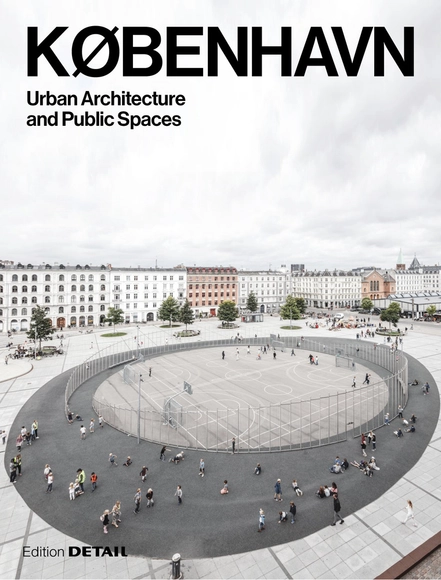
København (Copenhagen), the capital of Denmark, is at the forefront of many landscape architects and planners’ minds for both its groundbreaking moves towards sustainability and cutting-edge public spaces, bicycle culture, architecture, and food scenes. Having spent a significant amount of time in the city over the last decade, I’ve had the opportunity to begin to get to know the city and its people. One of the striking things about the city, perceptible in even my time there, is its continued trajectory of improvement. A chorus of people working diligently for decades to optimize the city for the everyday lives of its inhabitants have been laying the groundwork for what is possible today.
https://www.archdaily.com/973247/learning-from-copenhagen-a-focus-on-everyday-lifeJohn Bela
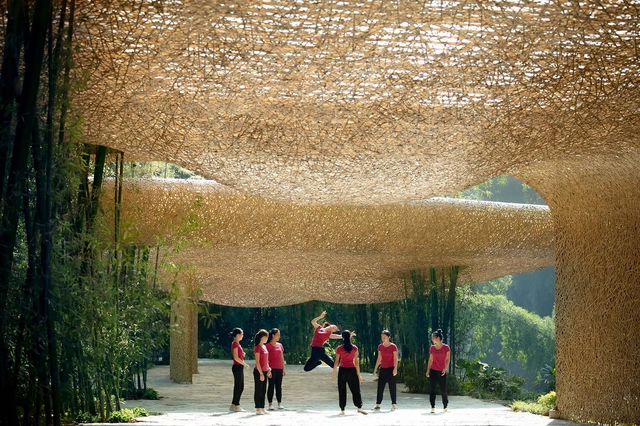
Bamboo is a very resistant, versatile, and sustainable natural building material, which can be used to build structures and decorative elements. This article explores its diverse applications in a selection of projects for public spaces.
Designing a public space means contemplating the aspects of everyday life in the city. Creating places for gatherings, conflicts, demonstrations, relaxation, and enjoyment. These spaces can be used in many different ways, depending on who interacts with them, and one of the main roles of those who design them is to expand these possibilities and sensations. Including plants, benches, sports facilities, spaces for culture, arts, and performances, conservation areas, or any other element that stands out, is essential to improve the quality of life of the citizens who enjoy these squares and parks.
https://www.archdaily.com/971738/parks-and-squares-20-public-space-designsEquipe ArchDaily Brasil
A new report from The Trust for Public Land (TPL) makes a compelling case for transforming underperforming, paved public schoolyards into green oases for the entire community. While the benefits for schools and their educational communities are clear, TPL sees an opportunity to open up these facilities to surrounding neighborhoods after school hours, on weekends, and when school is out. If all 90,000 public schools in the country had a “community schoolyard,” more communities could tackle the persistent park equity issue — in which too few communities, particularly undeserved ones, enjoy access to nearby high-quality public green spaces. TPL argues that opening up all schoolyards, essentially turning them into part-time all-access community hubs, would “put a park within a 10-minute walk of nearly 20 million people — solving the problem of outdoor access for one-fifth of the nation’s 100 million people who don’t currently have a park close to home.”
https://www.archdaily.com/971293/the-incredible-opportunity-of-community-schoolyardsJared Green


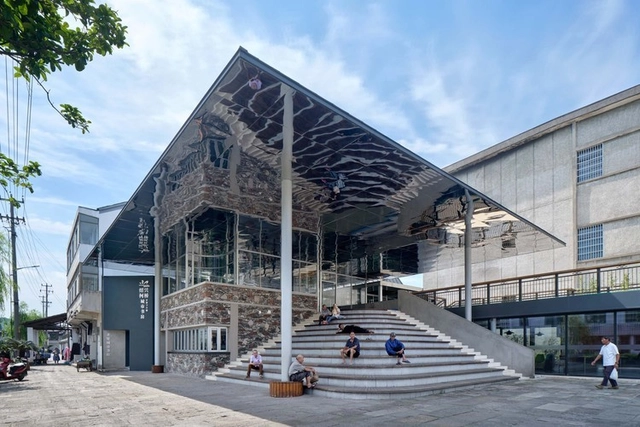






._Image_by_Zupagrafika.jpg?1653259487 "Orła Białego prefab panel estate in Poznań (Brutal Poland). . Image © Zupagrafika")