Powerhouse Company has won the competition to transform the Alo-location and neighborhood in Groningen, a city in the Netherlands. They teamed up with Houben/Van Mierlo, Vector-i and landscape architect DELVA to create the proposal. Dubbed HOLT, the project was developed with MWPO, Nijestee and Nijhuis Bouw. The plan for a new green and healthy neighborhood looks to the future of healthy living in the city.
A new masterplan and building scheme has been designed for the Codrico Factory and Rijnhaven in Rotterdam. With the overall plan created by Powerhouse Company in collaboration with developer RED Company, the proposal includes a series of buildings by Mecanoo, SHoP Architects, Office Winhov and Crimson Architectural Historians. Called the "Codrico Terrain", the project aims to celebrate local industrial heritage and embrace change for the future.
Powerhouse Company has revealed a new design for Floating Office Rotterdam (FOR), the headquarters of the Global Center on Adaptation (GCA). As the team states, construction will start this spring, and the all-timber project will be both energy-neutral and self-sufficient. The GCA will be housed in the Rijnhaven in Rotterdam for a period of 5 to 10 years.
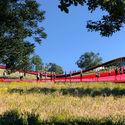
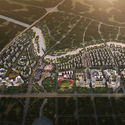
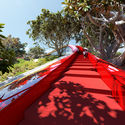
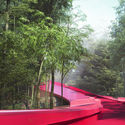
Construction has begun on the Loop of Wisdom in Chengdu, China, designed by Powerhouse Company. The red, walkable, curvy roof follows the landscape and twists through a lush, vivid park, promoting themes of health and beauty. The scheme will house the Exhibition and Reception Centers for the surrounding Unis Chip City masterplan, founded on the principles of people, nature, and technology.
https://www.archdaily.com/917894/powerhouse-companys-loop-of-wisdom-begins-constructionNiall Patrick Walsh
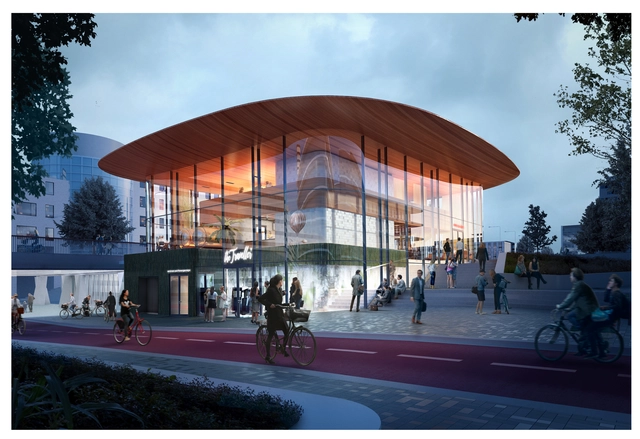
Construction has begun on the Powerhouse Company-designed pavilion for the ING campus in Amsterdam. Located in the up-and-coming district of Amsterdam Southeast, the 900-square-meter pavilion seeks to “make a bold statement while integrating with its surroundings."
The clean, minimalist pavilion will sit at the heart of the ING campus, serving as both a dining area and a multifunctional space for the community. Emphasizing the natural landscape, the pavilion offers a synergy between the built and natural environment through a friendly circular form, a timber interior, and green Tichelaar tiles on the north and east facades.
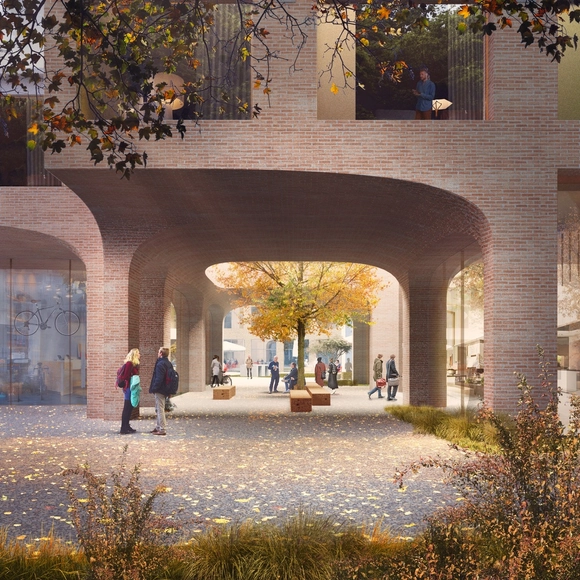
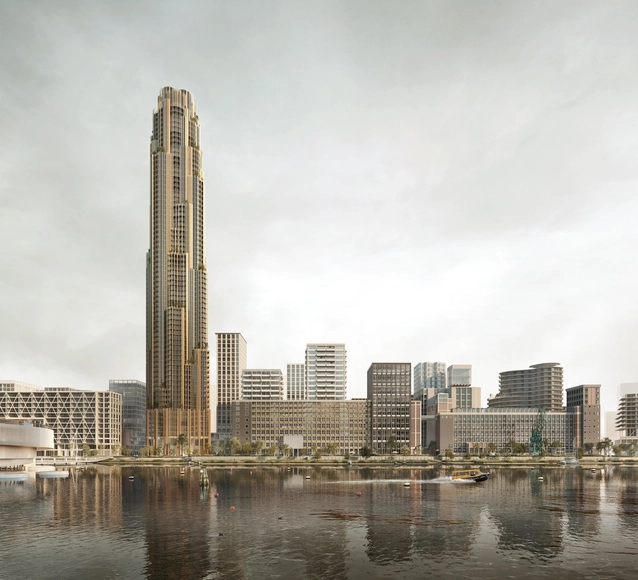
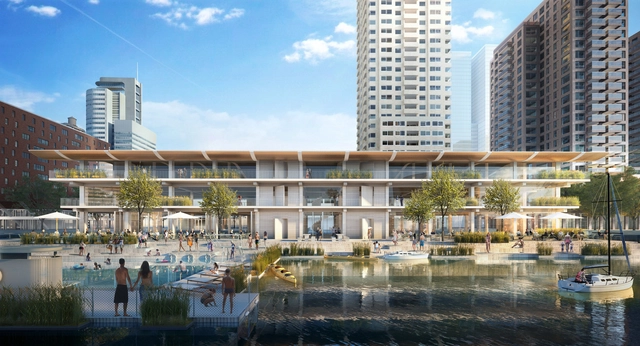
Powerhouse Company and Benthem Crouwel Architects have revealed their vision for the 2022 Asian Games Athlete Village International Zone in Hangzhou, China. The “Sponge City” proposal explores the sandy connection between land and water on a site which has recently been reclaimed from the sea.
The scheme, designed in collaboration with landscape architects SMARTLAND and Chinese firm UAD, forms a competition entry for the design of the village, the results of which are expected in August/September 2018. The team is one of six competing, including AS+P, SO-IL, NEXT Architects, Jadric Architektur, and Pelli Clarke Pelli Architects.
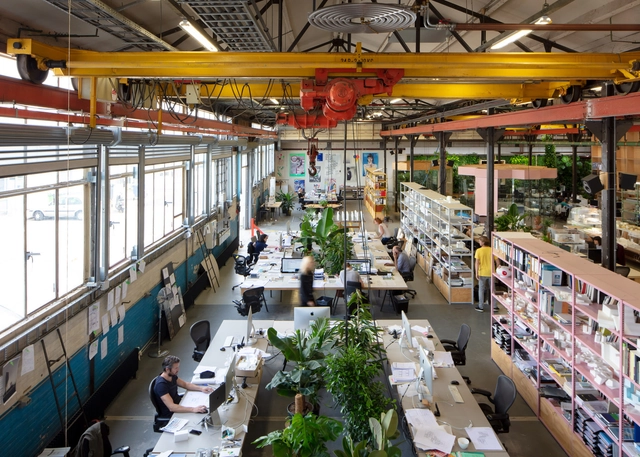
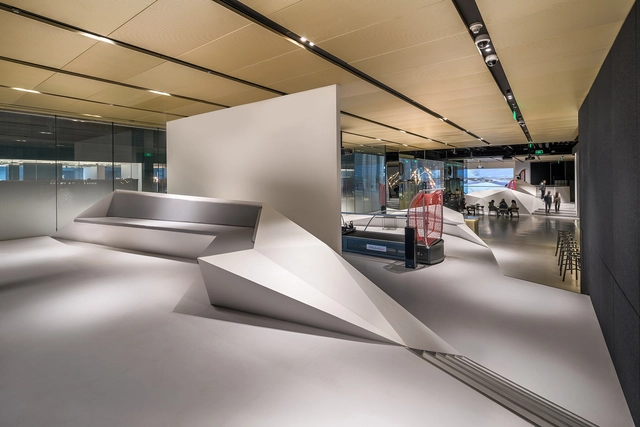
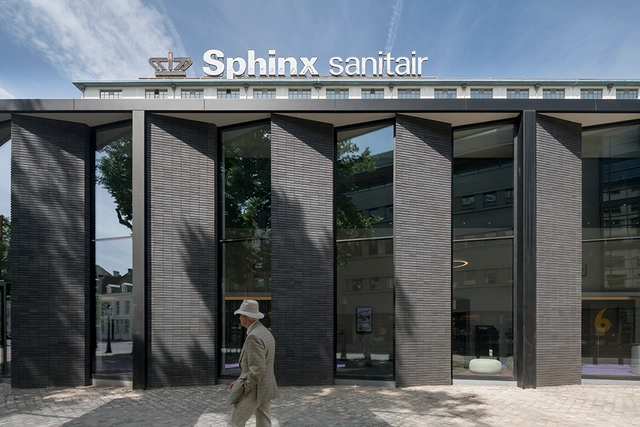
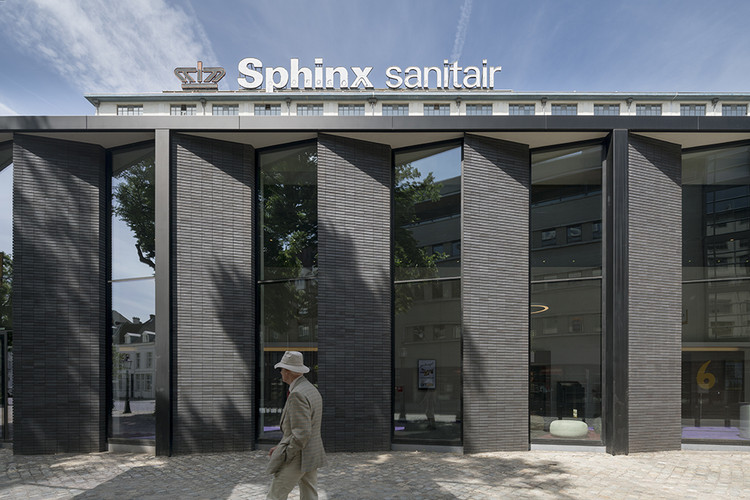
Having previously assembled sets of images featuring the offices of architecture firms in Dubai, London, Paris, Beijing, Shanghai, Seoul, the Nordic countries, and Barcelona, architectural photographer Marc Goodwin continues the series with an exploration of 17 large and small offices in the Netherlands. Occupying buildings formerly used as offices, banks and old factories, the interior and exterior images capture a glimpse of the lives of these designers and their daily architectural surroundings.
Architecture is always evolving. The practice and business of architecture are undoubtedly evolving alongside the more obvious technological advances, but what we often forget is that there are no new ideas. When it comes to design, what we see manifested in our daily lives is the result of evolution. And at the root of that design evolution is inspiration.
A new initiative from Gianpiero Venturini and his firm Itinerant Office titled Past, Present, Future aims to open a research path based on the analysis of successful practices in the 21st Century while ultimately providing a new form of inspiration for the next generations of architects and designers. The documentary series begins with a select group of 11 international architects, including Jacob van Rijs, co-founder of MVRDV, Mario Cucinella, and Simone Sfriso, co-founder of TAMassociati. Each architect is featured in three video interviews in which they reveal the methodology behind their designs, the themes and approaches within their architectural practice, and the predictions they have for architecture in the near and distant future.
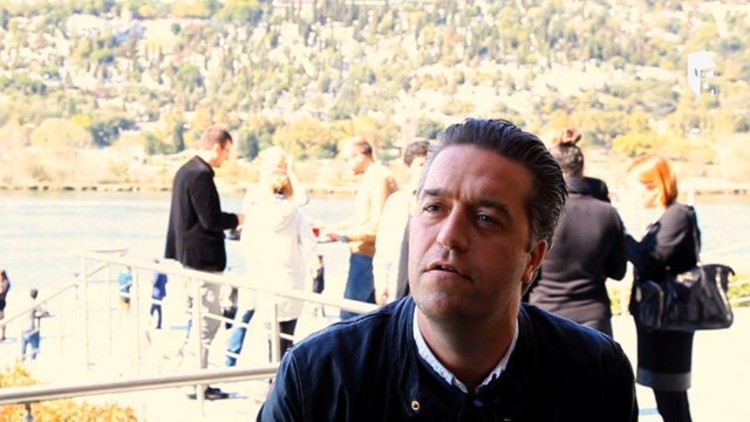
“I think architectural thinking is quite often about how to manage complexity, how to manage the complexity of different stakeholders -- an architect is a mediator between those different demands. And politics operates quite often in similar ways,” he said on the connection between architecture and politics. “I think what politics and architecture have in common is the need for strategy and for thinking and to design strategies."
Check out some of Powerhouse Company’s designs below and watch the full video above to see what else de Ru has to say about politics, empathy and education in architecture.
Powerhouse Company, an office that focuses on the fields of architecture, urban design and research, was recently awarded the Nykredit Motivation Prize 2012. The prize of over 13.000 euros was handed out by the Danish Minister for Culture, Uffe Elbæk, at a ceremony held at Nykredit’s headquarters in Copenhagen. A practice established by architects Nanne de Ru and Charles Bessard with offices in respectively Rotterdam and Copenhagen, they are an example of one of the new global-Danish architectural practices starting to mark its presence on the Danish architectural scene. More information after the break.
Over the last few months architectural firm Powerhouse Company have been working on the project Rien ne va Plus. This project consists of a research on the economic crisis and its intricate relation with architecture. This research resulted in an exhibition, that takes place at the architectural instute NAiM/Bureau Europa in Maastricht (The Netherlands), a reader that was published in collaboration with the magazine A10 and a series of debates.
You can also find the architect’s description after the break, along with photos of the exhibition taken by Johannes Schwartz and Christiaan van der Kooy, and a video created by Powerhouse Company.











.jpg?1534950459&format=webp&width=640&height=580)
.jpg?1534950417 "© Powerhouse Company, SMARTLAND and 3D Studio Prins.")
.jpg?1534950428 "© Powerhouse Company, SMARTLAND and 3D Studio Prins.")
.jpg?1534950443 "© Powerhouse Company, SMARTLAND and 3D Studio Prins.")
.jpg?1534950402 "© Powerhouse Company, SMARTLAND and 3D Studio Prins.")
.jpg?1534950459)