1. ArchDaily
  2. PIer Luigi Nervi

PIer Luigi Nervi: The Latest Architecture and News

Milan Architecture City Guide: 43 Projects from Historic Landmarks to Contemporary Designs

Subscriber Access | 

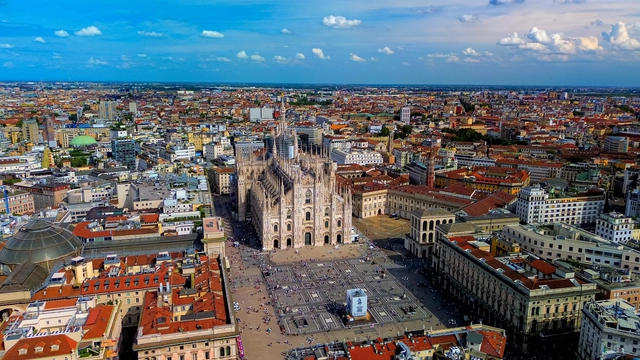
Milan, a global hub of fashion and finance, increasingly asserts itself as a leading center for architecture and design. Its status as Italy's second-largest city underpins its vibrant cultural scene, attracting both established and emerging creative talent. Additionally, Milan is home to esteemed educational institutions recognized for their focus on heritage preservation and conservation. Its cultural and design significance is increasingly pronounced, as a growing number of creators are relocating to establish their presence in this vibrant creative hub.

Among Milan's most iconic landmarks are the flamboyant Gothic Duomo di Milano, the historically and artistically significant Santa Maria delle Grazie, and the ornate Galleria Vittorio Emanuele II, along with numerous Renaissance and Baroque sites. The city also boasts some of the most innovative modern and contemporary architecture, showcasing a unique dialogue between tradition and modernity. This synergy is exemplified by the contributions of architects like Aldo Rossi, Gio Ponti, Stefano Boeri, Mario Cucinella, Zaha Hadid, Grafton Architects, Herzog & de Meuron, and Foster and Partners.

The following guide highlights key historical landmarks alongside exemplary contemporary architecture curated by ArchDaily. This guide serves as an indispensable resource for those planning to explore Milan during the 2026 Design Week, presenting a blend of essential sites designed by renowned local and international architects.
Milan Architecture City Guide: 43 Projects from Historic Landmarks to Contemporary Designs - Image 5 of 4Milan Architecture City Guide: 43 Projects from Historic Landmarks to Contemporary Designs - Image 6 of 4Milan Architecture City Guide: 43 Projects from Historic Landmarks to Contemporary Designs - Image 28 of 4Milan Architecture City Guide: 43 Projects from Historic Landmarks to Contemporary Designs - Image 48 of 4Milan Architecture City Guide: 43 Projects from Historic Landmarks to Contemporary Designs - More Images+ 52

Architecture as Soft Power: Cultural Diplomacy and Its Role in Shaping Architectural Production

Cultural diplomacy refers to the use of cultural expression and creative exchange to foster understanding and build relationships between nations. In this context, architecture has long played a distinctive role. Beyond its functional and aesthetic dimensions, it serves as a medium of communication, a language through which countries express identity, values, and ambition on the global stage.

Architecture operates as a form of soft power — persuasive rather than coercive — enabling nations to project influence through material presence. From modernist embassies in the post-war era to monumental pavilions at world expositions, governments and institutions have recognized the built environment's potential to shape perception. By commissioning prominent architects and adopting specific design languages, countries have used architecture to signal modernity, tradition, innovation, or stability.

Architecture as Soft Power: Cultural Diplomacy and Its Role in Shaping Architectural Production - Image 1 of 4Architecture as Soft Power: Cultural Diplomacy and Its Role in Shaping Architectural Production - Image 2 of 4Architecture as Soft Power: Cultural Diplomacy and Its Role in Shaping Architectural Production - Image 3 of 4Architecture as Soft Power: Cultural Diplomacy and Its Role in Shaping Architectural Production - Image 4 of 4Architecture as Soft Power: Cultural Diplomacy and Its Role in Shaping Architectural Production - More Images+ 20

The Windows of Venice: How History Inspired Modernity

Subscriber Access | 

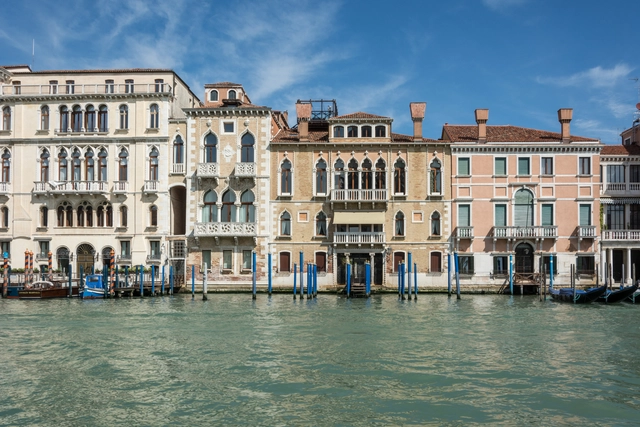
The ancient city of Venice, Italy, home to both the art and architecture editions of the Venice Biennale, is known for its unique geography as an island city of canals. Its naval and mercantile prominence now diminished, the city has found a new purpose as a center of learning, exhibiting, and tourism. However, its urban morphology and, indeed, most of its buildings are historic and have remained largely unchanged for hundreds of years. Their appearance exhibits a specific Venetian vernacular that has stood the test of time and stands as a backdrop for the city's contemporary activities. How do the facades of these buildings, particularly their windows, reflect this history? And how do the few modern buildings in the city, such as the Palazzo Nervi-Scattolin, respond to this weight of history?

The Windows of Venice: How History Inspired Modernity - Image 1 of 4The Windows of Venice: How History Inspired Modernity - Image 2 of 4The Windows of Venice: How History Inspired Modernity - Image 3 of 4The Windows of Venice: How History Inspired Modernity - Image 4 of 4The Windows of Venice: How History Inspired Modernity - More Images+ 30

Modernism and Tradition: The Influence of Milan's History on Gio Ponti's Designs

Subscriber Access | 

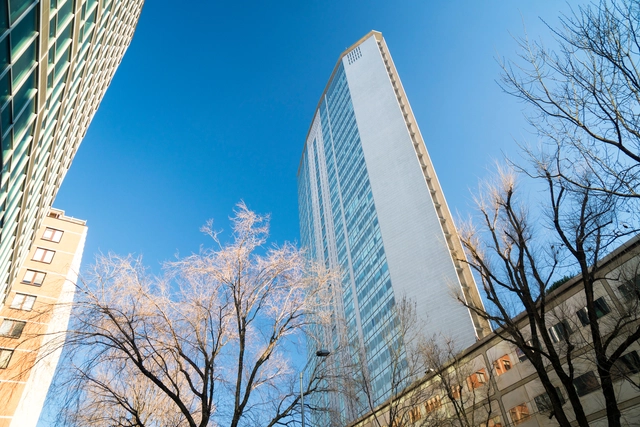
Architecture is quintessentially a place-based practice. The amount of local knowledge required to design a building has meant that architects, even many of those with widely spread works, have had concentrations of built projects in individual cities. Giovanni "Gio" Ponti, born and raised in the Italian city of Milan, is one such architect. His projects outside Milan include the Denver Art Museum in the USA and the Villa Planchart in Caracas, Venezuela, as well as university buildings in Padua and Rome, and Taranto Cathedral. However, his works in his native city, such as the Pirelli Tower, best track the development of his architecture and his contribution to product design and publishing.

Modernism and Tradition: The Influence of Milan's History on Gio Ponti's Designs - Image 1 of 4Modernism and Tradition: The Influence of Milan's History on Gio Ponti's Designs - Image 2 of 4Modernism and Tradition: The Influence of Milan's History on Gio Ponti's Designs - Image 3 of 4Modernism and Tradition: The Influence of Milan's History on Gio Ponti's Designs - Image 4 of 4Modernism and Tradition: The Influence of Milan's History on Gio Ponti's Designs - More Images+ 17

Spotlight: Pier Luigi Nervi

Known as both an architect and an engineer, Pier Luigi Nervi (June 21, 1891 – January 9, 1979) explored the limitations of reinforced concrete by creating a variety of inventive structural projects; in the process, he helped to show the material had a place in architecture movements of the coming years. Nervi began his career in a time of technological revolution, and through his ambition and ability to recognize opportunity in the midst of challenge, he was able to have an impact on several disciplines and cultures.

Concrete Shells: Design Principles and Examples

Subscriber Access | 

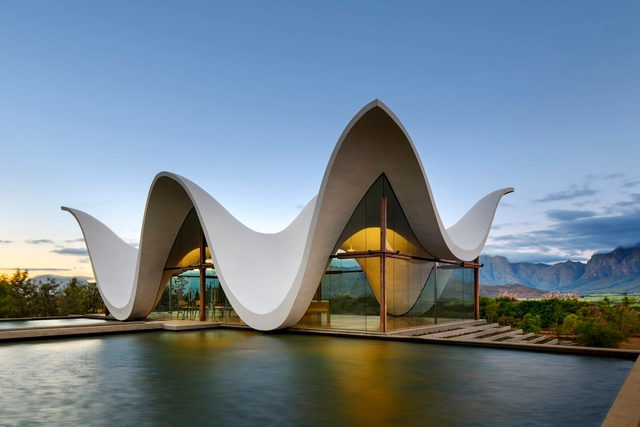
Let's think of a paper sheet. If we tried to stiffen it from its primary state, it couldn't support its own weight. However, if we bend it, the sheet achieves a new structural quality. The shells act in the same way. "You can't imagine a form that doesn't need a structure or a structure that doesn't have a form. Every form has a structure, and every structure has a form. Thus, you can't conceive a form without automatically conceiving a structure and vice versa". [1] The importance of the structural thought that culminates in the constructed object is then, taken by the relationship between form and structure. The shells arise from the association between concrete and steel and are structures whose continuous curved surfaces have a minimal thickness; thus they are widely used in roofs of large spans without intermediate supports.

In structural terms, they are efficient because they resist compression efforts and absorb at specific points on their surface, especially near the supports — small moments of flexion.

The Architecture of Washington DC's Watergate Complex: Inside America’s Most Infamous Address

Subscriber Access | 

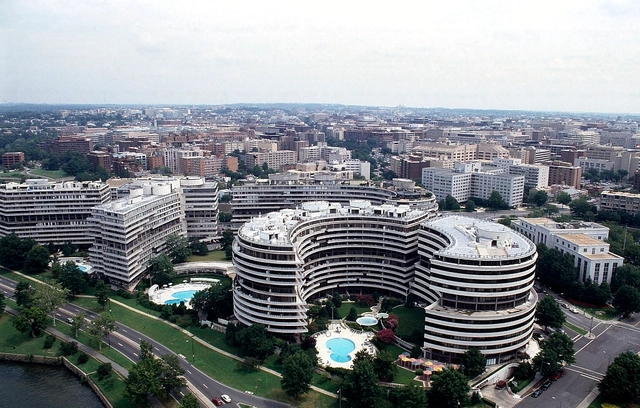
Joseph Rodota's new book The Watergate: Inside America’s Most Infamous Address (William Morrow) presents the story of a building complex whose name is recognized around the world as the address at the center of the United States' greatest political scandal—but one that has so many more tales to tell. In this excerpt from the book, the author looks into the design and construction of a building The Washington Post once called a "glittering Potomac Titanic," a description granted because the Watergate was ahead of its time, filled with boldface names—and ultimately doomed.

On the evening of October 25, 1965, the grand opening of the Watergate was held for fifteen-hundred guests. Luigi Moretti, the architect, flew in from Rome. Other executives came from Mexico, where the Watergate developer, the Italian real estate giant known as Societa Generale Immobiliare, was planning a community outside Mexico City, and from Montreal, where the company was erecting the tallest concrete-and-steel skyscraper in Canada, designed by Moretti and another Italian, Pier Luigi Nervi.

A Brief History of Rome's Luminous Rotundas

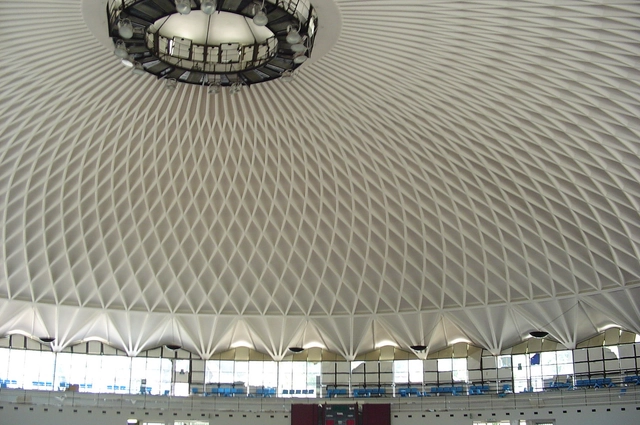
With its hundreds of churches, Rome has a developed a rich history of domes. Inspired by this heritage, Jakob Straub has photographed the city's most remarkable rotundas from the ancient Pantheon up to Pier Luigi Nervi's modern sports arena. His neutral photo perspective, taken looking upwards from the center of the rotunda, opens a new view for the underlying concepts where the architecture yearns for the firmament. For Elías Torres, these “zenithal-lit” spaces constitute an important method for daylight architecture, where the exterior is also transformed into a fascinating distant reality.

Torres has analysed numerous strategies for lighting architecture effectively with daylight from above. In his book “Zenithal Light,” illustrated with an abundance of striking photos, he came to the conclusion that “Amongst the representations of the sky in the interior of architecture, the one that depicts the sun shining from above with a circular form has been the favoured one for many cultures.”

Fire Consumes Pier Luigi Nervi's Palazzo del Lavoro

Pier Luigi Nervi's Palazzo del Lavoro (Palace of Labour) in Turin has been devastated by fire. The unoccupied exhibition hall, originally built for Italia'61, had been undergoing renovations. As La Stampa Turin reports, the fire started on the second floor and is most likely the result of arson. A similar incident happened a few months ago, but was quickly extinguished.

The glass encased Palace of Labour is internally divided by 16 structurally independent steel roofed compartments, each supported by radial branches stemming from 65-foot-tall concrete columns.

Architecture City Guide: San Francisco

Subscriber Access | 
Architecture City Guide: San Francisco - Image 8 of 4

This week we are featuring San Francisco for our Architecture City Guide series. Thank you to all of our readers for adding their can’t miss buildings last week. We hope to see your comments below this week too.

Follow the break for our San Francisco list and a corresponding map!