1. ArchDaily
  2. Physics

Physics: The Latest Architecture and News

"The Site is the Architect, the Site is Materiality": On Ammar Khammash and Notes on Formation

Subscriber Access | 

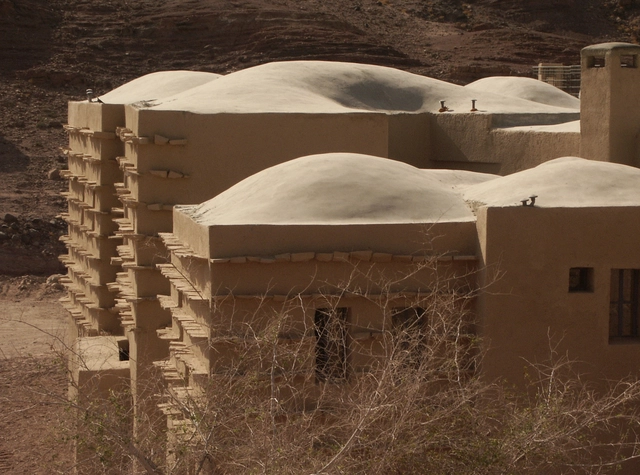
Ammar Khammash is a Jordanian architect, designer, and artist best known for his approach that focuses on the preservation of cultural and natural heritage while crafting an architecture that engages with its surroundings. With deep admiration for nature and its ecosystems, Khammash trusts that "the site is the architect”, a statement for which he is renowned that underscores the profound influence of context on his architectural design. With over three decades of experience spanning various disciplines and across several Middle Eastern countries such as Jordan, Oman, Palestine, Egypt, Syria, and the UAE, Ammar Khammash has consistently attempted to preserve and enhance the symbiosis between human constructions and the natural environment. His contributions include the Royal Academy for Nature Conservation, the Wild Jordan Center, and the restoration of the Church of Apostles.

In 2022, he was featured in the first edition of the Dongola Architecture Series, a biannual publication that offers unique perspectives into Arab culture by highlighting prominent contemporary architects. The issue, titled “Notes on Formation: Ammar Khammash,” written by Raafat Majzoub, explores "architecture as a transdisciplinary tool of expression, and as a method of imagining and reimagining the future," encapsulating the ethos of the publication. ArchDaily had the opportunity to talk to Ammar Khammash and Sarah Chalabi, founder of Dongola Limited Editions, to delve into the architect’s perspectives on site, materiality, and culture, along with his philosophy, notions on academia, and insights into the future of the profession.

"The Site is the Architect, the Site is Materiality":  On Ammar Khammash and Notes on Formation - Image 1 of 4"The Site is the Architect, the Site is Materiality":  On Ammar Khammash and Notes on Formation - Image 2 of 4"The Site is the Architect, the Site is Materiality":  On Ammar Khammash and Notes on Formation - Image 3 of 4"The Site is the Architect, the Site is Materiality":  On Ammar Khammash and Notes on Formation - Image 4 of 4The Site is the Architect, the Site is Materiality:  On Ammar Khammash and Notes on Formation - More Images+ 26

Paul Clemence Releases Images of CERN's Science Gateway Building Designed by Renzo Piano in Geneva, Switzerland

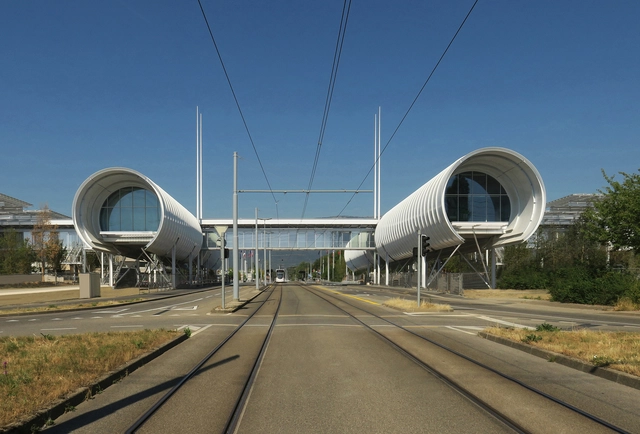
CERN, the European Organization for Nuclear Research, has started a new initiative known as the Science Gateway. The building was designed by Renzo Piano Building Workshop, architects in collaboration with Brodbeck Roulet Architectes Associés (Geneva). Reflecting the institution's broader mission, it encompasses the values of sharing knowledge, technology, and scientific inspiration with society. The Science Gateway is envisioned as an innovative facility dedicated to scientific education and outreach, aiming to catalyze curiosity and passion for science among younger generations. In his latest photo series, Paul Clemence photographed the CERN Science Gateway Building in Geneva, Switzerland.

Paul Clemence Releases Images of CERN's Science Gateway Building Designed by Renzo Piano in Geneva, Switzerland - Image 1 of 4Paul Clemence Releases Images of CERN's Science Gateway Building Designed by Renzo Piano in Geneva, Switzerland - Image 2 of 4Paul Clemence Releases Images of CERN's Science Gateway Building Designed by Renzo Piano in Geneva, Switzerland - Image 3 of 4Paul Clemence Releases Images of CERN's Science Gateway Building Designed by Renzo Piano in Geneva, Switzerland - Image 4 of 4Paul Clemence Releases Images of CERN's Science Gateway Building Designed by Renzo Piano in Geneva, Switzerland - More Images+ 31

Minimaforms “The Order of Time” Installation Reveals Constructed Relationships in the Ordering of Space

Subscriber Access | 

Minimaforms Presents The Order of Time at the Architectural Association School of Architecture Gallery. It is an immersive installation aimed to connect the preoccupations of physics, art, and architecture by revealing the ordering of spaces and constructed relationships through direct experience.

Three Sculptural installations are the highlight of the exhibition. Spherical organizations deployed through mathematical logic and designed to extend space within reflective light boxes, gifting its viewer a new immersive moment at every turn. ArchDaily had the chance to engage in a conversation with Theodore Spyropoulos; Artist & Architect at Minimaforms and Director of the Architectural Association’s Design Research Lab, on issues that tackled the interdisciplinary nature of architecture, the creative process of the installation, and how it influences the creation of spaces, buildings & cities.

Minimaforms “The Order of Time” Installation Reveals Constructed Relationships in the Ordering of Space - Image 1 of 4Minimaforms “The Order of Time” Installation Reveals Constructed Relationships in the Ordering of Space - Featured ImageMinimaforms “The Order of Time” Installation Reveals Constructed Relationships in the Ordering of Space - Image 2 of 4Minimaforms “The Order of Time” Installation Reveals Constructed Relationships in the Ordering of Space - Image 3 of 4Minimaforms “The Order of Time” Installation Reveals Constructed Relationships in the Ordering of Space - More Images+ 6

Call for Papers: First International Conference on Urban Physics

The First International Conference on Urban Physics aims to be a founding event for the numerical simulation of cities and megacities, which are facing worldwide critical problems, such as their dual participation - as victims and actors - to the present and upcoming climate changes. The conference will provide an opportunity for scientists from different disciplines (computer graphics, environmental physics, numerical models, renewable energies, urban planning ...) to confront their ideas and methods for the detection and analysis of physical quantities, in order to better manage the development of cities and to meet economic and environmental constraints.

Six "Miracle" Materials That Will Change Their Industries

Subscriber Access | 

The following six "miracle" materials could be headed straight into your home, office, car and more. Dina Spector at Business Insider recently rounded up the six most promising materials. As of now, their potential applications have just scratched the surface, but the possibilities are endless. Presented by AD Materials.

Scientists are constantly on the look out for lighter, stronger, and more energy-efficient materials. Here's a glance at some materials that will change the way we build things in the future.