1. ArchDaily
  2. Passive Cooling

Passive Cooling: The Latest Architecture and News

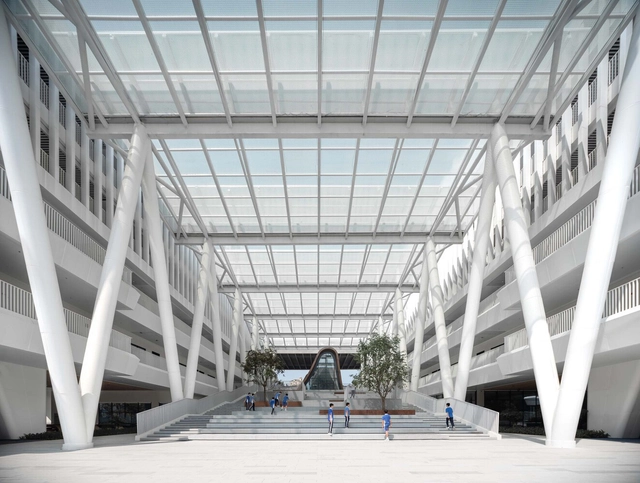
How to Improve Internal and External Environments with Glass Ceilings

As a highly transparent material that stands up to all but the most extreme of weather conditions, is easily formed into any size or shape, and, once formed, will last for thousands of years, glass is still one of the most innovative and crucial materials used in architecture. Although contemporary building practices allow us to form huge, glittering skyscrapers of glass that rise hundreds of meters into the air, the ancient material’s original purpose – to welcome light into weathertight and secure interiors – remains its most important more than a thousand years on.

As important as glass is to almost every typology of architecture in the form of windows, when it comes to the roof of a building, the use of glass is not so simple. We’ve understood the power and danger of combining light and glass ever since we saw a magnifying glass used to concentrate the heat of sunlight into incredibly high temperatures in children’s cartoons. Under a glass roof, the solar gain can make for uncomfortable internal environments without the correct protective precautions.

How to Improve Internal and External Environments with Glass Ceilings - Image 1 of 4How to Improve Internal and External Environments with Glass Ceilings - Image 2 of 4How to Improve Internal and External Environments with Glass Ceilings - Image 3 of 4How to Improve Internal and External Environments with Glass Ceilings - Image 4 of 4How to Improve Internal and External Environments with Glass Ceilings - More Images+ 10

Architectural Interventions in the Desert: Natural Escapes, Minimal Intervention and Reclusive Luxury

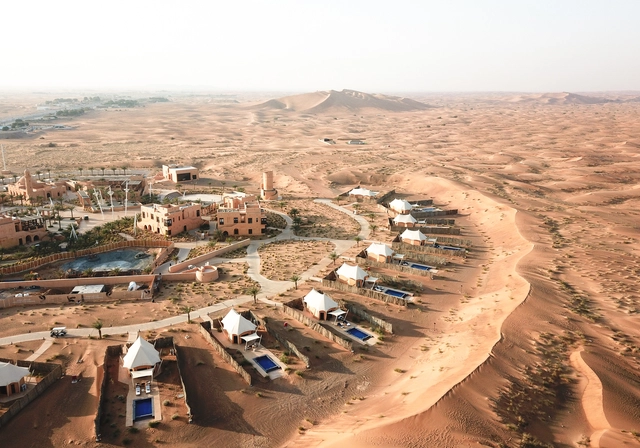
Set deep within some of the most isolated desert landscapes across the Middle East and further afield, these desert camp hotels offer a way to connect with their surroundings through the solitary experience of open and expansive scenery.

By disregarding the kind of structural interventions that might alter their historic and often culturally relevant landscapes, the projects position traditional and local skills, materials, and architectural techniques alongside high-end luxury interiors.

Architectural Interventions in the Desert: Natural Escapes, Minimal Intervention and Reclusive Luxury - Image 1 of 4Architectural Interventions in the Desert: Natural Escapes, Minimal Intervention and Reclusive Luxury - Image 2 of 4Architectural Interventions in the Desert: Natural Escapes, Minimal Intervention and Reclusive Luxury - Image 3 of 4Architectural Interventions in the Desert: Natural Escapes, Minimal Intervention and Reclusive Luxury - Image 4 of 4Architectural Interventions in the Desert: Natural Escapes, Minimal Intervention and Reclusive Luxury - More Images+ 8

Geothermal Energy: Using the Earth to Heat Buildings and Generate Electricity

Subscriber Access | 

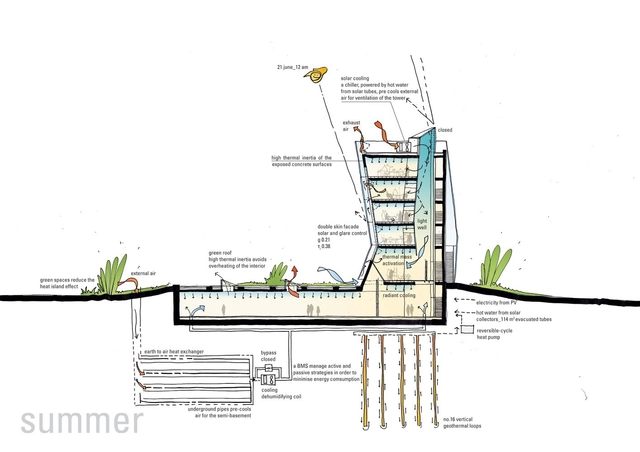
Unlike the air, the temperature in the subsoil varies very little during the year or according to geographical position. A few meters below the surface, the ground temperature is between about 10 to 21°C (50 to 70°F) depending on the region. Dig deeper, and the temperature increases between 20 to 40 degrees centigrade per km, reaching the Earth's core, which approaches 5000 °C. In fact, thinking about how we inhabit a sphere that is orbiting through space with a glowing center can be distressing for some. However, it may be helpful to learn that using Earth's forming energy to generate electricity is a sustainable and efficient way that is already common in some countries. At the same time, we can also take advantage of the mild temperature found a few meters under the ground to acclimatize buildings, whether in hot or cold climates.

Decarbonization and Energy Efficiency in Latin America: How to Progress Towards a More Sustainable Architecture?

Subscriber Access | 

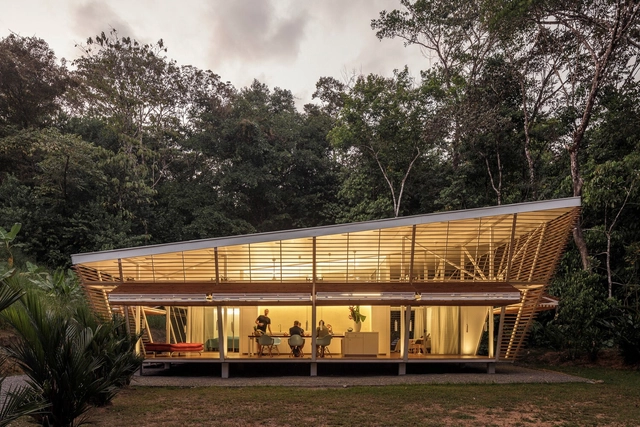
In the context of global initiatives to promote energy efficiency and the decarbonization of buildings, Latin America is at the center of the debate. The International Seminar on Sustainable and NetZero Buildings 2023, held in Bogotá and organized by CCCS, IEA, UNIANDES, CAF, and CEELA, aimed primarily to create a space for the exchange of experiences, such as Oliver Schütte's No Footprint House, while simultaneously conducting a review of government policies and the implementation of norms and standards in the region.

Among panels and conferences featuring Clara Camarasa, Nicola Borregaard, Laura Chapa, Paola Valencia, Iván Osuna, Juan Carlos Vega, Angélica Ospina, and Diego Velandia, five main learnings emerged as lessons: from creating more relevance and energy calculations to the development of the timber industry - and certifications.
Journey to Energy Efficiency: 10 Spanish Homes Applying Bioclimatic Strategies and Designs

Subscriber Access | 

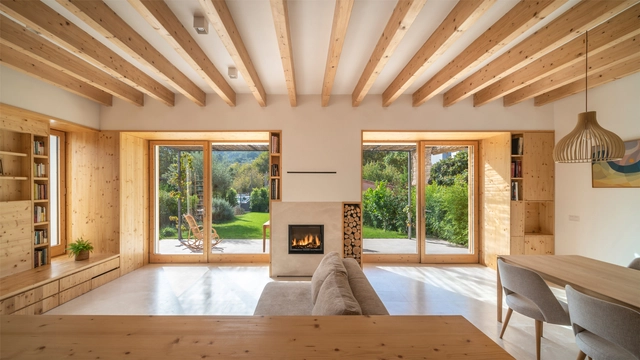
How is it possible to reduce the energy consumption of our homes? What design, material, and/or technological strategies can be developed to achieve interior comfort while also addressing the climate crisis? While achieving energy efficiency depends, among other factors, on the state of the homes, there are various strategies related to the implementation of renewable energies, air conditioning technologies, and more that can be applied, taking into account government policies, laws, regulations, and standards specific to each region.

Cooling and Energy Efficiency: A New Era in Building Design

The world has just witnessed the hottest months in recorded history, and the outlook is far from optimistic. Rising temperatures are driving greater cooling demands, threatening to trigger a vicious cycle of higher electricity use and carbon emissions. In a planet simultaneously facing unprecedented urbanization and a climate crisis, the intersection of building energy efficiency and cooling technologies has never been more crucial.
Designing for Water Scarcity: How Architects are Adapting to Arid Environments

An arid environment refers to specific regions characterized by a severe lack of available water and extremely dry weather conditions. More specifically, arid regions by definition, receive less than 25 centimeters of rain per year. In the immense vastness of arid environments, where extreme climates present significant challenges, the role of water in architecture takes on a new dimension.
For centuries, architects and designers dealing with harsh desert landscapes and the vital necessity of water have invented techniques, technologies, and new structures. Moreover, many creative approaches have been created to harness, collect, and cool water in arid environments. 

Designing for Water Scarcity: How Architects are Adapting to Arid Environments - Image 1 of 4Designing for Water Scarcity: How Architects are Adapting to Arid Environments - Image 2 of 4Designing for Water Scarcity: How Architects are Adapting to Arid Environments - Image 3 of 4Designing for Water Scarcity: How Architects are Adapting to Arid Environments - Image 4 of 4Designing for Water Scarcity: How Architects are Adapting to Arid Environments - More Images+ 3

What is a Traditional Windcatcher?

Subscriber Access | 

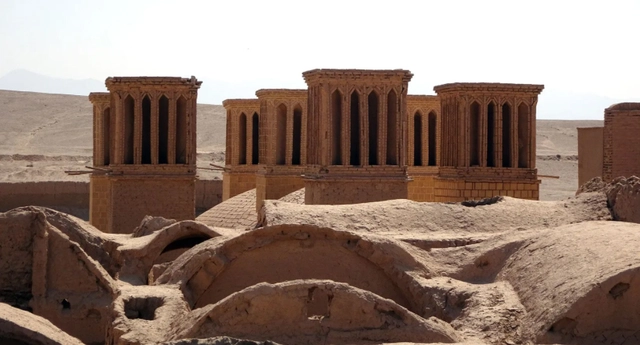
Before fossil-fuel powered air-conditioning became widely available, people living in harsh climates had nothing but natural means to ventilate their spaces and control the interior temperature. To do so, they took into account several external factors such as their location, orientation with respect to the sun and wind, their area's climate conditions, and local materials. In this article, we explore how ancient civilizations in Western Asia and North Africa have used windcatchers to adapt to the region's harsh climate and provide passive cooling solutions that are still being used in contemporary architecture, proving that local approaches to climate adaptability are fundamental to the development of today's built environment.

What is a Traditional Windcatcher?  - Image 1 of 4What is a Traditional Windcatcher?  - Image 2 of 4What is a Traditional Windcatcher?  - Image 3 of 4What is a Traditional Windcatcher?  - Image 4 of 4What is a Traditional Windcatcher?  - More Images+ 13

Back to Basics: Natural Ventilation and its Use in Different Contexts

Automation is everywhere around us - our homes, furniture, offices, cars, and even our clothing; we have become so accustomed to being surrounded by automated systems that we have forgotten what life was like without them. And while automation has noticeably improved the quality of interior spaces with solutions like purified air and temperature control, nothing compares to the natural cool breeze of mother nature.

But just like everything else in architecture, there is no one size fits all; what works in Tanzania cannot work in Switzerland or Colombia. This is due to several reasons, such as the difference in wind direction, average temperature, spatial needs, and environmental restrictions (or lack thereof). In this article, we take a look at natural ventilation in all its forms, and how architects have employed this passive solution in different contexts. 

Back to Basics: Natural Ventilation and its Use in Different Contexts  - Image 1 of 4Back to Basics: Natural Ventilation and its Use in Different Contexts  - Image 2 of 4Back to Basics: Natural Ventilation and its Use in Different Contexts  - Image 3 of 4Back to Basics: Natural Ventilation and its Use in Different Contexts  - Image 4 of 4Back to Basics: Natural Ventilation and its Use in Different Contexts  - More Images+ 25

What Materials Keep Buildings Cool?

Air-conditioning isn’t just expensive; it’s also terrible for the environment. Accounting for 10% of global energy consumption today, space cooling in 2016 alone was responsible for 1045 metric tons of CO2 emissions. This number is only expected to increase, with the International Energy Agency estimating that cooling will reach 37% of the world’s total energy demand by 2050.
What Materials Keep Buildings Cool? - SustainabilityWhat Materials Keep Buildings Cool? - SustainabilityWhat Materials Keep Buildings Cool? - SustainabilityWhat Materials Keep Buildings Cool? - SustainabilityWhat Materials Keep Buildings Cool? - More Images+ 5