1. ArchDaily
  2. Oslo School of Architecture

Oslo School of Architecture: The Latest Architecture and News

Designing with Smoke: The Chimney as Architectural and Environmental Instrument

Subscriber Access | 

Chimneys are among the most quietly persistent elements in architectural history. Yet their presence persists in nearly every cultural and climatic context, serving as a technical feature and a spatial, atmospheric, and symbolic device. It populates dense city skylines and anchors rural horizons alike, its vertical silhouette as ordinary as a window or a doorframe. This apparent ordinariness is deceptive. The chimney is one of the few architectural components that links the intimate scale of interior life with the expansive forces of the environment. For architects and designers, the necessity of the chimney presents a choice: to let it recede quietly into the building's functional fabric or to amplify it as a central, expressive element that shapes a project's identity.

Designing with Smoke: The Chimney as Architectural and Environmental Instrument - Image 1 of 4Designing with Smoke: The Chimney as Architectural and Environmental Instrument - Image 2 of 4Designing with Smoke: The Chimney as Architectural and Environmental Instrument - Image 3 of 4Designing with Smoke: The Chimney as Architectural and Environmental Instrument - Image 4 of 4Designing with Smoke: The Chimney as Architectural and Environmental Instrument - More Images+ 47

The Architecture of Rewilding: Designing for Ecosystem Recovery

As climate instability reshapes design priorities, architecture is increasingly drawn into ecological debates not as a spectator but as a participant. Among the concepts gaining traction is rewilding, a practice rooted in the restoration of self-sustaining ecosystems through the reintroduction of biodiversity, the removal of barriers, and the rebalancing of human presence in the landscape. Though often associated with conservation biology, rewilding also opens up new spatial and architectural imaginaries — ones that challenge conventional notions of permanence, authorship, and use.

The Architecture of Rewilding: Designing for Ecosystem Recovery - Image 1 of 4The Architecture of Rewilding: Designing for Ecosystem Recovery - Image 2 of 4The Architecture of Rewilding: Designing for Ecosystem Recovery - Image 3 of 4The Architecture of Rewilding: Designing for Ecosystem Recovery - Image 4 of 4The Architecture of Rewilding: Designing for Ecosystem Recovery - More Images+ 68

Competition-Winning Students Design and Build Pavilions for Remote Chinese School

For students of architecture, few things are as thrilling as seeing one of their designs physically built. For a group of Polish and Norwegian-based students, this dream has become a reality.

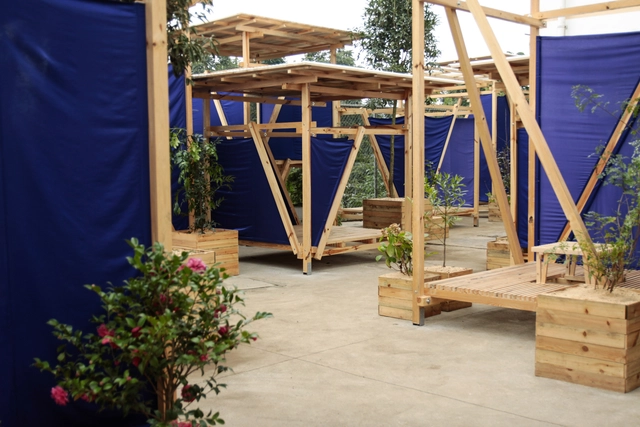
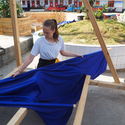
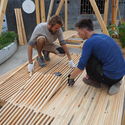
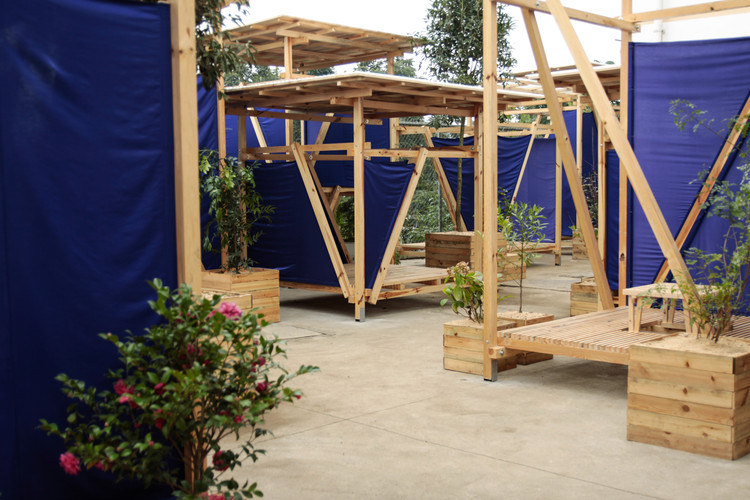
Having won the 120 Hours student competition in 2017, the Warsaw University of Technology team behind the “In ‘n’ Out Village” winning proposal has combined with students at the Oslo School of Architecture and Design to realize the design, constructing 19 pavilions in a Chinese schoolyard.

Competition-Winning Students Design and Build Pavilions for Remote Chinese School - Image 1 of 4Competition-Winning Students Design and Build Pavilions for Remote Chinese School - Featured ImageCompetition-Winning Students Design and Build Pavilions for Remote Chinese School - Image 2 of 4Competition-Winning Students Design and Build Pavilions for Remote Chinese School - Image 3 of 4Competition-Winning Students Design and Build Pavilions for Remote Chinese School - More Images+ 15

120 Hours 2016: 'Whatever Happened to Architectural Space?'

120 Hours, an open architectural competition organised by students from the Oslo School of Architecture, is inviting fellow students from around the world to explore the role of the architect in today's society. The competition, according to its organisers, is in "a unique position to make students reflect on their future profession. We want to challenge people to rethink the future of architecture." Last year's competition, chaired by Julien de Smedt, received 741 submissions from 90 different countries.

Can you prove that you will be the next great architect in just five days?

Subscriber Access | 

120 HOURS, - one of the worlds most important student competition, for and by architecture students, challenge you to redefine the meaning of sustainability in architecture. The catch; you only have five short days, and you have to convince OMA-partner Ellen Van Loon. Still up for it?

If you are so lucky as to find yourself with a job after you graduate school, the leap from student life to professional architect can be quite a challenge. From working on projects with deadlines many months down the line, to working day and night on proposals due “yesterday”. This is the harsh reality for most young professionals.

In 2010, three students at the Oslo School of Architecture wanted to create a new arena where Norwegian students could acquaint themselves with life as a professional architect. The result was the birth of the competition 120 HOURS.

Find out more after the break.