1. ArchDaily
  2. OSB Wood

OSB Wood: The Latest Architecture and News

From Tradition to Innovation: How Modern Technologies are Transforming the Potential of Wood

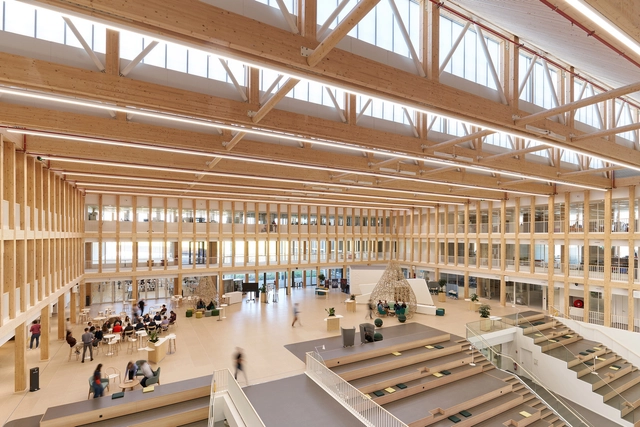
Wood, one of the oldest building materials, has been continuously reinvented throughout history. As contemporary architecture becomes more and more concerned with sustainability and environmental responsibility, the popularity of the material has also increased. As trees absorb carbon dioxide during their growth, their wood stores that carbon, keeping it out of the atmosphere. The materials derived from wood are thus associated with less greenhouse gas emissions on the condition of trees being harvested from sustainably managed forests. But in order to capture the full potential of this material, a plethora of techniques and modifications have evolved with the purpose of adapting and customizing wood's characteristics to the demands of modern design and construction. From thermal modification to engineered wood or versatile particle boards, these methods not only enhance wood's suitability for the rigors of contemporary architecture but also expand the usability of this sustainable material to an unprecedented scale.

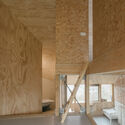
From Tradition to Innovation: How Modern Technologies are Transforming the Potential of Wood - Image 1 of 4From Tradition to Innovation: How Modern Technologies are Transforming the Potential of Wood - Image 2 of 4From Tradition to Innovation: How Modern Technologies are Transforming the Potential of Wood - Image 3 of 4From Tradition to Innovation: How Modern Technologies are Transforming the Potential of Wood - Image 4 of 4From Tradition to Innovation: How Modern Technologies are Transforming the Potential of Wood - More Images+ 5

OSB Panels in Interiors: From a Humble Material to a Design Feature

Subscriber Access | 

From its outer skin to its structural framing system, a building is made out of many layers. Just like a human body, many of those layers – which tend to be the most crucial, functional components – remain unseen by the public, covered with aesthetic features. Among all the hidden elements, all buildings include sheathing, the outer casing that construction crews place to serve several key purposes: protect the floor, walls, roofs and ceilings, fortify the structure against internal and external forces, and cover the entire framework, giving the building a solid shape.

Wood is the most common material for sheathing, with Oriented strand board (OSB) panels usually being the top choice. Why? Made by compressing and gluing cross-oriented strands of wood together with heat-cured adhesives, OSB boards are lightweight, flexible, strong, versatile and fully recyclable. They also stand out by resisting deflection, warping and distortion, apart from offering some thermal and acoustic insulation. However, besides their good performance and mechanical properties, OSB is especially known for being cheaper than other alternatives, drastically saving both costs and time. In fact, this structural panel can be $3 to $5 less expensive than plywood, which explains why it is often considered its low-cost substitute.

The Versatility of OSB Panels in 12 Projects

Subscriber Access | 

OSB (Oriented Strand Board) can be easily recognized for its distinctive appearance. This material consists of cross-oriented layers of wood strands compressed and bonded together with resin, applied under high pressure and temperature. As a result, the standardized panels have great stiffness, strength, and stability, and are often used as wall cladding attached to the steel frame of a building or as partitions. Also, they have good soundproofing capabilities, since the panels are uniform and have no internal gaps or voids. It is also worth mentioning that OSB can be fully recycled, thereby being considered eco-friendly.

RFC Residence / Reinach Mendonça Arquitetos Associados

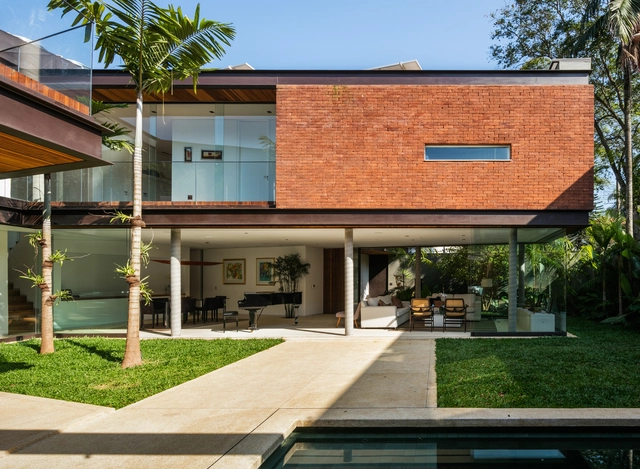
RFC Residence / Reinach Mendonça Arquitetos Associados - SustainabilityRFC Residence / Reinach Mendonça Arquitetos Associados - SustainabilityRFC Residence / Reinach Mendonça Arquitetos Associados - Exterior Photography, Sustainability, FacadeRFC Residence / Reinach Mendonça Arquitetos Associados - SustainabilityRFC Residence / Reinach Mendonça Arquitetos Associados - More Images+ 15

  • Area Area of this architecture project Area:  6587 ft²
  • Year Completion year of this architecture project Year:  2018
  • Manufacturers Brands with products used in this architecture project
    Manufacturers:  Saint-Gobain, A&A A Elétrica e A Hidráulica, AM Lesec Comercial, Andrade Lopes construções, Aricanduva Esquadrias, +36