Pyongyang Architecture Map. Image Courtesy of Blue Crow Media
Architecture map publisher, Blue Crow Media has just released its latest publication, a celebration of the unique architecture of Pyongyang, North Korea. With travel curtailed due to the pandemic, a peak inside the Hermit Kingdom could be just what we all need.
The Graham Foundation for Advanced Studies in the Fine Arts has announced 2020 Grants to Individuals. A total of 52 new grants will support critical projects that tackle contemporary issues, broaden historical perspectives, and explore the future of architecture and the designed environment. They are awarded for research, exhibitions, publications, films, and digital initiatives, among other formats.
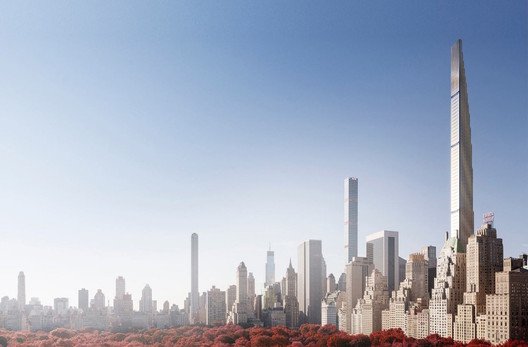
The hyperreal renderings predicting New York City’s skyline in 2018 are coming to life as the city’s wealth physically manifests into the next generation of skyscrapers. Just like millennials and their ability to kill whole industries singlehandedly, we are still fixated on the supertalls: how tall, how expensive, how record-breaking? Obsession with this typology centers around their excessive, bourgeois nature, but – at least among architects – rarely has much regard for the processes which enable the phenomenon.
Editor's Note: This article was originally published on 30 June, 2016. While the debate surrounding the terms of the UK's exit from the European Union continues to rage, the Tate remains a steady icon for London and the UK. But the building has also become a symbol in a new fight: one between the capital's elites and the general public. As the political sands in Britain continue to shift, it may be interesting to see how - and with whom - the building aligns in the future. - Katherine Allen, Managing Editor
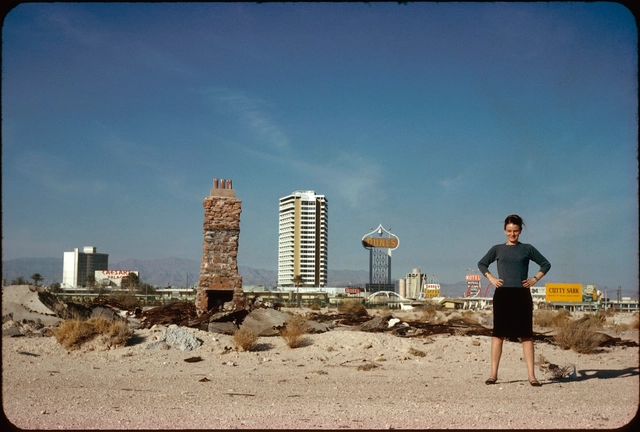
Denise Scott Brown in front of The Strip, Las Vegas, NV, US, 1966, Photo by Robert Venturi, courtesy of Venturi, Scott Brown and Associates, Inc.
Next month, American architect Denise Scott Brown will receive the 2018 Soane Medal, an award given to "architects who have made a major contribution to their field, through their built work, through education, history and theory." A powerhouse jury that included Sir David Chipperfield, Paul Goldberger, Farshid Moussavi, Alice Rawsthorn, Oliver Wainwright selected Scott Brown for the second edition of the award. The 2017 Soane Medal was given to Rafael Moneo.
Sir David Chipperfield, Trustee of Sir John Soane’s Museum, said: ‘The jury considered many outstanding candidates; however Denise Scott Brown stood apart and was the jury’s unanimous choice. Scott Brown’s contribution across architecture, urbanism, theory and education over the last fifty years has been profound and far-reaching. Her example has been an inspiration to many, and we are delighted to honour her with the awarding of the Soane Medal.’
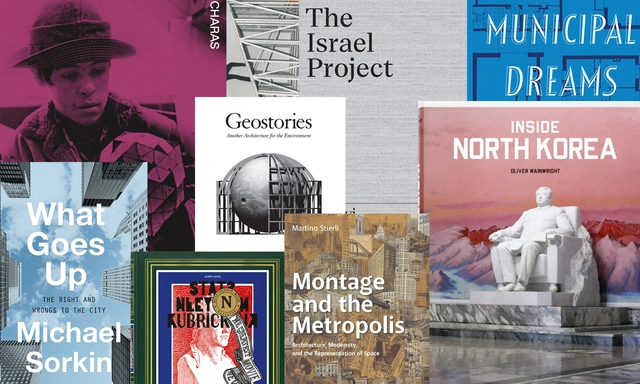
Metropolis Magazine has released a curated list of 19 new books to read this spring, with topics ranging from the evolution of social housing to Stanley Kubrick's unfilmed masterpiece to a fascinating tome on the architecture of Zionism. Not simply volumes detailing well-tread histories, these chosen titles explore every niche category through the lens of architecture. Ever wondered how Buckminster Fuller inspired six former gang members to construct his geodesic dome? Or what metro stations in North Korea look like?
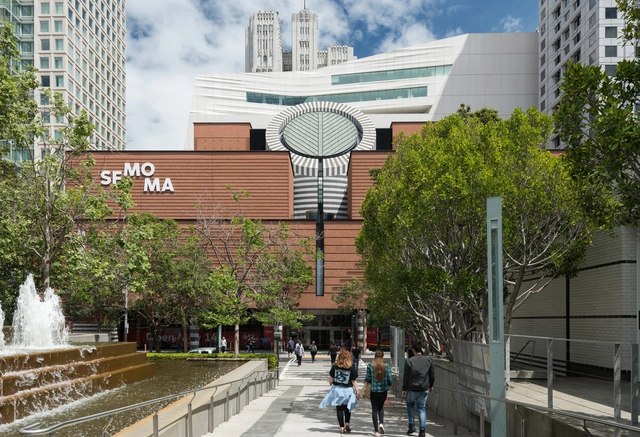
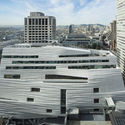
Shoehorned into the narrow space behind Mario Botta’s 1995 building, the Snøhetta-designed new wing of the SFMOMA was forced to go where few museums have gone before: up. Rising 10 stories into the San Francisco skyline, the new building nearly triples the amount of existing gallery space and adds a new entrance into what is now one of the world’s largest buildings dedicated to modern art. As the museum is set to reopen to the public May 14th, the critics' takes are rolling in. Did the restrictive site inspire a unique design solution or limit the creative possibilities of the project? Read on to find out.
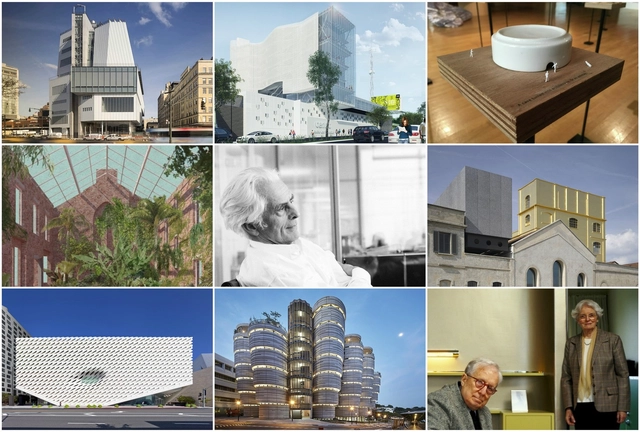
The past 12 months have given us plenty to talk about: 2015 saw the opening of several marquee new museums, and the field took an introspective turn with the “State of the Art of Architecture” at the Chicago Biennial. Now it’s December, and that means it’s time for many critics to look back at the triumphs and failures of the year past and make predictions for the year to come.
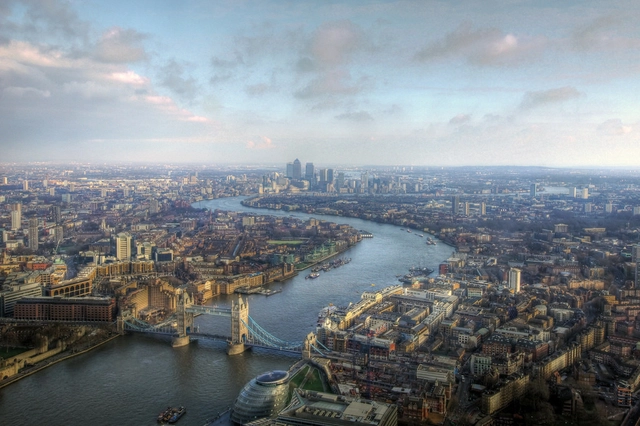
The Guardian's latest, Oliver Wainwright and Monica Ulmanu discuss London's controversial skyline and the forces that shape it. "Perhaps the tortured heap of towers that seem to be the future of London’s skyline (some thrilling, some monstrous, all very large) is inevitable," says Wainwright. "It is a vertical expression of the Square Mile’s medieval street pattern, forced skywards by global finance and massaged by reactive planning – the chaotic cocktail of invisible forces shaping the city." Read the whole article, here.
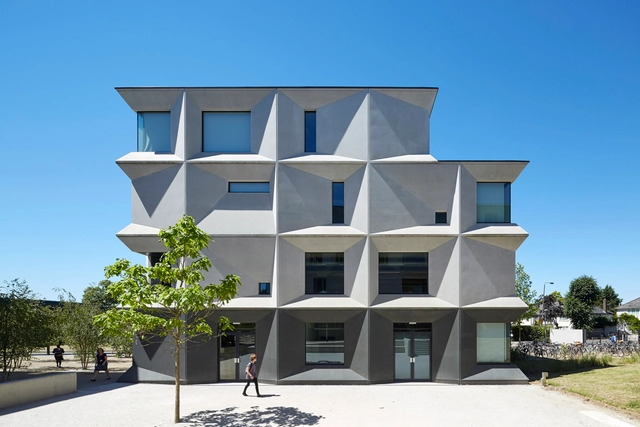
But despite the apparent surprise, was AHMM's Burntwood School a suitable winner of British architecture's highest award? Read on to find out what the critics thought.
Last week, the Chicago Architecture Biennial opened to over 31,000 visitors and much fanfare, and for good reason - it is the largest architecture event on the continent since the 1893 World's Columbian Exposition, featuring over one hundred exhibitors from over thirty countries. With a theme as ambiguous as "The State of the Art of Architecture," and with the hope of making the biennial, according to directors Joseph Grima and Sarah Herda, "a space for debate, dialog and the production of new ideas," the event was sure to generate equally wide-ranging opinions. Read on to find out what the critics had to say about the Biennial.
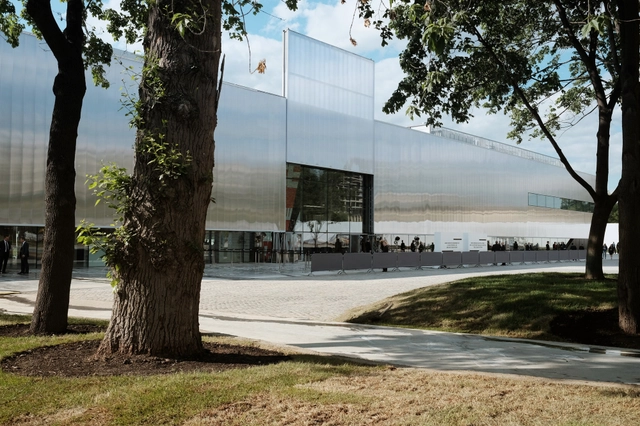
Founded in 2008 and named after the constructivist bus shelter that was its first, temporary home, the Garage Museum of Contemporary Art is Russia's first private, non-profit art foundation. Relocating from a semi-industrial neighborhood on the northern edge of Moscow to Gorky Park, the Garage Museum's conversion of a Soviet era canteen and social club into Museum of Contemporary Art by OMA has so far been overshadowed by its more glamorous OMA counterpart which opened last month, the Milanese distillery conversion for Prada. Nevertheless, since opening last Friday the Garage Museum has attracted attention for Rem Koolhaas' shift towards preservation, something that has startled the critics. Find out more about what they thought after the break.
The sudden and unexpected announcement of the Pritzker Prize yesterday evening sent shockwaves through the architecture world. With the sad death of the Prize's latest laureate Frei Otto on Monday, the Pritzker made the unprecedented decision to announce the winner two weeks early, ensuring that Otto's final, crowning achievement would make its way into the obituaries of this great man.
Of course, despite the sudden nature of the announcement, the many critics on Twitter were on hand to lend their initial thoughts in what was an interesting mix of congratulations, sadness and nostalgia. Read on after the break for all the reactions.
In the UK, urban issues are starting to see something of a renaissance, with problems such as the nation's housing shortage increasingly being subjected to scrutiny in ever more public arenas - in fact earlier this year housing overtook transport as the biggest concern among London voters. All of this means that 2015 will be "a golden opportunity to fix some of the worst city problems," according to the Guardian Cities, who have asked their architecture critic Oliver Wainwright to offer up a wishlist of positive changes that could benefit the nation's urban centres. From councils building more council housing to a tax on empty homes, Wainwright's four-point list offers straightforward policy advice that could truly transform the lives of British urbanites - and perhaps most promisingly, in three of these cases he explains how there are nascent movements already being made to bring his recommendations to fruition. You can read the full article here.
In an article for The Guardian, Oliver Wainwright steps "inside Beijing's apocalypse": the poisonous, polluted atmosphere that often clings to the Chinese capital. He explores ways in which those who live in this metropolis have started to redefine the spaces they frequent and the ways in which they live. Schools, he notes, are now building inflatable domes over play areas in order to "simulate a normal environment." The dangers were made clear when "this year’s Beijing marathon [...] saw many drop out when their face-mask filters turned a shade of grey after just a few kilometres." Now, in an attempt to improve the living conditions in the city, ecologists and environmental scientists are proposing new methods to filter the air en masse. Read about some of the methods here.
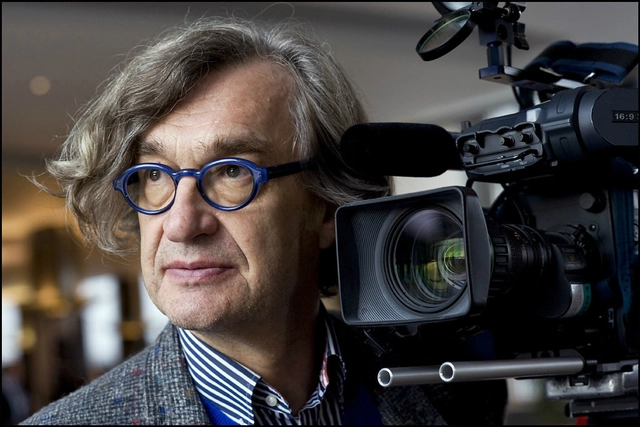
The highly anticipated 3D film series Cathedrals of Culturehas now opened around the world. Directed by Wim Wenders and a team of five other acclaimed directors (Robert Redford, Michael Glawogger, Michael Madsen, Margreth Olin and Karim Aïnouz), the collection - according to The Guardian's Oliver Wainwright - "feels more like a series of vapid promotional videos." Arguing that in most of the films (with the exception of Michael Madsen's) the narrative is lost in favour of cinematic shots, "Cathedrals of Culture presents a limited and internalised view of what architecture is, a fault perhaps driven by the obsession with the 3D camera. [...] It has a self-satisfied, sometimes cultish, air that makes you feel like you’re taking part in some collective brainwashing exercise." Wainwright concludes that Living Architectures is the best place to go. See some of their films featured in ArchDaily's 40 Architecture Docs to Watch in 2014.
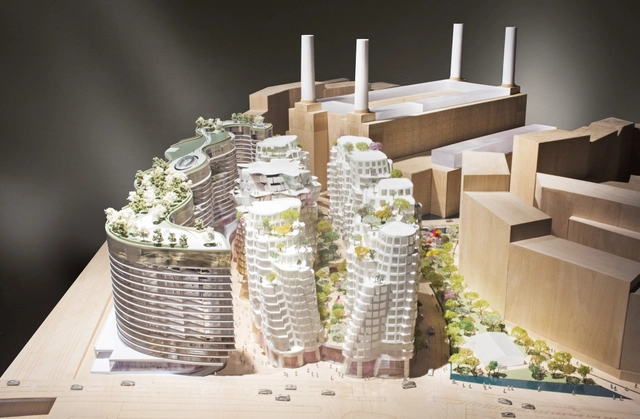
Phase 3, Battersea Power Station redevelopment (London). Image Courtesy of Foster + Partners / Gehry Partners
Alongside a number of recent articles that explore the rise of the urban property developer and the subsequent "threat" to the built environment, Oliver Wainwright of The Guardian explores at length how developers are "exploiting planning authorities and ruining our cities." In discussion with Peter Rees, former Chief Planning Officer for the City of London and responsible for the financial district's monuments of today, Wainwright discusses the lack of accountability of the vast majority of urban developers. While local councils attempt to secure the next iconic development for their area many planners, authorities and developers are locked in a battle over the built fabric of our cities. Read the article in full here.
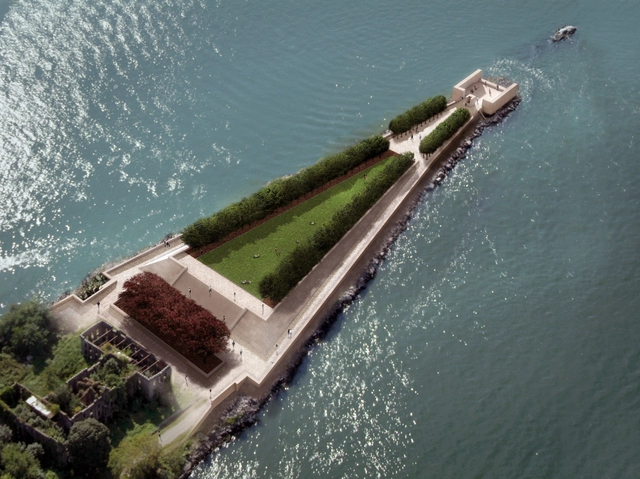
Aerial Rendering Prior to Completion. Image Courtesy of Franklin D. Roosevelt Four Freedoms Park, LLC
Built four decades after Louis Kahn's death, New York City'sFour Freedoms Park - the architect's posthumous memorial to Franklin D. Roosevelt and his policies - is becoming one of the architect's most popular urban spaces. In a recent article for the Guardian, Oliver Wainwright investigates what he describes as perhaps Kahn's "best project". Wainwright's spatial description of the monument is interweaved by fragments of Kahn's personal history, building up a picture of a space with "the feel of an ancient temple precinct" and "a finely nuanced landscape". Although Gina Pollara, who ultimately realised the plans in 2005, argues that Four Freedoms Park "stands as a memorial not only to FDR and the New Deal, but to Kahn himself", can a posthumous project ever be considered as an architect's best? Read the article in full here.

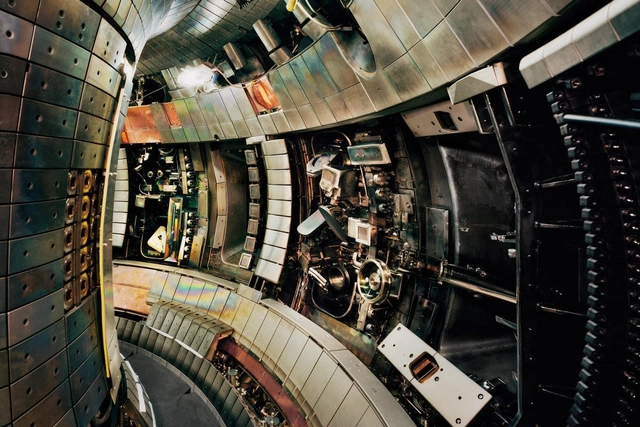

.jpg?1467325496&format=webp&width=640&height=580)


_on_view_in_the_Evelyn_and_Walter_Haas__Jr._Atrium_at_the_new_SFMOMA__photo_%C2%A9_Iwan_Baan__courtesy_SFMOMA.jpg?1462453791 "© Iwan Baan")