1. ArchDaily
  2. Mycellium

Mycellium: The Latest Architecture and News

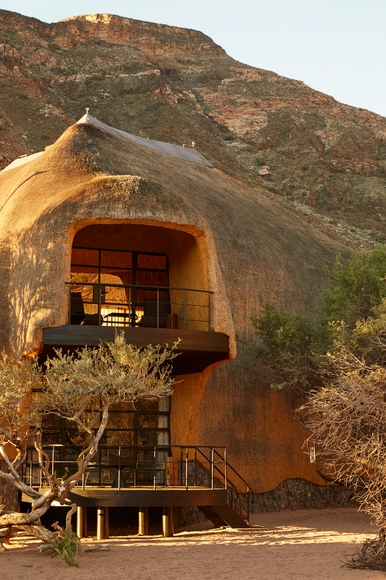
Transspecies Architecture: ArchDaily’s June Editorial Focus

Western philosophical tradition has long placed culture in opposition to nature. This dual thinking has shaped the canon of the sciences and humanities, and architecture was not left aside. Under that logic, everything that is not human exists to be exploited by them and is named "natural resource". This extractivist mindset has shaped the development of many parts of the world in the last centuries, leaving deep—sometimes irreparable—marks on the planet. Nevertheless, other ways of living have always existed. From West-African religious practices based on animism to the herbal sciences of the masters of the Sacred Jurema in Brazil; from indigenous communities in India whose life rhythm mirrors the monsoons, to the Arctic's Inuits who can see dozens of shades of white: humans and nature bear no distinction, what exists is life.

Contemporary authors bring this discussion to the realms of philosophy and, more specifically, architecture. Donna Haraway, Antônio Bispo dos Santos, Achille Mbembe, and Beatriz Colomina are only a few whose work has helped expand the narrow Western perspective, shedding light on alternative ways of living together—with other humans and more-than-humans—on this planet.

From Concrete to Cultivation: How AI and Robotics Are Rewriting Architecture’s Material Logic

Subscriber Access | 

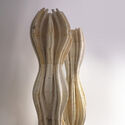
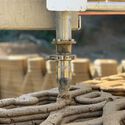
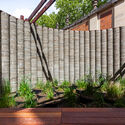
Architecture has entered a pivotal moment. As cities continue to grow under the weight of climatic and social pressures, the materials and systems that shape them are being redefined. Artificial intelligence and robotics, once used to accelerate construction processes, are now being rethought as tools for cultivation. Printed structures that grow, breathe, and decay. Cultivation, in this context, refers to designing with biological materials, where growth and decay are active parameters, merging digital precision with ecological intelligence. This evolution shows the shift from efficiency to empathy, where architecture becomes an agent of active repair. The introduction of mycelium and other natural materials into 3D printing presents a new paradigm in architecture: the logic of the living. A place where computation and fabrication meet biological adaptability.

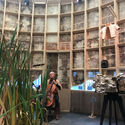
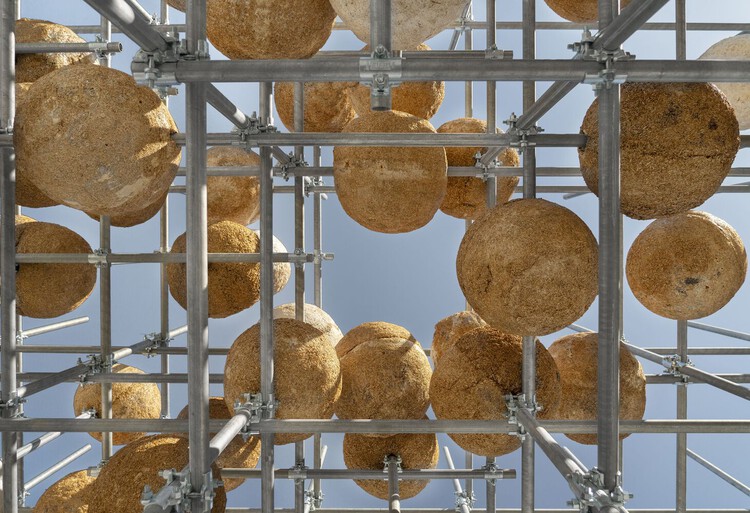
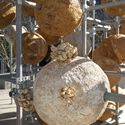
AI and robotics, once associated with industrial efficiency, are now opening new ways of designing. Early examples, such as ICON's 3D-printed housing prototypes, focused on speed and automation but offered little response to their surroundings. Newer projects, such as the MycoMuseum at the 2025 Venice Architecture Biennale, reinterpret these tools through a biological lens. Instead of shaping concrete, they cultivate living materials, marking a shift from pure optimization toward regeneration.

From Concrete to Cultivation: How AI and Robotics Are Rewriting Architecture’s Material Logic - Image 1 of 4From Concrete to Cultivation: How AI and Robotics Are Rewriting Architecture’s Material Logic - Image 2 of 4From Concrete to Cultivation: How AI and Robotics Are Rewriting Architecture’s Material Logic - Image 3 of 4From Concrete to Cultivation: How AI and Robotics Are Rewriting Architecture’s Material Logic - Image 4 of 4From Concrete to Cultivation: How AI and Robotics Are Rewriting Architecture’s Material Logic - More Images+ 9

Should Buildings Be Designed to Decay?

Subscriber Access | 

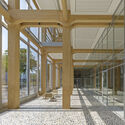
Buildings are physical, static, and permanent. To imagine them otherwise often requires some creative thinking. The industry has operated with this strong association between structures and permanence, unknowingly constraining perspectives on building life cycles. Innovations in building materials have opened up avenues for cirular design that challenge the long-held notion that buildings must endure indefinitely. Emerging approaches promote architecture that ebbs and flows with nature.

Should Buildings Be Designed to Decay? - Image 1 of 4Should Buildings Be Designed to Decay? - Image 2 of 4Should Buildings Be Designed to Decay? - Image 3 of 4Should Buildings Be Designed to Decay? - Image 4 of 4Should Buildings Be Designed to Decay? - More Images+ 1