For the 1957 International Builders Fair, Oscar Niemeyer developed the Interbau Apartment House, a modernist eight-storey building that sits on V-shaped pillars in the city of Berlin. While the building's facade consists of uniform windows and loggias clad with primary-colored mosaics, it is interrupted by enclosed pathways that connect the structure to the external elevator.
Architectural photographer Bahaa Ghoussainy explored the building and highlighted the complementary relationship between its uniform modernity and dynamic suspensions.
Architecture theorist, historian, and curator Beatriz Colomina talks about our discipline and its difficulty to accept the work as the result of a collaborative effort. When asked about sexism and gender issues within architecture, Colomina broadens the discussion and tackles the historical myth of architecture as the product of one single, brilliant - and always masculine - mind. A fiction that has obscured the role of a number of women, and whole teams, committed to the design process.
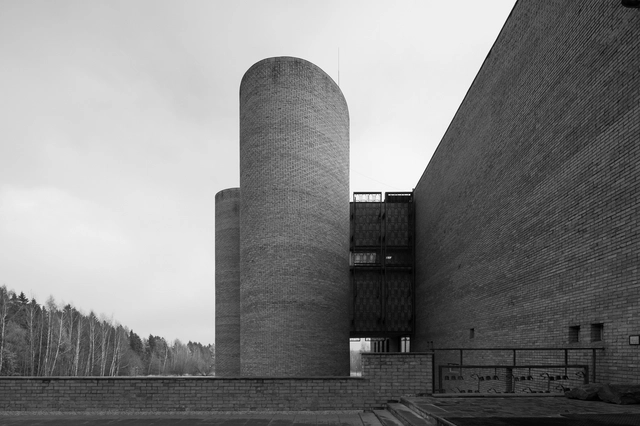
In recent years, people started to regain interest in a movement that dates back to the last century; a movement, first introduced during the 1940s and 1950s, through the works of Le Corbusier and Alison and Peter Smithson. With monolithic structures, modular shapes, and impressive massing, Brutalism highlights architectural integrity. This movement is highly characterized by rough, raw, and pure surfaces that underline the essence of the substances in question. Spread across the globe, architects have adopted and developed their own vision of this modern movement, creating contextual variations.
In the midst of all the chaos currently taking place in the city of Beirut, we look back on the Lebanese capital’s hidden Brutalist gems. To shed the light on a movement that's often neglected and forgotten, Architect Hadi Mroue created a series of images that highlight the Lebanese Brutalism movement as well as its evolution as an important part of the Lebanese modern heritage.
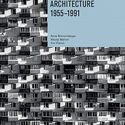
After the success of the original guide-book on underrated Soviet architecture, Garage Museum of Contemporary Art is publishing an English version of the bestselling guide: Moscow: A Guide to Soviet Modernist Architecture 1955–1991in a new digitalized format with six new chapters.
Modern architecture, visible in contemporary production, is usually related to the use of guidelines established by Le Corbusier's five points of architecture. Despite being widely known and debated for years, these points continue to be revisited and rethought in projects from various places and contribute to the creation of interesting buildings in various programs.
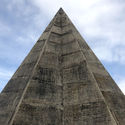
Amey Kandalgaonkar has unveiled a project which reimagines the traditional Chinese pagoda in a modernist style. The Shanghai-based designer created the fictional reinterpretation as a homage to a building form largely untouched by Modernism, featuring raw brut concrete, minimal ornamentation, and bold geometric moves.
https://www.archdaily.com/916524/amey-kandalgaonkar-reimagines-traditional-chinese-pagodas-for-a-modernist-eraNiall Patrick Walsh
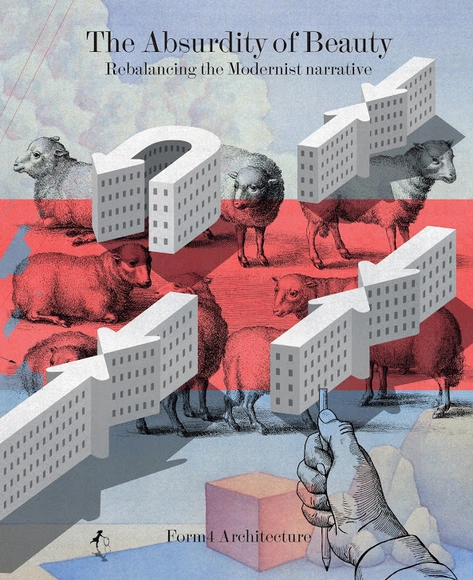
John Marx, AIA, Co-Founding Principal and Chief Artistic Officer of Form4 Architecture, has debuted The Absurdity of Beauty: Rebalancing the Modernist Narrative, which challenges the philosophies of Modernism and posits how these discussions can inspire a new era of urbanism and abundance.
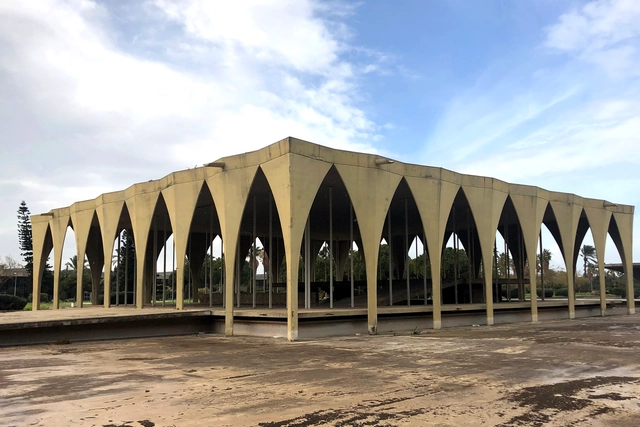
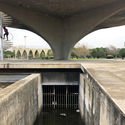
Lebanon is home to several outstanding structures, influenced by centuries of architectural styles. However, one of the most intriguing projects in the Middle Eastern country lies in the northern city of Tripoli, a culturally-rich historical city with structures once inhabited by Romans, Crusaders, Phoenicians, and Ottomans. The Rachid Karami International Exhibition Center, designed by Oscar Niemeyer, reflects the slow deterioration from Lebanon’s pre-war golden age to post-war depression. The country's iconic modernist site has suffered after years of neglect and reportedly will require upwards of 15 million dollars to restore.
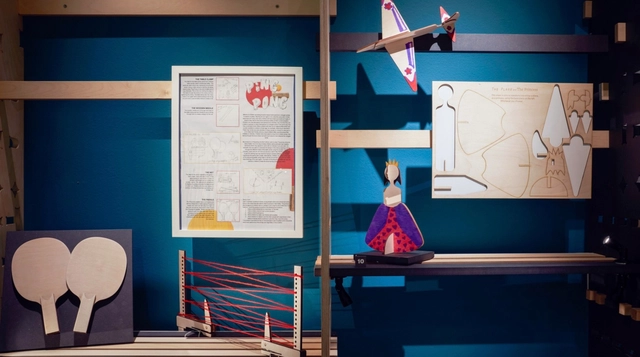
How does our built environment affect us? This major exhibition spanning two galleries examines the positive and negative influence buildings have on our health and wellbeing. From Dickensian London to the bold experiments of postwar urban planners, and from healing spaces for cancer patients to the role architecture can play in global healthcare provision, we look anew at the buildings that surround and shape us.
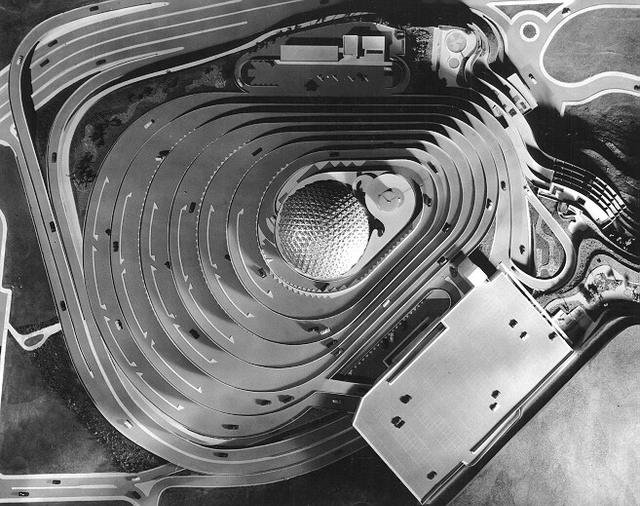
Although construction was never completed, El Helicoide (The Helix) in Caracas remains one of the most important relics of the Modern movement in Venezuela. The 73,000-square-meter project, designed in 1955 by Jorge Romero Gutiérrez, Peter Neuberger, and Dirk Bornhorst, takes the form of a double spiral topped by a large geodesic dome designed by Buckminster Fuller. It is characterized by a series of ascending and descending ramps intended to carry visitors to its variety of programmatic spaces, including 320 shops, a 5-star hotel, offices, a playground, a television studio, and a space for events and conventions.
Today, Proyecto Helicoide aims to rescue the urban history and memory of the building through a series of exhibitions, publications, and educational activities.
NOWNESS has released the latest in their "In Residence" series, a collection of short videos that interview designers in their homes. This time, internationally renowned Mexican Architect Fernando Romero presents his Mexico City villa, designed by Francisco Artias in 1955, which he describes as "the ultimate modernity dream come true."
When the concrete cloverleaf of Prentice Hospital sprouted from the Chicago ground in 1975, its award-winning design met the praise of critics and the admiration of many Chicagoans. Architect Bertrand Goldberg drew from Brutalism, but with a symmetry and grace that distinguished Prentice from more angular works in that style.
This week, as Goldberg’s famous work is pulled apart by wreckers, nothing about its loss seems symmetrical or graceful. Within 40 years, the building transitioned from a proud symbol of civic renewal and design innovation to the victim of old-fashioned Chicago politics. The controversy surrounding the demolition of Prentice, however, injected the preservation movement into an urban design discussion with a presence not seen in a long time.
https://www.archdaily.com/441977/is-the-demolition-of-prentice-hospital-another-penn-station-momentMichael R. Allen


.jpg?1575455535&format=webp&width=640&height=580)
.jpg?1575455403 "© Bahaa Ghoussainy")
.jpg?1575455498 "© Bahaa Ghoussainy")
.jpg?1575455479 "© Bahaa Ghoussainy")
.jpg?1575455317 "© Bahaa Ghoussainy")
.jpg?1575455535)
.jpg?1573123210&format=webp&width=640&height=580)