1. ArchDaily
  2. model building

model building: The Latest Architecture and News

The Plan and the Prompt: How AI Is Rewiring Design and Practice

Subscriber Access | 

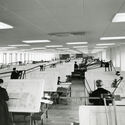
Architecture's design process has always been shaped by the tools at hand. We once drew with pen and ink on fragile sheets, copied by blueprint and guarded against smudges and tears; then Mylar arrived, making revisions and preservation easier and nudging drawings toward a leaner, more deliberate economy of lines. Computer-aided drafting followed, speeding coordination and changing how we think about scale and precision. Today, AI adds another layer—gathering information in seconds and spinning images on command—promising new efficiencies while raising fresh questions about authorship and craft. What we make, and how we make it, has evolved with each tool; the history of our methods is the history of our ideas.

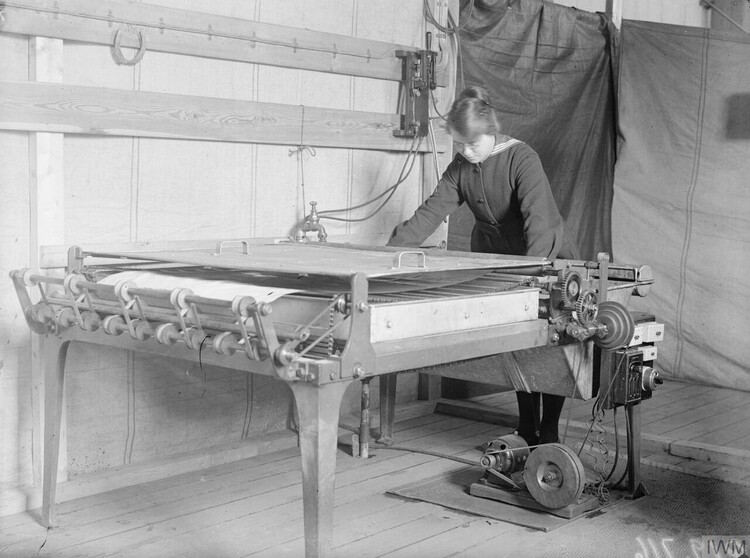
Beginning in the post-war era, Mylar (developed in the 1950s) eased drawing reproduction and hastened the shift from blueprint to whiteprint processes. Before Mylar, simply preserving drawings—keeping an idea intact, legible, and undamaged—was a significant task. Post-war design priorities often leaned toward efficiency, simplicity, and an industrial minimalism aligned with reconstruction needs. The tools reinforced this: architectural work remained predominantly hand-drawn, where every line took time to lay down and even more time to erase. That labour sharpened the economy of drawing; each stroke had to earn its place.

The Plan and the Prompt: How AI Is Rewiring Design and Practice - Image 1 of 4The Plan and the Prompt: How AI Is Rewiring Design and Practice - Image 2 of 4The Plan and the Prompt: How AI Is Rewiring Design and Practice - Image 3 of 4The Plan and the Prompt: How AI Is Rewiring Design and Practice - Image 4 of 4The Plan and the Prompt: How AI Is Rewiring Design and Practice - More Images+ 10

Why are Scale Models So Appealing?

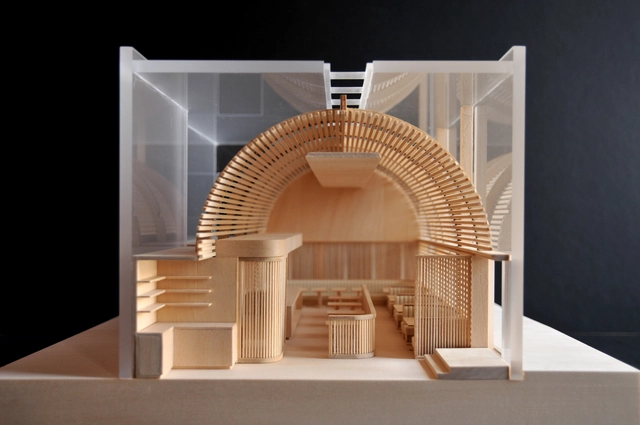
Ambitious and diverse, models are representative tools non-exclusive to architects. Peculiar fascination with miniatures – and what they tell us about our larger world- extends to all ages, cultures, and purposes. From scaled temples of clay from 200 B.C. found in Mexico, ceramic models carried during medieval Islamic journeys, Victorian doll houses, and LEGOS, models are more than baby buildings. Miniatures unveil the essentials, explain much larger concepts, contain intimate and historical data, and invite us to challenge our known selves and perspective.

Why are Scale Models So Appealing?  - Image 1 of 4Why are Scale Models So Appealing?  - Image 2 of 4Why are Scale Models So Appealing?  - Image 3 of 4Why are Scale Models So Appealing?  - Image 4 of 4Why are Scale Models So Appealing?  - More Images+ 2

The Allure—and Importance—of Architectural Models

This article was originally published on Common Edge.

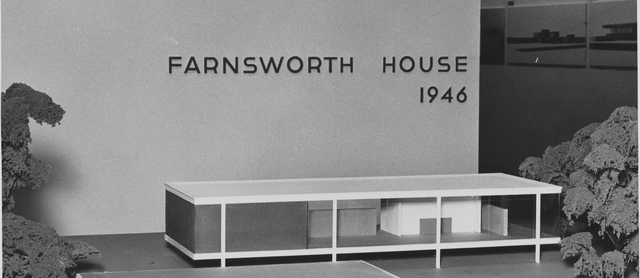
In this week's reprint, author Mark Alan Hewitt talks about models and their importance. "For those of us lucky enough to have grown up during the 1950s and ’60s, models were hot stuff—and not just the kind that statement may bring to mind", he states. Going back to the realistic models of the 70s, similar to today's virtual renderings, this essay retraces their history and the artists that produced them.

Is Integrating Building Performance Difficult at Your Firm?

Subscriber Access | 

In a study recently published by AIA, less than 13% of architectural firms have incorporated building performance as part of their practice. With buildings contributing 40% of total carbon emissions leading to climate change, just 25 projects are roughly equivalent to planting 1 million trees each year. In addition to that, teams that are able to showcase data-driven and performance-driven decision-making and feature an energy analysis in every pursuit are able to increase fees and generate more revenue. Although integrating building performance sounds like a no-brainer, it proves to be difficult at many firms, because in addition to the practical changes, it requires a culture shift. That culture shift can only happen if the tools are easy to use, accurate, and mesh well with current workflows. Right now is the perfect time to tackle these culture changes due to a few reasons:

5 Ways to Discuss Building Performance for Your Next Project Pursuit

 | Sponsored Content

Today in the United States, buildings account for nearly 40% of carbon emissions (EESI) and 78% of electricity usage. The most sustainability-focused firms run energy simulations for less than 50% of their projects (10% for a typical firm) and only doing so late in the process when design changes are limited and insufficient to combat red flags found in the performance report (AIA 2030 report). We can make building performance widespread once we help the entire community discuss the subject in terms of investment and return. Especially during a project pursuit, since having the buy in from the whole team helps ensure the key project metrics are met. Owners are seeking out teams who are using actual metrics and data driven processes that affect their bottom line. This new approach to practice is what makes the younger teams’ standout and will benefit both the climate and the bottom-line. Here are 5 ways to talk about building performance in your project pursuits: