1. ArchDaily
  2. Mies van der Rohe

Mies van der Rohe: The Latest Architecture and News

As Phyllis Lambert Turns 90, Exhibition Examining Her Impact and Influence Opens in Montréal

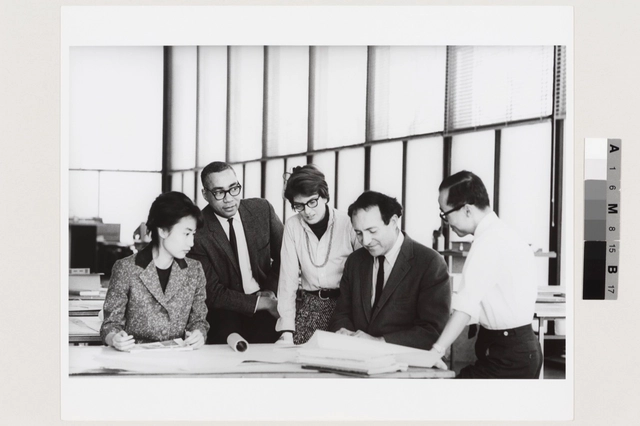
This week Phyllis Lambert, widely considered to be among the most influential figures in architecture, turned 90. Known primarily for founding the Canadian Centre for Architecture (CCA) in her hometown of Montrèal in 1979, she also acted as Director of Planning for the world-renowned Seagram Building in Manhattan (a tower commissioned by her family). The project is often cited as one of Mies van der Rohe's most important built works. As a practising architect, Lambert designed the Saidye Bronfman Centre (1967) – a performing arts center named after her mother.

As Phyllis Lambert Turns 90, Exhibition Examining Her Impact and Influence Opens in Montréal - Image 1 of 4As Phyllis Lambert Turns 90, Exhibition Examining Her Impact and Influence Opens in Montréal - Image 2 of 4As Phyllis Lambert Turns 90, Exhibition Examining Her Impact and Influence Opens in Montréal - Image 3 of 4As Phyllis Lambert Turns 90, Exhibition Examining Her Impact and Influence Opens in Montréal - Image 4 of 4As Phyllis Lambert Turns 90, Exhibition Examining Her Impact and Influence Opens in Montréal - More Images+ 2

Watch the Official Performance of “We Know How to Order” at the Chicago Architecture Biennial

Subscriber Access | 

The city of Chicago is an intersection of multiple systems – the organizational orders of its modernist buildings; the presence of the federal government; the negotiations and orders of the lives of its marginalized communities. “We Know How to Order”, conceived by Bryony Roberts, choreographed by Asher Waldron and performed by the South Shore Drill Team, brings these intersections to life in a vibrant street performance for the first ever Chicago Architecture Biennial. A series of drill routines with influences from street choreography, the project explicitly "super-imposes" its system of movement onto the organization of Mies van der Rohe’s Federal Center, calling "attention to the accessibility of public space in the US" and "how architectural systems alongside social expectations influence the occupation of common space," according to the Chicago Architecture Biennial guidebook.

A Virtual Look Into Mies van der Rohe's Barcelona Pavilion

Subscriber Access | 

The Barcelona Pavilion was officially only used once, and that was on the 27th of May, 1929, when King Alfonso XIII of Spain participated in a ceremony for its opening. Its role, according to an official statement by President Paul von Hindenburg, was to “present the Spirit of the New Germany: simplicity and clarity of means and intentions—everything is open, nothing is concealed.” As the first official participation of Germany in an international event since the catastrophic end of the First World War, it was a day of enormous symbolic importance, attended by diplomats, aristocrats and dignitaries. Within a few years the peace would collapse, in Barcelona as much as in Berlin, but for a moment, in May, modernity was met with optimism.

The Barcelona Pavilion was intended to embody this moment. Free of external ornament, the building was made of the most luxurious materials. Walls were fashioned of thin plates of luminous semi-precious stone, from green polished marble to golden onyx. According to Philip Johnson’s influential account, they didn’t physically limit space, but rather suggested flowing movement, and didn’t divide so much as bind; bringing the inside to the outside by continuing beyond the roofline into the garden. While the columns provided a kind of cartesian grid of points tethering the roof, the walls were positioned freely. In the courtyard was a bronze nude, arms aloft in a gesture that might be dance, might be grief, reflected in a still pool. With the asymmetrical walls, the luxurious stone, the bright light, the podium on which it sat; the pavilion was at the same time both a hyper-modernist building, and a classical ruin.


Mies van der Rohe's Lafayette Park Named National Historic Landmark

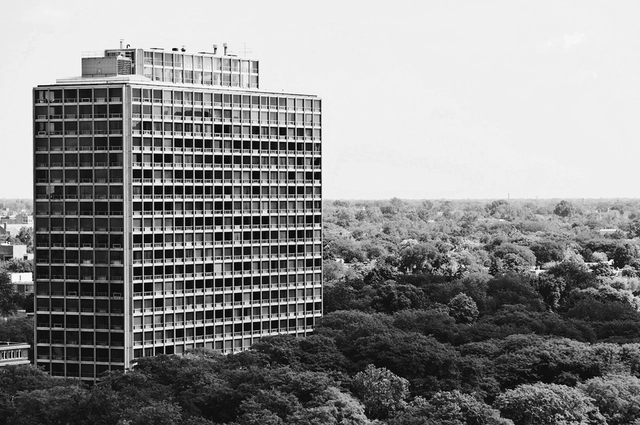
One of the first and most successful examples of urban renewal, Detroit's 78-acre Lafayette Park is known for being the world's largest collection of works by Mies van der Rohe. Now, the mid-century modern "masterpiece" is the first urban renewal project to be declared a National Historic Landmark. This is partially due to the fact that, as Ruth Mills, architectural historian for Quinn Evans Architects told the Detroit Free Press, "Lafayette Park was one of the few urban renewal projects that's done it successfully." It is now Michigan's 41st landmark.

A Virtual Look Into Mies van der Rohe's Farnsworth House

Subscriber Access | 

Farnsworth House, the temple of domestic modernism designed by Mies van der Rohe as a weekend retreat for a Chicago doctor, is one of the most paradoxical houses of the 20th century. A perfectionist mirage, it floats like a pavilion in a park, but its history has been beset by plagues, floods and feuds. As the second installment of a series of three modernist classics presented by Archilogic, we’ve modeled the Farnsworth house so that you can see if—in spite of its austere reputation—it can be lived in after all. In this model you can explore the spatial arrangement of the house, and refurnish it with Eames chairs, deck it out with your IKEA favorites, or booby-trap it with children’s toys.

Exhibition: Side by Side: Philip Johnson's Glass House and Mies van der Rohe's Farnsworth House

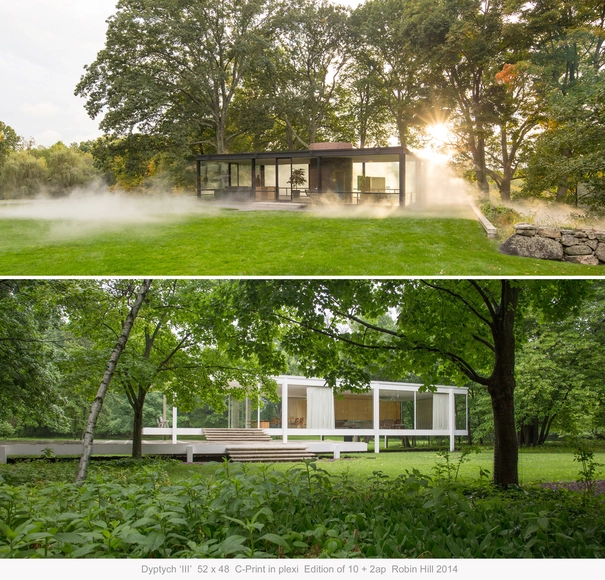
Side by Side is an exhibition by photographer Robin Hill that explores the similarities and differences between two of America's most iconic houses. The Glass House by Philip Johnson and The Farnsworth House by Mies van der Rohe. Through a series of dyptychs, Mr. Hill's lens explores both the geometry of the structures and their place in the environment. Tellingly the exhibition is housed in the Seagram Building designed by Mies van der Rohe and assisted by Philip Johnson. The lobby of The Four Seasons is an ideal venue for this exhibition as much of the design aesthetic of both architects is prevalent in the space as well as in the photographs.
"Baby Rems" and the Small World of Architecture Internships

The world of architecture is small. So small in fact, that Rem Koolhaas has been credited with the creation of over forty practices worldwide, led by the likes of Zaha Hadid and Bjarke Ingels. Dubbed “Baby Rems” by Metropolis Magazine, this Koolhaas effect is hardly an isolated pattern, with manifestations far beyond the walls of OMA. The phenomenon has dominated the world of architecture, assisted by the prevalence and increasing necessity of internships for burgeoning architects.

In a recent article for Curbed, Patrick Sisson dug into the storied history of internships to uncover some unexpected connections between the world's most prolific architects. With the help of Sisson's list, we've compiled a record of the humble beginnings of the household names of architecture. Where did Frank Gehry get his start? Find out after the break.

"Baby Rems" and the Small World of Architecture Internships - Image 1 of 4"Baby Rems" and the Small World of Architecture Internships - Image 2 of 4"Baby Rems" and the Small World of Architecture Internships - Image 3 of 4"Baby Rems" and the Small World of Architecture Internships - Image 4 of 4Baby Rems and the Small World of Architecture Internships - More Images+ 3

AD Round Up: American Classics

Subscriber Access | 

Happy Fourth of July! In recognition of Independence Day in the United States, ArchDaily has assembled six of our favorite "American Classics." Featuring projects by Louis Kahn, Mies van der Rohe, Richard Neutra, Paul Rudolph, Eero Saarinen, and Richard Meier, each of these canonical works occupies a prominent place in twentieth-century American architecture. See them all after the break.

Sex and Real Estate, Reconsidered: What Was the True Story Behind Mies van der Rohe's Farnsworth House?

Subscriber Access | 
Sex and Real Estate, Reconsidered: What Was the True Story Behind Mies van der Rohe's Farnsworth House? - Image 14 of 4
Unidentified woman, perhaps Edith Farnsworth, at Farnsworth House. Undated. [BACK] Gorman’s Child Photography. Courtesy and copyright of Newberry Library, Chicago, Illinois.

In 1951, Mies van der Rohe completed a house in Plano, Illinois that was the epitome of his modernist ideals; with a steel structure surrounded entirely by glass walls the building perfectly connected the user with its idyllic natural setting, and it was - and is - venerated as a masterwork. A lesser-known story about the work is how its owner Dr Edith Farnsworth attempted to sue her architect, in a story of bitterness and unrequited love - but even less well-known, argues Nora Wendl, is the story of what really happened. In this excerpt from her essay "Uncompromising Reasons for Going West: A Story of Sex and Real Estate, Reconsidered," published in Thresholds issue 43: "Scandalous," Wendl examines the overblown and dubious assertions made about Farnsworth's intentions, finding that the truth may be much more simple: perhaps the Farnsworth House is just not a pleasant place to live.

“I have decided to speak up.”

Such is the threshold between a private affair and a public scandal: one person speaks. These are also the opening lines to “The Threat to the Next America,” which appears in the April 1953 issue of House Beautiful. Penned by editor Elizabeth Gordon, the article describes an unnamed, but “highly intelligent, now disillusioned, woman who spent more than $70,000 building a 1-room house that is nothing but a glass cage on stilts.”[1] Gordon warns readers of a design movement sweeping the nation:

Something is rotten in the state of design—and it is spoiling some of our best efforts in modern living. After watching it for several years, after meeting it with silence, House Beautiful has decided to speak out and appeal to your common sense, because it is common sense that is mostly under attack. Two ways of life stretch before us. One leads to the richness of variety, to comfort and beauty. The other, the one we want fully to expose to you, retreats to poverty and unlivability. Worst of all, it contains the threat of cultural dictatorship.[2]

Sex and Real Estate, Reconsidered: What Was the True Story Behind Mies van der Rohe's Farnsworth House? - Image 1 of 4Sex and Real Estate, Reconsidered: What Was the True Story Behind Mies van der Rohe's Farnsworth House? - Image 2 of 4Sex and Real Estate, Reconsidered: What Was the True Story Behind Mies van der Rohe's Farnsworth House? - Image 3 of 4Sex and Real Estate, Reconsidered: What Was the True Story Behind Mies van der Rohe's Farnsworth House? - Image 4 of 4Sex and Real Estate, Reconsidered: What Was the True Story Behind Mies van der Rohe's Farnsworth House? - More Images+ 10

New Images Released of Mecanoo's Plan to Modernize Mies' D.C. Library

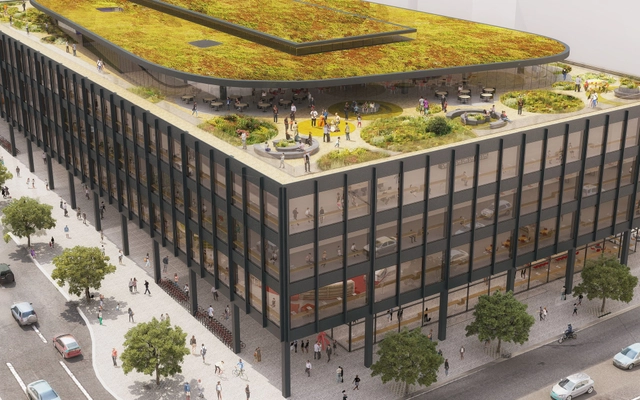
Mecanoo and Martinez + Johnson Architecture has released their completed preliminary designs for the modernization of the Martin Luther King Jr. Memorial Library - the only library and Washington D.C. building ever designed by Mies van der Rohe. The team’s competition-winning scheme aims to improve “Mies in a contemporary Miesian way.”

“While not final, these renderings demonstrate the amazing possibilities as we work to transform this historic building into a center for learning, innovation and engagement for the District,” says the D.C. Public Library. Updated images and more information about the design, after the break.

Review: 'All Of This Belongs To You' - Civic Urbanism At London's Victoria & Albert Museum

Subscriber Access | 

The Victoria and Albert Museum (V&A), named after the Queen and Her Consort, has its foundations in the Great Exhibition of 1851 amidst the wealth, innovation and squalor of the Industrial Revolution. Britain was flooded by prosperity which allowed for the development of major new institutions to collect and exhibit objects of cultural significance or artistic value. The institute’s first director, Henry Cole, declared that it should be “a schoolroom for everyone,” and a democratic approach to its relationship with public life has remained the cornerstone of the V&A. Not only has it always been free of charge but it was also the first to open late hours (made possible by gas lighting), allowing a more comprehensive demographic of visitor.

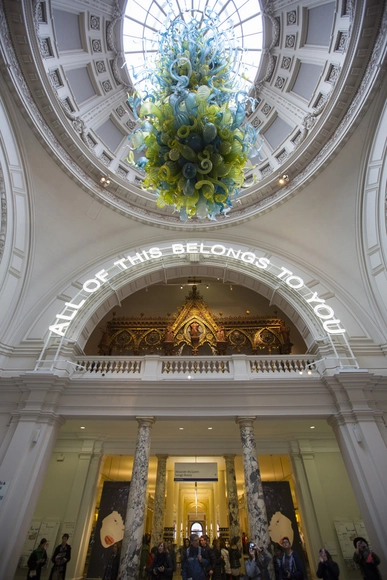
Their latest exhibition, which opens today, seeks to realign the museum’s vast collection and palatial exhibition spaces in South Kensington with these founding concepts. The interventions of All of This Belongs to You attempt to push the V&A’s position as an extension of London’s civic and cultural built environment to the fore, testing the museum’s ability to act as a 21st century public institution. To do this in London, a city where the notion of public and private is increasingly blurred, has resulted in a sequence of compelling installations which are tied together through their relevance either in subject matter, technique, or topicality.

Review: 'All Of This Belongs To You' - Civic Urbanism At London's Victoria & Albert Museum - Image 1 of 4Review: 'All Of This Belongs To You' - Civic Urbanism At London's Victoria & Albert Museum - Image 2 of 4Review: 'All Of This Belongs To You' - Civic Urbanism At London's Victoria & Albert Museum - Image 3 of 4Review: 'All Of This Belongs To You' - Civic Urbanism At London's Victoria & Albert Museum - Image 4 of 4Review: 'All Of This Belongs To You' - Civic Urbanism At London's Victoria & Albert Museum - More Images+ 4

Tubakuba Mountain Hub / OPA Form

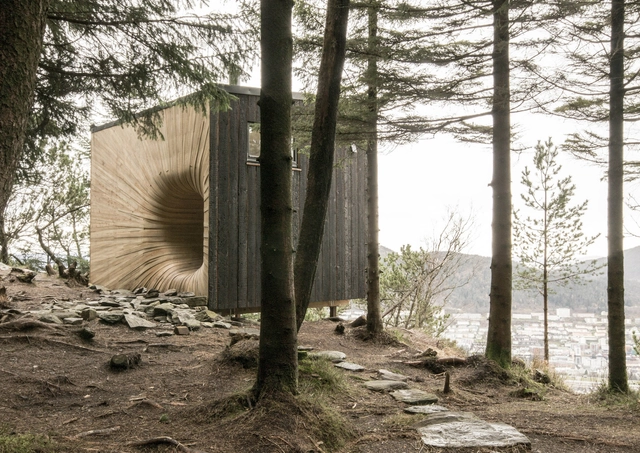
Tubakuba Mountain Hub / OPA Form - Hospitality ArchitectureTubakuba Mountain Hub / OPA Form - Hospitality ArchitectureTubakuba Mountain Hub / OPA Form - Hospitality ArchitectureTubakuba Mountain Hub / OPA Form - Hospitality ArchitectureTubakuba Mountain Hub / OPA Form - More Images+ 6

  • Architects: OPA Form
  • Year Completion year of this architecture project Year:  2014

Mediating Mies: Dirk Lohan's Langham Hotel Lobby at the IBM Building

Subscriber Access | 

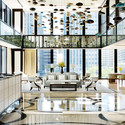
In 2013 the former IBM Building in Chicago, Mies van der Rohe's last completed skyscraper, underwent a significant renovation as a part of the tower was converted into a hotel. In this article, originally published in Blueprint issue #338 as "Lobbying for Mies van der Rohe," Anthea Gerrie catches up with Dirk Lohan - the Chicago architect who helped his grandfather design the building nearly 50 years ago, and who was called back in to design the new hotel's entrance lobby.

"It's not very Mies," says Dirk Lohan dubiously, in one of the great understatements of the year. We are standing in the double-height reception hall of the Langham Chicago hotel with what looks like dozens of multicoloured glass balloons swimming above us and a mirror-glass frieze adding to a cacophony of glitz and dazzle.

It is indeed the very antithesis of the aesthetic of the architect known for the phrase "less is more". But then the audacious idea of converting an office building by the most functionalist of architects into a five-star hotel was always going to be problematic.

Mediating Mies: Dirk Lohan's Langham Hotel Lobby at the IBM Building - Image 1 of 4Mediating Mies: Dirk Lohan's Langham Hotel Lobby at the IBM Building - Image 2 of 4Mediating Mies: Dirk Lohan's Langham Hotel Lobby at the IBM Building - Image 3 of 4Mediating Mies: Dirk Lohan's Langham Hotel Lobby at the IBM Building - Image 4 of 4Mediating Mies: Dirk Lohan's Langham Hotel Lobby at the IBM Building - More Images+ 7

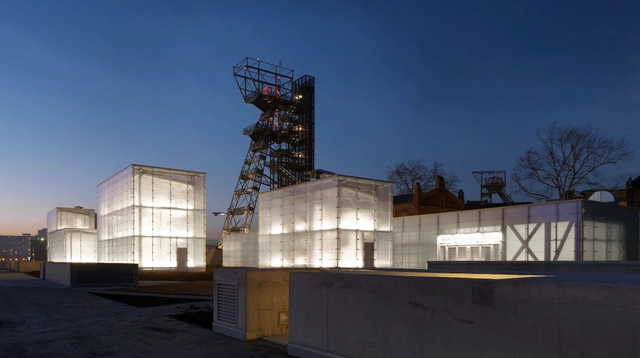
Silesian Museum Katowice / Riegler Riewe Architekten

Silesian Museum Katowice / Riegler Riewe Architekten - Adaptive ReuseSilesian Museum Katowice / Riegler Riewe Architekten - Adaptive ReuseSilesian Museum Katowice / Riegler Riewe Architekten - Adaptive ReuseSilesian Museum Katowice / Riegler Riewe Architekten - Adaptive ReuseSilesian Museum Katowice / Riegler Riewe Architekten - More Images+ 36

Vilnius SPA - Anykščiai / SP Architektu Grupe

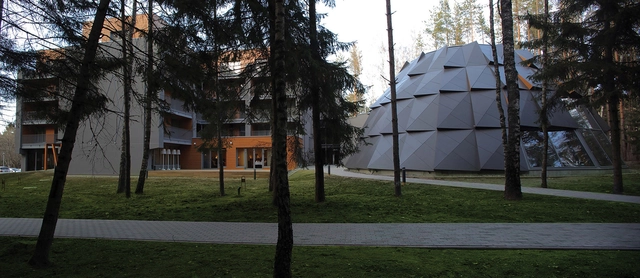
Vilnius SPA - Anykščiai / SP Architektu Grupe - RenovationVilnius SPA - Anykščiai / SP Architektu Grupe - RenovationVilnius SPA - Anykščiai / SP Architektu Grupe - RenovationVilnius SPA - Anykščiai / SP Architektu Grupe - RenovationVilnius SPA - Anykščiai / SP Architektu Grupe - More Images+ 10

E_C House / SAMI-arquitectos

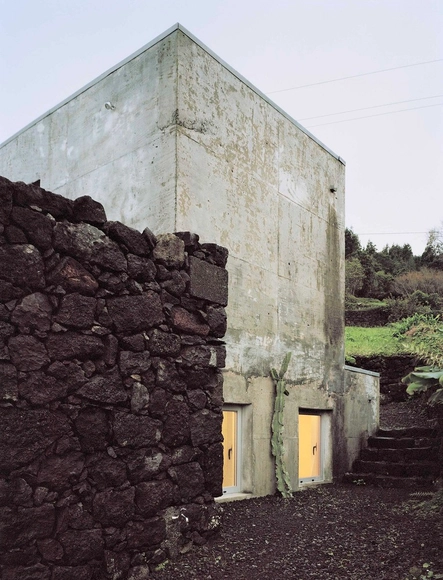
E_C House / SAMI-arquitectos - HousesE_C House / SAMI-arquitectos - HousesE_C House / SAMI-arquitectos - HousesE_C House / SAMI-arquitectos - HousesE_C House / SAMI-arquitectos - More Images+ 16

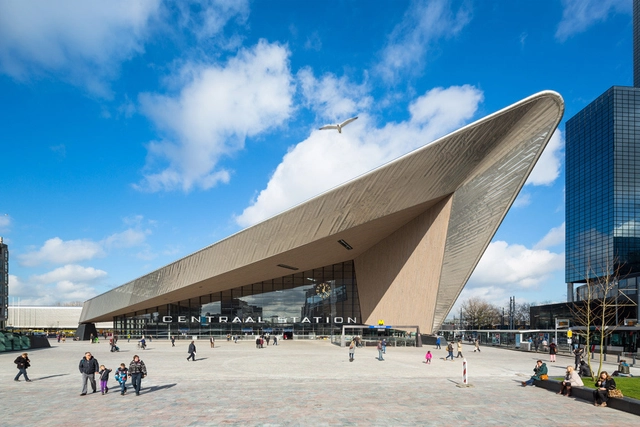
Rotterdam Central Station / West 8 + Benthem Crouwel Architects + MVSA Architects

Rotterdam Central Station / West 8 + Benthem Crouwel Architects + MVSA Architects -           Metro StationRotterdam Central Station / West 8 + Benthem Crouwel Architects + MVSA Architects - Exterior Photography,           Metro Station, CityscapeRotterdam Central Station / West 8 + Benthem Crouwel Architects + MVSA Architects -           Metro StationRotterdam Central Station / West 8 + Benthem Crouwel Architects + MVSA Architects -           Metro StationRotterdam Central Station / West 8 + Benthem Crouwel Architects + MVSA Architects - More Images+ 22

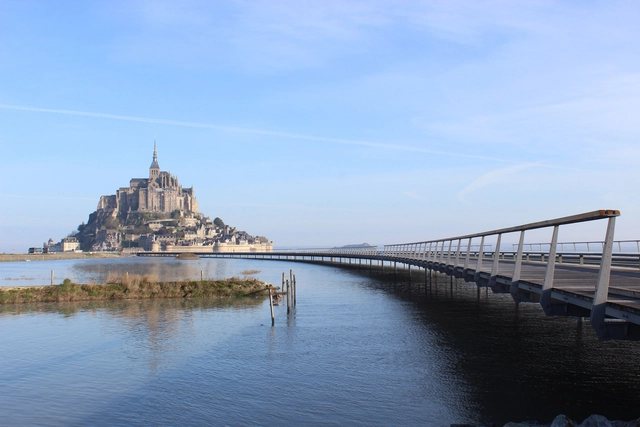
The Jetty to the Mont-Saint-Michel / Dietmar Feichtinger Architectes

The Jetty to the Mont-Saint-Michel / Dietmar Feichtinger Architectes - Bridges The Jetty to the Mont-Saint-Michel / Dietmar Feichtinger Architectes - Bridges The Jetty to the Mont-Saint-Michel / Dietmar Feichtinger Architectes - Bridges The Jetty to the Mont-Saint-Michel / Dietmar Feichtinger Architectes - Bridges The Jetty to the Mont-Saint-Michel / Dietmar Feichtinger Architectes - More Images+ 4

Mont Saint-Michel, France