1. ArchDaily
  2. Mies van der Rohe

Mies van der Rohe: The Latest Architecture and News

Barcelona Architecture City Guide: 30 Buildings and Places from Gaudí to Today

Subscriber Access | 

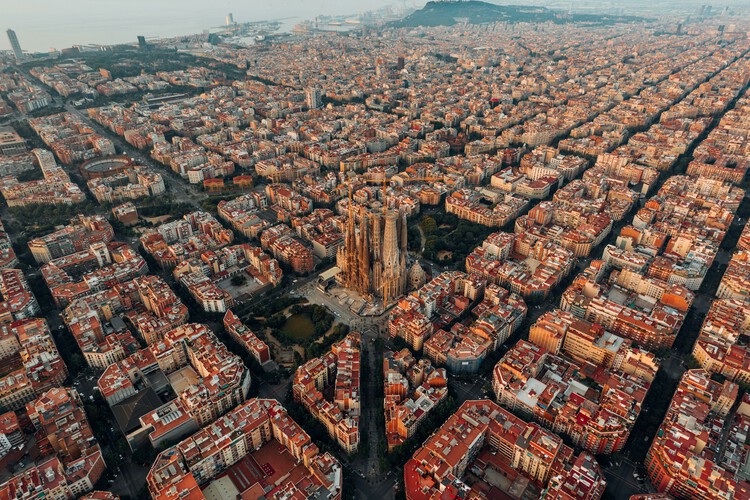
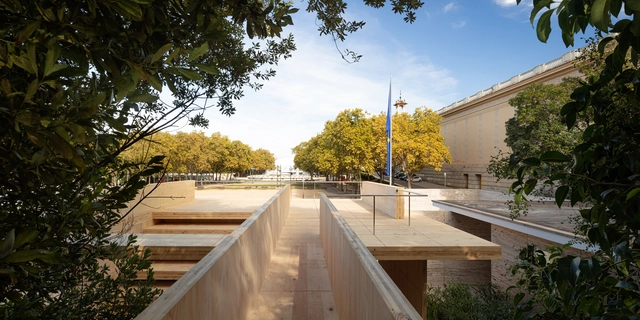
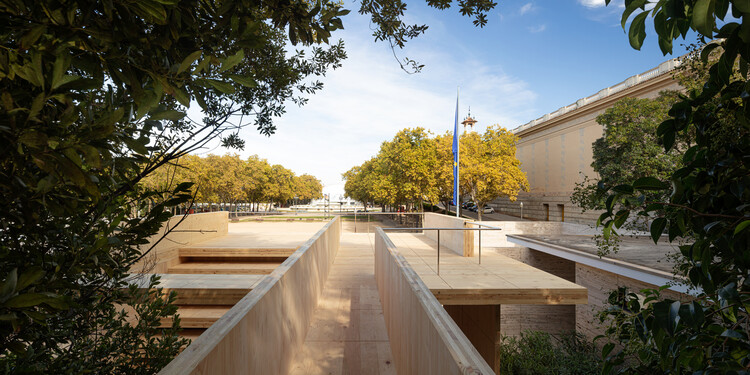
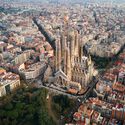
Barcelona is a city where architecture has long served as a laboratory of urban experimentation, each era leaving its mark on the city's fabric. From the dense streets of the Gothic Quarter to the ornate interiors of the Palau de la Música Catalana, the city expanded outward through Ildefons Cerdà's Eixample, a stage where Gaudí and his contemporaries challenged the rules of form, scale, and ornamentation. These experiments defined a local identity and culminated in the Sagrada Família, a vision that continues into the 21st century through the integration of advanced technology.

The city's twentieth-century transformation forged an architectural language with global influence. The principles of International Modernism are embodied in Mies van der Rohe's Barcelona Pavilion, while later developments—from Bofill's explorations in collective housing to the urban interventions of the 1992 Olympics—reshaped the skyline and the city's relationship to its waterfront. Subsequent contemporary projects continue to negotiate form, landscape, and urban scale, contributing to a layered and evolving city.

Barcelona Architecture City Guide: 30 Buildings and Places from Gaudí to Today - Image 1 of 4Barcelona Architecture City Guide: 30 Buildings and Places from Gaudí to Today - Image 2 of 4Barcelona Architecture City Guide: 30 Buildings and Places from Gaudí to Today - Image 3 of 4Barcelona Architecture City Guide: 30 Buildings and Places from Gaudí to Today - Image 4 of 4Barcelona Architecture City Guide: 30 Buildings and Places from Gaudí to Today - More Images+ 29

Rooms as Heritage: How Interior Typologies Carry Cultural Memory

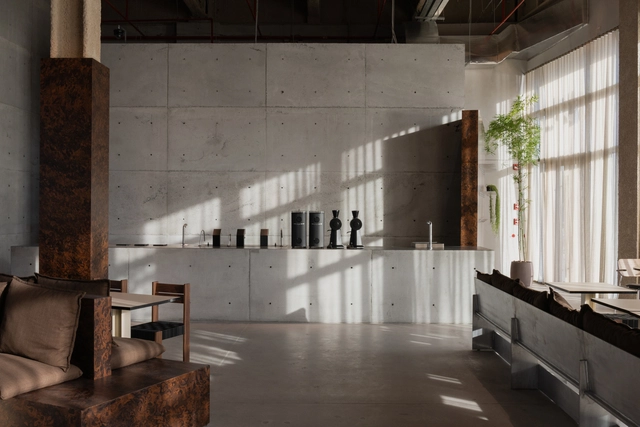
For decades, heritage has been easiest to recognize from the street. We protect facades, skylines, and monuments because they are visible, stable, and legible as cultural assets. Yet most of what we remember about living is how we eat together, withdraw, argue, care, and rest, which happen far from view. It happens inside rooms. As open plans quietly give way to thresholds, corridors, and enclosures, a deeper question emerges: what if cultural memory survives not in what architecture shows, but in how it is lived?

Rooms as Heritage: How Interior Typologies Carry Cultural Memory - Image 1 of 4Rooms as Heritage: How Interior Typologies Carry Cultural Memory - Image 2 of 4Rooms as Heritage: How Interior Typologies Carry Cultural Memory - Image 3 of 4Rooms as Heritage: How Interior Typologies Carry Cultural Memory - Image 4 of 4Rooms as Heritage: How Interior Typologies Carry Cultural Memory - More Images+ 7

Building with the “Blue Note”: Tension, Deviation, and Structure in Architecture

Subscriber Access | 

By operating with only five notes, the pentatonic scale establishes a stable and intuitive musical system in which structural clarity allows for variation without the risk of excessive dissonance. From this consolidated structure, which forms the basis of countless musical styles, especially popular music, the blues introduced a decisive inflection by incorporating additional notes into the scale. Without delving into excessive technicalities, these are subtle tonal deviations, small dissonances often associated with a more melancholic sound, known as blue notes. Played fleetingly rather than as emphatic accents, they briefly tension the system, adding expressiveness and depth while keeping the underlying structure intact.

If in music the blues scale operates through a subtle deviation that "seasons" the underlying structure, a similar principle can be identified in architecture. Although comparisons between different artistic languages are always delicate, it is possible to recognize projects that find their expressive strength not in rupture, but in localized inflections introduced within clear systems, whether of modulation, subtraction, materiality, or typology. Localized displacements and asymmetries function as internal tensions that do not compromise the coherence of the whole, revealing how expressiveness can emerge from controlled deviation rather than from permanent exception.

Designing the Future, Again: What the 55-Year Return of the World Expo to Osaka Reveals

Subscriber Access | 

The 2025 Osaka Expo has captured widespread attention—not only for its architectural ambition and spectacle, but also for breaking records and generating controversy. Its most iconic feature, a monumental timber ring designed by Sou Fujimoto, has already made headlines as a Guinness World Record-breaking wooden structure. Built on the reclaimed island of Yumeshima, the site has attracted praise and critique in equal measure. Beyond its awe-inspiring 2-kilometer circumference—parts of which extend dramatically over the water—the structure has also drawn concerns, including questions about health & safety, extreme heat, and swarms of insects that may affect the visitor experience.

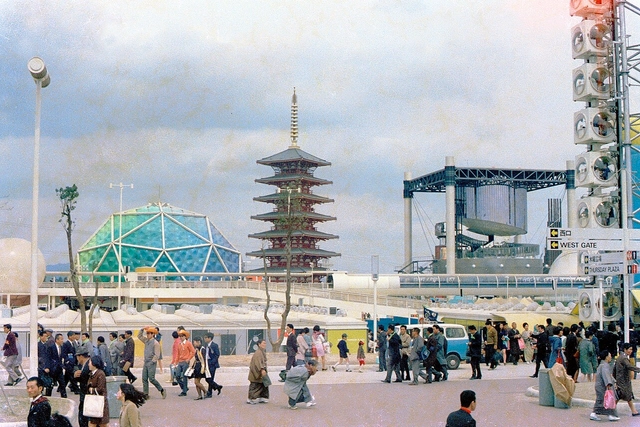
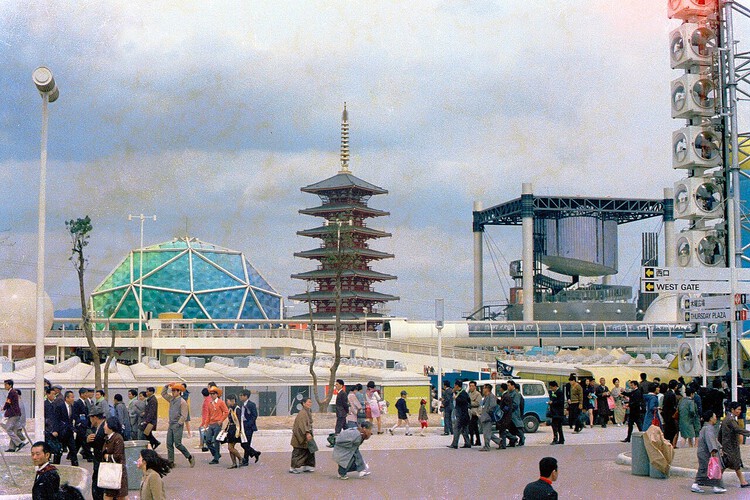
This year also marks a significant anniversary: the 55th year since the 1970 Osaka Expo, held under drastically different socio-economic conditions. Comparing these two expos—both hosted in the same city—offers a rare opportunity to reflect on how the rhetoric, curatorial themes, and architectural ambitions of world expos have evolved over time. From "Progress and Harmony for Mankind" in 1970 to "Designing Future Society for Our Lives" in 2025, the shift in thematic focus reveals changing global priorities. Meanwhile, the scale and nature of architectural involvement have also transformed, from the futuristic visions of Japanese Metabolism to a more internationally dispersed group of designers concerned with sustainability, technology, and civic engagement.

Designing the Future, Again: What the 55-Year Return of the World Expo to Osaka Reveals - Image 1 of 4Designing the Future, Again: What the 55-Year Return of the World Expo to Osaka Reveals - Image 2 of 4Designing the Future, Again: What the 55-Year Return of the World Expo to Osaka Reveals - Image 3 of 4Designing the Future, Again: What the 55-Year Return of the World Expo to Osaka Reveals - Image 4 of 4Designing the Future, Again: What the 55-Year Return of the World Expo to Osaka Reveals - More Images+ 21

Eliminating the Barrier Between Indoor Spaces and Nature

 | Sponsored Content
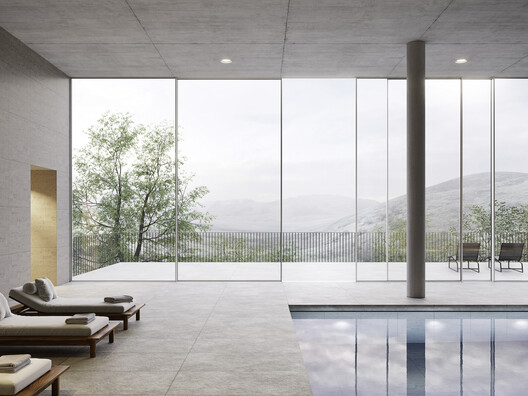
Eliminating the Barrier Between Indoor Spaces and Nature - Featured Image
Detached House in Bavaria Visualization © xoio

For centuries, architecture has been shaped by the aspiration to create a smooth transition between the indoors and the outdoors. Today, technologically sophisticated window and facade systems allow architects to design open, light-flooded room concepts without losing heat. The Solarlux cero maximum sliding window can eliminate the boundaries between spaces, demonstrated most impressively when large-format elements replace building corners. This is a technical achievement accomplished entirely without supports that disrupt the view. cero creates a direct, immediate connection to nature that goes far beyond what standard solutions can offer.

Choreographing Space: Architecture and Dance as Interdisciplinary Practices

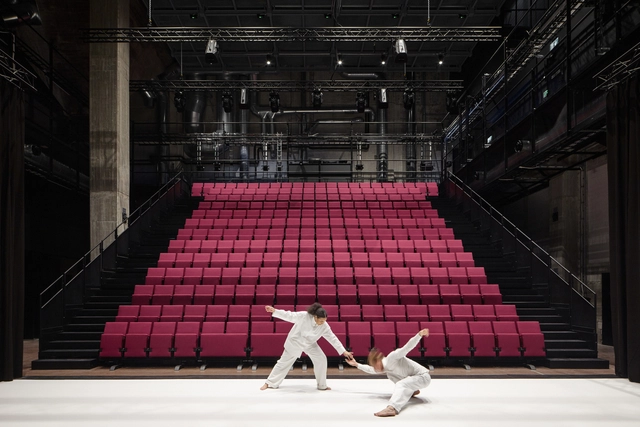
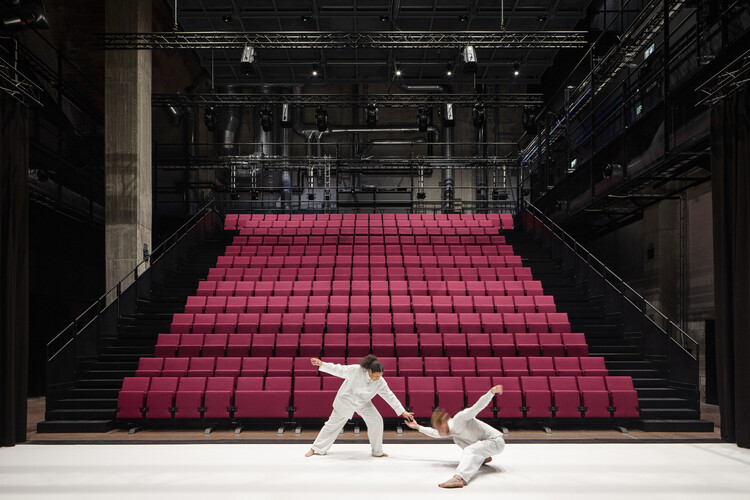
"Dance, dance… otherwise we are lost." This oft-cited phrase by Pina Bausch encapsulates not only the urgency of movement, but its capacity to reveal space itself. In her choreographies, space is never a neutral backdrop, it becomes a partner, an obstacle, a memory. Floors tilt, chairs accumulate, walls oppress or liberate. These are architectural conditions, staged and contested through the body. What Bausch exposes — and what architecture often forgets — is that space is not simply built, it is performed. Her work invites architects to think not only in terms of materials and forms, but of gestures, relations, and rhythms. It suggests that architecture, like dance, is ultimately about how we inhabit, structure, and emotionally charge the spaces we move through.

Historically, architecture and dance have operated in parallel, shaping human experience through the body's orientation in space and time. From the choreographed rituals of classical temples to the axial logics of Baroque palaces, built space has always implied movement. The Bauhaus took this further, as Oskar Schlemmer's Triadic Ballet visualized space as a geometric extension of the body. This was not scenery, but spatial thinking made kinetic. In the 20th century, choreographers like William Forsythe and Anne Teresa De Keersmaeker integrated architectural constraints into their scores, while architects such as Steven Holl, Diller Scofidio + Renfro, and Toyo Ito designed buildings that unfold as spatial sequences, inviting movement, drift, and delay.

Choreographing Space: Architecture and Dance as Interdisciplinary Practices - Image 1 of 4Choreographing Space: Architecture and Dance as Interdisciplinary Practices - Image 2 of 4Choreographing Space: Architecture and Dance as Interdisciplinary Practices - Image 3 of 4Choreographing Space: Architecture and Dance as Interdisciplinary Practices - Image 4 of 4Choreographing Space: Architecture and Dance as Interdisciplinary Practices - More Images+ 35

The Barcelona Method: How Climate Data is Saving Historic Architecture from Carbon Stranding

Subscriber Access | 

In heritage districts from Prague to Paris, a countdown has begun. Years until countless architectural treasures become, quite literally, worthless. Not through the slow erosion of time or the erratic shifts of cultural taste, but through the inevitable mathematics of atmospheric chemistry. In UrbanDecarbonisation: Destranding Cities for a Post-fossil Future, Paolo Cresci, Francesca Galeazzi, and Aurel von Richthofen introduce the concept of "carbon stranding", a scenario in which buildings become financially non-viable due to tightening carbon regulations. This threatens to render entire heritage districts financially extinct before they reach their centennials.

The Barcelona Method: How Climate Data is Saving Historic Architecture from Carbon Stranding - Image 1 of 4The Barcelona Method: How Climate Data is Saving Historic Architecture from Carbon Stranding - Image 2 of 4The Barcelona Method: How Climate Data is Saving Historic Architecture from Carbon Stranding - Image 3 of 4The Barcelona Method: How Climate Data is Saving Historic Architecture from Carbon Stranding - Image 4 of 4The Barcelona Method: How Climate Data is Saving Historic Architecture from Carbon Stranding - More Images+ 3

Unwrapped Interiors: A Case for Material Authenticity and Clarity

When designing a space—whether at the scale of interiors, architecture, or infrastructure—materiality is a central concern. Beyond aesthetics, materials determine how a project functions, ages, and endures. Some architects—such as Wang Shu and Kengo Kuma—have built their practices on a deep sensitivity to the potential and limits of materials. But even in the most pragmatic sense, the question arises: What lasts? What doesn't? And how do materials change over time? Naturally, materials shape atmosphere and appearance—qualities that often matter most to clients. Yet increasingly, the discourse around materiality has shifted from structural substance to surface treatment. When did we start focusing more on "decorating" our spaces by layering one material over another, rather than relying on the inherent beauty and performance of the building fabric itself?

Unwrapped Interiors: A Case for Material Authenticity and Clarity - Image 1 of 4Unwrapped Interiors: A Case for Material Authenticity and Clarity - Image 2 of 4Unwrapped Interiors: A Case for Material Authenticity and Clarity - Image 3 of 4Unwrapped Interiors: A Case for Material Authenticity and Clarity - Image 4 of 4Unwrapped Interiors: A Case for Material Authenticity and Clarity - More Images+ 10

Mid-Century & Mid-Western: Tracing the Modernist Movement in America’s Industrial Corridor

Subscriber Access | 

The Mid-Century Modernist movement was more than an aesthetic or material shift in the United States, as it was a response to a rapidly changing world. Emerging after World War II, this architectural revolution rejected ornate, traditional styles of the past in favor of clean lines, functional design, and incorporation of flashy materials like steel, glass, and concrete. Modernism was a break from tradition, focusing instead on simplicity, efficiency, and a vision for the future. It reflected the optimism of a nation rebuilding itself, where technology and innovation shaped everything from cityscapes to suburban homes.

Mid-Century & Mid-Western: Tracing the Modernist Movement in America’s Industrial Corridor - Image 1 of 4Mid-Century & Mid-Western: Tracing the Modernist Movement in America’s Industrial Corridor - Image 2 of 4Mid-Century & Mid-Western: Tracing the Modernist Movement in America’s Industrial Corridor - Image 3 of 4Mid-Century & Mid-Western: Tracing the Modernist Movement in America’s Industrial Corridor - Image 4 of 4Mid-Century & Mid-Western: Tracing the Modernist Movement in America’s Industrial Corridor - More Images+ 10

Hannes Meyer: Exploring the Legacy of a Former Bauhaus Director

In March 2025, the actor Adrian Brody rose to the stage to collect his Academy Award for playing the role of László Toth in the acclaimed film, The Brutalist. The film is about a Bauhaus-educated architect who escaped Nazi Germany in the 1930s for the United States. Whilst the story is fictional, it reflects the lives of several émigré architects who left Central Europe in search of better working and intellectual conditions. These included the first three directors of Bauhaus, the renowned German school of design established in 1919. The first and third directors of the school, Walter Gropius and Mies van der Rohe respectively, ended up in the US where their careers in teaching and building both flourished. Lesser known is the second director, Hannes Meyer, who took a different path from his colleagues.

Hannes Meyer: Exploring the Legacy of a Former Bauhaus Director - Image 1 of 4Hannes Meyer: Exploring the Legacy of a Former Bauhaus Director - Image 2 of 4Hannes Meyer: Exploring the Legacy of a Former Bauhaus Director - Featured ImageHannes Meyer: Exploring the Legacy of a Former Bauhaus Director - Image 4 of 4Hannes Meyer: Exploring the Legacy of a Former Bauhaus Director - More Images+ 6

The Timeless Appeal of Modernism in Technology and Digital Architecture

Modernism, a movement that sought to break away from traditional forms and embrace the future, laid the groundwork for many technological and digital advancements in contemporary architecture. As the Industrial Revolution brought about mass production, new materials, and technological innovation, architects like Le Corbusier, Walter Gropius, and Mies van der Rohe championed the ethos of "form follows function" and a rational approach to design. Their principles resonate in the digital age, where computational design and high-tech materials redefine form and construction.

The 20th century's modernist ideals — efficiency, simplicity, and functionality — created a foundation for architects to experiment with structural clarity and material honesty. High-tech architecture, which emerged in the late 20th century, evolved from these principles, merging modernism's clean lines with advanced engineering and technology. This paved the way for parametricism and algorithm-driven design processes, revolutionizing architecture and enabling complex forms previously thought impossible.

The Timeless Appeal of Modernism in Technology and Digital Architecture - Image 1 of 4The Timeless Appeal of Modernism in Technology and Digital Architecture - Image 2 of 4The Timeless Appeal of Modernism in Technology and Digital Architecture - Image 3 of 4The Timeless Appeal of Modernism in Technology and Digital Architecture - Image 4 of 4The Timeless Appeal of Modernism in Technology and Digital Architecture - More Images+ 45

Designing for Density: How Modernist Principles Continue to Shape Social Housing Solutions Today

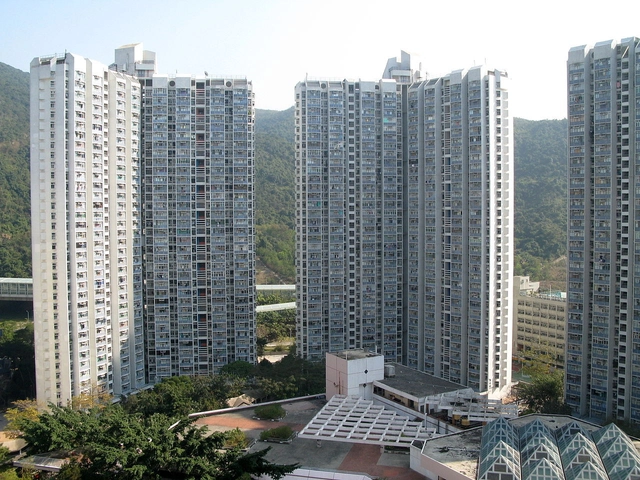
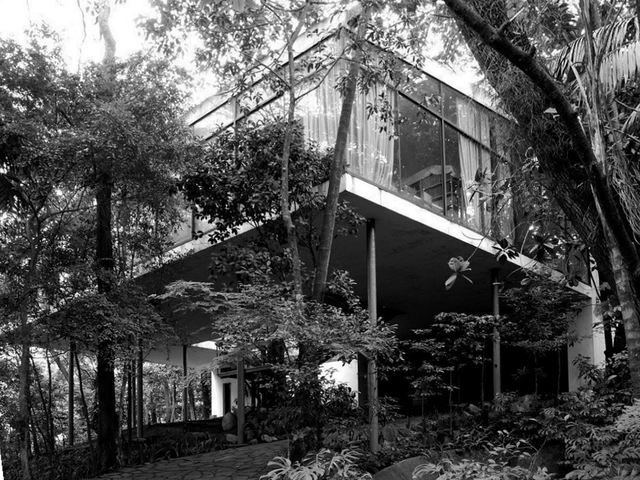
When discussing modernist living, several iconic private residential projects may first come to mind—Le Corbusier's Villa Savoye, the Case Study Houses, most notably by Richard Neutra, Pierre Koenig, and Charles and Ray Eames, as well as the glass houses by Mies van der Rohe and Philip Johnson. Most of these projects exemplified an idealized vision of modern living, set in picturesque landscapes and characterized by experimentation with new construction methods, materials, and spatial concepts. Their designs embraced openness, blurring the boundaries between private and public spaces, largely unburdened by constraints such as density, efficiency, accessibility, public transit integration, or communal considerations.

While these modern homes remain influential in contemporary residential design, they also—perhaps unexpectedly—laid the groundwork for high-density housing principles. Concepts such as the interplay between public and private space, modular construction, and prefabrication, initially explored in these private residences, have been adapted to the vastly different constraints of social housing. 

Designing for Density: How Modernist Principles Continue to Shape Social Housing Solutions Today - Image 1 of 4Designing for Density: How Modernist Principles Continue to Shape Social Housing Solutions Today - Image 2 of 4Designing for Density: How Modernist Principles Continue to Shape Social Housing Solutions Today - Image 3 of 4Designing for Density: How Modernist Principles Continue to Shape Social Housing Solutions Today - Image 4 of 4Designing for Density: How Modernist Principles Continue to Shape Social Housing Solutions Today - More Images+ 26

Modernism Reconsidered: Revisiting the Movement’s Complex Relationship with Sustainability

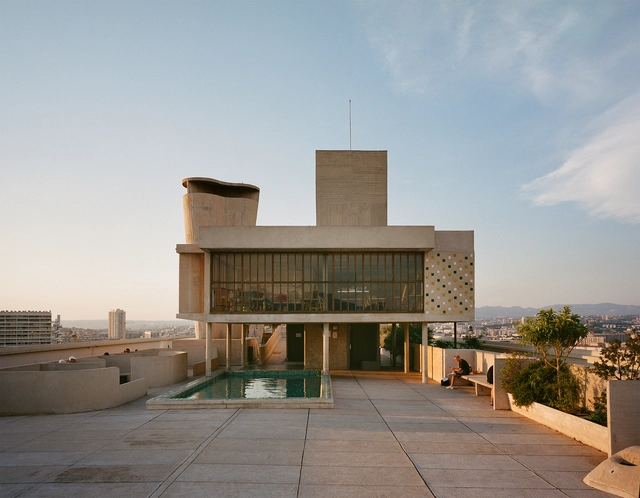
Modernism emerged in the early 20th century as a revolutionary movement that rejected historical styles, prioritizing functionality, innovation, and rationality. Grounded in the promise of industrial progress, architects like Walter Gropius, Le Corbusier, and Ludwig Mies van der Rohe championed using new materials and construction methods, striving for a universal architectural language. Their work introduced radical ideas: open floor plans, expansive glazing for natural light, and pilotis that elevated structures, symbolizing a new architectural era. However, alongside its groundbreaking ideas, modernism's relationship with sustainability has sparked ongoing debates.
While modernist architects sought to address social and economic challenges through affordable housing and efficient design, their reliance on energy-intensive materials like concrete and steel created unintended environmental consequences. The large-scale industrialization celebrated by modernists often disregarded local climates and ecological systems, leading to inefficiencies. Yet, the principles of functionality and adaptability embedded in modernist architecture laid the groundwork for what we now recognize as sustainable practices. From Le Corbusier's rooftop gardens to Frank Lloyd Wright's integration of nature, the seeds of environmentally conscious design were undeniably present, albeit limited in their execution.

Modernism Reconsidered: Revisiting the Movement’s Complex Relationship with Sustainability - Image 1 of 4Modernism Reconsidered: Revisiting the Movement’s Complex Relationship with Sustainability - Image 2 of 4Modernism Reconsidered: Revisiting the Movement’s Complex Relationship with Sustainability - Image 3 of 4Modernism Reconsidered: Revisiting the Movement’s Complex Relationship with Sustainability - Image 4 of 4Modernism Reconsidered: Revisiting the Movement’s Complex Relationship with Sustainability - More Images+ 25

Upper Lawn: A Manifestation of Alison and Peter Smithson's Architectural Vision

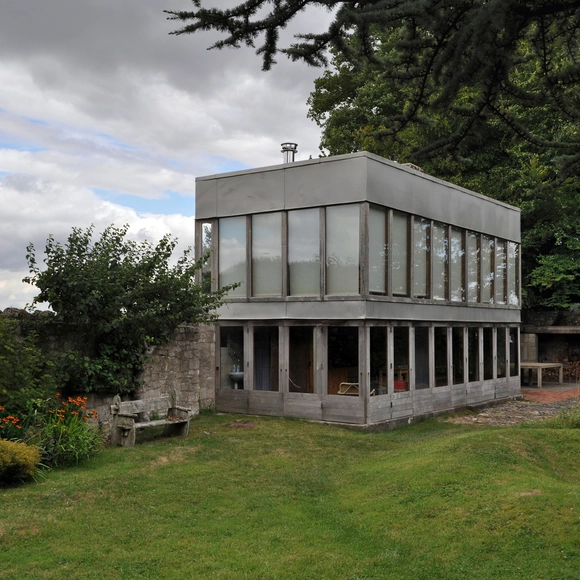
Nestled near the ruins of Fonthill Abbey in the English countryside, Upper Lawn Pavilion — also known as the Solar Pavilion — is a modest yet profound architectural experiment by Alison and Peter Smithson. Built between 1959 and 1962 as a weekend retreat and laboratory for ideas, the pavilion embodies their ethos of economy, material honesty, and respect for context, reflecting the pioneering spirit of New Brutalism.

Upper Lawn's thoughtful interplay between the new and the existing is particularly compelling. Built on the remains of an 18th-century English farmhouse, the pavilion repurposes thick masonry walls from the original structure, incorporating elements such as the well, trees, and lawn into its design. Using prefabricated materials like timber, glass, and aluminum, the Smithsons constructed a light-filled space that harmonizes with its surroundings, embodying their principle of "as found architecture" — a concept rooted in honoring and adapting to preexisting conditions rather than imposing on them.

Upper Lawn: A Manifestation of Alison and Peter Smithson's Architectural Vision - Image 1 of 4Upper Lawn: A Manifestation of Alison and Peter Smithson's Architectural Vision - Image 2 of 4Upper Lawn: A Manifestation of Alison and Peter Smithson's Architectural Vision - Image 3 of 4Upper Lawn: A Manifestation of Alison and Peter Smithson's Architectural Vision - Image 4 of 4Upper Lawn: A Manifestation of Alison and Peter Smithson's Architectural Vision - More Images+ 11

Architecture Classics: Modern Housing on the American Continent 1930-1960

Subscriber Access | 

Much of the production of modern architecture on the American continent was based on the model of European architects who, with their works, projected the fundamental premises and ideas for modern living. These pillars of architecture were transferred and consequently adapted to the American territory, introducing, at the same time, their own characteristics according to the territorial, socio-cultural and economic context. 

We understand that good architecture is that which serves as a model for solving problems inherent to the discipline of architecture in general. This is why certain references that we consider today as "classics" are examples of good architectural practices that have been appropriated by other architects, taking the pertinent and necessary elements to achieve a result in accordance with the particular context. 

Architectural Details of the Bauhaus Movement: Revisiting the Glass Corners and Tubular Steel Construction

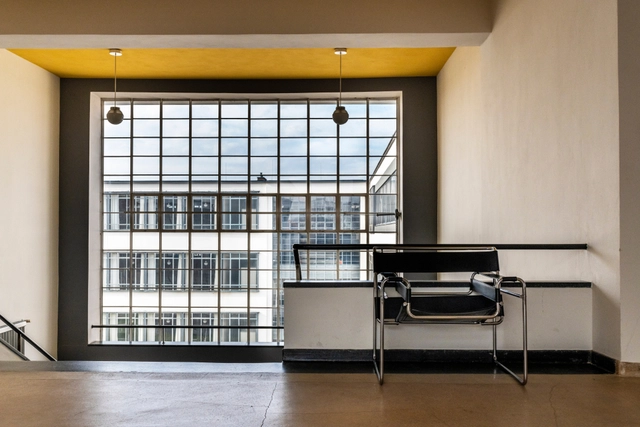
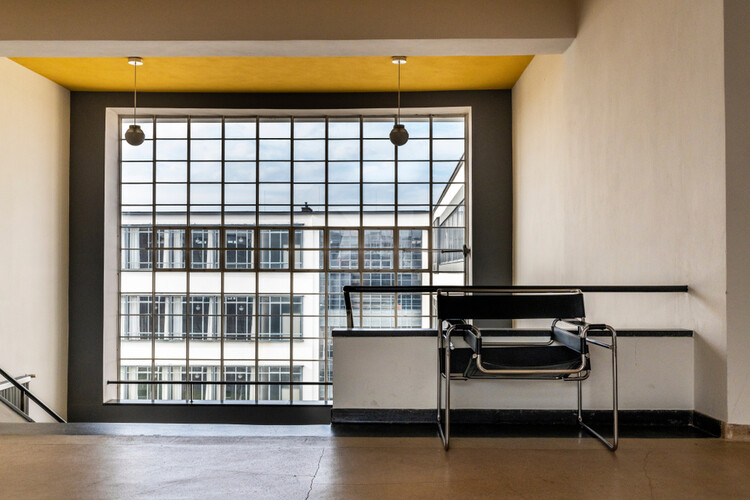
Bauhaus's designs have influenced our contemporary society in obvious and subtle ways. Iconic examples include Marcel Breuer’s Wassily Chair, the B55 Chair, the Bauhaus typeface, and the graphic design principles emphasizing clean lines, primary colors, and geometric shapes. However, the architectural construction details of the Bauhaus movement are much less discussed. While most can readily identify modern or Bauhaus buildings by their geometric forms, functionality, and industrial materials, their architectural details are often overlooked. They not only echo the design language of Breuer’s renowned furniture pieces but also have influenced the much-celebrated architectural glass details of Mies van der Rohe. How were Bauhaus's details executed, and how might they be translated into contemporary details today?

 Architectural Details of the Bauhaus Movement: Revisiting the Glass Corners and Tubular Steel Construction - Image 1 of 4 Architectural Details of the Bauhaus Movement: Revisiting the Glass Corners and Tubular Steel Construction - Image 2 of 4 Architectural Details of the Bauhaus Movement: Revisiting the Glass Corners and Tubular Steel Construction - Image 3 of 4 Architectural Details of the Bauhaus Movement: Revisiting the Glass Corners and Tubular Steel Construction - Image 4 of 4 Architectural Details of the Bauhaus Movement: Revisiting the Glass Corners and Tubular Steel Construction - More Images+ 15

Architecture Inspiring Fashion: Villa Malaparte, the Eiffel Tower, and Louis Kahn’s Salk Institute Host Runway Shows

Beyond serving as mere backdrops for fashion shows, architecture often influences fashion collections, contributing spatially to their storytelling, offering material inspiration, and showcasing the connection between structure and shape. As both disciplines revolve around form, structure, and the human experience, architecture, and fashion share a strong connection, one often explored by creators in both fields. From meticulous tailoring and structural designs that mimic architectural lines, contours, and volumes, to architecture taking cues from how fashion works with the human shape, this interplay can create multidimensional experiences for the enthusiasts of both high fashion and architecture.

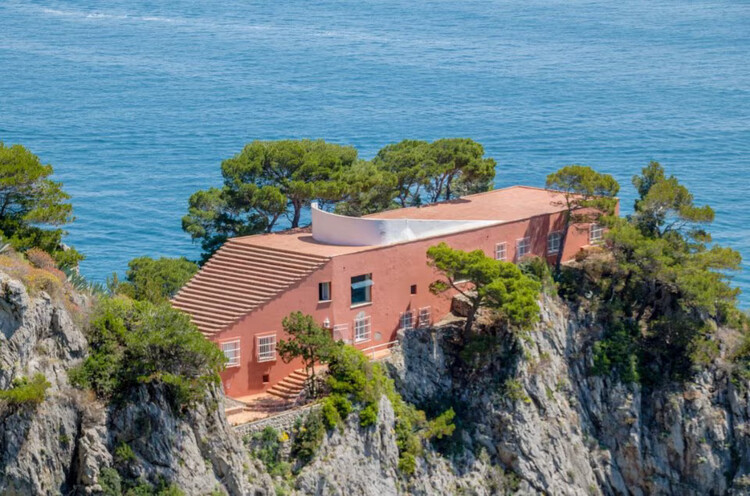
On June 10, French brand Jacquemus, known for its minimalist designs with surrealist touches, chose to celebrate its 15th anniversary with an exclusive runway show at Villa Malaparte. The location, usually inaccessible for this type of event, has made another exception for Saint Laurent, who featured it as the backdrop of its 2018 spring campaign starring Kate Moss.

Architecture Inspiring Fashion: Villa Malaparte, the Eiffel Tower, and Louis Kahn’s Salk Institute Host Runway Shows - Image 1 of 4Architecture Inspiring Fashion: Villa Malaparte, the Eiffel Tower, and Louis Kahn’s Salk Institute Host Runway Shows - Image 2 of 4Architecture Inspiring Fashion: Villa Malaparte, the Eiffel Tower, and Louis Kahn’s Salk Institute Host Runway Shows - Image 3 of 4Architecture Inspiring Fashion: Villa Malaparte, the Eiffel Tower, and Louis Kahn’s Salk Institute Host Runway Shows - Image 4 of 4Architecture Inspiring Fashion: Villa Malaparte, the Eiffel Tower, and Louis Kahn’s Salk Institute Host Runway Shows - More Images+ 6

2023's AD Classics: Year in Review

Architecture Classics showcased on ArchDaily serve as essential archives of architectural marvels, offering a window into the past. These classics showcase our collective design wisdom and innovation globally, enriching our design knowledge. In fact, through the acknowledgment and appreciation of different styles, functions, and narratives embedded within these structures, our view of architecture and its impact worldwide can become more comprehensive.

Within ArchDaily’s extensive list of Architectural Classics, 2023 saw the exploration of 16 diverse typologies. From public landmarks like Mies Van der Rohe’s Barcelona Pavilion to the Julio Mario Sant Domingo Cultural Center and the Biblioteca El Tintal by Bermùdez Arquitectos, showcasing the power of public infrastructure. Structures such as Mariano Moreno’s National Library and Oscar Niemeyer’s Aeronautics Center highlight the eclectic nature of these classics.

2023's AD Classics: Year in Review - Image 1 of 42023's AD Classics: Year in Review - Image 2 of 42023's AD Classics: Year in Review - Image 3 of 42023's AD Classics: Year in Review - Image 4 of 42023's AD Classics: Year in Review - More Images+ 13