For more than a century, a street market known as ‘The Blue’ was the beating heart of Bermondsey in Southeast London. On Saturdays gone by, hundreds flocked to the historic neighborhood, a site with roots reaching back to the 11th century when it was once a pilgrimage route to Bermondsey Abbey. Market punters used to sample goods from more than 200 stalls that famously sold everything under the sun. “You can buy anything down The Blue” was the phrase everyone went by.
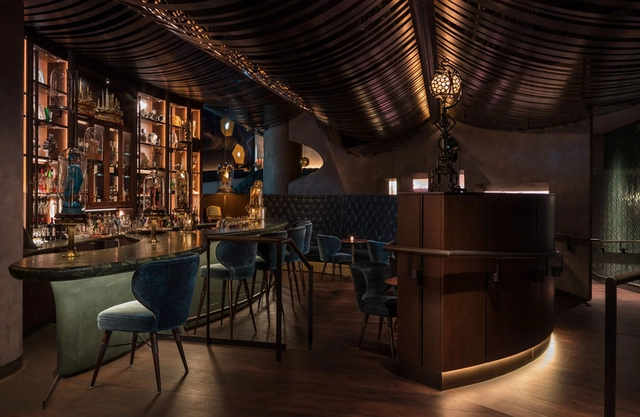
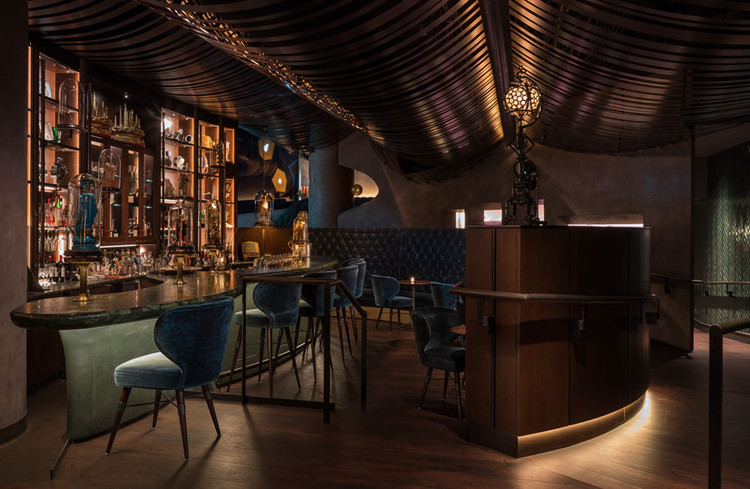
Deep Dive, a restaurant in Seattle underneath the Amazon Spheres, was another Studio Pacifica project. Graham Baba was the architect. Courtesy Studio Pacifica
Karen Braitmayer, a disabled architect, consultant, and volunteer, brings her unique life experiences to Studio Pacifica, the Seattle‐based practice she founded in 1993. With deep expertise in code compliance and regulations, Braitmayer and her team work with architectural firms like Olson Kundig and Perkins and Will to help create barrier‐free civic, residential, and commercial buildings. Studio Pacifica has served as consultants on notable projects ranging from the Space Needle renovation to the Bill & Melinda Gates Foundation Discovery Center and student housing at Smith College. Braitmayer was appointed by President Barack Obama to the United States Access Board, a position she still holds today.
As we mark the 30th anniversary of the passage of the Americans with Disabilities Act (ADA) this month, we spoke to her about how far we’ve come, and how we can continue to advance accessible design in the built environment.
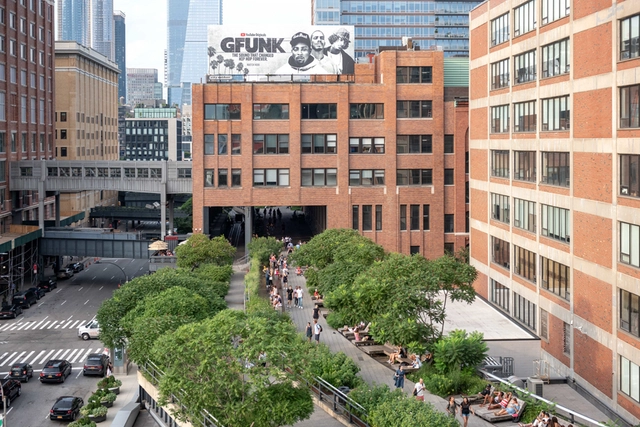
An aerial view of the High Line with Chelsea Market. The park plans to reopen, with certain restrictions, on July 16. Courtesy Timothy Schenck
Metropolis catches up with the High Line Network, a consortium of North American reuse projects that has been sharing notes and best practices through the pandemic.
Since the pandemic began, the High Line Network—a group of North American infrastructure reuse projects founded in 2017—has been conducting regular teleconference calls among its members, comparing notes on operations and sharing best practices and advice with fellow members. With many open or planning to reopen soon, and as the pandemic continues, many observers expect these projects will become even more popular among the public, since they provide outdoor space where visitors can walk, bicycle, and safely enjoy themselves—usually at an appropriate distance from one another. Especially now, the network believes its constituent projects can deliver tremendous and much-needed social, health, environmental, and economic benefits.
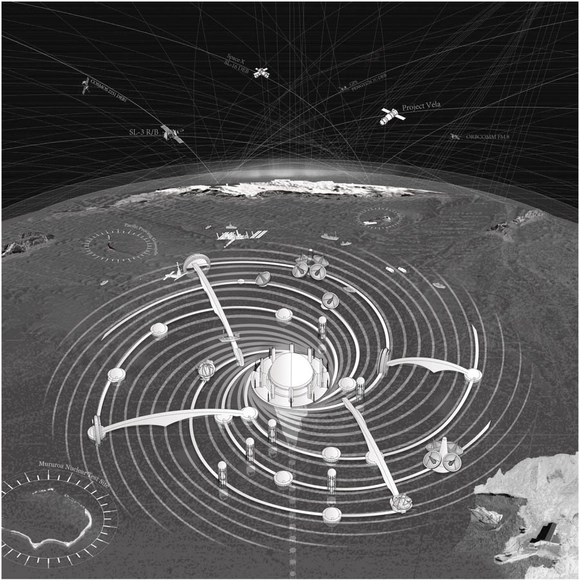
Cosmorama, a part of the U.S. pavilion at the Venice Biennale in 2018, comprised three sets of illustrated geographic stories: Mining the Sky, Planetary Ark, and Pacific Cemetery (a portion of which is pictured above). Courtesy Design Earth
I can’t stop thinking about refugia. In the years, months, and days before the COVID-19 pandemic, the term was confined to the literature and philosophy of climate crisis, referring to pockets of life that through geographic isolation or species resilience manage to hang on in spite of the environmental forces against them. Think of clusters of Pacific Northwest barnacles nestled high on coastal outcroppings to avoid falling prey to sea snails. Or old-growth forests insulated from rising temperatures in cool mountain valleys.
As self-quarantine set in earlier this spring, the word refugia, at least for me, expanded in definition from specific ecological condition to conceptual touchstone—a necessary leap to metaphor when faced with planetary crisis. The magnitude of this pandemic falls outside human comprehension, but for the luckiest of us, refuge is manageable: a place of relative safety, of sourdough starters and online Jazzercise classes.
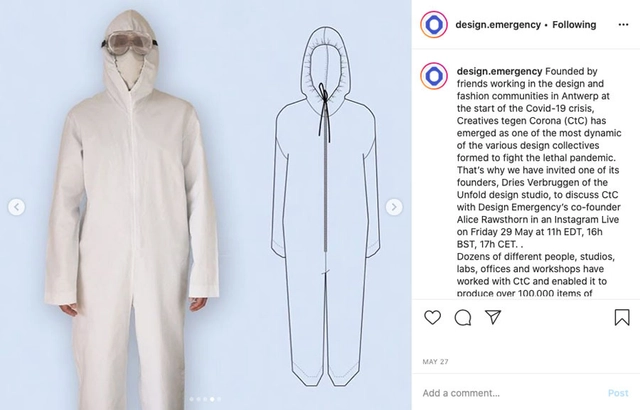
As a part of the design.emergency initiative with Paola Antonelli, Alice Rawsthorn recently spoke to Antwerp-based designer Dries Verbruggen about collaborative efforts being made in the fashion-focused city to create over 100 thousand gowns, coveralls, masks, and other PPE. Courtesy design.emergency
The design.emergency initiative has unpacked everything from collaborative PPE production to object hacking and the power of symbolic imagery.
In the era of the pandemic, the design world’s museums, galleries, manufacturers, organizations, and independent talents have all gone virtual. An endless list of COVID-19-induced cancellations has driven most to find clever ways in which to present their work and engage their audiences. Many have opted for viewing room and interactive exhibition formats, while social media and video communication services have also played a vital role.
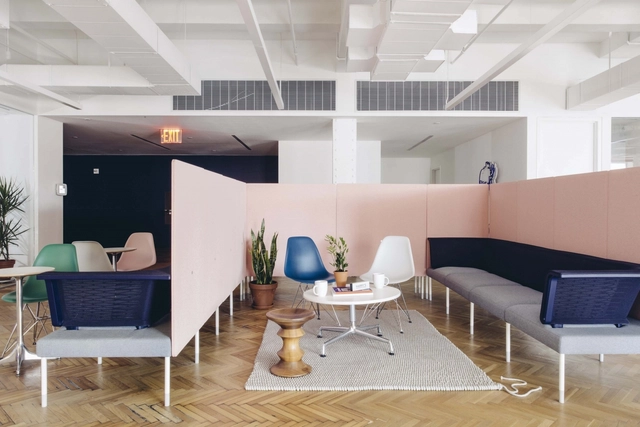
The Industry Impact Survey found that workplace projects have generally been put on hold as clients consider rightsizing their office spaces. Shown here: the New York offices of the men’s care start-up Harry’s. Courtesy Geordie Wood
At ThinkLab, our passion lies at the intersection of specification and design, where we use research to improve communications between designers and manufacturers. Today, that research is helping companies within the interiors industry make critical business decisions as we face economic uncertainty. Here, we share some recent data and insights from our Industry Impact Survey—an ongoing research initiative that we invite you to participate in.
Back in February this year, the American architectural community was scandalised by a draft executive order from the White House threatening to make neoclassical or traditional regional styles compulsory for all new federal buildings. The initiative fails to recognise the specificity of the architectural expression and the innovation that stems from understanding the local context. Metropolis Magazine has gathered together several examples of civic architecture that succeed in expressing the needs and aspirations of their communities, thus building a compelling argument against a mandated, unified architectural expression.
Kiruna, a Swedish town within the Arctic Circle, has had to relocate owing to geological instability brought on by mining. This unusual circumstance is the focus of Kiruna Forever, an exhibition at ArkDes. Ingenjörsvillan, a house in Kiruna, was one of the structures moved. In the town’s new location, a circular city hall designed by Henning Larsen plays centerpiece. Courtesy Jessica Nilden
Kiruna Forever, an exhibition at ArkDes, traces the town's relocation due to geological instability.
“Kiruna is on the move,” says Carlos Mínguez Carrasco, curator of the new exhibition Kiruna Forever. Kiruna, a 125-year-old Swedish town that sprouted around the iron mine of the same name, started an official relocation process in 2018 after decades of discussion with the state-owned mining company LKAB. Today, as the expansion of the mine destabilizes the ground surrounding it, nearby buildings are being demolished or loaded onto flatbed trucks and moved to the new city center nearly two miles east.
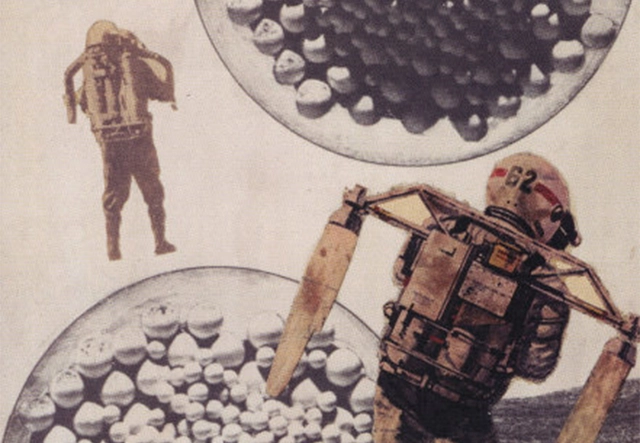
Raimund Abraham’s Air Ocean City. Image Courtesy of MIT Press
For more than a century, architects have been addressing the world as a project through speculative designs in an attempt to imagine the future and reframe global issues. Globalisation, the ever-increasing interconnectedness demands action on a worldwide scale and invites a reflection on the profession's responsibilities. The latter is precisely what the book The World as an Architectural Project achieves, through a compilation of world-scale speculative projects of the past century, making a compelling case for the agency of architecture.
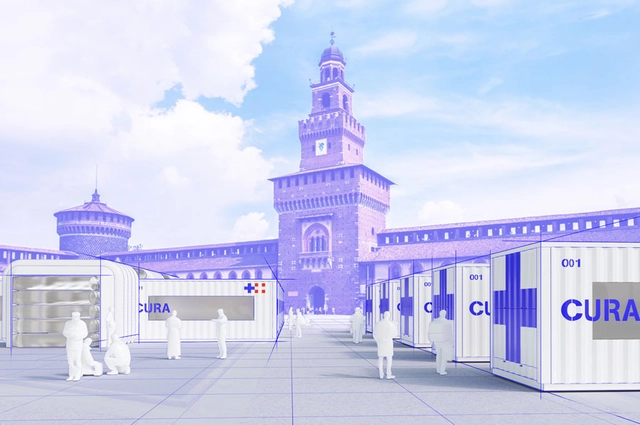
CURA pods. Image Courtesy of Carlo Ratti Associati
As the global health crisis continues, architects and designers are putting their expertise, technical capabilities and research skills in the service of the fight against the coronavirus. Metropolis Magazine has gathered together a list of several companies and their different initiatives for helping out in this novel situation. From 3d-printing personal protection equipment for medical staff, to designing modular intensive care units, and researching steps for converting buildings into hospitals, the creative community is bringing its own contribution to the efforts of tackling the pandemic.
From the famous Kitchen Debate between Nikita Khrushchev and Richard Nixon to the popularity of Henry Ford within the USSR, the hundreds of factories designed by Detroit engineer Albert Kahn for Soviet Russia, and skyscrapers erected in Moscow, the Cold War had a peculiar side to it, that is the Russian fascination with American culture and technology.
In the mid-aughts, after acquiring an abandoned tech campus in Mountain View, California, Google tapped Clive Wilkinson Architects to fashion a new corporate campus—Googleplex 1.0—out of it.Courtesy Benny Chan/Fotoworks
The energy already embodied in the built environment is a precious unnatural resource. It’s time to start treating it like one.
At its Googleplex headquarters in Mountain View, California, Google has what is arguably one of the most sustainable corporate campuses in America. It has a new million-square-foot complex on a 42-acre landscape, featuring monumental futuristic buildings from Danish architect Bjarke Ingels and British designer Thomas Heatherwick. But these places are not the same place. Although the new campus has no doubt been developed with a sense of environmental duty, the radically sustainable campus is the one next door, which Google has been using since 2003. Foreseeably—and fortunately—they’ll go on using it. Built in 1994, it was once the corporate home of an earlier Palo Alto technology firm, Silicon Graphics.
https://www.archdaily.com/932528/a-new-idea-in-architecture-no-new-buildingsThomas de Monchaux
in 2019, the Bauhaus turned 100 and a crop of museum buildings sprang up for the celebration.
In 2019, two museums bearing the name Bauhaus appeared on the German culture circuit. Angling to capitalize on the design school’s centennial, the Bauhaus Museum Weimar was first out of the gate, opening in early April; a few clicks behind, the Bauhaus Museum Dessau followed suit in early September. A third project, the much-delayed extension to Walter Gropius’s 1979 Bauhaus- Archiv/Museum für Gestaltung in Berlin, did not manage to keep pace and isn’t expected to open for a couple more years yet.
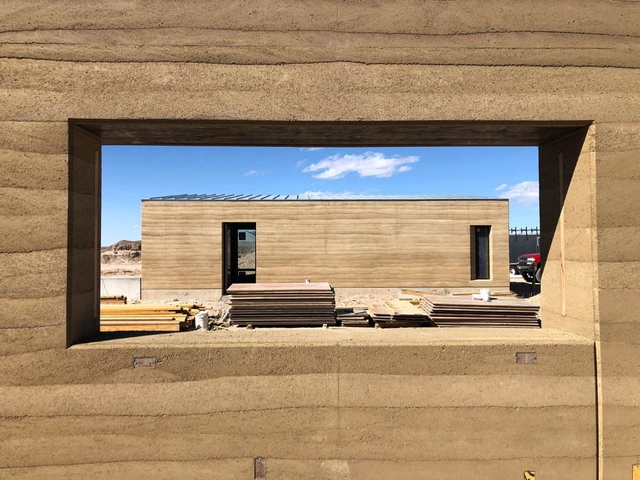
Concrete is the most carbon-intensive material found in the built environment, and rammed earth is a viable alternative—at least for projects of a certain scale. The San Antonio–based architecture firm Lake|Flato has opted for rammed earth on two of its residential projects, such as this one in West Texas.Courtesy Kyle Melgaard/Pilgrim Building Company
Practitioners have finally begun taking a more nuanced approach to the carbon emitted by new buildings. Are they too late?
I’ve started calling them come-to-carbon moments—the inner alarm bells that sound as you begin to register the devastating ecological costs of every man-made surface around you. Every sidewalk you’ve ever walked on, every building you’ve ever walked into, and every material inside those buildings, too. It’s the kind of thing you can’t un-see once you’ve started looking, the kind of knowledge that can transform a worldview, or a practice.
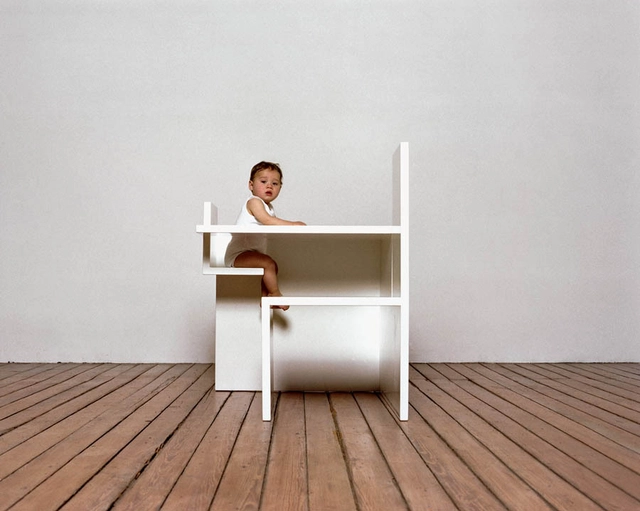
With her Mother/Child Dining Table, Maartje Steenkamp reflects on the connection between parents and their babies at mealtime. “[It] goes much deeper than just giving food; mother and child are almost one, as with the umbilical cord before birth,” she says. “In this way the furniture has to be one, too.” She based the orientation of its seats, and the length of the table, on the size and position of her own body while feeding her child. Courtesy Inga Powilleit
Designers, curators, and entrepreneurs are scrambling to make sense of motherhood in a culture that’s often hostile to it.
At their most extravagant, the tendriled seed pods of the Nigella damascena flower resemble the curled necks of swans in a Tunnel of Love. Its fringed, quick-growing blooms have long appeared in English cottage gardens, and in southern Europe and North Africa, where the species grows wild. In the United States you can purchase a packet of its seeds—around 2,200 of them—for about $6.
https://www.archdaily.com/930657/politics-has-failed-mothers-can-design-helpLila Allen
In some theoretical books, architecture and the human body are more or less the same, each depending on one another. Oftentimes, however, it is the body that undergoes detrimental adjustments to adapt to the architecture, not the other way around.
In the newly released book X-Ray Architecture, architectural historian Beatriz Colomina argues that health facilities inspired modern architecture's most dominant formal signatures.
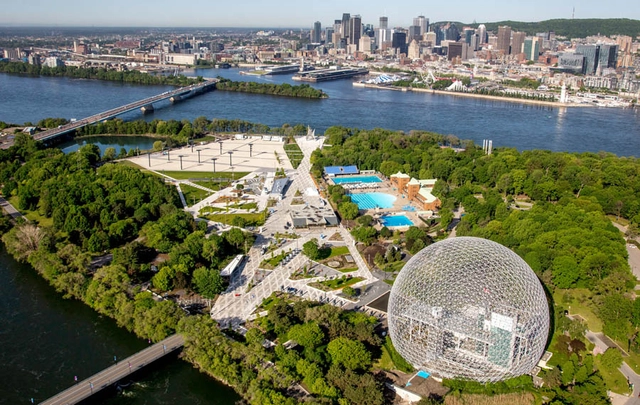
Encompassing a Buckminster Fuller–designed geodesic dome and an Alexander Calder sculpture, the intervention shows how the city is rethinking its world’s fair treasures.
The contemporary urban fabric of Montreal, perhaps more than any other Canadian city, was shaped by a single event in its modern history: the 1967 International and Universal Exposition, popularly known as Expo 67. With its record-breaking number of visitors, it was the most successful world’s fair of the 20th century and fueled a construction boom in the city that stretched into the late 1970s.








.jpg?1579877914&format=webp&width=640&height=580)