1. ArchDaily
  2. Matri-Archi

Matri-Archi: The Latest Architecture and News

International Women’s Day 2025: The Diverse Approaches of Emerging Woman-Led Architecture Practices

Subscriber Access | 

This International Women's Day, we celebrate the contributions of women in architecture, a field traditionally dominated by men. While dominant narratives may overlook their significant impact, as the history of architecture is replete with examples of women subtly but powerfully shaping the profession. When limited to a draftsman position, Ester McCoy took a step back not to disengage but to better observe. She became the first architectural critic and historian to notice the unique flavor of Modernism developing along the West Coast during the 1950s, bringing names such as Richard Neutra, or Luis Barragan to the forefront of architectural discussions. Similarly, the name Aline Louchheim may not be a widely recognized one among architects, but, because of her, the name Eero Saarinen surely is. The profession of architectural publicist also emerged through this collaboration. These stories remind us that recognizing women's achievements in architecture is not about celebrating gender, but about acknowledging a historical bias that has hindered the entire field's progress.

International Women’s Day 2025: The Diverse Approaches of Emerging Woman-Led Architecture Practices - Image 1 of 4International Women’s Day 2025: The Diverse Approaches of Emerging Woman-Led Architecture Practices - Image 2 of 4International Women’s Day 2025: The Diverse Approaches of Emerging Woman-Led Architecture Practices - Image 3 of 4International Women’s Day 2025: The Diverse Approaches of Emerging Woman-Led Architecture Practices - Image 4 of 4International Women’s Day 2025: The Diverse Approaches of Emerging Woman-Led Architecture Practices - More Images+ 5

Intersectional Design: Rethinking Architecture for the Future

Design stems from nuance, empathy, and understanding. The best solutions address the needs, identities, and context of a client and place. A designer's response needs to be informed by these different realities. Intersectional Design is a method of designing by thinking through how factors of identity (gender, race, sexuality, class, and many more) interact with one another. In understanding how these factors combine, we can more deeply understand the context of use and an individual user's priorities.

Intersectional Design: Rethinking Architecture for the Future - Image 1 of 4Intersectional Design: Rethinking Architecture for the Future - Image 2 of 4Intersectional Design: Rethinking Architecture for the Future - Image 3 of 4Intersectional Design: Rethinking Architecture for the Future - Image 4 of 4Intersectional Design: Rethinking Architecture for the Future - More Images+ 5

Building Africa: The State of Things

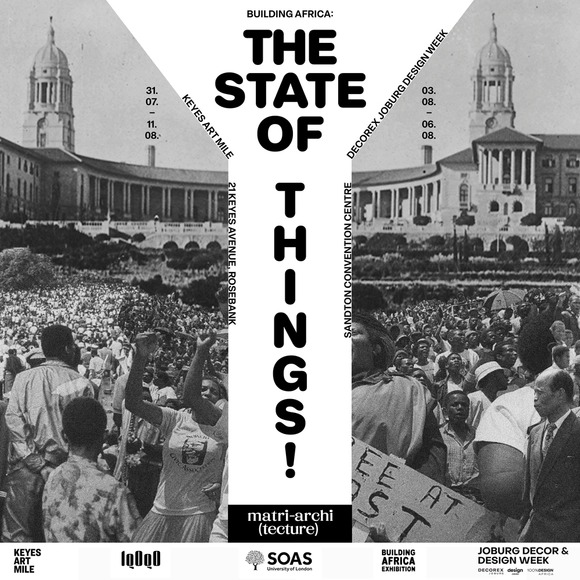
Matri-Archi(tecture) prepositions an exhibition in Johannesburg, titled ‘Building Africa: The State of Things!. The exhibition asks what it means to restore, preserve, foreground, call upon, remember and project former and future conditions of socio-political identity through the architecture of buildings that were once central figures in the political agenda of South Africa. The exhibition foregrounds research about the Constitutional Court and Union Buildings.

Spatial Education and the Future of African Cities: An Interview with Matri-Archi

Led by architectural designers Khensani de Klerk and Solange Mbanefo, Matri-Archi is a collective based between Switzerland and South Africa that aims to bring African women together for the development of spatial education in African cities. Through design practice, writing, podcasts, and other initiatives, Matri-Archi — one of ArchDaily's Best New Practices of 2021 — focuses on the recognition and empowerment of women in the spatial field and architectural industry.

ArchDaily had the opportunity to talk to the co-directors of the collective on hegemonic space, informal architecture, technology, local idiosyncrasies, and the future of African and global cities. Read the full interview below.

Breaking Down Barriers: Black History Month 2022

Subscriber Access | 

A little less than two years after the onset of a global pandemic, inclusion in the architecture profession is unfortunately still a limited conversation. A 2020 survey by the UK’s Architects' Journal revealed a sobering amount of obstacles for Black architects in the UK, and in the United States, prominent Black practitioners such as Mabel O. Wilson of Studio & have questioned the Eurocentric nature of a large amount of architectural study.

Breaking Down Barriers: Black History Month 2022 - Image 1 of 4Breaking Down Barriers: Black History Month 2022 - Image 2 of 4Breaking Down Barriers: Black History Month 2022 - Image 3 of 4Breaking Down Barriers: Black History Month 2022 - Image 4 of 4Breaking Down Barriers: Black History Month 2022 - More Images+ 7

ArchDaily Selects the Best New Practices of 2021

As our world evolves at an unprecedented pace, the challenges that come with it are becoming more and more complex. The questions faced by the cities and networks of our global world, the physical and virtual environments where our evolution takes place, are making architecture more relevant than ever. 

The issues of the built environment are no longer exclusive to the incumbents who build and design it and have become transversal questions in our society. From the citizens who question the quality of their public spaces to the self-trained builder erecting a tiny house in the woods, to the homeowners using an app to codesign their interiors during lockdown, we want to have a saying and we want to take action. Why does architecture have to be so uncertain, so distant? 

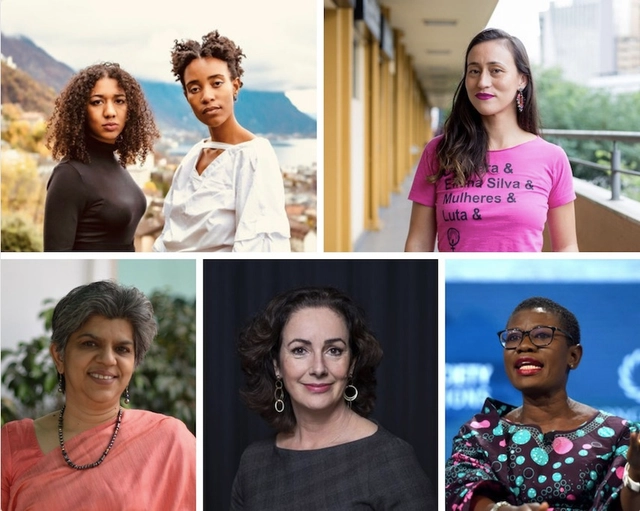
Women in Urban Leadership: 6 Trailblazers You Should Get To Know

Subscriber Access | 

"Successful, vibrant, happy cities arise out of the visions of many, not the powerful few." - Jane Jacobs.

While we've seen progress in female representation over the last century, women's perspectives and voices are still significantly marginalized. This year, the UN reported that women serve as Heads of State or Government in only 22 countries and that 119 countries have never had a female leader, despite the strong case that their leadership makes for more inclusive decision-making and more representative governance. Moreover, women occupy just 10 percent of the highest-ranking jobs at the world's leading architecture firms.

Women in Urban Leadership: 6 Trailblazers You Should Get To Know  - Image 1 of 4Women in Urban Leadership: 6 Trailblazers You Should Get To Know  - Image 2 of 4Women in Urban Leadership: 6 Trailblazers You Should Get To Know  - Image 3 of 4Women in Urban Leadership: 6 Trailblazers You Should Get To Know  - Image 4 of 4Women in Urban Leadership: 6 Trailblazers You Should Get To Know  - More Images+ 1