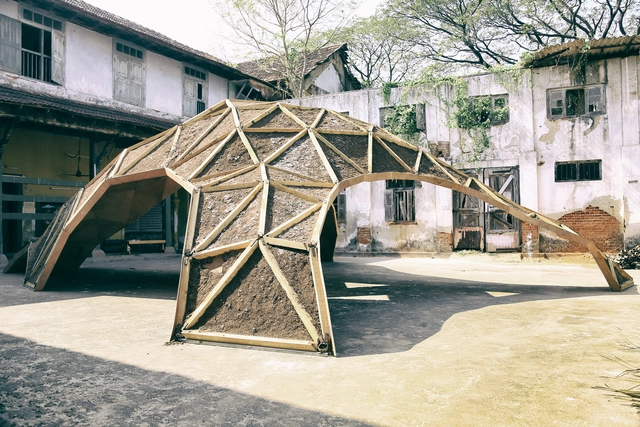
Are the concrete buildings we build actually a sign of architectural progress? Defunct housing projects abandoned shopping malls, and short-sighted urban projects are more often than not doomed to a lifetime of emptiness after they have served their purpose. Their concrete remains and transforms into a lingering reminder of what was once a symbol of modern ambition. Stadiums and their legacies, in particular, come under high scrutiny of how their giant structures get used after the games are over, with few Olympic stadiums making successful transitions into everyday life. With a new approach to sustainability, the Shell Mycelium pavilion is part of a manifesto towards a more critical take on building. Say the designers on their position: “We criticize these unconscious political choices, with living buildings, that arise from nature and return to nature, as though they never existed.”
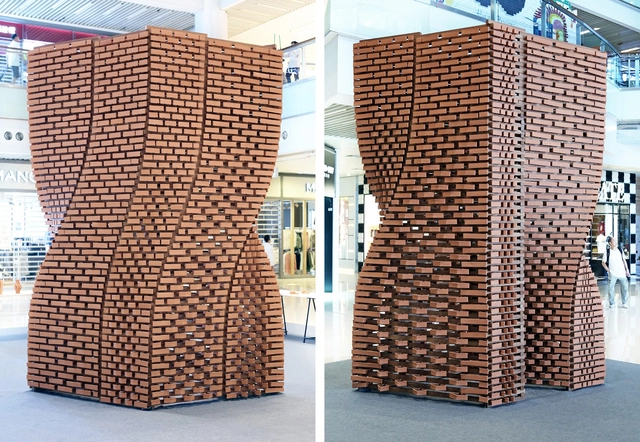
Developed by researchers and students from the Faculty of Architecture at HKU and supported by Sino Group, the 'Ceramic Constellation Pavilion' is built on a wooden structure that supports a series of "walls" formed by about 2,000 clay bricks. Each of these individual components is unique and has been manufactured using robotic technology and 3D printing, allowing to generate different types of transparency and opacity in their different faces.
https://www.archdaily.com/878419/more-than-2000-unique-robotically-manufactured-bricks-generate-variable-walls-in-this-pavilionAD Editorial Team
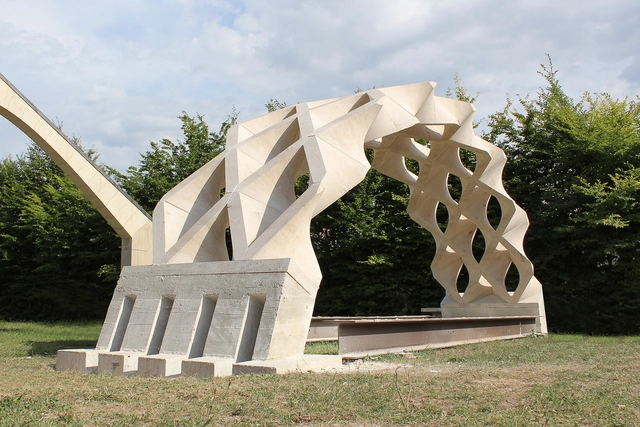
Italy-based New Fundamentals Research Group recently designed and built a full-scale prototype of an experimental barrel-vaulted stone structure for SNBR, a French company that specializes in cutting-edge stone construction. The structure is named Hypar Vault in a reference to the geometry of its constituent blocks; it uses two types of prefabricated stone modules—one type is the mirror image of the other—whose designs are based on the hypar (hyperbolic paraboloid), one of the only "doubly-ruled" surfaces in geometry. The use of these configurations allowed the vault to be constructed with almost zero wasted stone.
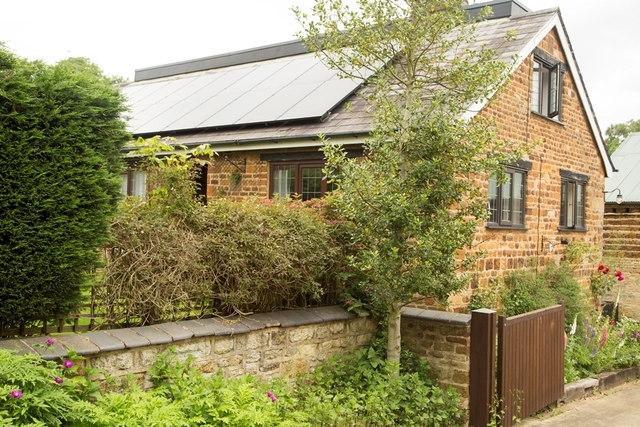
When it comes to increasing the energy efficiency of a project, solar panels provide many benefits, but architects often avoid using them for aesthetic reasons.
https://www.archdaily.com/877122/how-to-install-inconspicuous-thermal-solar-panels-in-just-a-few-hoursArchDaily Team
The IAAC (Institute for Advanced Architecture of Catalonia) has developed a series of advanced materials and systems for air conditioning and passive ventilation, allowing homes to reduce interior temperatures up to 5 degrees lower while saving the electricity consumption caused by the traditional air-conditioning. The systems are made from long-lifespan materials, which lower the costs of maintenance in the long-term and can be used as low-cost alternative building technologies.
A design by Ashari Architectsforan architectural installation in Iran is a direct response to the need to reconnect with the senses. The project, a pavilion built from a cube that holds a suspended brick volume, shows the potential of the use of this material by creating distinct atmospheres.
https://www.archdaily.com/877871/how-one-concrete-manufacturer-helps-architects-reduce-project-costs-with-an-in-house-design-teamAngus W. Stocking, L.S.
We love construction details! That's why this week's photos highlight the art of the synthesis of materials and the varied photographic products we can obtain by looking closer. Photographers like Joel Filipe, Marie-Françoise Plissart and Adria Goula, give us precise and beautiful exposure to wooden joints, steel structures, concrete details, curtain walls and more.
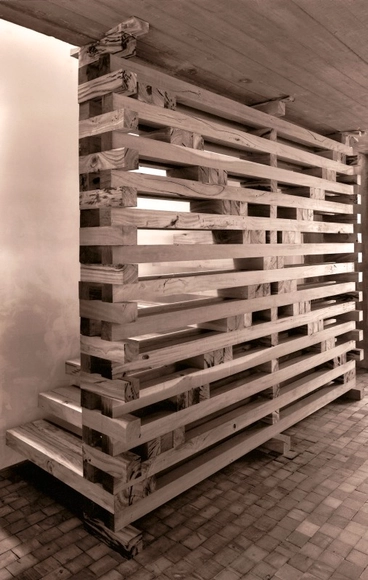
Designed by architect Rafael Iglesia for the home of the Del Grande family in Rosario, Argentina, this staircase is the result of a system of counteracting forces. The structure's wooden elements are held in place only by the friction and pressure that is produced between the pieces of wood that make up the system.
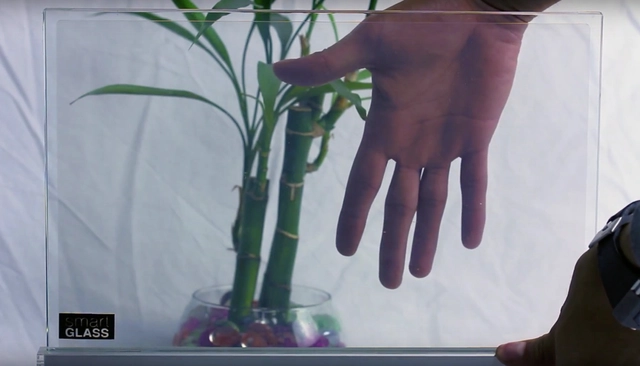
A relative newcomer to the material world, smart glass (also known as switch glass or electrochromic glass) has the ability to change its properties and appearance, allowing the environmental conditions of a space to be optimized according to the use and needs of its users.
https://www.archdaily.com/876080/this-intelligent-glass-can-change-from-opaque-to-transparent-in-just-secondsAD Editorial Team
As part of Concéntrico 03, architects Manuel Bouzas Cavada, Manuel Bouzas Barcala and Clara Álvarez Garcí designed a temporary exhibition pavilion in the Escuelas Trevijano Plaza, with the objective of “making the unclear, transparent, and the heavy, light."
https://www.archdaily.com/875859/this-wood-pavilion-is-supported-entirely-through-origami-foldsPola Mora
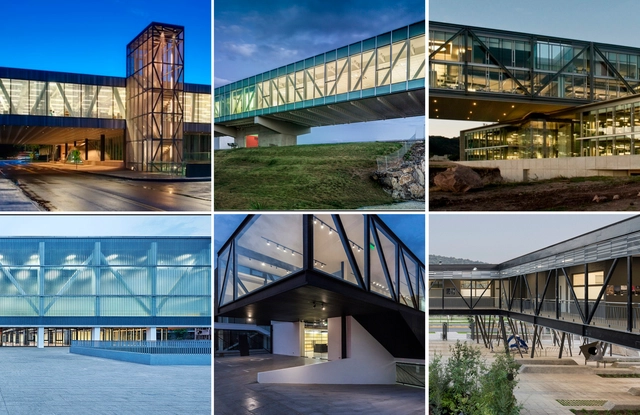
Understanding the structural aspects of architecture is an inherent task of the architect; sufficient structural knowledge allows designers to propose ideas such as large structural elements which offer an interesting response to a project's needs.
A design by C-re-a.i.d. for a Maasai village in northern Tanzania, is a morphological response to the imposed need to settle, using sustainable, local and accessible materials to redefine its construction culture.





.jpg?1502071782&format=webp&width=640&height=580)