1. ArchDaily
  2. Mass Housing

Mass Housing: The Latest Architecture and News

Architecture and Ideology: How Political Systems Shaped 20th-Century Design

Architecture is often presented as the visible expression of its time, its desires, its faith in progress, its idea of order. Yet this reading tends to flatten the conditions under which buildings are produced. It suggests that architecture follows history when, in many cases, it actively participates in it. Few periods make this more evident than the twentieth century, when architecture became deeply entangled with political programs, economic systems, and competing visions of how collective life should be organized.

What is commonly grouped under the label of Modernism is often described as a coherent project, defined by formal clarity, technological optimism, and a break with historical styles. But this apparent coherence dissolves when we look beyond its canonical centres. The same spatial principles (standardization, functional zoning, industrial production) were adopted in political and economic contexts that differed significantly in their structures and objectives. A static movement unfolded as a flexible system continuously reoriented according to the priorities of each regime. What appeared as a shared language was, in practice, a set of tools applied to distinct agendas.
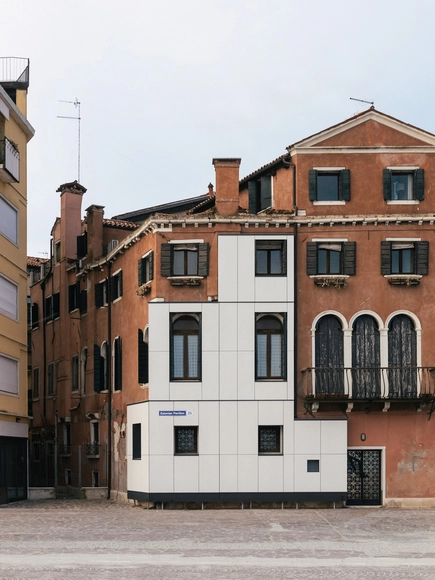

The Estonian Pavilion at the 2025 Venice Biennale Questions Massive Insulation Projects Through a Façade Installation

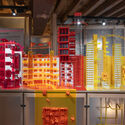
The installation and exhibition representing Estonia at the 19th International Architecture Exhibition of La Biennale di Venezia is curated by architects Keiti Lige, Elina Liiva, and Helena Männa. Titled Let Me Warm You, the national exhibition explores different dimensions of sustainability by questioning whether insulation-driven renovations in Estonia are simply compliance measures to meet European energy targets or whether they can also serve as opportunities to enhance the spatial and social quality of mass housing districts. To make this point, the Estonian installation covers the façade of a Venetian building with insulation panels, replicating how they are commonly installed in Estonia for mass housing renovations.

The Estonian Pavilion at the 2025 Venice Biennale Questions Massive Insulation Projects Through a Façade Installation - Image 1 of 4The Estonian Pavilion at the 2025 Venice Biennale Questions Massive Insulation Projects Through a Façade Installation - Image 2 of 4The Estonian Pavilion at the 2025 Venice Biennale Questions Massive Insulation Projects Through a Façade Installation - Image 3 of 4The Estonian Pavilion at the 2025 Venice Biennale Questions Massive Insulation Projects Through a Façade Installation - Image 4 of 4The Estonian Pavilion at the 2025 Venice Biennale Questions Massive Insulation Projects Through a Façade Installation - More Images+ 50

Maximized Density: How Co-Living Spaces Do More with Less

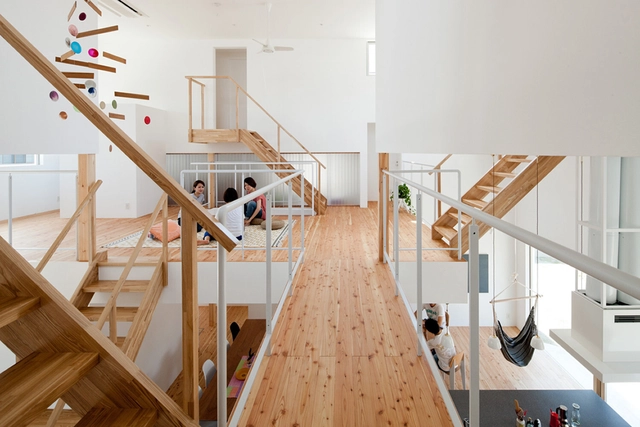
Rising populations and soaring real estate prices pose significant challenged to urban housing. In a desperate hunt for affordable living options, communal co-living spaces have emerged as a creative solution, offering quality living conditions through clever space optimization strategies. By implementing innovative design techniques, these shared living communities maximize every square foot to create functional spaces within compact footprints.

Maximized Density: How Co-Living Spaces Do More with Less - Image 1 of 4Maximized Density: How Co-Living Spaces Do More with Less - Image 2 of 4Maximized Density: How Co-Living Spaces Do More with Less - Image 3 of 4Maximized Density: How Co-Living Spaces Do More with Less - Image 4 of 4Maximized Density: How Co-Living Spaces Do More with Less - More Images+ 1

New Models for Collective Housing

Subscriber Access | 

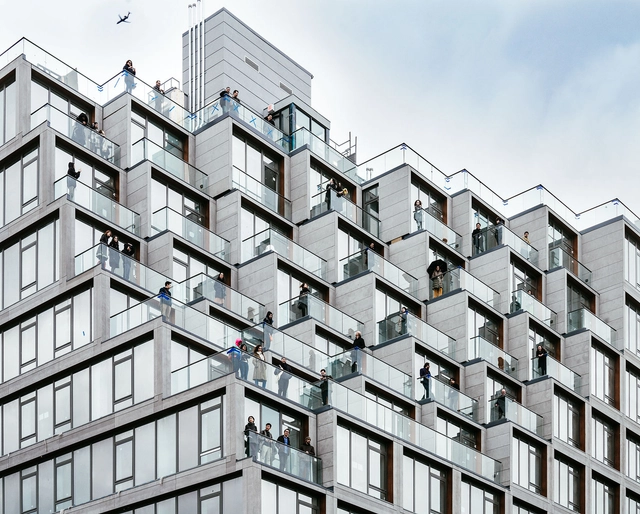
Housing production has been relying on the same spatial configurations for almost a century, catering to a vision of domestic life that no longer constitutes the norm. The widespread housing shortage, the issue of affordability, the rise of single-person households, and an aging population prompt a re-evaluation of existing housing models to address a broader range of demographics and adapt to the changing needs of city dwellers. The following explores contemporary collective housing models that provide the framework for new dwelling experiences and support current lifestyles.

New Models for Collective Housing - Image 1 of 4New Models for Collective Housing - Image 2 of 4New Models for Collective Housing - Image 3 of 4New Models for Collective Housing - Image 4 of 4New Models for Collective Housing - More Images+ 4

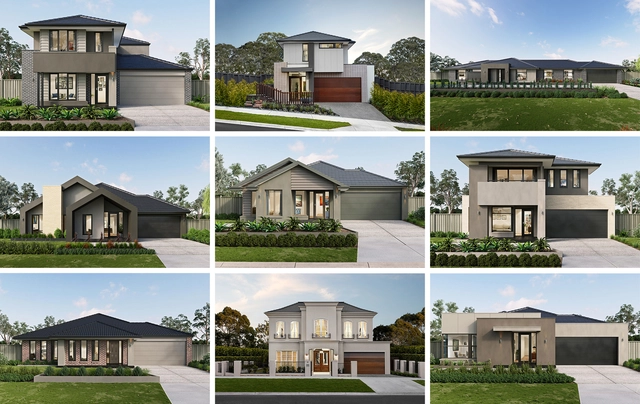
Rethinking Volume Builders through Customizable Contemporary Designs with Metricon

 | Sponsored Content

Use the term ‘volume builder’ in front of an architect, and there’s a fair chance they’ll shudder. Conjuring a vision of homogenous, mass-produced boxes squished together, ruining the look of leafy suburbs traditionally populated by impeccably designed homes, volume building is often seen as the poor cousin.

However, not all volume builders are cut from the same cloth.

Call for applications: "Urban Summer School: Open form"

Urban Summer School: Open Form – Lublin 2018
26 August 2018 - 08 September 2018
Application deadline: May 7, 2018
www.uss.niaiu.pl

Marwa Al-Sabouni Explains How Syrian Architecture Laid the Foundations for War

Subscriber Access | 

In 2014, Syrian architect Marwa al-Sabouni won the Syria category of the UN Habitat Mass Housing Competition for a housing scheme she developed for the city of Homs, her hometown. Now over two years later, Thames and Hudson has published her book Battle for Home: The Vision of a Young Architect in Syria. Throughout all of these events, al-Sabouni has remained in Syria. As the Guardian puts it: “As bombs fell around her, Syrian architect Marwa al-Sabouni stayed in Homs throughout the civil war, making plans to build hope from carnage.”

In this TEDSummit video, Al-Sabouni argues “that while architecture is not the axis around which all of human life rotates... it has the power to... direct human activity” She believes that the Old Islamic cities of Syria were once harmonious urban entities which advocated for co-habitation and tolerance through their intertwining. However, she posits that over the last century, beginning with French colonization, the Ancient towns were seen as un-modern and were gradually “improved” with elements of modernity: “brutal unfinished concrete blocks, aesthetic devastation and divisive communities that zoned communities by class, creed, or affluence.” This urban condition, she argues, is what created the conditions for the uprising-turned-civil war.