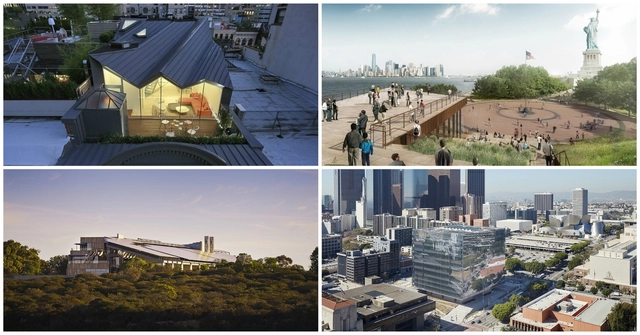
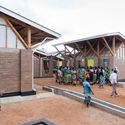
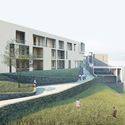
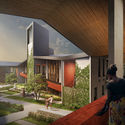
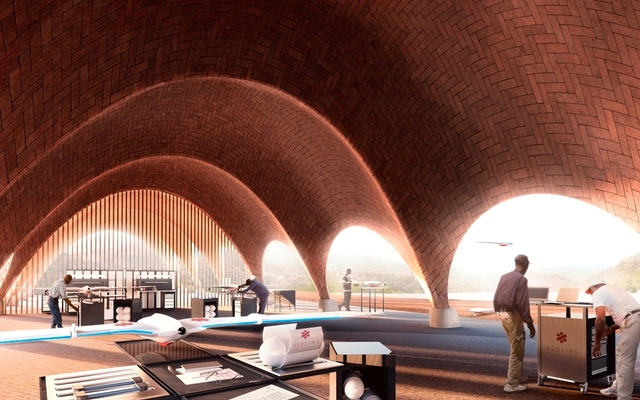
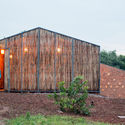
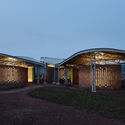
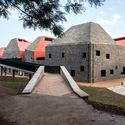
Addressing contextual severe healthcare problems, like the outbreak of infectious diseases or maternal mortality, MASS has helped in setting design strategies to mitigate and reduce critical medical concerns. With some projects operational, and others in the pipeline, the facilities imagined, tackle a wide range of complications.
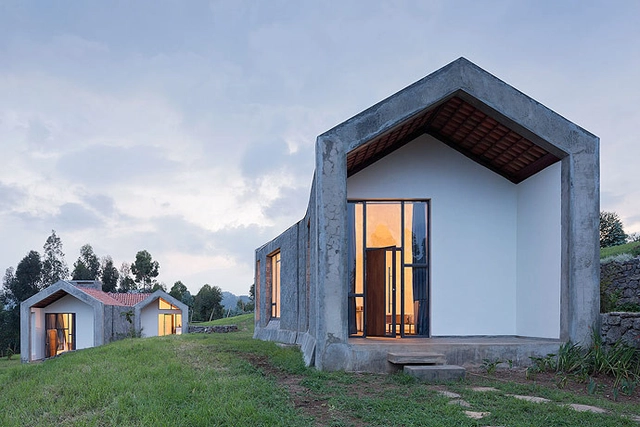
Rwanda is writing a new global story for itself. Over two decades after the end of the country’s civil war and the 1994 genocide, a series of progressive visions have been the catalyst for transformation throughout Rwanda. These economic and structural reforms have redefined the built environment, and in turn, are shaping contemporary architecture across the country.
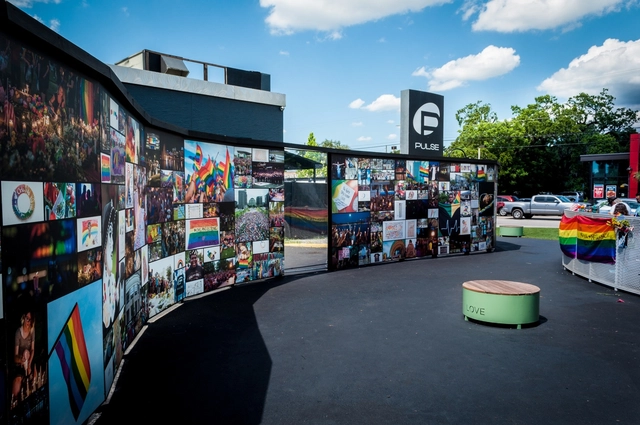
The six shortlisted concepts for the National Pulse Memorial & Museum will be on display at the Orange County Regional History Center where people can view and comment on the schemes, helping the jury choose the winning proposal, to be announced on October 30.
Design:ED Podcast is an inside look into the field of architecture told from the perspective of individuals that are leading the industry. This motivational series grants unique insight into the making of a successful design career, from humble beginnings to worldwide recognition. Every week, featured guests share their personal highs and lows on their journey to success, that is sure to inspire audiences at all levels of the industry. Listening to their stories will provide a rare blueprint for anyone seeking to advance their career, and elevate their work to the next level.
In this episode, host Aaron Prinz speaks with Michael Murphy, Founding Principal of MASS Design Group. He discusses how MASS operates as a non-profit, the social and political implications of architecture, and how they founded MASS Design Group. This episode was recorded in partnership with the University of Texas at Austin’s School of Architecture.
The shortlist has been announced for the design of the National Pulse Memorial & Museum in Orlando, Florida, honoring the 49 people killed during the Pulse nightclub shooting on June 12th, 2016. Established by Dovetail Design Strategists for the onePULSE Foundation, the open, two-stage international competition seeks to honor those killed while also supporting the families, survivors, and first responders.
https://www.archdaily.com/918366/high-profile-architects-shortlisted-for-pulse-nightclub-shooting-memorialNiall Patrick Walsh
The new graphic identity of the 2019 Chicago Architecture Biennial. by LA-based ELLA. Image Courtesy of Chicago Architecture Biennial
The third Chicago Architecture Biennial will occur from September 19, 2019, to January 5, 2020, and yesterday the first group of contributors to the 2019 edition and publication was announced. This year’s theme, “...and other such stories,” will bring together a multi-faceted and international exploration of architecture and the built environment. Newly commissioned projects for the Biennial will highlight issues including public housing, social justice, and the appropriation and preservation of the natural environment.
Are we going to follow a model of unsustainable building and construction similar to what I witnessed in China—or can we develop a uniquely African model of sustainable, and equitable development? I'm optimistic we can.
In this recent TED Talk, Christian Benimana talks about his journey as an architect—growing up in Rwanda, studying in China, and finally returning to Africa to see the beginnings of a building boom very similar to what he witnessed in Shanghai. Given this background, he then explains why he and MASS Design Group founded the African Design Center, a school and innovation center that intends to be a catalyst for positive urban development on the continent.
Architect Magazine has unveiled the 2017 edition of the “Architect 50,” their list of the 50 best architecture firms in the United States. The 2017 rankings are based on scores from three categories: business, design and sustainability. This year saw more entrants than ever before, with several first-time entrants making notable impressions, including the number 1 ranked design firm, WORKac. Topping the overall list was Skidmore, Owings & Merrill (SOM), who also ranked in the top 10 in both design and sustainability.
See the top 10 from each category after the break.
The Cooper Hewitt, Smithsonian Design Museum has announced the winners of their 2017 National Design Awards, recognizing outstanding achievement in design and innovation across a variety of design disciplines. Now in its 18th year, the annual award was established to “promote design as a vital humanistic tool in shaping the world.”
On Thursday, December 22nd, an email arrived in the inboxes of ArchDaily’s editors that made us sit up, shake off our holiday-induced lethargy, and take notice. MASS Design Group’s Year in Review email might initially have blended in with the many other holiday wishes and 2016 recaps we receive at that time of year—it recapped such highlights as Michael Murphy’s TED Talk in February or the launch of the first African Design Center—but it had one thing that we hadn’t seen from other firm’s years-in-review: detailed statistics about the firm’s achievements that year.
In recent decades, certain aspects of architecture have become increasingly open to scientific analysis, most notably when it comes to a building’s environmental impact. It’s no surprise, therefore, to see MASS Design Group’s claims that their work uses 74% less embodied carbon than typical building projects, or that 78% of their materials are sourced within 100 kilometers, but alongside these were some more unusual metrics: since it was founded, the firm has invested 88% of construction costs regionally, created 15,765 jobs, and in 2016 alone, their work served a total of 64,580 users. These numbers suggest a way of thinking about architecture that few have attempted before—a way that, if widely adopted, could fundamentally change the way architecture is practiced and evaluated. We spoke to MASS co-founder Alan Ricks to find out how these statistics are calculated, and what purpose they serve.
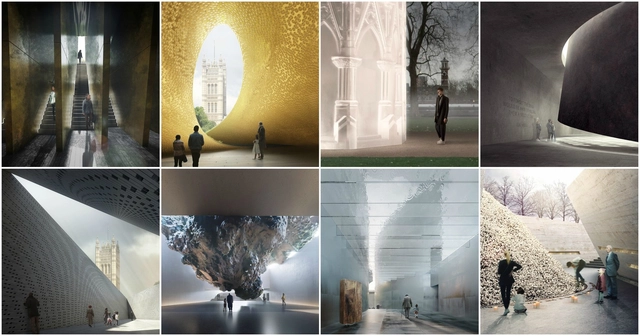
The UK Holocaust Memorial Foundation and Malcolm Reading Consultants have revealed the designs of 10 teams shortlisted to design a new Holocaust Memorial, to be located in London's Victoria Tower Gardens next to the Houses of Parliament. After a call for expressions of interest was launched in September, 10 star-studded teams were selected in November and invited to submit their designs for an "emotionally powerful and sensitively designed memorial."
With the designs now revealed to the public, competition organizer Malcolm Reading Consultants and the government-led Memorial Foundation are now consulting with the public and are inviting people to submit feedback about the designs here. The feedback received in this consultation period "will play a crucial role in informing the jury’s final decision on the memorial," they explained in a press release. Read on to see all 10 shortlisted designs.
A total of 51 teams, consisting of 320 architectural practices, responded to the call for submissions, and 13 semi-finalist teams were highly commended for their designs. The four shortlisted firms will participate in a design forum at the university next week and will submit their final concept designs by January 2016.
In designing and building multiple successful public buildings in central Africa and around the world, MASS Design Group has employed and guided thousands of local craftsmen, curating the building process to inspire dignity. Now, they wish to help the African people obtain the skills necessary to guide the process themselves. At the United Nations Solutions Summit this Sunday Christian Benimana, a program director for the non-profit design studio, will present plans for what they are calling the “Bauhaus of Africa”: three “African Design Centers” to be built over the next 10 years in strategic locations throughout the continent. The design centers will house an education program tasked with training a new generation of African architects - a workforce certain to be indispensable as Africa enters a period of unprecedented urban growth.
As the legacy of the Cold War fades and Western preeminence gradually becomes a thing of the past, population booms in Asia followed by the growth of a vast non-western middle class have seriously challenged the Western perception of the world. The East has become the focal point of the world’s development.
If East Asia is the present focal point of this development, the future indisputably lies in Africa. Long featuring in the Western consciousness only as a land of unending suffering, it is now a place of rapidly falling poverty, increasing investment, and young populations. It seems only fair that Africa’s rich cultures and growing population (predicted to reach 1.4 billion by 2025) finally take the stage, but it’s crucially important that Africa’s future development is done right. Subject to colonialism for centuries, development in the past was characterized by systems that were designed for the benefit of the colonists. Even recently, resource and energy heavy concrete buildings, clothes donations that damage native textile industries, and reforestation programs that plant water hungry and overly flammable trees have all been seen, leaving NGOs open to accusations of well-meaning ignorance.
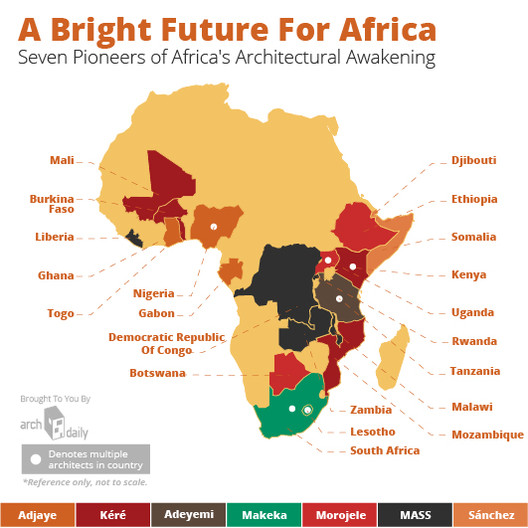
Fortunately, a growth in native practices and a more sensible, sensitive approach from foreign organizations has led to the rise of architectural groups creating buildings which learn from and improve Africa. Combining local solutions with the most appropriate Western ideas, for the first time these new developments break down the perception of monolithic Africa and have begun engaging with individual cultures; using elements of non-local architecture when they improve a development rather than creating a pastiche of an imagined pan-African culture. The visions these groups articulate are by no means the same - sustainable rural development, high end luxury residences and dignified civic constructions all feature - but they have in common their argument for a bright future across Africa. We’ve collected seven pioneers of Africa’s architectural awakening - read on after the break for the full article and infographic.
As the Pritzker Jury begins its deliberations for the 2015 Pritzker Prize, this is a critical time of year for shaping the landscape of architectural debate for the coming year and beyond. The following is an open letter to Martha Thorne, the Executive Director of the Pritzker Prize, from Conrad Newel, author of the popular blog Notes on Becoming a Famous Architect.
Dear Martha,
I have to hand it to you and all the people on the Pritzker committee, you guys are a very crafty bunch. Just when I thought I had you all figured out, you have now - even though only slightly - succeeded in confounding me.
From my 2011 analysis of the Pritzker, I figured that your potential pool of laureates was always a very predictable bunch. In fact anyone could look at my data and predict with reasonable certainty that the next laureate would most likely be an Asian or Caucasian male starchitect from Europe, The USA, or Japan. I further pointed out that none of your laureates have done much in the way of humanitarianism, despite the fact that the mission statement of the Pritzker also asks that the recipient should be making significant contributions to humanity. I maintained that this part of the mandate has been consistently overlooked.
Global, the Winter 2014 issue of ArchitectureBoston magazine, out now, is an examination of the challenges and opportunities facing architects working abroad, from the Middle East to Africa to Asia. The topics explored in this issue include how to value resource-constrained approaches, honor local vernacular, and learn from the urbanization precedents set in other parts of the world. In this article, Jay Wickersham FAIA examines how in a globalized market, architecture firms can take steps to ensure that their designs act in the best interests of the foreign communities they affect.
The signs of architecture’s globalization are all around us. Foreign students flock to Boston to study architecture, prominent buildings are designed by foreign architects, American firms build practices around international projects. Globalization has allowed architects to work outside their own regions and cultures, at a scale and with a freedom of design they might never enjoy at home. But beneath the excitement and glamour of international practice, I sense an unease. Are we creating vital and original new architectures, or are we homogenizing cities and landscapes and obliterating regional differences? Are architects helping to strengthen and develop the economies of host communities, or are they acting as unwitting tools of inequality and repression?
Videos
Hunts Point Library concept. Image Courtesy of Andrew Berman Architect, Library Development Solutions, Neil Donnelly, AEA Consulting, Auerbach Pollock Friedlander
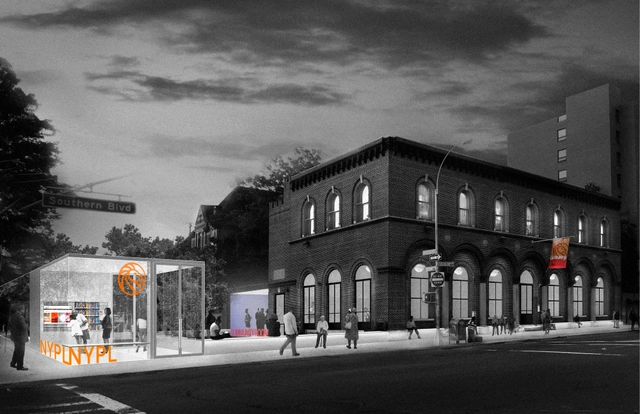
There are 207 branch libraries in the city of New York, each providing a number of services to city residents. From the simple lending of books to adult technical literacy classes, these institutions are as vital as they were before the advent of the internet, and their attendance numbers prove it. Between the years of 2002 and 2011, circulation in the city’s library systems increased by 59%. Library program attendance saw an increase of 40%. In spite of this, library funding was cut by 8% within this same timeframe, which has made it difficult to keep many of the system’s buildings in good repair. To spark interest and support from city leaders, The Architectural League, in collaboration with the Center for an Urban Future, instigated the design study Re-Envisioning New York's Branch Libraries.
Sponsored by the Charles H. Revson Foundation, the study is the effort of five design teams chosen by the League. These teams - including MASS Design Group and SITU STUDIO - were charged with proposing exciting new library designs that follow the League’s themes of “integrating libraries into the city’s housing and community development goals, reconfiguring libraries to meet community needs, and developing new ideas for expanding the impact of branch libraries.” The teams presented their work at a January 4th symposium. See each of the proposals, as well as video footage of that symposium, after the break.






.jpg?1570484550&format=webp&width=640&height=580)