1. ArchDaily
  2. Mashrabiya

Mashrabiya: The Latest Architecture and News

Jaali, Mashrabiya, Cobogó: The Lightest Skins in Architecture

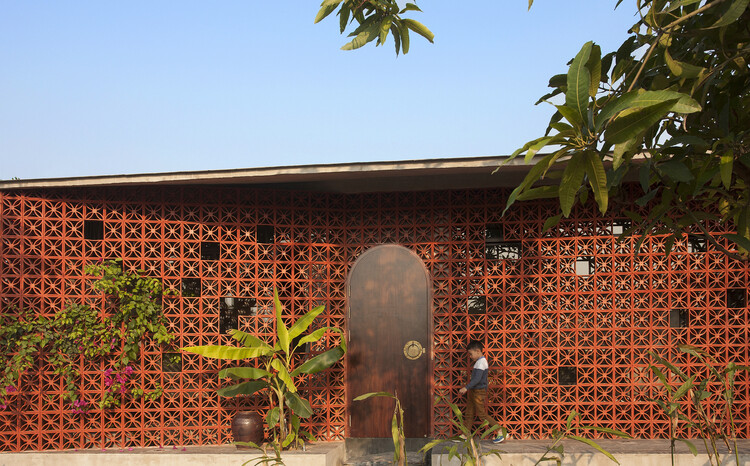
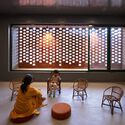
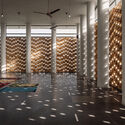
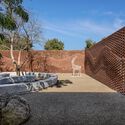
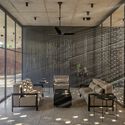
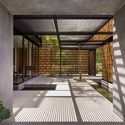
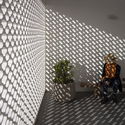
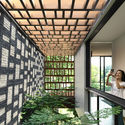
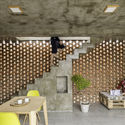
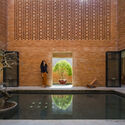
A perforated screen is often treated as an afterthought, something applied to soften light, to decorate a façade, or to add texture where a wall might otherwise feel flat. It is photographed as a surface, drawn as a pattern, and discussed as a craft. But in many buildings across the Indian subcontinent and the Islamic world, the screen was never an addition. It was the wall itself. Remove it, and the building does not simply change in appearance; it loses its ability to regulate heat, move air, and mediate between inside and outside.

This misreading reveals more about contemporary habits than about the screen itself. Architectural thinking has long separated structure from envelope, performance from expression. Within that framework, elements like the jaali or mashrabiya are easy to categorize as ornamental, visually rich but technically secondary. Yet these screens were conceived as integrated systems, where geometry, material, and climate operate together. Their intelligence lies in what they do.
Jaali, Mashrabiya, Cobogó: The Lightest Skins in Architecture - Image 1 of 4Jaali, Mashrabiya, Cobogó: The Lightest Skins in Architecture - Image 2 of 4Jaali, Mashrabiya, Cobogó: The Lightest Skins in Architecture - Image 3 of 4Jaali, Mashrabiya, Cobogó: The Lightest Skins in Architecture - Image 4 of 4Jaali, Mashrabiya, Cobogó: The Lightest Skins in Architecture - More Images+ 11

Global Architects, Local Contexts: Navigating Identity in the Gulf’s Cultural Landmarks

Subscriber Access | 

In recent years, the Gulf region has emerged as a global center for cultural and architectural development, commissioning internationally acclaimed architects to design its most high-profile museums and institutions. These projects, ranging from Louvre Abu Dhabi by Jean Nouvel to Museum of Islamic Art in Doha by I. M. Pei, are often designed by foreign architects, yet they aim to embed themselves within their context through strategies that reference the region's landscape, climate, and architectural traditions. This raises a fundamental question: What defines local architecture in the 21st century?

Global Architects, Local Contexts: Navigating Identity in the Gulf’s Cultural Landmarks - Image 1 of 4Global Architects, Local Contexts: Navigating Identity in the Gulf’s Cultural Landmarks - Image 2 of 4Global Architects, Local Contexts: Navigating Identity in the Gulf’s Cultural Landmarks - Image 3 of 4Global Architects, Local Contexts: Navigating Identity in the Gulf’s Cultural Landmarks - Image 4 of 4Global Architects, Local Contexts: Navigating Identity in the Gulf’s Cultural Landmarks - More Images+ 9

Computational Design in India: Dialogues between Modern and Vernacular Form

Subscriber Access | 

India's global identity has developed alongside its aspirations for a unique architectural future. Over time, the country's architectural landscape has evolved from vernacular traditions to foreign influences, from post-colonial revivals to modern digital expressions. Computational design has played an influential role in shaping contemporary styles, empowering homegrown architectural firms to experiment with form and structure.

Computational Design in India: Dialogues between Modern and Vernacular Form - Image 1 of 4Computational Design in India: Dialogues between Modern and Vernacular Form - Image 2 of 4Computational Design in India: Dialogues between Modern and Vernacular Form - Image 3 of 4Computational Design in India: Dialogues between Modern and Vernacular Form - Image 4 of 4Computational Design in India: Dialogues between Modern and Vernacular Form - More Images+ 5

Reimagining The Mashrabiya: Functionality and Symbolism in Contemporary Architecture

For centuries, arid environments have solved the problem of light, privacy, and heat through a statement architectural feature of Islamic and Arab architecture, the mashrabiya. Crafted from geometric patterns traditionally made from short lengths of turned wood, the mashrabiya features lattice-like patterns that form large areas. Traditionally, it was used to catch wind and offer passive cooling in the dry Middle Eastern desert heat. Frequently used on the side street of a built structure, water jars, and basins were placed inside it to activate evaporative cooling. The cool air from the street would pass through the wooden screen, providing air movement for the occupants.

Similar to the Indian jali, the vernacular language also offers a playful experience with daylight while still maintaining a certain degree of privacy. Traced back to Ottoman origins, the perforated screens protected occupants’ from the sun while simultaneously letting daylight through in calculated doses. Although the mashrabiya was a statement in arab and Islamic architecture languages, it wasn’t until 1987 that the archetypal element began appearing with a revised contemporary application.

Reimagining The Mashrabiya: Functionality and Symbolism in Contemporary Architecture  - Image 1 of 4Reimagining The Mashrabiya: Functionality and Symbolism in Contemporary Architecture  - Image 2 of 4Reimagining The Mashrabiya: Functionality and Symbolism in Contemporary Architecture  - Image 3 of 4Reimagining The Mashrabiya: Functionality and Symbolism in Contemporary Architecture  - Image 4 of 4Reimagining The Mashrabiya: Functionality and Symbolism in Contemporary Architecture  - More Images+ 7

Architectural Interventions in the Desert: Natural Escapes, Minimal Intervention and Reclusive Luxury

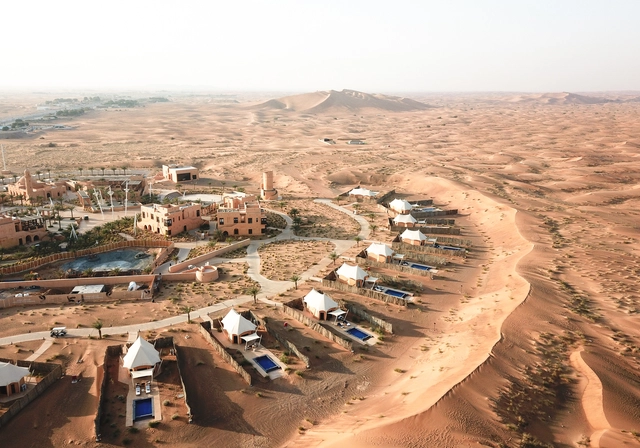
Set deep within some of the most isolated desert landscapes across the Middle East and further afield, these desert camp hotels offer a way to connect with their surroundings through the solitary experience of open and expansive scenery.

By disregarding the kind of structural interventions that might alter their historic and often culturally relevant landscapes, the projects position traditional and local skills, materials, and architectural techniques alongside high-end luxury interiors.

Architectural Interventions in the Desert: Natural Escapes, Minimal Intervention and Reclusive Luxury - Image 1 of 4Architectural Interventions in the Desert: Natural Escapes, Minimal Intervention and Reclusive Luxury - Image 2 of 4Architectural Interventions in the Desert: Natural Escapes, Minimal Intervention and Reclusive Luxury - Image 3 of 4Architectural Interventions in the Desert: Natural Escapes, Minimal Intervention and Reclusive Luxury - Image 4 of 4Architectural Interventions in the Desert: Natural Escapes, Minimal Intervention and Reclusive Luxury - More Images+ 8

15 Projects in India Using Traditional Jali Wall Facades: Solution to Control Light, Temperature and Ventilation

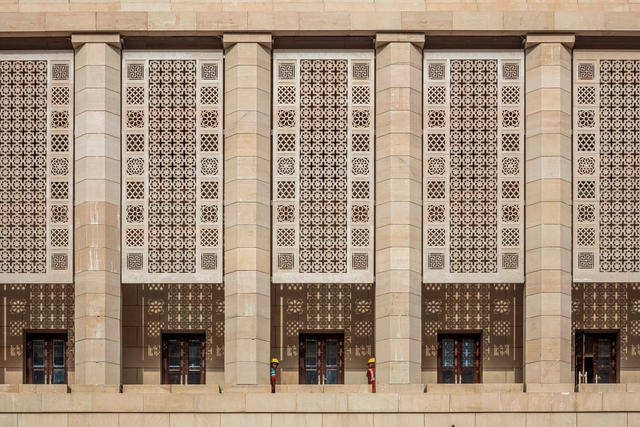
Natural light, fresh air, and a constant, comfortable temperature. These are three of the most basic components we need in our interior spaces. By expanding and increasing the use of glass in contemporary building facades, we can increase natural light. However, to combine these wall-to-wall glazed surfaces with ventilation and temperature control, high-powered technical solutions are often required.

As the architecture industry shifts its focus towards greater sustainability and energy efficiency, many modern projects in the world’s hottest (and getting hotter) environments are unearthing more traditional ways to control temperature, light, and ventilation by learning from the past to save us from the future.

15 Projects in India Using Traditional Jali Wall Facades: Solution to Control Light, Temperature and Ventilation  - Image 1 of 415 Projects in India Using Traditional Jali Wall Facades: Solution to Control Light, Temperature and Ventilation  - Image 2 of 415 Projects in India Using Traditional Jali Wall Facades: Solution to Control Light, Temperature and Ventilation  - Image 3 of 415 Projects in India Using Traditional Jali Wall Facades: Solution to Control Light, Temperature and Ventilation  - Image 4 of 415 Projects in India Using Traditional Jali Wall Facades: Solution to Control Light, Temperature and Ventilation  - More Images+ 17

Polished, Private, and Passive: Traditional Courtyard Houses and their Timeless Architectural Features

Subscriber Access | 

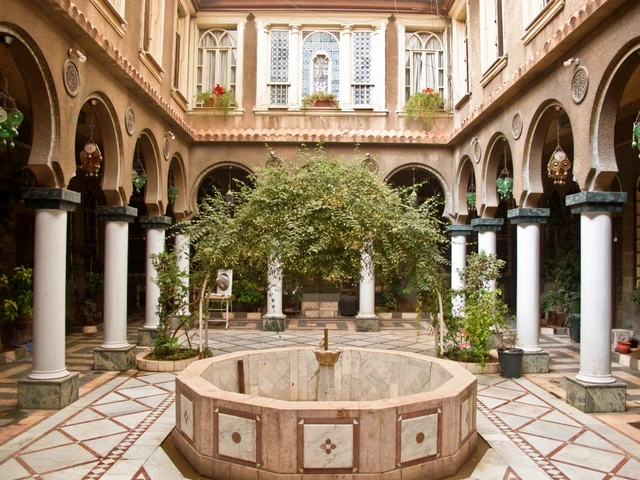
We have seen in recent residential projects the need for bringing the outdoors inside, whether it's through green walls, biophilic designs, or interior courtyards, especially in countries with dry and hot climates. When it comes to countries of the Arab world, creating these outdoor-inspired inner spaces is a lot more than just bringing in some sunlight and fresh air, it is an architectural expression of a rich culture that transcended generations and inspired nations beyond their borders. In this article, we will explore how cultural and social norms influenced the creation of traditional courtyard houses in Arabian countries and how their unique architectural features were reimagined in modern contexts.

Polished, Private, and Passive: Traditional Courtyard Houses and their Timeless Architectural Features - Image 1 of 4Polished, Private, and Passive: Traditional Courtyard Houses and their Timeless Architectural Features - Image 2 of 4Polished, Private, and Passive: Traditional Courtyard Houses and their Timeless Architectural Features - Image 3 of 4Polished, Private, and Passive: Traditional Courtyard Houses and their Timeless Architectural Features - Image 4 of 4Polished, Private, and Passive: Traditional Courtyard Houses and their Timeless Architectural Features - More Images+ 14

Zanzibar: The Many Meanings of Light

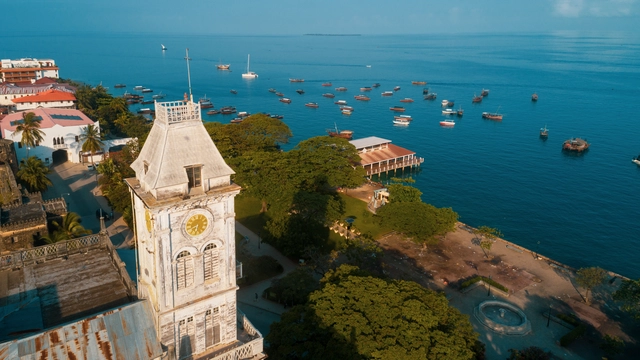
Light — how we perceive the world around us — is an integral, emotive architectural element. Access to light is enhanced and limited in an architectural capacity globally, with architects of expensive tropical dwellings celebrating sunny vistas with expansive glazing, while a wide range of art galleries reject light in its natural form, eliminating it in adherence to the sensitive exhibit requirements of art pieces. Light in an architectural and urban sense is also highly symbolic, evident in the many metropolises of our world, but where this symbolism takes on an interesting dimension is in the archipelago of Zanzibar.

Zanzibar: The Many Meanings of Light - Image 1 of 4Zanzibar: The Many Meanings of Light - Image 2 of 4Zanzibar: The Many Meanings of Light - Image 3 of 4Zanzibar: The Many Meanings of Light - Image 4 of 4Zanzibar: The Many Meanings of Light - More Images+ 5

How to Use Hollow Elements in Home Architecture

Subscriber Access | 

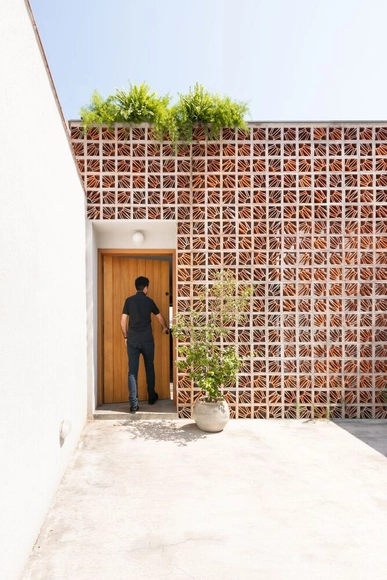
Visual permeability, ventilation and a strong identity appeal, the hollow elements have increasingly found their place in contemporary architecture. Whether in large buildings or small residences, they appear in different shapes, materials and compositions, helping to determine the degree of interaction between interior and exterior space. This artifice in a residential construction is an important tool to ensure privacy and intimacy, without losing the possibility of connections to the outside and natural ventilation.

How to Use Hollow Elements in Home Architecture - Image 1 of 4How to Use Hollow Elements in Home Architecture - Image 2 of 4How to Use Hollow Elements in Home Architecture - Image 3 of 4How to Use Hollow Elements in Home Architecture - Image 4 of 4How to Use Hollow Elements in Home Architecture - More Images+ 16

Bahia Rodin Museum / Brasil Arquitetura

Bahia Rodin Museum / Brasil Arquitetura - Historic Preservation
© Nelson Kon

Bahia Rodin Museum / Brasil Arquitetura - Historic PreservationBahia Rodin Museum / Brasil Arquitetura - Historic PreservationBahia Rodin Museum / Brasil Arquitetura - Historic PreservationBahia Rodin Museum / Brasil Arquitetura - Historic PreservationBahia Rodin Museum / Brasil Arquitetura - More Images+ 31

  • Architects: Brasil Arquitetura
  • Area Area of this architecture project Area:  3055
  • Year Completion year of this architecture project Year:  2002

Light Matters: Learning From Vernacular Windows

Before computer daylight simulations were used to optimize the atmosphere and energy in buildings, generations of builders developed simple principles to create the best windows for their site. Two lighting experts have studied these traditional openings in buildings to find inspiration for more sustainable designs today. Francesco Anselmo, a lighting designer at Arup, and John Mardaljevic, Professor of Building Daylight Modelling at the School of Civil & Building Engineering of Loughborough University, have analysed the sun and skylight variations from northern regions like Stockholm down to the equator in cities like Haiti or Abu Dhabi.

Read on to learn more about the variety of traditional windows.

Light Matters: Learning From Vernacular Windows - Image 1 of 4Light Matters: Learning From Vernacular Windows - Image 2 of 4Light Matters: Learning From Vernacular Windows - Image 3 of 4Light Matters: Learning From Vernacular Windows - Image 4 of 4Light Matters: Learning From Vernacular Windows - More Images+ 2

Light Matters: Mashrabiyas - Translating Tradition into Dynamic Facades

The delicate mashrabiya has offered effective protection against intense sunlight in the Middle East for several centuries. However, nowadays this traditional Islamic window element with its characteristic latticework is used to cover entire buildings as an oriental ornament, providing local identity and a sun-shading device for cooling. In fact, designers have even transformed the vernacular wooden structure into high-tech responsive daylight systems. 

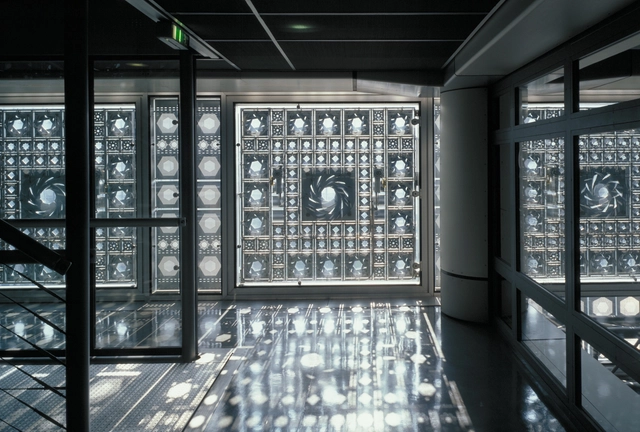
Jean Nouvel is one of the leading architects who has strongly influenced the debate about modern mashrabiyas. His Institut du monde arabe in Paris was only the precedent to two buildings he designed for the harsh sun of the Middle East: The Doha Tower, which is completely wrapped with a re-interpretation of the mashrabiya, and the Louvre Abu Dhabi museum with its luminous dome.

More mashrabiyas, after the break...

Light Matters: Mashrabiyas - Translating Tradition into Dynamic Facades - Image 1 of 4Light Matters: Mashrabiyas - Translating Tradition into Dynamic Facades - Image 2 of 4Light Matters: Mashrabiyas - Translating Tradition into Dynamic Facades - Image 5 of 4Light Matters: Mashrabiyas - Translating Tradition into Dynamic Facades - Image 3 of 4Light Matters: Mashrabiyas - Translating Tradition into Dynamic Facades - More Images+ 23