1. ArchDaily
  2. Manuel Herz

Manuel Herz: The Latest Architecture and News

12 Pavilions at EXPO 2025 Osaka Highlight Immersive Spatial Experiences

 | Sponsored Content

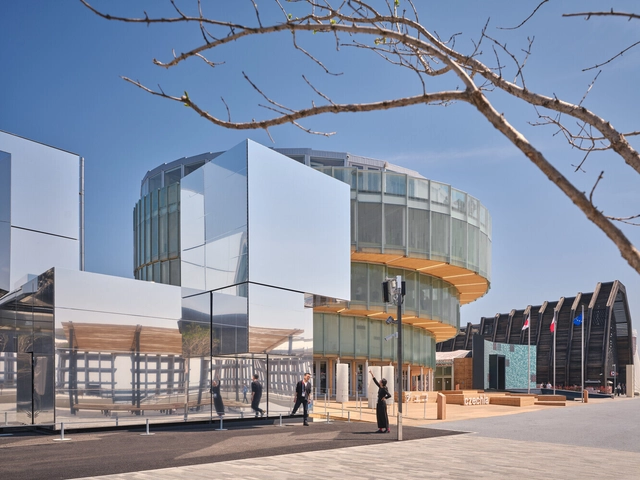
Since its inauguration this spring, Expo 2025 Osaka has captured global attention from multiple perspectives, demonstrating how architecture can function as a laboratory for exploring solutions to pressing challenges. After 55 years, Osaka is once again hosting the World Expo, with each installation organized around the sub-themes Saving Lives, Empowering Lives, and Connecting Lives. These pavilions take forms that express the identity and values of their region through distinctive architectural languages, forming the central axis of their design. Building on this foundation, some installations serve as laboratories for the future society, utilizing technology to enhance experiences both inside and outside the spaces, transforming the visit through light, sound, visuals, and movement as part of the technological innovation showcased at the event.

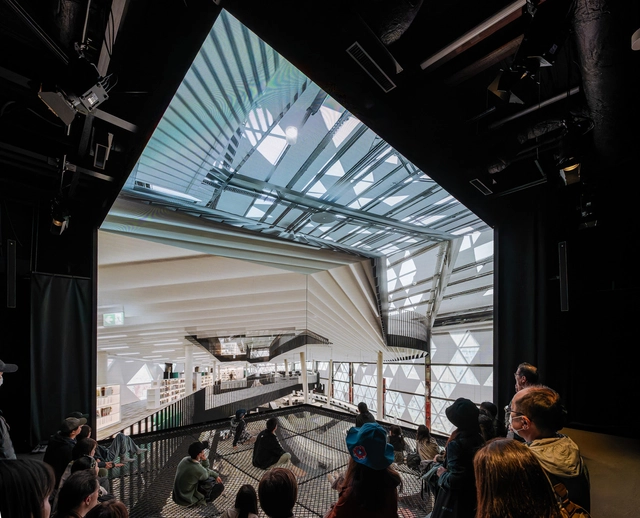
12 Pavilions at EXPO 2025 Osaka Highlight Immersive Spatial Experiences - Image 1 of 412 Pavilions at EXPO 2025 Osaka Highlight Immersive Spatial Experiences - Image 2 of 412 Pavilions at EXPO 2025 Osaka Highlight Immersive Spatial Experiences - Image 3 of 412 Pavilions at EXPO 2025 Osaka Highlight Immersive Spatial Experiences - Image 4 of 412 Pavilions at EXPO 2025 Osaka Highlight Immersive Spatial Experiences - More Images+ 27

On Designing National Pavilions: Power and Identity at Universal Exhibitions

Subscriber Access | 

What can a pavilion’s architecture reveal about its country? At major World Expos, national pavilions are designed to answer this question, transforming into spaces laden with symbolism. Though temporary, these structures are rich in meaning, functioning as architectural expressions of political identity. Their forms and materials encapsulate national ambitions. Expo Osaka 2025, the latest chapter in this ongoing narrative, showcases how nations increasingly use built space to construct global images of themselves—sustainable, technological, culturally distinct, and geopolitically relevant.
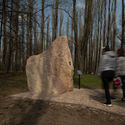
On Designing National Pavilions: Power and Identity at Universal Exhibitions - Image 1 of 4On Designing National Pavilions: Power and Identity at Universal Exhibitions - Image 2 of 4On Designing National Pavilions: Power and Identity at Universal Exhibitions - Image 3 of 4On Designing National Pavilions: Power and Identity at Universal Exhibitions - Image 4 of 4On Designing National Pavilions: Power and Identity at Universal Exhibitions - More Images+ 10

The Swiss Pavilion, Designed by Manuel Herz Architekten, Explores Lightweight Materials at Expo Osaka 2025

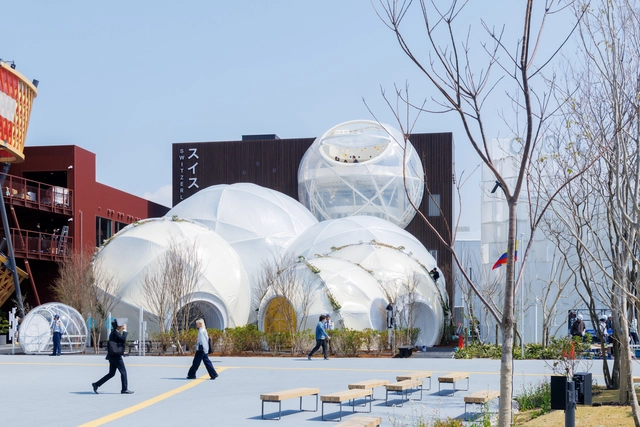
The latest photographs of the Swiss Pavilion for Expo 2025 Osaka have just been released. Designed by Manuel Herz Architekten, NUSSLI, and Bellprat Partner, as a result of a competition won, the pavilion guides visitors through five spatial zones under the theme From Heidi to High Tech. The installation brings together references from Swiss cultural narratives and technological developments in a multi-sensory setting. In line with the Expo's overall theme, "Designing the Future Society for Our Lives," the pavilion aims to minimize environmental impact with a lightweight membrane design that allows for speedy construction and strengthens the relationship between both countries.
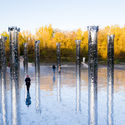
The Swiss Pavilion, Designed by Manuel Herz Architekten, Explores Lightweight Materials at Expo Osaka 2025 - Image 1 of 4The Swiss Pavilion, Designed by Manuel Herz Architekten, Explores Lightweight Materials at Expo Osaka 2025 - Image 2 of 4The Swiss Pavilion, Designed by Manuel Herz Architekten, Explores Lightweight Materials at Expo Osaka 2025 - Image 3 of 4The Swiss Pavilion, Designed by Manuel Herz Architekten, Explores Lightweight Materials at Expo Osaka 2025 - Image 4 of 4The Swiss Pavilion, Designed by Manuel Herz Architekten, Explores Lightweight Materials at Expo Osaka 2025 - More Images+ 15

Kampala on a Global Stage: Doreen Adengo’s Cross-Disciplinary Legacy

Subscriber Access | 

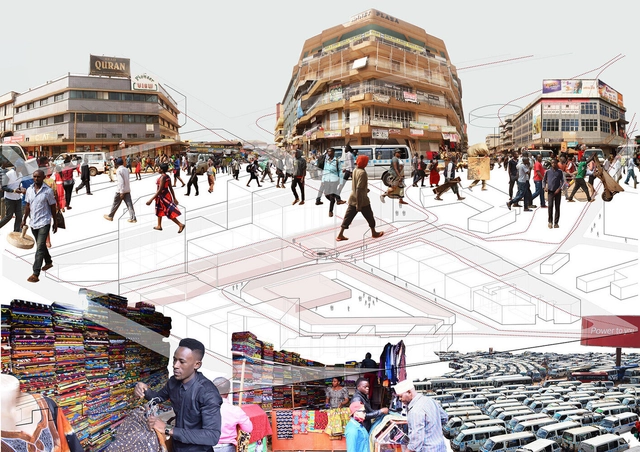
Doreen Adengo, Ugandan architect and trailblazer, passed away on July the 22nd of this year, after battling a long-term illness. She founded Adengo Architecture, a studio based out of her home city of Kampala. A designer who studied in the United States, worked in firms in New York, Washington, and London, and was teaching at Uganda Martyrs University – her legacy is nothing short of extraordinary. It is a legacy that spans disciplines and geographies – but a legacy, too, that is deeply rooted in the context of Africa, Uganda, and Kampala.

Kampala on a Global Stage: Doreen Adengo’s Cross-Disciplinary Legacy - Image 1 of 4Kampala on a Global Stage: Doreen Adengo’s Cross-Disciplinary Legacy - Image 2 of 4Kampala on a Global Stage: Doreen Adengo’s Cross-Disciplinary Legacy - Image 3 of 4Kampala on a Global Stage: Doreen Adengo’s Cross-Disciplinary Legacy - Image 4 of 4Kampala on a Global Stage: Doreen Adengo’s Cross-Disciplinary Legacy - More Images+ 7

On the Ongoing Hostilities: Architectural Institutions Rally in Support of Ukraine

Subscriber Access | 

On the 24th of February 2022, Russia launched a large-scale invasion of Ukraine. Set to become Europe’s largest refugee crisis and armed conflict in this century, so far, this war has mobilized people across the world in order to exert pressure on authorities and put a stop to the armed hostilities. Individuals, as well as institutions in the architectural field, have taken part in these acts of solidarity, issuing statements, condemning actions, and even halting their work in Russia. From the UIA to MVRDV to Russian Institutions such as Strelka, the architecture world is denouncing the acts of violence and supporting an immediate cease of fire.

On the Ongoing Hostilities: Architectural Institutions Rally in Support of Ukraine - Image 1 of 4On the Ongoing Hostilities: Architectural Institutions Rally in Support of Ukraine - Image 2 of 4On the Ongoing Hostilities: Architectural Institutions Rally in Support of Ukraine - Image 3 of 4On the Ongoing Hostilities: Architectural Institutions Rally in Support of Ukraine - Image 4 of 4On the Ongoing Hostilities: Architectural Institutions Rally in Support of Ukraine - More Images

Faith and Light: The Architecture of Judaism

Subscriber Access | 

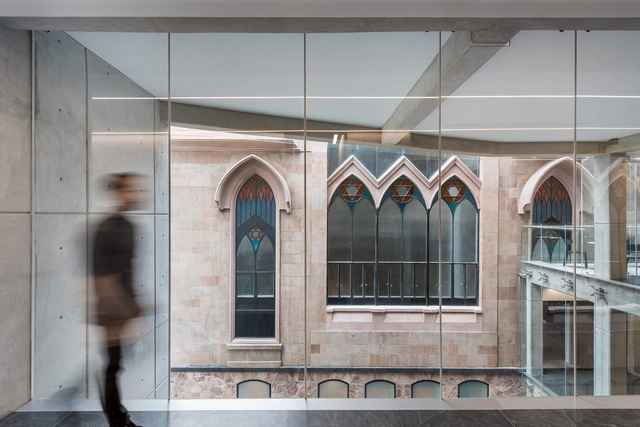
Few religions have as much history and symbolism as Judaism. As the world's oldest monotheistic religion, it dates back nearly 4,000 years. In Judaism, architecture and houses of worship serve as places not only for liturgical services but also for assembly and study. Today, architects are rethinking the design of synagogues and community gathering spaces to celebrate Judaism, reflection and community. 

Faith and Light: The Architecture of Judaism - Image 1 of 4Faith and Light: The Architecture of Judaism - Image 2 of 4Faith and Light: The Architecture of Judaism - Image 3 of 4Faith and Light: The Architecture of Judaism - Image 4 of 4Faith and Light: The Architecture of Judaism - More Images+ 6

Changing the Paradigms of Memorialization: the Ongoing Story Behind the Babyn Yar Holocaust Memorial Center

Subscriber Access | 

Babyn Yar, a ravine in the Ukrainian capital Kyiv, witnessed the killing of more than 33,000 Jewish men, women, and children, on September 29 and 30, 1941. The site of one of the largest single massacres perpetrated by occupying German troops against Jews during World War II, Babyn Yar became a symbol of the Holocaust by Bullets.

While the main tragic event took place in 1941, throughout the occupation, the site was used as a killing location by the German forces. In fact, it is reported that 70 to 100 000 people lost their lives in Babyn Yar. With no architecture to the tragedy and only a remaining “broken” landscape, people struggled with achieving memorialization and public recognition. 

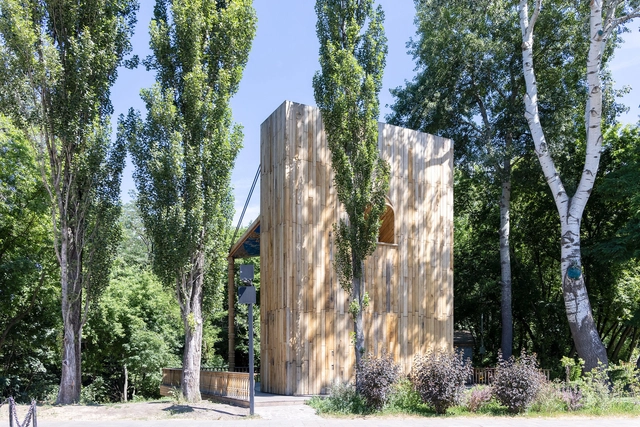
Changing the Paradigms of Memorialization: the Ongoing Story Behind the Babyn Yar Holocaust Memorial Center - Image 1 of 4Changing the Paradigms of Memorialization: the Ongoing Story Behind the Babyn Yar Holocaust Memorial Center - Image 2 of 4Changing the Paradigms of Memorialization: the Ongoing Story Behind the Babyn Yar Holocaust Memorial Center - Image 3 of 4Changing the Paradigms of Memorialization: the Ongoing Story Behind the Babyn Yar Holocaust Memorial Center - Image 4 of 4Changing the Paradigms of Memorialization: the Ongoing Story Behind the Babyn Yar Holocaust Memorial Center - More Images+ 25

Manuel Herz to Design Curvilinear Expansion of Rural Senegal Hospital

Manuel Herz has been chosen to design the expansion of the Tambacounda Hospital in rural Senegal, conceived and funded by the Josef and Anni Albers Foundation and American Friends of Le Korsa.

The extension is viewed as an urgent project to address overcrowding in the vital facility, with the demands of 20,000 annual patients resulting in hot, overcrowded communal spaces, and children sharing beds in wards. The Foundation described Manuel Herz as the “unanimous choice” with an approach showing “a mix of visual flair, practical understanding, and profound humanitarianism.”

Manuel Herz to Design Curvilinear Expansion of Rural Senegal Hospital - Image 1 of 4Manuel Herz to Design Curvilinear Expansion of Rural Senegal Hospital - Image 2 of 4Manuel Herz to Design Curvilinear Expansion of Rural Senegal Hospital - Featured ImageManuel Herz to Design Curvilinear Expansion of Rural Senegal Hospital - Image 3 of 4Manuel Herz to Design Curvilinear Expansion of Rural Senegal Hospital - More Images

Exhibition at Chicago's Graham Foundation to Examine African Modernism

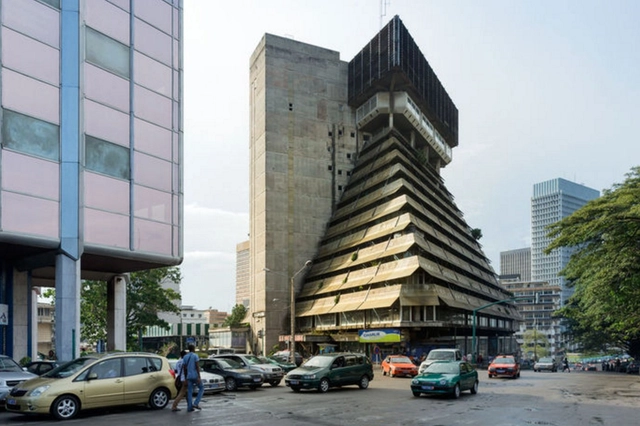
A new exhibition opening later this month at Chicago's Graham Foundation seeks to explore the complex history and legacy of modernist architecture in sub-Saharan Africa during the 1960s and 1970s. Architecture of Independence: African Modernism will feature nearly eighty buildings in commissioned photographs by Iwan Baan, Alexia Webster, and Manuel Herz. Alongside archival material, the exhibition "imparts a new perspective on the intersection of architecture and nation-building in Ghana, Senegal, Côte d’Ivoire, Kenya, and Zambia and investigates some of the most compelling yet under-studied examples of 1960s and 1970s architecture worldwide."