1. ArchDaily
  2. mangroves

mangroves: The Latest Architecture and News

The Mangrove as a Wall: Coastal Protection and Urban Development in India

Audio available

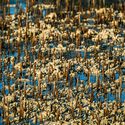
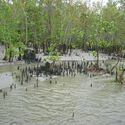
Along India's coast, the boundary between land and sea is not always a line of concrete. In places, it is a forest of tangled roots, tidal channels, and sediment, a landscape that changes character with the water. Mangroves influence how water moves, how shorelines evolve, and how coastal communities experience flood risk. Their role in coastal protection depends on the width and condition of the forest, the movement of tides, and the accumulation of sediment.

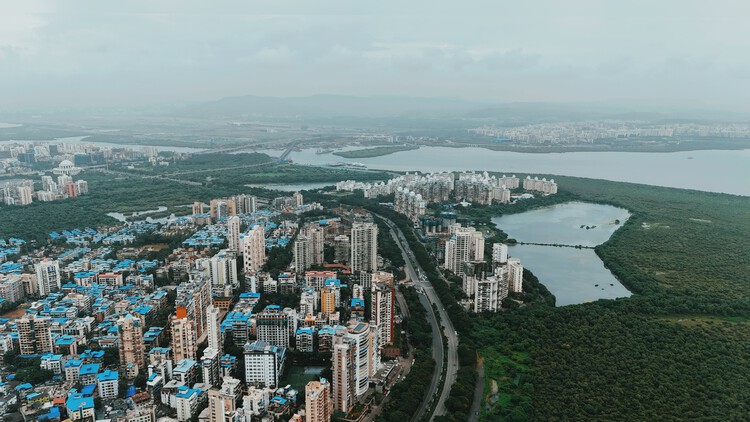
Seawalls and embankments are designed to resist water at a defined boundary. Mangroves work through a different set of processes. Their roots, trunks, and branches create resistance to moving water, while the forest interacts with sediment and tidal flows over time. The two forms of protection are often discussed separately, yet along inhabited coasts they occupy the same territory. Development takes place behind embankments, roads cross tidal landscapes, and mangrove forests persist in the remaining spaces between infrastructure and water. How these elements are arranged can influence the conditions under which coastal protection operates.

The Mangrove as a Wall: Coastal Protection and Urban Development in India - Image 1 of 4The Mangrove as a Wall: Coastal Protection and Urban Development in India - Image 2 of 4The Mangrove as a Wall: Coastal Protection and Urban Development in India - Image 3 of 4The Mangrove as a Wall: Coastal Protection and Urban Development in India - Image 4 of 4The Mangrove as a Wall: Coastal Protection and Urban Development in India - More Images+ 6

Choreographing Lagos: Dele Adeyemo on Dance, Cosmology, and Spatial Practices

Audio available

Having thrown a stone today, Eshu kills a bird of yesterday. The Yoruba proverb tells both a story of reparation and of ancestrality by joyfully bending spacetime conventions and accessing subjects from the past with present actions. The saying offers a poetic entry point to broader West African traditions and to the practice of Scottish-Nigerian artist and architect Dele Adeyemo. Named one of the winners of the ArchDaily 2025 Next Practices Awards, Adeyemo's work brings together ecology, spirituality, dance, and territory, examining how embodied cultural practices can generate alternative spatial possibilities within and against the architecture of racial capitalism.

Born in Nigeria and raised in the United Kingdom, Adeyemo has been visiting Lagos for many years. Through this engagement, he has developed an extensive body of research on collective movement practices that predate capitalism and offer distinct, often imaginative spatial intelligences operating alongside dominant systems. ArchDaily spoke with Dele about his artistic and pedagogical practices, and how he identifies design sophistication where architects often perceive deficiency.

Choreographing Lagos: Dele Adeyemo on Dance, Cosmology, and Spatial Practices - Image 1 of 4Choreographing Lagos: Dele Adeyemo on Dance, Cosmology, and Spatial Practices - Image 2 of 4Choreographing Lagos: Dele Adeyemo on Dance, Cosmology, and Spatial Practices - Image 3 of 4Choreographing Lagos: Dele Adeyemo on Dance, Cosmology, and Spatial Practices - Image 4 of 4Choreographing Lagos: Dele Adeyemo on Dance, Cosmology, and Spatial Practices - More Images+ 20

CEMEX + Aptum Architecture's Floating Concrete Structures Act as Mangroves for Shorelines

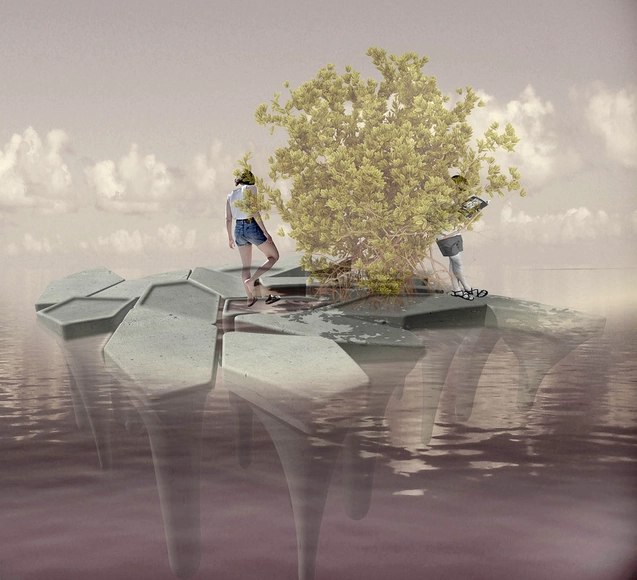
Mangroves are vital for stabilizing shorelines, but their recent depletion presents impending doom for coastal habitats. 

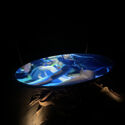
Aptum Architecture and CEMEX Research Group might have a solution. Their collaborative project, Rhizolith Island (Isla Rhizolith), is a prototype that explores the potential for floating concrete structures to revitalize deteriorating shorelines. The structure was just installed in Cartagena, Columbia as part of the RC 2016 (Reunion del Concreto), an international Expo and Academic Conference on Concrete.

CEMEX + Aptum Architecture's Floating Concrete Structures Act as Mangroves for Shorelines - Image 1 of 4CEMEX + Aptum Architecture's Floating Concrete Structures Act as Mangroves for Shorelines - Image 2 of 4CEMEX + Aptum Architecture's Floating Concrete Structures Act as Mangroves for Shorelines - Image 3 of 4CEMEX + Aptum Architecture's Floating Concrete Structures Act as Mangroves for Shorelines - Image 4 of 4CEMEX + Aptum Architecture's Floating Concrete Structures Act as Mangroves for Shorelines - More Images+ 8