1. ArchDaily
  2. Leadenhall Building

Leadenhall Building: The Latest Architecture and News

London Architecture City Guide: 20 Modern and Contemporary Attractions to Explore in UK’s Cultural and Financial Powerhouse

Subscriber Access | 

London’s architectural history is a rich tapestry that weaves together styles of various periods and influences. In the post-war era, the city experienced a surge in modern architecture, becoming a canvas for experimentation. New stylistic movements saw their expression crystalized through buildings such as Richard RogersLloyd’s Building, one of the most representative examples of High-Tech architecture, or the Barbican Estate, a large-scale housing estate that became the iconic structure for Brutalist architecture.

London’s contemporary architectural landscape continues to evolve, in part through the works of internationally-recognized architects such as Norman Foster, Zaha Hadid, and Thomas Heatherwick. This varied blend of styles, and ways of expression reflects the city’s ability to embrace architectural movements of global significance. As a center for innovation, London continues to attract established and emerging architects who shape its skyline and contribute to its international architectural discourse, with each new building offering a glimpse into the ever-changing nature of London’s urban fabric.

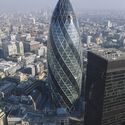
London Architecture City Guide: 20 Modern and Contemporary Attractions to Explore in UK’s Cultural and Financial Powerhouse - Image 1 of 4London Architecture City Guide: 20 Modern and Contemporary Attractions to Explore in UK’s Cultural and Financial Powerhouse - Image 2 of 4London Architecture City Guide: 20 Modern and Contemporary Attractions to Explore in UK’s Cultural and Financial Powerhouse - Image 3 of 4London Architecture City Guide: 20 Modern and Contemporary Attractions to Explore in UK’s Cultural and Financial Powerhouse - Image 4 of 4London Architecture City Guide: 20 Modern and Contemporary Attractions to Explore in UK’s Cultural and Financial Powerhouse - More Images+ 26

Richard Rogers Restructures Practice Prior To Relocation

The Architects' Journal have reported that London based practice Rogers Stirk Harbour + Partners (RSHP), headed by Richard Rogers, has refined its in-house structure "as the practice continues to implement its long-term succession plan." The practice, who will move into their new home on level fourteen of the Leadenhall Building following its completion last year, will operate one studio led by Richard Rogers alongside partner Simon Smithson; another by Graham Stirk with partner Richard Paul; and a third headed by Ivan Harbour.

Video: The Making of RSHP's Leadenhall Building

In celebration of Rogers Stirk Harbour + Partners’ relocation to their newly constructed Leadenhall Building, the London-based practiced has released a short film that captures the “making of” the 52-story, 225-meter skyscraper. RSHP, now occupying the building’s 14th floor, is said to be proud to be Leadenhall’s latest tenants:

“After 30 years at Thames Wharf Studios, it is important for us to be moving into a building that reflects the ethos and evolution of our design practice, clearly stated in its urban relationship with the Lloyd’s building opposite,” says the partners of RSHP. “We will begin this new phase of our history in a building that already feels like home but allows us the advantages of a contemporary, flexible office space in a prime location in the increasingly vibrant and exciting City of London.”

The building, popularly referred to as the "Cheesegrater," was completed in September of last year.

Video: First Look Inside Rogers Stirk Harbour + Partner's "Cheesegrater"

Subscriber Access | 

In a short film for The Guardian Lead Architect and Partner of Rogers Stirk Harbour + Partners, Graham Stirk, tours Robert Booth around the almost-complete Leadenhall Building. The building is referred to as a relative of it's neighbour, Lloyds of London, which was completed by Richard Rogers's practice in 1986. Leadenhall, dubbed the "Cheesegrater" due to its angled façade, is twice the height of Lloyds and is considered to be the physical manifestation of the evolution of Rogers' architectural and tectonic language. Although less "structurally showy" than its counterpart, the building is still unconventionally bold when it comes to structural expression.