1. ArchDaily
  2. Laser Scanning

Laser Scanning: The Latest Architecture and News

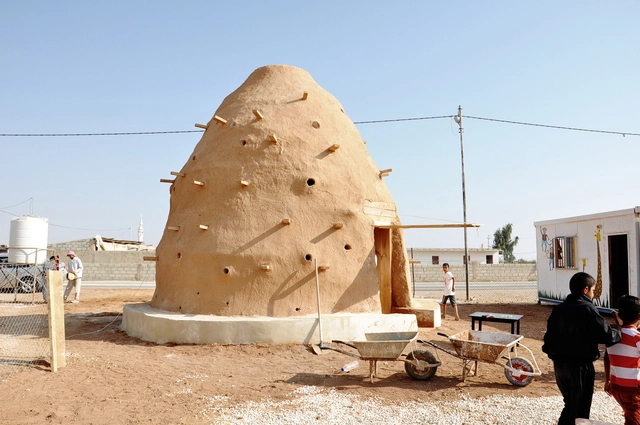
Vernacular Building and AI: Can Data Alone Bridge the Gap?

As artificial intelligence (AI) becomes increasingly embedded in society, it's essential to pause and reflect on the foundations that sustain it—and the dimensions to which it extends. At the heart of AI's learning are datasets, whose structure and content shape how these systems interpret and respond to the world. This reliance creates a deep interdependence—one that not only informs AI's capabilities but also defines its potential blind spots. In light of this, we must ask: What forms of understanding might this process exclude, especially those not easily captured in digital form?

Vernacular Building and AI: Can Data Alone Bridge the Gap? - Image 1 of 4Vernacular Building and AI: Can Data Alone Bridge the Gap? - Image 2 of 4Vernacular Building and AI: Can Data Alone Bridge the Gap? - Image 3 of 4Vernacular Building and AI: Can Data Alone Bridge the Gap? - Image 4 of 4Vernacular Building and AI: Can Data Alone Bridge the Gap? - More Images+ 15

Using 3D Modeling to Decode the Mathematics of Roman Architecture

Subscriber Access | 

From the Colosseum's vast arches to the Pantheon's perfect dome, Roman architecture fused engineering precision with expressive form. These buildings reshaped the urban life of antiquity but also left traces that continue to guide contemporary design. Yet much of the knowledge behind their construction has been lost or obscured over time, like the geometry, the proportions, and methods. Today, new technologies are helping to recover that hidden layer of architectural intelligence, offering fresh perspectives on how Romans built with such ingenuity.

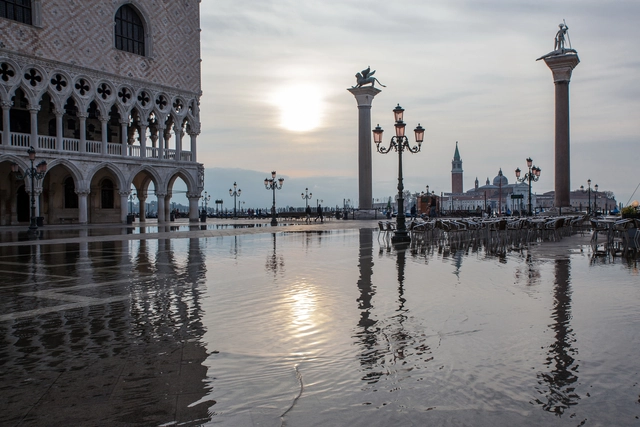
New Technologies Might Save Venice’s Cultural Heritage from the Floods

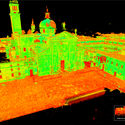
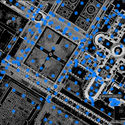
Factum Foundation, a nonprofit dedicated to the use of digital technology for cultural heritage conservation, in collaboration with the Fondazione Giorgio Cini, Ecole Polytechnique Fédérale de Lausanne (EPFL) and Iconem have recorded the Island of San Giorgio Maggiore, in Venice, Italy, in its entirety. For more than 10 days, the team using photogrammetry and LiDAR technologies scanned the 10-hectare island. The project entitled ARCHiVe, linked with EPFL's Venice Time Machine aims to "efficiently and effectively aid in the preservation of Venice's fragile cultural heritage".

New Technologies Might Save Venice’s Cultural Heritage from the Floods - Image 1 of 4New Technologies Might Save Venice’s Cultural Heritage from the Floods - Image 2 of 4New Technologies Might Save Venice’s Cultural Heritage from the Floods - Image 3 of 4New Technologies Might Save Venice’s Cultural Heritage from the Floods - Image 4 of 4New Technologies Might Save Venice’s Cultural Heritage from the Floods - More Images+ 24

Timescanners: Digital Scanners Explain Historic Architecture's Engineering Mysteries

Subscriber Access | 

Thanks to state of the art mobile laser scanners, scientists can now document the greatest architecture in history, from The Pyramids to St. Paul's Cathedral, as digital models with pinpoint accuracy. The digital representations take you inside, around and through the buildings, which means researchers can study and analyze sites without being in the field. The technology is already proving its worth - watch the trailer above to see how Petra was constructed and more!