1. ArchDaily
  2. Laboratory of Architecture #3

Laboratory of Architecture #3: The Latest Architecture and News

Subscriber Access

Spiraling Up: 6 Projects Using Spiral Ramps for Vertical Movement

Audio available

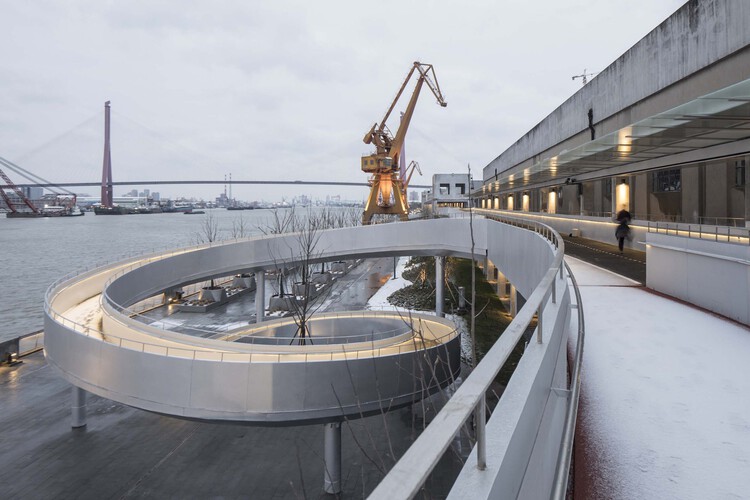
In most architectural projects, vertical circulation is expressed as a purely functional element, tucked away behind fire-rated doors or an elevator core. However, sometimes architects also use spirals when trying to resolve site elevation changes. Given the right scale, these elements allow for a more artistic formal expression that serves both utilitarian and aesthetic purposes without relying on mechanical lifts or stairwells. Structural systems like cantilevered steel trusses and reinforced concrete decks allow these spiral elements to extend outward as sheltered entry canopies or wind around open central atriums. Functionally, these circulation paths may be expressed in several ways: as stairs like the Itamaraty Palace in Brasilia, or as ramps, which can offer the possibility to reduce mobility barriers for visitors. In both cases, the spiral can provide smooth transitions across varied floor levels while maintaining an unobstructed line-of-sight throughout the program.
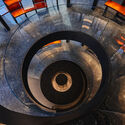
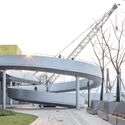
Spiraling Up: 6 Projects Using Spiral Ramps for Vertical Movement - Imagen 1 de 4Spiraling Up: 6 Projects Using Spiral Ramps for Vertical Movement - Imagen 2 de 4Spiraling Up: 6 Projects Using Spiral Ramps for Vertical Movement - Imagen 3 de 4Spiraling Up: 6 Projects Using Spiral Ramps for Vertical Movement - Imagen 4 de 4Spiraling Up: 6 Projects Using Spiral Ramps for Vertical Movement - More Images+ 9

Art Nouveau Revisited: Craft, Materiality, and Detail in Contemporary Hospitality Spaces

Audio available

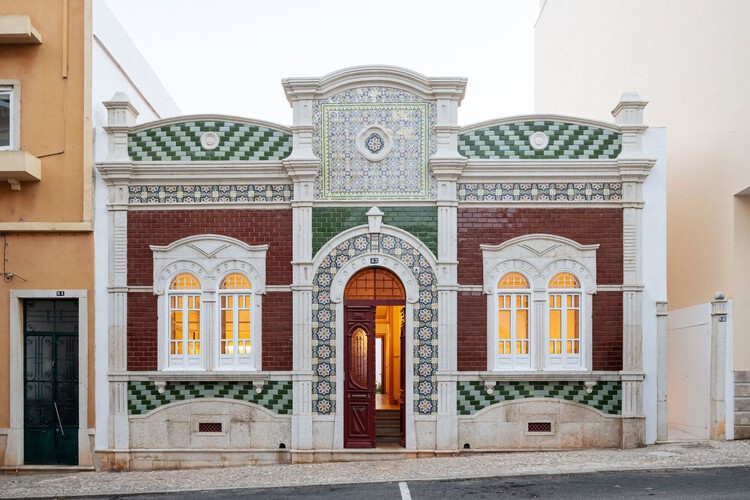
At the turn of the 20th century, parallel, yet connected movements around the world ushered in a new style and architectural era. From the Arts and Crafts in England, Art Nouveau, then Art Deco in France, or the Jugendstil in Germany/Austria, these design and artistic developments spread around the world and took on different forms depending on their context. The basis remained similar, though, with a focus on artisanal value and craftsmanship; the use of wood, glass, and various metals; the integration of organic forms into the exterior facade and interior structure; and the refined incorporation of ornamentation as an architectural element, often as vegetation or geometric patterns.

Art Nouveau Revisited: Craft, Materiality, and Detail in Contemporary Hospitality Spaces - 1 的图像 4Art Nouveau Revisited: Craft, Materiality, and Detail in Contemporary Hospitality Spaces - 2 的图像 4Art Nouveau Revisited: Craft, Materiality, and Detail in Contemporary Hospitality Spaces - 3 的图像 4Art Nouveau Revisited: Craft, Materiality, and Detail in Contemporary Hospitality Spaces - 4 的图像 4Art Nouveau Revisited: Craft, Materiality, and Detail in Contemporary Hospitality Spaces - More Images+ 17