Wellbeing is no longer confined to exclusive resorts, spas, or hospitality settings. Today, it has become an essential part of contemporary living, inspiring homeowners to create private spaces dedicated to relaxation and personal care. Collections such as LEMI's Home Spa Collection explore this growing interest in residential wellness through a selection of massage beds and relaxation loungers.
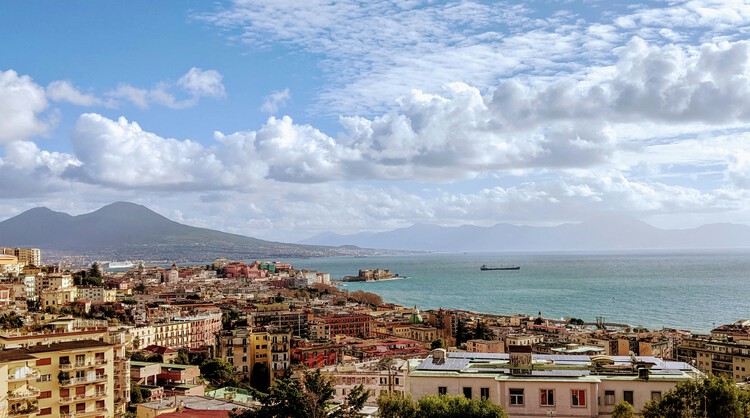
Set on the edge of the Mediterranean and shaped by centuries of continuous occupation, Naples is a city where architecture is inseparable from time. Layers of Greek foundations, Roman infrastructures, medieval churches, Baroque palaces, and Modern interventions coexist within a dense and compact urban fabric. Naples reveals itself as an accumulation of structures, adaptations, and reuse, where buildings are rarely isolated objects and more often part of a larger spatial, social, and historical system.
The city's architecture is deeply tied to its geography and construction culture. Built between the sea and volcanic terrain, Naples developed vertically and inward, relying on courtyards, narrow streets, and thick masonry walls to mediate light, climate, and movement. Underground spaces, reused Roman cisterns, and carved tuff structures extend the city below ground, creating a parallel architectural dimension that supports daily life above.
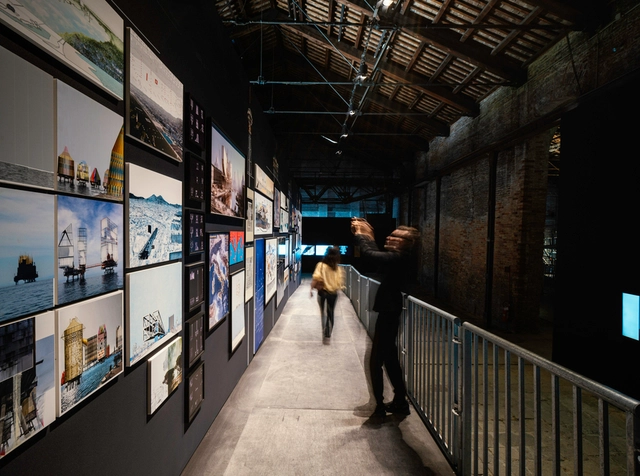
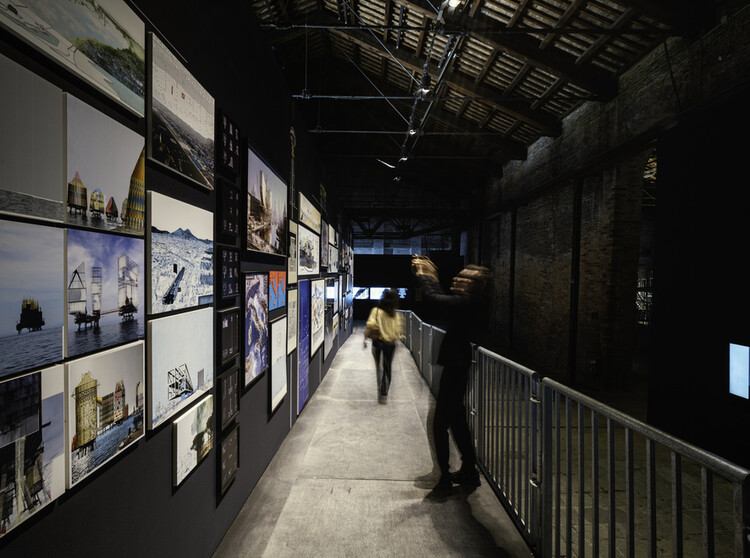
"La Quadreria" interior photo gallery. Italian Pavilion at the 2025 Venice Architecture Biennale. Image Courtesy of PCM Studio di Paola C. Manfredi
The Italian Pavilion at the 19th International Architecture Exhibition – La Biennale di Venezia is situated in the Tese delle Vergini of the Arsenale and is promoted by the Directorate-General for Contemporary Creativity of the Italian Ministry of Culture. This year, the Pavilion hosts architectural, scientific, and cultural reflections on the Mediterranean Sea and its neighboring oceans, in an exhibition titled "Terrae Aquae. Italy and the Intelligence of the Sea", curated by Architect and Professor Guendalina Salimei. The exhibition brings together projects from diverse actors in Italian society through an open call, whose objective was to rethink the boundary between land and water as an integrated system of architecture, infrastructure, and landscape. In response to the Biennale's central theme, the exhibition aims to stimulate the awakening of a collective intelligence capable of triggering a renewal in that relationship, starting from the Italian coast and expanding globally.
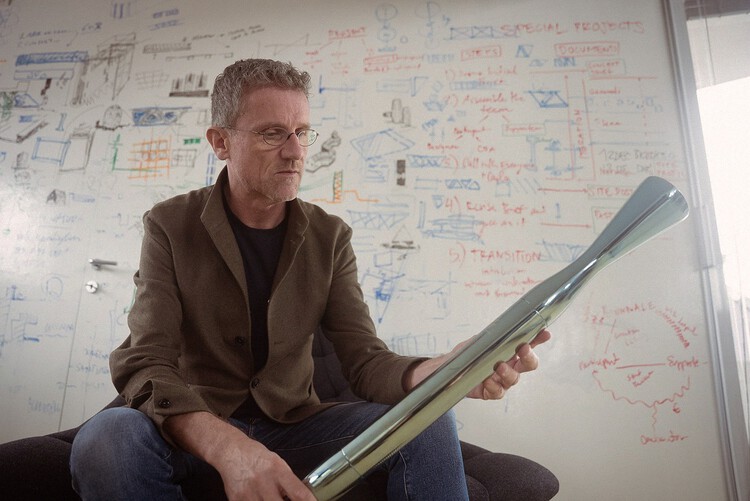
Carlo Ratti, the designer of the Olympic and Paralympic Winter Games Milano Cortina 2026 torch. Image Courtesy of Milano Cortina 2026
The official torches, named Essential, for the Milano Cortina 2026: Winter Olympics and Paralympics, were unveiled in parallel events at the Triennale di Milano and Expo 2025 in Osaka. Designed by Carlo Ratti Associati in collaboration with Eni and its subsidiary Versalis, Essential takes a minimalist approach that foregrounds the flame as the central element. The project blends Italian design with engineering precision, resulting in a torch that serves as both a symbolic and technical object. Its open structure, uncommon in torch design, allows viewers to see how the flame is produced, revealing the typically hidden mechanisms at work.
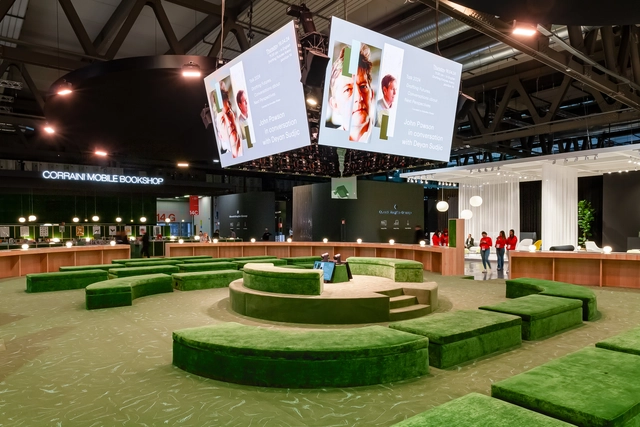
The 63rd edition of the Salone del Mobile will take place in Milan from April 8 to 13, 2025. Dating back to 1961, Salone del Mobile is a trade fair that covers a wide range of interior design products. The theme of this edition focuses on exploring the deep connections between humanity and design, aiming to establish the event as a creative platform beyond its commercial functions. The fair also serves as a laboratory for experimentation and the exchange of ideas, where new prototypes for furniture and domestic spaces are presented in settings that bring different narratives about ways of living to life. In addition to the furniture exhibition, the event will feature installations, conferences, and workshops, all taking place over the five days at Milan's Rho Fiera fairgrounds.
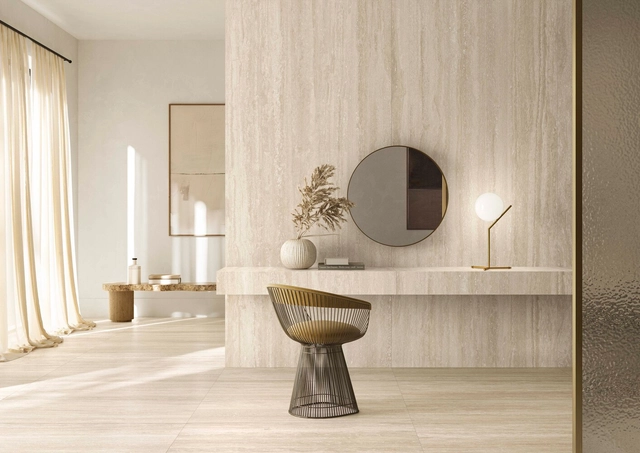
Pietra Tiburtina - Campidoglio. Image Courtesy of Casalgrande Padana
Travertine —known as lapis tiburtinus by the ancient Romans— has endured for centuries as one of the most iconic materials in Italian design heritage. This limestone has left a lasting mark on architectural history, from the monuments of the Roman Empire to contemporary works like the Church of 2000 and the Ara Pacis Museum. Over time, its aesthetic has evolved alongside art and design, adapting to technical advancements while preserving its essence and relevance in modern architecture.
https://www.archdaily.com/1022299/carving-pietra-tiburtina-a-contemporary-approach-to-classic-travertineEnrique Tovar
As we step into the new year, we take a moment to reflect on the lasting impact of celebrated architects, designers, and curators who passed away in 2023. This past year witnessed the departure of influential figures who, through their talent and dedication, left an indelible mark on the built environment. Some embarked on their careers with bold gestures that reshaped architectural paradigms, while others worked quietly, placing a profound focus on the human experience or the invisible figures of out profession.
Italian Designer and architect Andrea Branzi passed away on October 9, 2023. Born in Florence in 1938, Branzi co-founded the world-renowned architecture studio Archizoon Associati. The studio also consisted of Gilberto Corretti, Paolo Deganello, and Massimo Morozzi, and then were joined by Dario and Lucia Bartolini. Andrea Branzi also played a significant role in establishing the iconic Domus Academy and served as a professor and chairman at the Politecnico di Milano’s School of Interior Design.
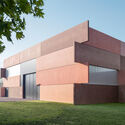
Architecture studio ELASTICOFarm, led by Stefano Pujatti, has been awarded the Premio Italiano di Architettura (Italian Architecture Prize), promoted by the Triennale di Milano and MAXXI. The award, now in its fourth edition, is received in recognition of their S-LAB project, a new building in Turin, Italy, for the Istituto Nazionale di Fisica Nucleare (INFN). The prize highlights works of architecture with high design quality and an attentive approach to innovation and the social role of architecture.
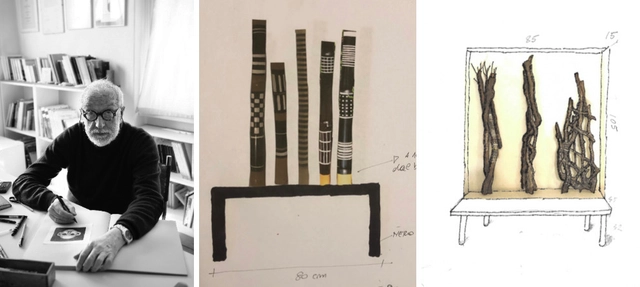
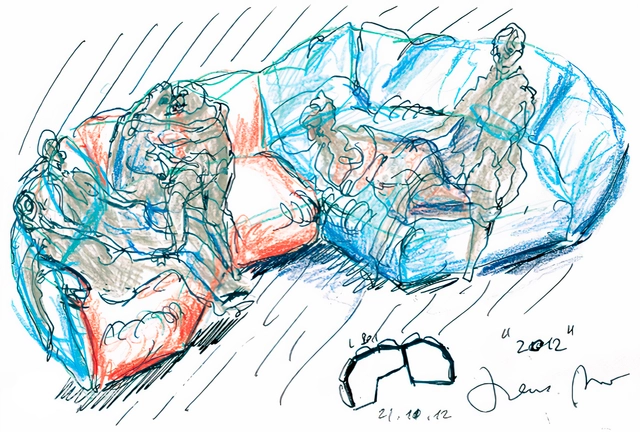
Standard, project sketches. Francesco Binfaré, 2012. Image Courtesy of Edra
The earliest vestiges of furniture in society can be traced back to the Fourth Dynasty of Egypt when the armchair of Queen Hetepheres I (ca. 2600 BC) was discovered. This armchair marked a significant milestone in the history of furniture. It is not surprising, therefore, that the chronology of furniture is intertwined with architectural, pictorial, and sculptural expressions of the time, where these elements often act as witnesses and, in exceptional cases, as central objects in the history of art and design.
Furniture consists of everyday objects designed to meet specific needs in our daily lives. However, sometimes they transcend their practical function and take on an autonomous presence. A piece of furniture has no nobler purpose than its interaction with human beings, therefore, separating these objects from their utilitarian dimension becomes an act of disruption. As a result, designers such as Francesco Binfaré have described sofas as “The most mysterious object amongst the furniture populating the interior design universe”. In this context, Edra creates unique objects that blend art and industrial production, reflecting contemporary domestic landscapes and experimenting with new shapes and materials.
https://www.archdaily.com/1002698/the-renaissance-of-the-sofa-innovations-atypical-shapes-and-anthropometryEnrique Tovar
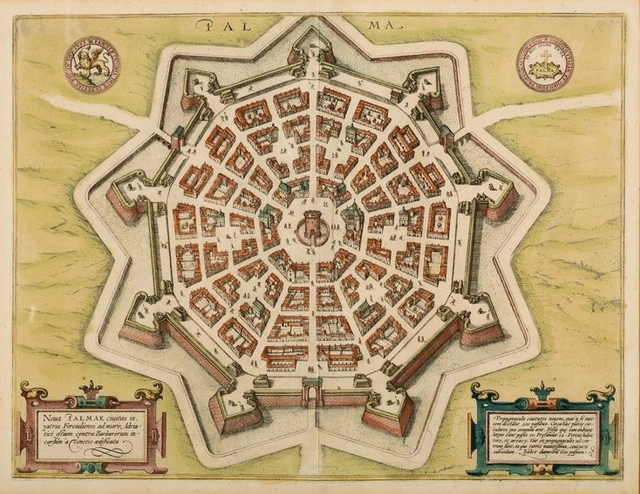
The concept of an “ideal city” is something that is often talked about today, as we look towards the future and think about what aspects of urban life we feel are most important for residents to thrive in a healthy community. However, ideal cities were conceived during the Italian Renaissance, as planners and architects prioritized rationale in their designs focusing on human values, urban capacities, and the recursive waves of cultural and artistic revolutions that influenced large-scale planning schemes.
Interior spaces are a constellation of multiple elements framed by a building’s architecture. Furniture, in particular, plays a key role in defining a space, affecting the uses, comfort level, and feel of the space. Creating a coherent design that maximizes function and activates a living space requires furniture pieces that are not only aesthetically pleasing to begin but are also timeless - creating a dialogue between furniture and architecture.
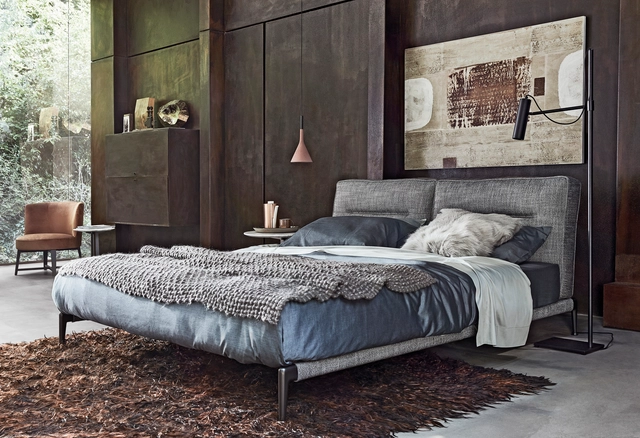
A furniture piece can be described as an extension of architecture, creating a direct connection between structure and inhabitants. The piece's geometries must mimic or complement the proportions and shapes incorporated into the architecture while accommodating the physical needs of the individual. A notable Italian furniture design company, Flexform, has utilized many of these design principles in the company’s portfolio of contemporary style furniture. Originally the handmade crafts of the Galimberti brothers in 1959, ‘Flexform di Galimberti’s’ early success led the company to expand and grow - allowing many of timeless pieces to be incorporated into the fabric of international architecture.
Each year, thousands of tourists flock to the Italian region of Tuscany to view works of architectural mastery. Renowned architectural figures such as Michelangelo and Brunelleschi transformed Tuscan cities to be stages of cultural rebirth during the 14th-17th century. These times, however, have passed. Today, Tuscany is faced with problems such as the decline of suburbs, abandoned buildings, and property speculation. The modern Italian architecture scene is in decline, and the country is experiencing an oversupply of architects, requiring many to emigrate in search of work.
Can the spirits of these Renaissance architectural masterminds be emulated today in modern Tuscany? This is exactly the topic that cultural association 120g explores in their new documentary, Tuscanyness. The film depicts how this nature of cultural rebirth is alive today through the architects born and educated in the Tuscan region. Here, emerging architects have the unique opportunity to listen to the teachings of the past to inform the architecture of the future.
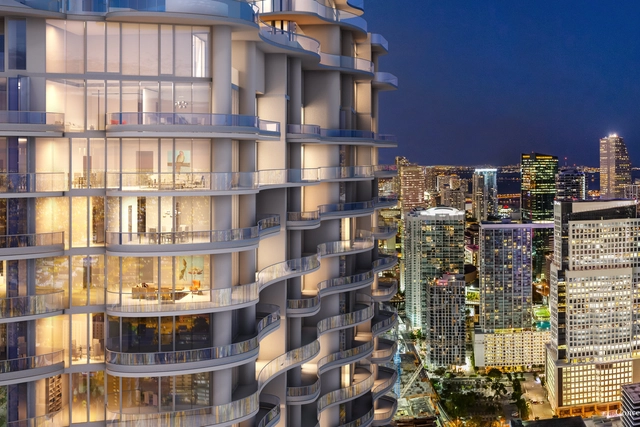
A soaring new skyscraper dubbed the "Brickell Flatiron" is set to rise 213 meters above the skyline in Brickell, Miami. Designed by Luis Revuelta, the tower features an organic floorplate profile with wide elliptical terraces, maximizing sweeping views of Biscayne Bay and downtown Miami.
These curvilinear, flowing lines are complemented by the interiors, designed by acclaimed Italian architect and designer Massimo Iosa Ghini of Iosa Ghini Associati. The Italian craftsmanship and renaissance-revival air of Iosa Ghini's design together with the clean functionality of Revuelta's architecture, presenting two harmonious elements of design in Miami; old school glamor, and contemporary luxury.