1. ArchDaily
  2. International Exposition

International Exposition: The Latest Architecture and News

A Look at the 45 Award-Winning Pavilions of Expo 2025 Osaka

About a month after the closing of Expo 2025 Osaka, the designs and constructions presented at the world's fair remain as a legacy. While the Bahrain Pavilion, designed by Lina Ghotmeh Architecture, drew particular attention this year for receiving double recognition, it was one among many awarded projects. During the awards ceremony held on the penultimate night of the event, a total of 45 awards were presented among 165 participating countries. The Official Participant Awards are granted according to pavilion size and type, recognizing excellence in Architecture and Landscape (for self-built pavilions only), External Design (for module pavilions only), Exhibition Design, Theme Development, and Sustainability. The recipients were selected by an international jury of nine experts who visited all national and thematic pavilions during two evaluation sessions in May and October 2025. The following overview presents all 45 pavilions distinguished in the five categories of the Official Participant Awards.

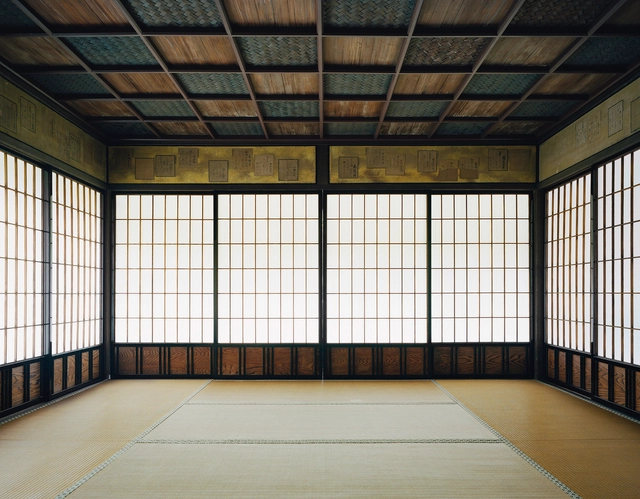
A Look at the 45 Award-Winning Pavilions of Expo 2025 Osaka - Image 1 of 4A Look at the 45 Award-Winning Pavilions of Expo 2025 Osaka - Image 2 of 4A Look at the 45 Award-Winning Pavilions of Expo 2025 Osaka - Image 3 of 4A Look at the 45 Award-Winning Pavilions of Expo 2025 Osaka - Image 4 of 4A Look at the 45 Award-Winning Pavilions of Expo 2025 Osaka - More Images+ 15

Staging Culture: The Architect as Curator

Architecture has never been confined to the act of building. It constantly negotiates between material practice and intellectual reflection, yet throughout the twentieth and twenty-first centuries, many architects felt that the built project alone was insufficient to address the full range of questions facing the discipline. Economic pressures, political contexts, and programmatic demands often narrowed the scope of practice.

Exhibitions and curatorial platforms, by contrast, created spaces of experimentation and critique, opening arenas where architecture could interrogate itself, where its past could be reinterpreted, its present challenged, and its future projected. In this tension, the figure of the architect-curator emerged, treating curating itself as a form of design — not of walls or facades, but of discourse, narratives, and frameworks of meaning.

Staging Culture: The Architect as Curator - Image 1 of 4Staging Culture: The Architect as Curator - Image 2 of 4Staging Culture: The Architect as Curator - Image 3 of 4Staging Culture: The Architect as Curator - Image 4 of 4Staging Culture: The Architect as Curator - More Images+ 32

Architecture as Soft Power: Cultural Diplomacy and Its Role in Shaping Architectural Production

Cultural diplomacy refers to the use of cultural expression and creative exchange to foster understanding and build relationships between nations. In this context, architecture has long played a distinctive role. Beyond its functional and aesthetic dimensions, it serves as a medium of communication, a language through which countries express identity, values, and ambition on the global stage.

Architecture operates as a form of soft power — persuasive rather than coercive — enabling nations to project influence through material presence. From modernist embassies in the post-war era to monumental pavilions at world expositions, governments and institutions have recognized the built environment's potential to shape perception. By commissioning prominent architects and adopting specific design languages, countries have used architecture to signal modernity, tradition, innovation, or stability.

Architecture as Soft Power: Cultural Diplomacy and Its Role in Shaping Architectural Production - Image 1 of 4Architecture as Soft Power: Cultural Diplomacy and Its Role in Shaping Architectural Production - Image 2 of 4Architecture as Soft Power: Cultural Diplomacy and Its Role in Shaping Architectural Production - Image 3 of 4Architecture as Soft Power: Cultural Diplomacy and Its Role in Shaping Architectural Production - Image 4 of 4Architecture as Soft Power: Cultural Diplomacy and Its Role in Shaping Architectural Production - More Images+ 20

Expo 2030 Riyadh Unveils First Details of Its Masterplan

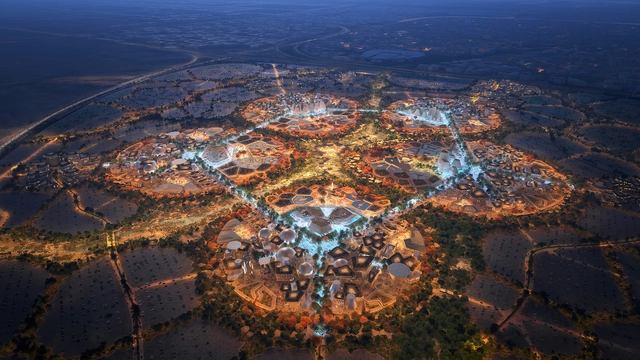
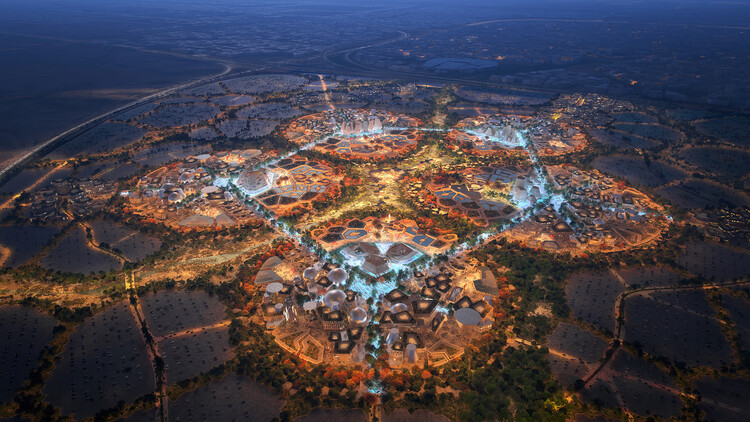
The Bureau International des Expositions (BIE) General Assembly in Paris has officially approved the Registration Dossier for Expo 2030 Riyadh, formally confirming Saudi Arabia as the host of the upcoming World Expo. With this milestone, the next phase of preparations will begin, including the official invitation of participating countries through diplomatic channels. Coinciding with the approval, the initial masterplan for the Expo site designed by LAVA, the Laboratory for Visionary Architecture, has been unveiled. Scheduled to take place from October 1, 2030, to March 31, 2031, the event will be held on a site in Riyadh, designed to accommodate more than 40 million visits and host over 195 participating nations.

Expo 2030 Riyadh Unveils First Details of Its Masterplan - Image 1 of 4Expo 2030 Riyadh Unveils First Details of Its Masterplan - Image 2 of 4Expo 2030 Riyadh Unveils First Details of Its Masterplan - Image 3 of 4Expo 2030 Riyadh Unveils First Details of Its Masterplan - Image 4 of 4Expo 2030 Riyadh Unveils First Details of Its Masterplan - More Images

Riyadh, Saudi Arabia's Capital to Host World Expo in 2030

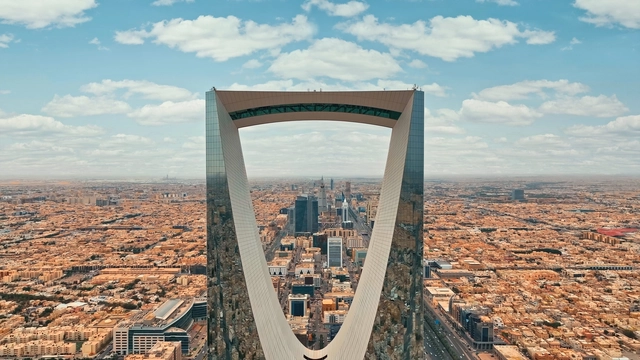
The Bureau International des Expositions (BIE) announced yesterday, on Tuesday, November 28, that Riyadh, the capital city of the Kingdom of Saudi Arabia has been selected to host the 2030 World Expo, by securing the necessary two-thirds majority of votes in the first round. Marking another milestone for the Gulf, following Dubai's Expo 2020 and Qatar's hosting the FIFA World Cup in 2022, this five-yearly event draws millions of visitors and investments. Under the theme, "The Era of Change: Together for a Foresighted Tomorrow", Expo 2030 Riyadh will run between 1 October 2030 and 31 March 2031.

Competing against South Korea's port city of Busan and Rome in Italy, Riyadh won the bid with 119 votes, while Busan received 29 votes, and Rome got 17 votes out of the 182 members of the Paris-based Bureau International des Expositions (BIE). Other explored subjects were the themes of “Transforming Our World, Navigating Toward a Better Future” by Busan and “People and Territories: Regeneration, Inclusion and Innovation”, for Rome.

Demolished and Rebuilt: The Identity of Architectural Replicas

The rights to reconstruct Kisho Kurokawa's iconic Nakagin Capsule Tower are currently sold on one of the largest NFT sites. While the tower’s demolition has begun earlier this year, the auction sells the right to rebuild the structure, in both the metaverse and in real space. The idea of recreating the Metabolic building in a virtual space seems natural. It could allow a larger community to explore an iconic piece of architecture and encourage them to experiment with it, an initiative in line with Metabolist ideals. On the other hand, the idea of reconstructing a demolished historical building in the physical world raises a different set of conflicting emotions. Architectural replicas are not the norm, but their existence raises questions regarding the identity and authenticity of works of architecture.

Demolished and Rebuilt: The Identity of Architectural Replicas - Image 1 of 4Demolished and Rebuilt: The Identity of Architectural Replicas - Image 2 of 4Demolished and Rebuilt: The Identity of Architectural Replicas - Image 3 of 4Demolished and Rebuilt: The Identity of Architectural Replicas - Image 4 of 4Demolished and Rebuilt: The Identity of Architectural Replicas - More Images+ 5

Expo 2020 Dubai: Transitioning to the Future?

Subscriber Access | 

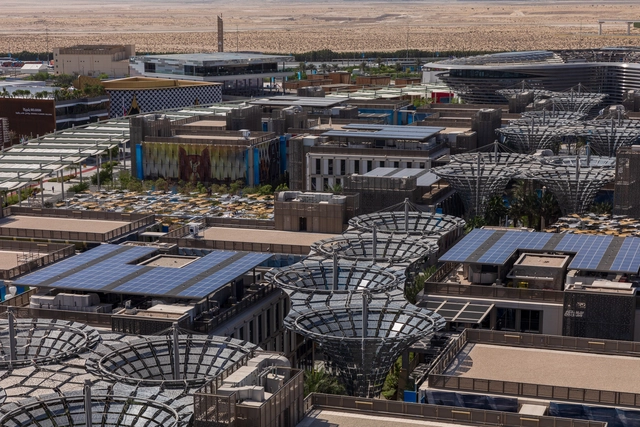
During the past two years spent photographing Expo 2020 Dubai, I was often asked by friends what exactly it was. To align with its closure on the 31st of March, I would like to address that question from two angles. Most readers will be aware that the expo is part of a tradition dating back to the 19th century - a Showcase for companies and countries, a tourist attraction, a testing ground for technical innovation. But it is also a collection of paradigm studies on opportunity, sustainability, and mobility, as well as a lucrative building project creating a new neighbourhood in the Emirates and a future means of dwelling. Perhaps this last frame of reference is the most interesting for it is what most distinguishes this expo from others.

Expo 2020 Dubai: Transitioning to the Future? - Image 1 of 4Expo 2020 Dubai: Transitioning to the Future? - Image 2 of 4Expo 2020 Dubai: Transitioning to the Future? - Image 3 of 4Expo 2020 Dubai: Transitioning to the Future? - Image 4 of 4Expo 2020 Dubai: Transitioning to the Future? - More Images+ 64