1. ArchDaily
  2. Iconic Buildings

Iconic Buildings: The Latest Architecture and News

After Le Corbusier: How Southeast Asia Turned the Satellite City Into a Transit Megaproject

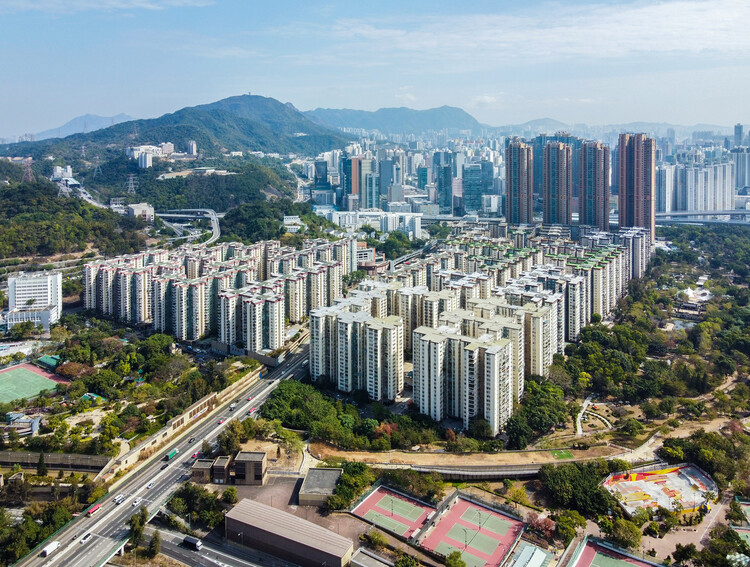
Southeast Asia is often narrated as a kind of architectural playground—an arena where modern and contemporary ideals have been tested at full scale through singular, iconic buildings. One can trace an easy lineage through names that have helped shape the region's skyline imagination: Paul Rudolph's Lippo Centre in Hong Kong and The Concourse in Singapore, I.M. Pei's OCBC Centre and Hong Kong's Bank of China Tower, Norman Foster's Supreme Court of Singapore and the HSBC Main Building in Hong Kong, Ron Phillips' Hong Kong City Hall, Moshe Safdie's Marina Bay Sands. Yet this familiar history—told through objects, colonialism, authorship, and signature forms—risks missing a deeper, more consequential layer of influence: the planning logics and infrastructural frameworks that have quietly structured how these cities expand, densify, and distribute everyday life.
After Le Corbusier: How Southeast Asia Turned the Satellite City Into a Transit Megaproject - Image 1 of 4After Le Corbusier: How Southeast Asia Turned the Satellite City Into a Transit Megaproject - Image 2 of 4After Le Corbusier: How Southeast Asia Turned the Satellite City Into a Transit Megaproject - Image 3 of 4After Le Corbusier: How Southeast Asia Turned the Satellite City Into a Transit Megaproject - Image 4 of 4After Le Corbusier: How Southeast Asia Turned the Satellite City Into a Transit Megaproject - More Images+ 12

Architecture and Agency: Rethinking Authorship Through Participatory Design

Subscriber Access | 

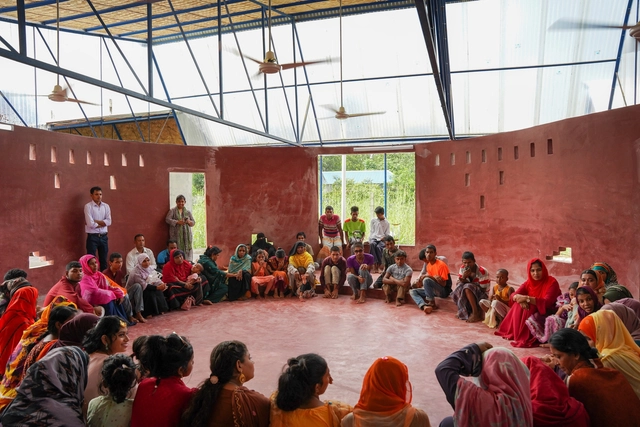
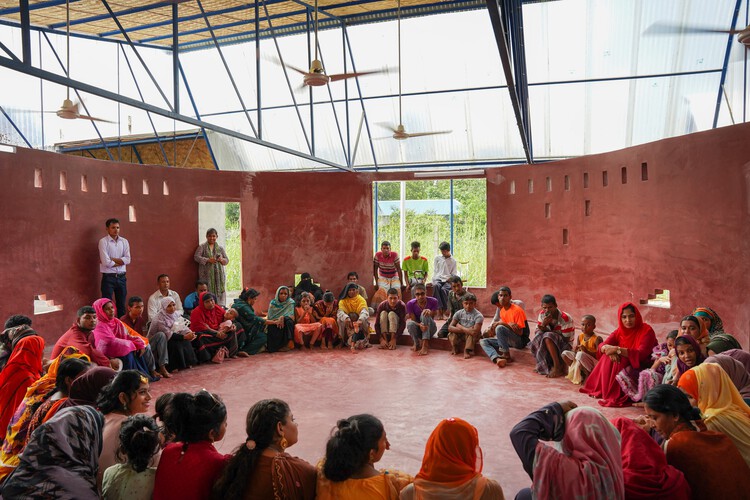
Architecture has historically produced many iconic buildings shaped by singular visions—often designed unilaterally for users, communities, and cities. While this top-down approach has enabled strong formal coherence and conceptual clarity, it has also prioritized authorship over engagement. The result: projects that may be celebrated as visionary, yet often feel disconnected from the everyday realities of those who inhabit them.

Designing for others is inherently complex. As architects, we are frequently tasked with creating environments for communities with whom we may have no personal or cultural familiarity. This distance, however, can offer valuable objectivity. It allows us to engage diverse perspectives with fresh eyes, critically analyzing the needs and constraints of multiple stakeholders. Through this process, the discipline of architecture has advanced—pushing boundaries in spatial thinking, material innovation, and structural experimentation.

Architecture and Agency: Rethinking Authorship Through Participatory Design - Image 1 of 4Architecture and Agency: Rethinking Authorship Through Participatory Design - Image 2 of 4Architecture and Agency: Rethinking Authorship Through Participatory Design - Image 3 of 4Architecture and Agency: Rethinking Authorship Through Participatory Design - Image 4 of 4Architecture and Agency: Rethinking Authorship Through Participatory Design - More Images+ 29

Hong Kong's Queensway Reimagined: Sara Klomps on the Genesis and Ambition of The Henderson by Zaha Hadid Architects

Subscriber Access | 

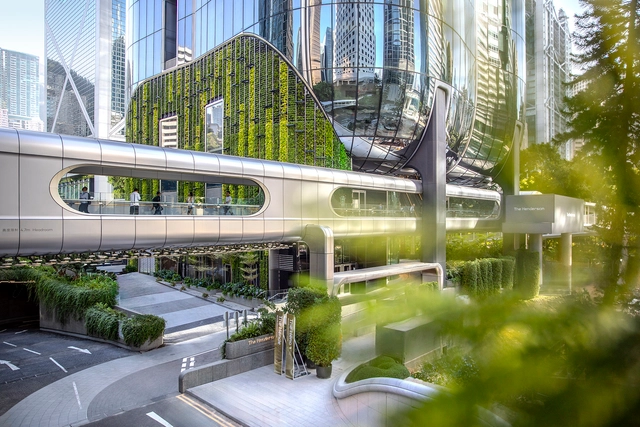
Architectural landmarks often cluster together. In Tokyo, the iconic Omotesando is a well-known stretch where global "starchitects" built flagship luxury retail spaces in the 2000s. Hong Kong has a lesser-known but equally powerful architectural agglomeration along Queensway—though historically more corporate and less publicly engaging. Beginning in the 1980s, this corridor became home to a series of landmark buildings by some of the world's most prominent architects: Norman Foster's HSBC Headquarters, I.M. Pei's Bank of China Tower, Paul Rudolph's Lippo Centre, and the nearby Murray Building by Ron Phillips—now revitalized as a hotel by Foster + Partners. The area is further enriched later on by Heatherwick Studio's renovation of Pacific Place and Tod Williams Billie Tsien Architects' Asia Society Hong Kong Center.

Hong Kong's Queensway Reimagined: Sara Klomps on the Genesis and Ambition of The Henderson by Zaha Hadid Architects - Image 1 of 4Hong Kong's Queensway Reimagined: Sara Klomps on the Genesis and Ambition of The Henderson by Zaha Hadid Architects - Image 2 of 4Hong Kong's Queensway Reimagined: Sara Klomps on the Genesis and Ambition of The Henderson by Zaha Hadid Architects - Image 3 of 4Hong Kong's Queensway Reimagined: Sara Klomps on the Genesis and Ambition of The Henderson by Zaha Hadid Architects - Image 4 of 4Hong Kong's Queensway Reimagined: Sara Klomps on the Genesis and Ambition of The Henderson by Zaha Hadid Architects - More Images+ 7

SOM to Reimagine the 95th and 96th Floors of Their John Hancock Center in Chicago

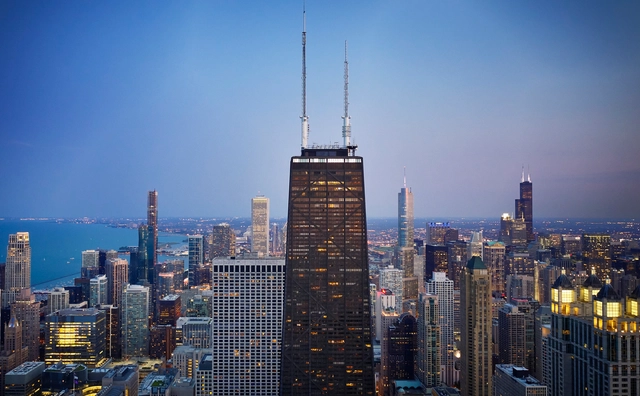
Skidmore, Owings & Merrill (SOM) have announced plans to redevelop the 95th and 96th floors of the iconic 875 N. Michigan Avenue, formally named the John Hancock Center. The building, originally designed by SOM in 1967 and completed in 1970, is recognized as the world's first mixed-use skyscraper, having become a recognizable feature of Chicago's skyline. The redesign endeavor aims to reimagine the two floors, measuring 30,000 square feet, into an observation deck and an attractive destination in the city.

SOM to Reimagine the 95th and 96th Floors of Their John Hancock Center in Chicago - Image 1 of 4SOM to Reimagine the 95th and 96th Floors of Their John Hancock Center in Chicago - Image 2 of 4SOM to Reimagine the 95th and 96th Floors of Their John Hancock Center in Chicago - Image 3 of 4SOM to Reimagine the 95th and 96th Floors of Their John Hancock Center in Chicago - Image 4 of 4SOM to Reimagine the 95th and 96th Floors of Their John Hancock Center in Chicago - More Images

Incremental Iconation: A Path for Developing Monumental Buildings in the Global South

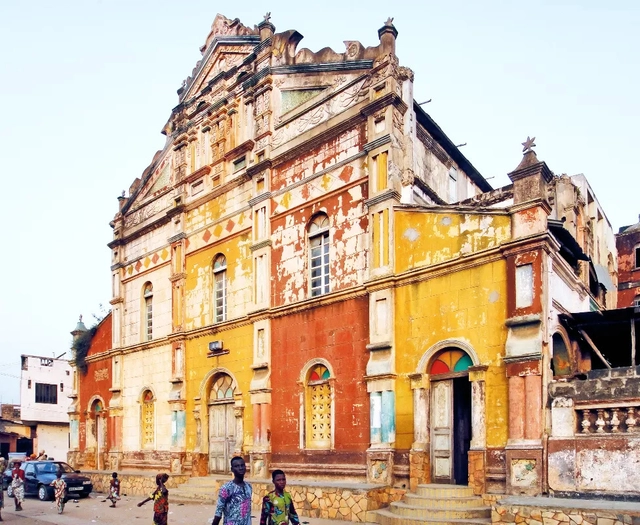
Buildings that are designed to layer stories and memories, evoke a sense of aspiration, define cultural narratives, and build a national identity will always be important in all societies. When buildings have this power to shape communities, make an impact on a city’s image, and change the course of socio-economic growth, then they can be identified as iconic. Though the term “iconic” is subjective, it is one that pushes the boundaries of architecture in any context. It calls for spatial originality, proposes innovative material technology, and necessitates a radical socio-economic investment to be realized.

However, since the economies of developing countries in the global south cannot meet the requirements of these architectural structures, is there a more suitable socio-economic model for monumental structures in this context? Can the incremental principles of small adaptable changes and growth be applied to the finite iconic aspiration of this architecture?

Incremental Iconation: A Path for Developing Monumental Buildings in the Global South - Image 1 of 4Incremental Iconation: A Path for Developing Monumental Buildings in the Global South - Image 2 of 4Incremental Iconation: A Path for Developing Monumental Buildings in the Global South - Image 3 of 4Incremental Iconation: A Path for Developing Monumental Buildings in the Global South - Image 4 of 4Incremental Iconation: A Path for Developing Monumental Buildings in the Global South - More Images+ 2

The Revival of Art Deco: Exploring New Designs and Preserving Existing Ones

Subscriber Access | 

Almost a century after the iconic aesthetic emerged, Art Deco is finally having its comeback. As seen in new projects, interior spaces, and furniture around the globe, the glitz and glam that makes us long for the Roaring 20s of the early 20th century is now giving us a small taste of the Roaring 20s revival in the 21st century. As the distinct identity of Art Deco architecture and design has continued to inspire the world, what can we expect from new designs, and the preservation of existing ones?

The Revival of Art Deco: Exploring New Designs and Preserving Existing Ones - Image 1 of 4The Revival of Art Deco: Exploring New Designs and Preserving Existing Ones - Image 2 of 4The Revival of Art Deco: Exploring New Designs and Preserving Existing Ones - Image 3 of 4The Revival of Art Deco: Exploring New Designs and Preserving Existing Ones - Image 4 of 4The Revival of Art Deco: Exploring New Designs and Preserving Existing Ones - More Images+ 4

Le Corbusier's Enduring Spirit: Celebrating 100 Years of Architectural Influence

One hundred years ago, in 1923, Le Corbusier’s “Vers une Architecture” was published in the magazine “L’Esprit Nouveau.” The controversial collection of essays authored by the Modernist master served as a manifesto for the development of modern architecture, influencing generations of architects and sparking polemics on the proposed principles of architectural design. The book advocates for the beauty of streamlined industrial designs, like those of airplanes, automobiles or ocean liners; it proposes a completely different way of building cities, favoring tall and slender towers surrounded by abundant greenery, and introduces Le Corbusier’s 5 principles for modern design.

Now, a century later, these theories have become part of every architect’s education, but they are also highly contested. Some critics argue that the rigid approach, especially in relation to urban planning principles, fails to engage the cultural and contextual nuances of different communities, leading to alienating urban environments. Still, the legacy of Le Corbusier is significant, serving as a constant point of reference for architects when exploring the balance between functionality, aesthetics, symbolism and the social impact of their designs.

Le Corbusier's Enduring Spirit: Celebrating 100 Years of Architectural Influence - Image 1 of 4Le Corbusier's Enduring Spirit: Celebrating 100 Years of Architectural Influence - Image 2 of 4Le Corbusier's Enduring Spirit: Celebrating 100 Years of Architectural Influence - Image 3 of 4Le Corbusier's Enduring Spirit: Celebrating 100 Years of Architectural Influence - Image 4 of 4Le Corbusier's Enduring Spirit: Celebrating 100 Years of Architectural Influence - More Images+ 16

The Danish Architecture Center Opens the First Permanent Exhibition on Danish Architecture in Copenhagen

The Danish Architecture Center (DAC) has announced that the first permanent exhibition on Danish Architecture will open on March 24, 2023, in Copenhagen. The exhibition titled “So Danish!” tells the story of the evolution of architecture in the country, starting from the Viking Age and continuing to the present day. By presenting this history, it aims to help visitors understand the role and influence of architecture in the Danish democratic society.

The Danish Architecture Center Opens the First Permanent Exhibition on Danish Architecture in Copenhagen - Image 1 of 4The Danish Architecture Center Opens the First Permanent Exhibition on Danish Architecture in Copenhagen - Image 2 of 4The Danish Architecture Center Opens the First Permanent Exhibition on Danish Architecture in Copenhagen - Image 3 of 4The Danish Architecture Center Opens the First Permanent Exhibition on Danish Architecture in Copenhagen - Image 4 of 4The Danish Architecture Center Opens the First Permanent Exhibition on Danish Architecture in Copenhagen - More Images+ 17

Public and Cultural Buildings: A Tour of Copenhagen’s Architectural Masterpieces

Subscriber Access | 

True beauty in architecture lies in its ability to serve and improve human experience, yet this fundamental principle is not always upheld. Too often, we see “public” buildings that do not integrate into the urban fabric, are disconnected from their surroundings and fail to contribute to a city’s vibrancy and quality of life. Some may be quite beautiful to look at, but if they are not functional, comfortable, and welcoming to the people they are meant to benefit, their value as public spaces becomes rather questionable. Architectural icons like the Sydney Opera House and Bilbao Guggenheim Museum, for example, are celebrated not just for their stunning silhouettes or breathtaking interiors, but because they enhance culture and city life, enrich the community, and offer diverse opportunities for interaction and public involvement. It is this holistic, human-centered approach to design that allows these landmarks to become integral parts of a city’s identity, one that is embraced and owned by its citizens.

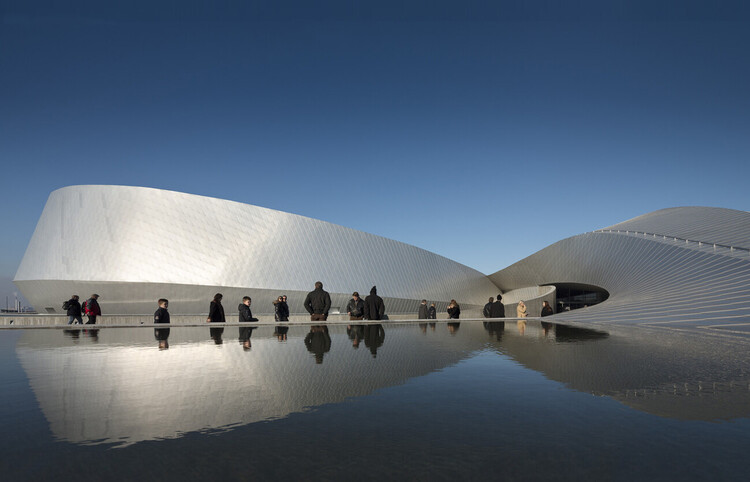
Public and Cultural Buildings: A Tour of Copenhagen’s Architectural Masterpieces - Image 1 of 4Public and Cultural Buildings: A Tour of Copenhagen’s Architectural Masterpieces - Image 2 of 4Public and Cultural Buildings: A Tour of Copenhagen’s Architectural Masterpieces - Image 3 of 4Public and Cultural Buildings: A Tour of Copenhagen’s Architectural Masterpieces - Image 4 of 4Public and Cultural Buildings: A Tour of Copenhagen’s Architectural Masterpieces - More Images+ 25

Where Are the Architectural Masterpieces?

This article was originally published on Common Edge.

Shortly after the millennium, Vanity Fair, a magazine that purports to follow every kind of cultural milestone, asked a select group of 52 “experts” to pick the five best buildings since 1980. The selections were bizarre; almost every building was by one of the chosen architects, which made up the vast majority of those asked for their picks. Few choices received more than five votes.

7 Iconic Buildings Reimagined in Different Architectural Styles

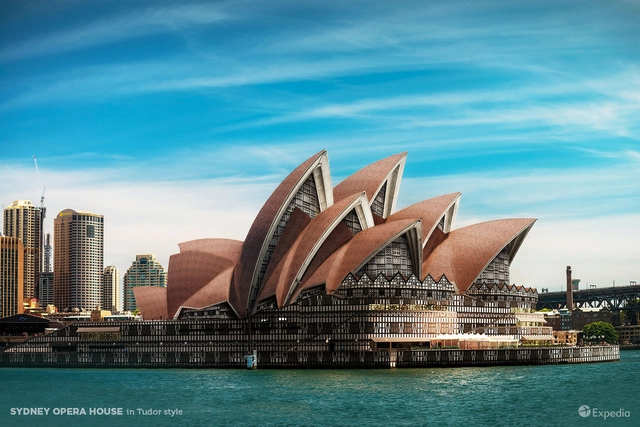
Architectural styles derive their uniqueness by demonstrating the construction techniques, political movements, and social changes that make up the zeitgeist of a place in a particular moment of time. Whether it was the rebirth of art and culture with Renaissance architecture, or the steel skyscrapers that emerged in the post-war movement, each stylistic change tells us something different about the transitions of architectural history. But what if architecture rejected a critical regionalist approach, and buildings took on the characteristics of another place? These seven images made for Expedia by NeoMam and Thisisrender provide a glimpse into what some of our favorite architectural icons would look like if they were built in a different style.