1. ArchDaily
  2. Hiroshi Nakamura & NAP

Hiroshi Nakamura & NAP: The Latest Architecture and News

Cities of the Dead: 10 Projects Exploring Burial Architecture

Subscriber Access | 

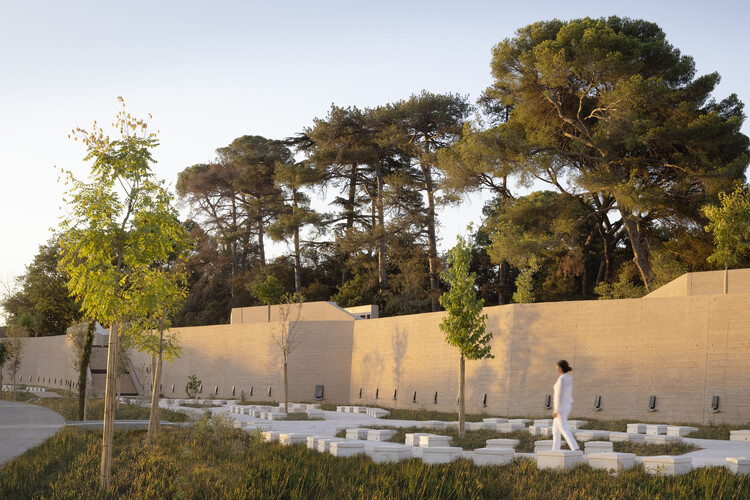
Death is a certainty, but its architecture has never been stable. Every period and culture has invented a different way of placing the dead in the world (close or far, visible or screened, monumental or almost anonymous), and those choices have always carried social and political weight. Cemeteries are where that weight becomes legible in space, turning belief and regulation into boundaries, paths, and names.

In that sense, a cemetery behaves like a piece of city-making. It needs access, limits, and an internal order that can grow without losing clarity. It depends on ground and water management as much as on symbolism, and on administration as much as on form. But its real architectural problem is how to make a large, evolving territory readable while preserving the intimacy of a visit. Names must be locatable; routes must remain legible; trees grow, paths shift, stones weather, records accumulate. What looks fixed is, in practice, a living system designed to be used and revisited, long after the first grief has passed.
Cities of the Dead: 10 Projects Exploring Burial Architecture - Image 1 of 4Cities of the Dead: 10 Projects Exploring Burial Architecture - Image 2 of 4Cities of the Dead: 10 Projects Exploring Burial Architecture - Image 3 of 4Cities of the Dead: 10 Projects Exploring Burial Architecture - Image 4 of 4Cities of the Dead: 10 Projects Exploring Burial Architecture - More Images+ 14

Time-Space to Read, Gather, and Care: 7 Community Libraries in Remote and Peripheral Settings

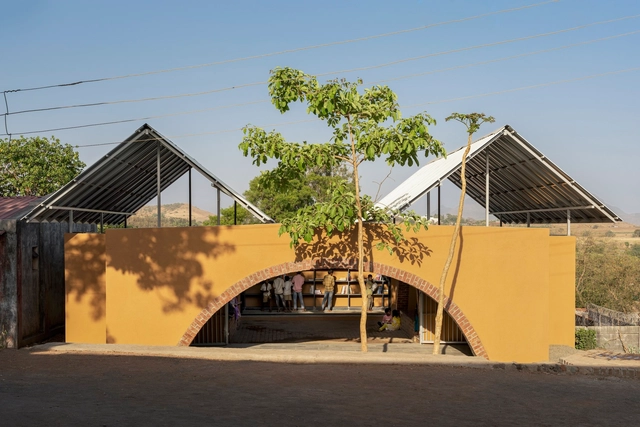
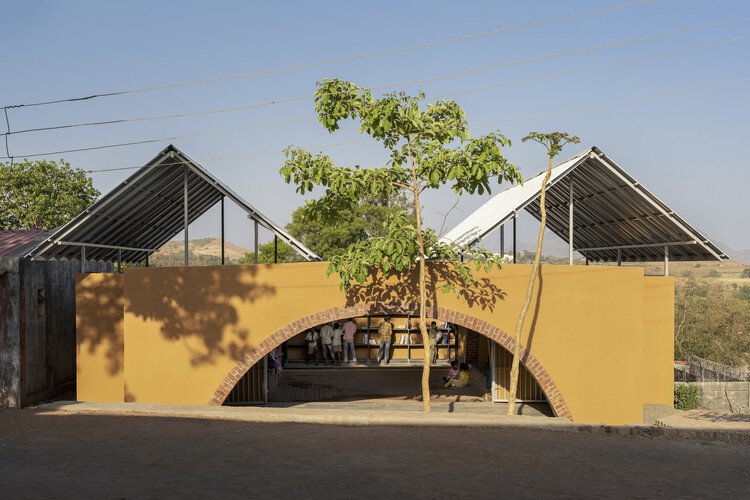
In many parts of the world, remoteness is not only defined by distance. It may describe a mountain settlement far from infrastructure or an urban and suburban neighborhood on the margins of visibility and opportunity. Across these diverse contexts, the library has been one of the most vital typologies—a space where architecture embodies the modes of accessibility, inclusivity, and community care.

Time-Space to Read, Gather, and Care: 7 Community Libraries in Remote and Peripheral Settings - Image 1 of 4Time-Space to Read, Gather, and Care: 7 Community Libraries in Remote and Peripheral Settings - Image 2 of 4Time-Space to Read, Gather, and Care: 7 Community Libraries in Remote and Peripheral Settings - Image 3 of 4Time-Space to Read, Gather, and Care: 7 Community Libraries in Remote and Peripheral Settings - Image 4 of 4Time-Space to Read, Gather, and Care: 7 Community Libraries in Remote and Peripheral Settings - More Images+ 18

Rethinking Sustainability Through Site-Specific Strategies

Subscriber Access | 

Sustainability in architecture is often framed as a universal challenge, leading to standardized solutions that prioritize efficiency over context. However, architecture is inherently tied to its environment — buildings interact with climate, topography, and cultural history in ways that demand specificity. Instead of relying on standardized sustainability checklists, how can architecture embrace site-specific solutions? This conversation is deeply connected to the concept of Genius Loci, or the spirit of a place, introduced by Christian Norberg-Schulz and embraced by architects advocating for designs that resonate with their surroundings. It suggests that architecture should not be imposed upon a site but rather emerge from it, informed by its materials, climate, and cultural significance. This philosophy challenges the widespread application of generic sustainable technologies, instead proposing that sustainability must be inherently tied to the location in which it operates.

Rethinking Sustainability Through Site-Specific Strategies - Image 1 of 4Rethinking Sustainability Through Site-Specific Strategies - Image 2 of 4Rethinking Sustainability Through Site-Specific Strategies - Image 3 of 4Rethinking Sustainability Through Site-Specific Strategies - Image 4 of 4Rethinking Sustainability Through Site-Specific Strategies - More Images+ 81

Care House of the Wind Chimneys / Hiroshi Nakamura & NAP

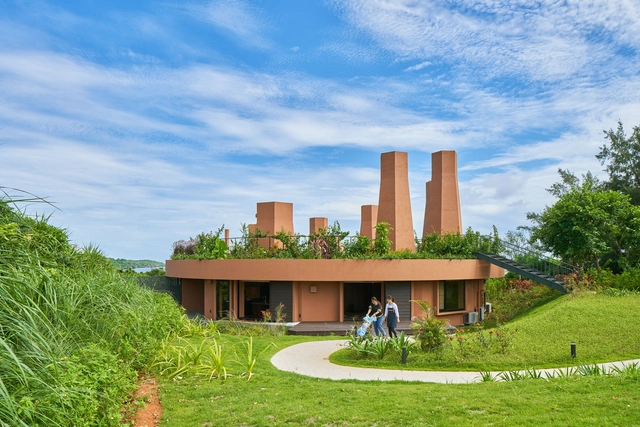
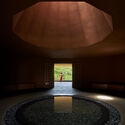
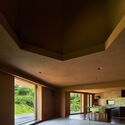
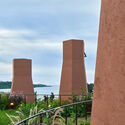
Care House of the Wind Chimneys / Hiroshi Nakamura & NAP - Exterior Photography, Healthcare ArchitectureCare House of the Wind Chimneys / Hiroshi Nakamura & NAP - Interior Photography, Healthcare Architecture, Arch, Column, LightingCare House of the Wind Chimneys / Hiroshi Nakamura & NAP - Interior Photography, Healthcare Architecture, FacadeCare House of the Wind Chimneys / Hiroshi Nakamura & NAP - Exterior Photography, Healthcare Architecture, ColumnCare House of the Wind Chimneys / Hiroshi Nakamura & NAP - More Images+ 25

Maeda, Onna, Kunigami District, Okinawa 904-0417, Japan, Japan

The Project in a Small Japanese Village Setting the Standard for Zero-Waste Architecture

Subscriber Access | 

Nestled in the steep gorges and river valleys of Japan’s Tokushima prefecture is Kamikatsu - a small town seemingly like any other. But Kamikatsu, unlike its neighbors (or indeed, most towns in the world), is nearly entirely waste-free.

Since 2003 - years before the movement gained widespread popularity - the town has committed to a zero-waste policy. The requirements are demanding: waste must be sorted in more than 30 categories, broken or obsolete items are donated or stripped for parts, unwanted items are left in a store for community exchange. But the residents’ efforts over the years have paid off- nearly 80% of all the village’s waste is recycled.

The Project in a Small Japanese Village Setting the Standard for Zero-Waste Architecture - Image 1 of 4The Project in a Small Japanese Village Setting the Standard for Zero-Waste Architecture - Image 2 of 4The Project in a Small Japanese Village Setting the Standard for Zero-Waste Architecture - Image 3 of 4The Project in a Small Japanese Village Setting the Standard for Zero-Waste Architecture - Image 4 of 4The Project in a Small Japanese Village Setting the Standard for Zero-Waste Architecture - More Images+ 15

Winners of the 2018 Building of the Year Awards

With nearly 100,000 votes cast during the last two weeks, we are happy to present the winners of the 2018 ArchDaily Building of the Year Awards. This peer-based, crowdsourced architecture award showcases projects chosen by ArchDaily readers who filtered thousands of projects down to the 15 best works featured on ArchDaily in 2017.

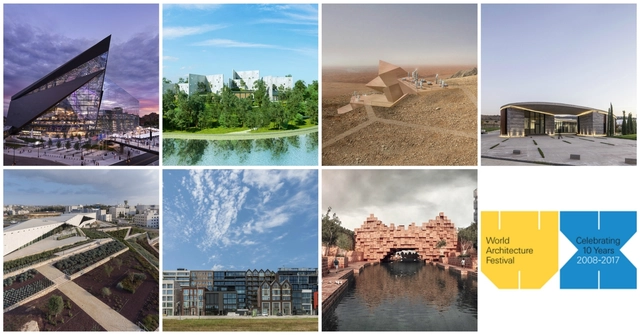
2017 World Architecture Festival Announces Day 1 Award Winners

The World Architecture Festival (WAF) has announced the Day 1 category winners of their 2017 awards slate. Winners selected among 32 categories over the first two days of the conference will then continue on to compete for the title of the World Building of the Year 2017 to be announced on the final day of the event on Friday.

The world’s largest architectural award program, the WAF Awards year saw its biggest year yet, with a total of 924 entries received from projects located in 68 countries across the world. The finalist projects will be selected live at the festival by a Super Jury made up of jury chair Robert Ivy, Chief Executive Officer of the American Institute of Architects; Nathalie de Vries, Director & Co-founder of MVRDV; Ian Ritchie, Founder of Ian Ritchie Architects; and Christoph Ingenhoven, Founder of Ingenhoven Architects.

You can check out the full shortlist here, and see which built and future projects took home awards after the break.

2013 AR+D Awards for Emerging Architecture Announced

The winners of the 2013 AR+D Awards for Emerging Architecture have been announced! The awards, presented by The Architectural Review and now in its 15th year, have seen "projects from locales as diverse as Bloomsbury and the Himalayas." This year over 350 entries were discussed by four esteemed judges, including Sir Peter Cook, and have led to four winners who will share a prize fund of £10,000. See both the four winning entries and the ten highly commended schemes after the break...