1. ArchDaily
  2. high-speed rail

high-speed rail: The Latest Architecture and News

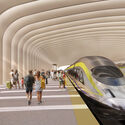
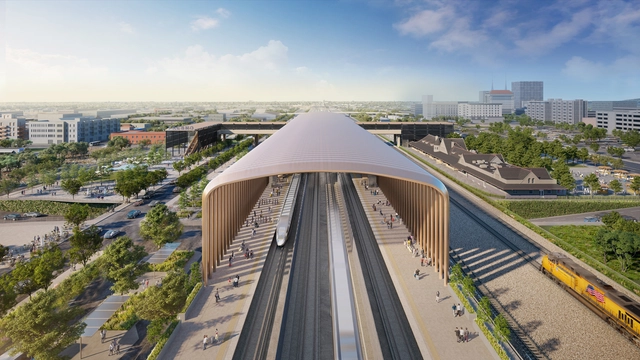
Foster + Partners and Arup Reveal Design for California High-Speed Rail’s First Stations

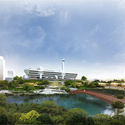
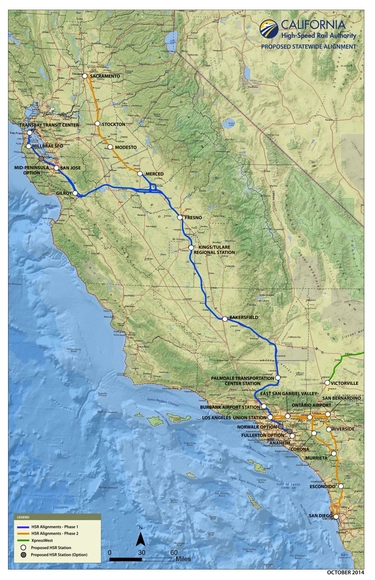
As part of public ‘open house’ sessions with local communities and agencies, Foster + Partners and Arup have revealed the design for the first 4 stations of California’s High-Speed Rail. This is part of an extensive project, as the new Central Valley stations will serve as models for the design of the next stations planned along the 500-mile-long Los Angeles/Anaheim to San Francisco rail system. The open house sessions represent an opportunity for the public to explore the project, talk with California High-Speed Rail Authority planning experts, and learn more about the high-speed rail infrastructure. The project is under construction, with the first operable line scheduled to be completed between 2030 and 2033.


Foster + Partners and Arup Reveal Design for California High-Speed Rail’s First Stations - Image 1 of 4Foster + Partners and Arup Reveal Design for California High-Speed Rail’s First Stations - Image 2 of 4Foster + Partners and Arup Reveal Design for California High-Speed Rail’s First Stations - Image 3 of 4Foster + Partners and Arup Reveal Design for California High-Speed Rail’s First Stations - Image 4 of 4Foster + Partners and Arup Reveal Design for California High-Speed Rail’s First Stations - More Images+ 5

ZHA & Esplan Win Competition to Design the New Terminal for Rail Baltica

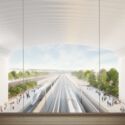
Zaha Hadid Architects were selected along with Esplan from Estonia to design the new terminal of the Rail Baltic railway at Ülemiste, Tallinn. Their proposal for the starting point of the Rail Baltic line connecting Tallinn, Riga and Vilnius with the European high-speed rail network, has been awarded the first place in the design competition.

ZHA & Esplan Win Competition to Design the New Terminal for Rail Baltica - Image 1 of 4ZHA & Esplan Win Competition to Design the New Terminal for Rail Baltica - Image 2 of 4ZHA & Esplan Win Competition to Design the New Terminal for Rail Baltica - Image 3 of 4ZHA & Esplan Win Competition to Design the New Terminal for Rail Baltica - Image 4 of 4ZHA & Esplan Win Competition to Design the New Terminal for Rail Baltica - More Images+ 6

Winning Proposal to Define Jurong Lake District as Singapore’s Newest Business Hub

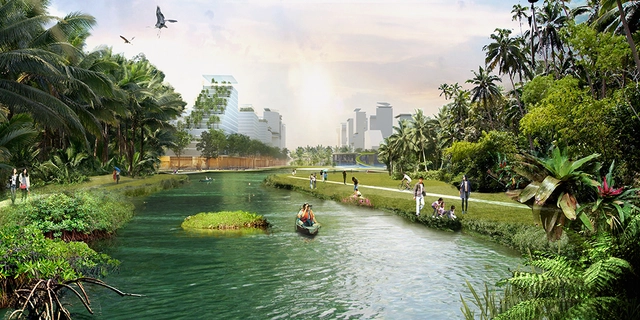
The Singapore Urban Redevelopment Authority (URA) has selected KCAP Architects&Planners as the primary consultant to develop Singapore’s Jurong Lake District, leading a varied design team that includes SAA Architects, Arup, S333, and Lekker.

Submitting a dense, commercial mixed-use concept masterplan centered around a new high-speed rail (HSR) terminal in Singapore, the team’s intention was to facilitate the Jurong Lake District’s progress as a ‘district of the future’, as well as creating the country’s second Central Business District. Waterways and a variety of landscaped green spaces were also key components of the proposal, giving the area a striking identity.

Winning Proposal to Define Jurong Lake District as Singapore’s Newest Business Hub - Image 1 of 4Winning Proposal to Define Jurong Lake District as Singapore’s Newest Business Hub - Image 2 of 4Winning Proposal to Define Jurong Lake District as Singapore’s Newest Business Hub - Image 3 of 4Winning Proposal to Define Jurong Lake District as Singapore’s Newest Business Hub - Image 4 of 4Winning Proposal to Define Jurong Lake District as Singapore’s Newest Business Hub - More Images

California Breaks Ground on America’s First High Speed Rail

California has broke ground on America’s first high-speed rail line in Fresno, six years after voters first approved an almost $10 billion bond act to fund the project. However, along with celebrations comes skepticism; according to an NPR report, fears of the project’s failure have risen due to the rail line only having a fifth of its funding and that its nearly three-hour journey will still take longer than a flight connecting Los Angeles to San Francisco. Despite this, supporters are optimistic that the line will be up and running by 2030. The state will be relying on private investment and revenue from the state’s greenhouse-gas fees to secure the remaining $55 billion needed to complete the $68 billion project.

Does China's Urbanization Spell Doom or Salvation? Peter Calthorpe Weighs In...

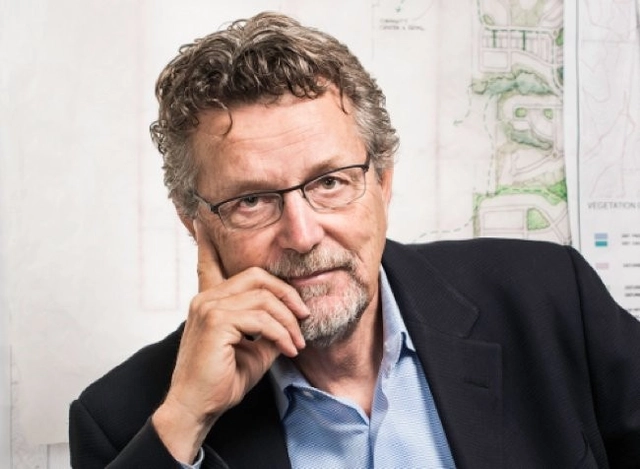
This article originally appeared on Metropolis Magazine's Point of View Blog as "Q&A: Peter Calthorpe."

The titles of Peter Calthorpe’s books trace the recent history of urban design in its most vital and prescient manifestations, starting in 1986 with Sustainable Communities (with Sim Van der Ryn) and followed by The Regional City: Planning for the End of Sprawl (with Bill Fulton), The Next American Metropolis: Ecology, Community and the American Dream, and Urbanism in the Age of Climate Change.

A founding member of the Congress for the New Urbanism and a past winner of the Urban Land Institute’s prestigious J.C. Nichols Prize for Visionaries in Urban Development, the Berkeley-based architect and planner has been at the forefront of urban design for more than three decades. In recent years, in addition to his firm’s continuing work in the United States, Calthorpe Associates has increasingly turned his attention to a country urbanizing at a pace unprecedented in world history: China.

Here Calthorpe talks about China’s unique planning process, the future of high-speed rail in California, and Architecture 2030’s new 2030 Palette, after the break...

The Future of Train Travel: Life in Hyper-Speed

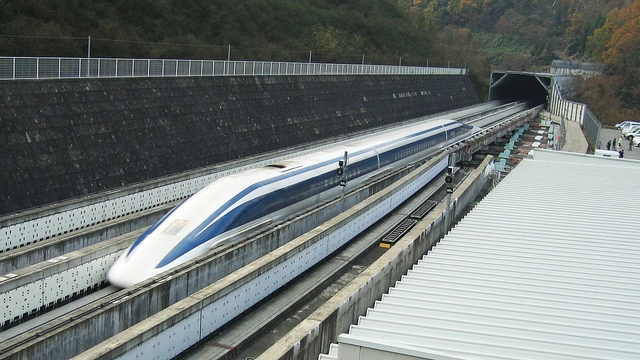
Japan, inventor of the world's first bullet train, recently unveiled plans for an even faster and more radical train model: a floating train, powered by magnets, that will travel 100 mph faster than current bullet trains (about 300 mph). The maglev train, standing for "magnetic levitation," will run between Tokyo and Osaka, an estimated distance of 315 miles, cost $64 billion, and be completed by 2045.

High-speed rail has already revolutionized national and international transportation in many parts of the world - for example, China has a maglev that already goes 270mph - and now high-speed is transitioning into hyper-speed. Last year, we reported that Elon Musk, CEO of SpaceX and co-founder of both PayPal and Tesla Motors, shared with the public his desire to patent a new mode of transportation - the “Hyperloop” that would get passengers from San Francisco to LA in only 30 minutes.

So what might the future hold for train travel? And, more importantly, how will it affect our cities and the people who live in them?

For more on the maglev train and the future of rail, read on.