1. ArchDaily
  2. Hidden Doors

Hidden Doors: The Latest Architecture and News

Rooms That Appear: Sliding Partitions and Conditional Domestic Space

Subscriber Access | 
Audio available

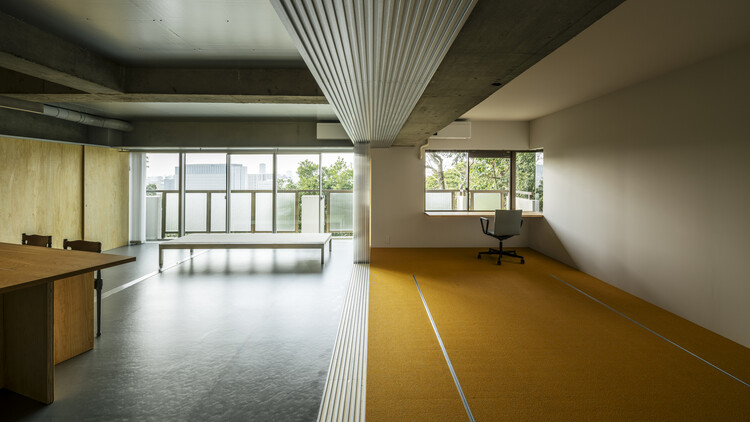
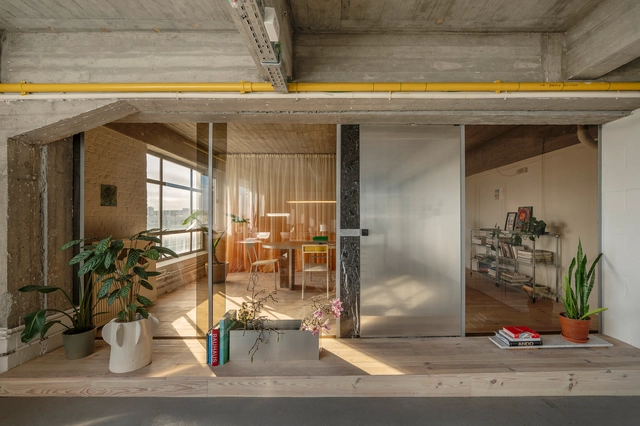
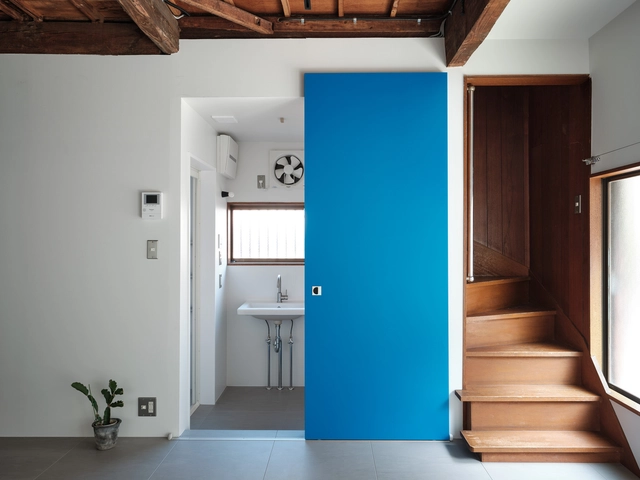
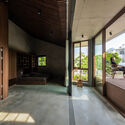
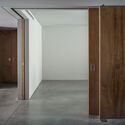
Sliding doors are often discussed through efficiency. They save the swing radius of a conventional door, allow compact rooms to function more easily, and help small apartments borrow a few extra centimeters of usable space. Yet in many interiors, their more interesting role is not only spatial economy. Sliding partitions transform the reading of the room itself. A bedroom, study, guest room, dining area, or workspace can appear when a panel is closed, disappear when it is opened, and remain ambiguous when the boundary is translucent or partial.

This makes the sliding partition especially useful in domestic contexts shaped by density, changing family structures, hybrid work, and climatic negotiation typical of regions like East and Southeast Asia. It allows privacy without permanence, enclosure without full separation, and openness without the loss of control. Unlike the fixed wall, it does not insist that a room has only one identity. Instead, it allows domestic space to respond to time: day and night, guests and family, work and rest, exposure and retreat.
Rooms That Appear: Sliding Partitions and Conditional Domestic Space - Image 1 of 4Rooms That Appear: Sliding Partitions and Conditional Domestic Space - Image 2 of 4Rooms That Appear: Sliding Partitions and Conditional Domestic Space - Image 3 of 4Rooms That Appear: Sliding Partitions and Conditional Domestic Space - Image 4 of 4Rooms That Appear: Sliding Partitions and Conditional Domestic Space - More Images+ 30

The Hidden Mechanics of Doors: How Hinges, Tracks, and Pivots Shape Spatial Experience

The choice of door types plays a crucial role in defining the spatial experience and atmosphere of architecture. Beyond material or style, the way a door is detailed—its movement, weight, and method of operation—can drastically influence how a space is perceived and navigated. However, what truly enables the functionality of different door types is the often-overlooked element of door hardware. Even within the same door type, the selection of hinges, tracks, pivots, and handles can significantly affect how users interact with and interpret the space.

The Hidden Mechanics of Doors: How Hinges, Tracks, and Pivots Shape Spatial Experience - Image 1 of 4The Hidden Mechanics of Doors: How Hinges, Tracks, and Pivots Shape Spatial Experience - Image 2 of 4The Hidden Mechanics of Doors: How Hinges, Tracks, and Pivots Shape Spatial Experience - Image 3 of 4The Hidden Mechanics of Doors: How Hinges, Tracks, and Pivots Shape Spatial Experience - Image 4 of 4The Hidden Mechanics of Doors: How Hinges, Tracks, and Pivots Shape Spatial Experience - More Images+ 27

The Overlooked Art of Door Design: An Introductory Guide to Interior Door Types

Doors are among the most frequently used architectural elements in any occupied building, serving as movable thresholds that negotiate between private and public spaces. They facilitate both connection and separation among co-inhabitants. Yet, despite their fundamental role, doors are often one of the most overlooked design elements, particularly by clients. In discussions with industry professionals on various interior projects, a common consensus emerges—clients typically pay little attention to door types and details as long as the opening direction aligns with their expectations. However, the world of door design is an intricate one, offering a wealth of possibilities in finishes, installation methods, and modes of operation—each of which can significantly shape the spatial experience beyond the simple matter of swing direction.

The choice of door type and detailing can define or redefine a space entirely. Some doors offer superior sound insulation, while others remain open to connect spaces, enhancing spatial fluidity seamlessly. Certain designs require meticulous installation and ongoing maintenance, while others are virtually hassle-free. Moreover, the type of door selected, particularly that of the hinge, influences not only wall construction but also flooring layers and transitions, adding further complexity to the design process.

The Overlooked Art of Door Design: An Introductory Guide to Interior Door Types - Image 1 of 4The Overlooked Art of Door Design: An Introductory Guide to Interior Door Types - Image 2 of 4The Overlooked Art of Door Design: An Introductory Guide to Interior Door Types - Image 3 of 4The Overlooked Art of Door Design: An Introductory Guide to Interior Door Types - Image 4 of 4The Overlooked Art of Door Design: An Introductory Guide to Interior Door Types - More Images+ 17

Ricky Gui Documents Over 600 Hidden Doors Around Singapore

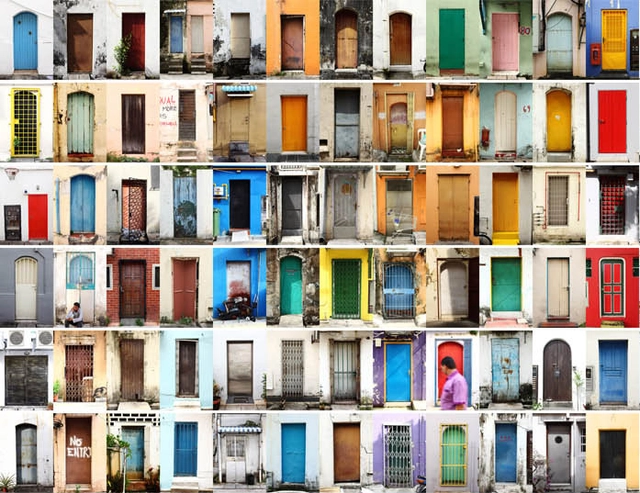
Ricky Gui showcases a stunning series of "Hidden Doors" located behind shophouses in Singapore. Working for over a year, Gui highlighted over 600 "Hidden Doors"in his documentation. These doors are usually looked over as they hide behind shophouses and alleyways where people are unlikely to venture into. 

Ricky Gui Documents Over 600 Hidden Doors Around Singapore - Image 1 of 4Ricky Gui Documents Over 600 Hidden Doors Around Singapore - Image 2 of 4Ricky Gui Documents Over 600 Hidden Doors Around Singapore - Image 3 of 4Ricky Gui Documents Over 600 Hidden Doors Around Singapore - Image 4 of 4Ricky Gui Documents Over 600 Hidden Doors Around Singapore - More Images+ 14